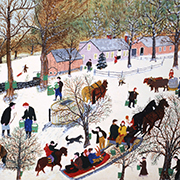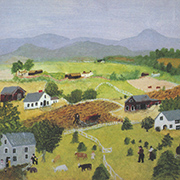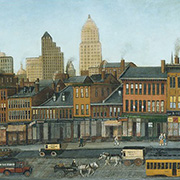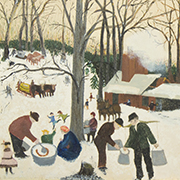

The Ins and Outs of Self-Taught Art
Reflections on a Shifting Field
January 10, 2012 - April 7, 2012
The Lady and the Tramp
Images of Women in Austrian and German Art
October 11, 2011 - December 30, 2011
Recent Acquisitions
(And Some Thoughts on the Current Art Market)
July 5, 2011 - September 30, 2011
Decadence & Decay
Max Beckmann, Otto Dix, George Grosz
April 12, 2011 - June 24, 2011
Self-Taught Painters in American 1800-1950
Revisiting the Tradition
January 11, 2011 - April 2, 2011
Marie-Louise Motesiczky
Paradise Lost & Found
October 12, 2010 - December 30, 2010
Recent Acquisitions
(And Some Thoughts on the Current Art Market)
July 13, 2010 - October 1, 2010
Käthe Kollwitz
A Portrait of the Artist
April 13, 2010 - June 25, 2010
Seventy Years Grandma Moses
A Loan Exhibition Celebrating the 70th Anniversary of the Artist's "Discovery"
February 3, 2010 - April 3, 2010
Egon Schiele as Printmaker
A Loan Exhibition Celebrating the 70th Anniversary of the Galerie St. Etienne
November 3, 2009 - January 23, 2010
From Brücke To Bauhaus
The Meanings of Modernity in Germany, 1905-1933
March 31, 2009 - June 26, 2009
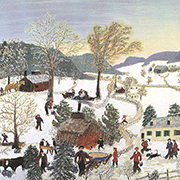
They Taught Themselves
American Self-Taught Painters Between the World Wars
January 9, 2009 - March 14, 2009
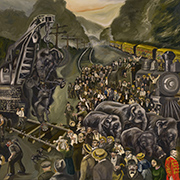
Elephants We Must Never Forget
New Paintings Drawings and Prints by Sue Coe
October 14, 2008 - December 20, 2008
Recent Acquisitions
(And Some Thoughts on the Current Art Market)
June 24, 2008 - September 26, 2008
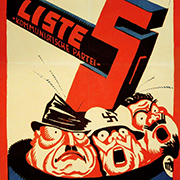
Hope or Menace?
Communism in Germany Between the World Wars
March 25, 2008 - June 13, 2008
Transforming Reality
Pattern and Design in Modern and Self-Taught Art
January 15, 2008 - March 8, 2008
Leonard Baskin
Proofs and Process
October 9, 2007 - January 5, 2008
Recent Acquisitions
(And Some Thoughts on the Current Art Market)
June 5, 2007 - September 28, 2007
Who Paid the Piper?
The Art of Patronage in Fin-de-Siècle Vienna
March 8, 2007 - May 26, 2007
Fairy Tale, Myth and Fantasy
Approaches to Spirituality in Art
December 7, 2006 - February 3, 2007
More Than Coffee was Served
Café Culture in Fin-de-Siècle Vienna and Weimar Germany
September 19, 2006 - November 25, 2006
Recent Acquisitions
(And Some Thoughts on the Current Art Market)
June 6, 2006 - September 8, 2006
Parallel Visions II
"Outsider" and "Insider" Art Today
April 5, 2006 - May 26, 2006
Ilija!
His First American Exhibtion
January 17, 2006 - March 18, 2006
Coming of Age
Egon Schiele and the Modernist Culture of Youth
November 15, 2005 - January 7, 2006
Sue Coe:
Sheep of Fools
September 20, 2005 - November 5, 2005
Recent Acquisitions
And Some Thoughts on the Current Art Market
June 7, 2005 - September 9, 2005
Every Picture Tells a Story
The Narrative Impulse in Modern and Contemporary Art
April 5, 2005 - May 27, 2005
65th Anniversary Exhibition, Part II
Self-Taught Artists
January 18, 2005 - March 26, 2005
65th Anniversary Exhibition, Part I
Austrian and German Expressionism
October 28, 2004 - January 8, 2005
Sue Coe: Bully: Master of the Global Merry-Go-Round and Recent Acquisitions
(And Some Thoughts on the Current Art Market)
June 8, 2004 - October 16, 2004
Animals & Us
The Animal in Contemporary Art
April 1, 2004 - May 22, 2004
Henry Darger
Art and Myth
January 15, 2004 - March 20, 2004
Body and Soul
Expressionism and the Human Figure
October 7, 2003 - January 3, 2004
Recent Acquisitions
(And Some Thoughts on the Current Art Market)
June 24, 2003 - September 12, 2003
In Search of the "Total Artwork"
Viennese Art and Design 1897–1932
April 8, 2003 - June 14, 2003
Russia's Self-Taught Artists
A New Perspective on the "Outsider"
January 14, 2003 - March 29, 2003
Käthe Kollwitz:
Master Printmaker
October 1, 2002 - January 4, 2003
Recent Acquisitions
(And Some Thoughts on the Current Art Market)
June 25, 2002 - September 20, 2002
Workers of the World
Modern Images of Labor
April 2, 2002 - June 15, 2002
Grandma Moses
Reflections of America
January 15, 2002 - March 16, 2002
Gustav Klimt/Egon Schiele/Oskar Kokoscha
From Art Nouveau to Expressionism
November 23, 2001 - January 5, 2002
The "Black-and-White" Show
Expressionist Graphics in Austria & Germany
September 20, 2001 - November 10, 2001
Recent Acquisitions (And Some Thoughts on the Current Art Market)
June 26, 2001 - September 7, 2001
Art with an Agenda
Politics, Persuasion, Illustration and Decoration
April 10, 2001 - June 16, 2001
"Our Beautiful and Tormented Austria!": Art Brut in the Land of Freud
January 18, 2001 - March 17, 2001
The Tragedy of War
November 16, 2000 - January 6, 2001
The Expressionist City
September 19, 2000 - November 4, 2000
Recent Acquisitions (And Some Thoughts on the Current Art Market)
June 20, 2000 - September 8, 2000
From Façade to Psyche
Turn-of-the-Century Portraiture in Austria & Germany
March 28, 2000 - June 10, 2000
European Self-Taught Art
Brut or Naive?
January 18, 2000 - March 11, 2000
Saved From Europe
In Commemoration of the 60th Anniversary of the Galerie St. Etienne
November 6, 1999 - January 8, 2000
The Modern Child
(Images of Children in Twentieth-Century Art)
September 14, 1999 - November 6, 1999
Recent Acquisitions
(And a Look at Sixty Years of Art Dealing)
June 15, 1999 - September 3, 1999
Sue Coe: The Pit
The Tragical Tale of the Rise and Fall of a Vivisector
March 30, 1999 - June 5, 1999
Henry Darger and His Realms
January 14, 1999 - March 13, 1999
Becoming Käthe Kollwitz
An Artist and Her Influences
November 17, 1998 - December 31, 1998
George Grosz - Elfriede Lohse-Wächtler
Art & Gender in Weimar Germany
September 23, 1998 - November 11, 1998
Recent Acquisitions
(And Some Thoughts About Looted Art)
June 9, 1998 - September 11, 1998
Taboo
Repression and Revolt in Modern Art
March 26, 1998 - May 30, 1998
Sacred & Profane
Michel Nedjar and Expressionist Primitivism
January 13, 1998 - March 14, 1998
Egon Schiele (1890-1918)
Master Draughtsman
November 18, 1997 - January 3, 1998
The New Objectivity
Realism in Weimar-Era Germany
September 16, 1997 - November 8, 1997
Recent Acquisitions
A Question of Quality
June 10, 1997 - September 5, 1997
Käthe Kollwitz - Lea Grundig
Two German Women & The Art of Protest
March 25, 1997 - May 31, 1997
That Way Madness Lies
Expressionism and the Art of Gugging
January 14, 1997 - March 15, 1997
The Viennese Line
Art and Design Circa 1900
November 18, 1996 - January 4, 1997
Emil Nolde - Christian Rohlfs
Two German Expressionist Masters
September 24, 1996 - November 9, 1996
Breaking All The Rules
Art in Transition
June 11, 1996 - September 6, 1996
Sue Coe's Ship of Fools
March 26, 1996 - May 24, 1996
New York Folk
Lawrence Lebduska, Abraham Levin, Isreal Litwak
January 16, 1996 - March 16, 1996
The Fractured Form
Expressionism and the Human Body
November 15, 1995 - January 6, 1996
From Left to Right
Social Realism in Germany and Russia, Circa 1919-1933
September 19, 1995 - November 4, 1995
Recent Acquisitions
June 20, 1995 - September 8, 1995
On the Brink 1900-2000
The Turning of Two Centuries
March 28, 1995 - May 26, 1995
Earl Cummingham - Grandma Moses
Visions of America
January 17, 1995 - March 18, 1995
Three Berlin Artists of the Weimar Era: Hannah Höch, Käthe Kollwitz, Jeanne Mam
September 13, 1994 - November 5, 1994
55th Anniversary Exhibition in Memory of Otto Kallir
June 7, 1994 - September 2, 1994
Drawn to Text: Comix Artists as Book Illustrators
May 15, 1994 - January 7, 1995
Sue Coe: We All Fall Down
March 29, 1994 - May 27, 1994
The Forgotten Folk Art of the 1940's
January 18, 1994 - March 19, 1994
Symbolism and the Austrian Avant Garde
Klimt, Schiele and their Contemporaries
November 16, 1993 - January 8, 1994
Art and Politics in Weimar Germany
September 14, 1993 - November 6, 1993
Recent Acquisitions
June 8, 1993 - September 3, 1993
The "Outsider" Question
Non-Academic Art from 1900 to the Present
March 23, 1993 - May 28, 1993
The Dance of Death
Images of Mortality in German Art
January 19, 1993 - March 13, 1993
Art Spiegelman
The Road to Maus
November 17, 1992 - January 9, 1993
Käthe Kollwitz
In Celebration of the 125th Anniversary of the Artist's Birth
September 15, 1992 - November 7, 1992
Naive Visions/Art Nouveau and Expressionism/Sue Coe: The Road to the White House
May 19, 1992 - September 4, 1992
Richard Gerstl/Oskar Kokoschka
March 17, 1992 - May 9, 1992
Scandal, Outrage, Censorship
Controversy in Modern Art
January 21, 1992 - March 7, 1992
Viennese Graphic Design
From Secession to Expressionism
November 19, 1991 - January 11, 1992
The Expressionist Figure
September 10, 1991 - November 9, 1991
Recent Acquisitions
Themes and Variations
May 14, 1991 - August 16, 1991
Sue Coe Retrospective
Political Document of a Decade
March 12, 1991 - May 5, 1991
Gustav Klimt, Egon Schiele, Oskar Kokoschka
Watercolors, drawings and prints
January 22, 1991 - March 2, 1991
Egon Schiele
November 13, 1990 - January 12, 1991
Lovis Corinth
A Retrospective
September 11, 1990 - November 3, 1990
Recent Acquisitions
June 12, 1990 - August 31, 1990
Max Klinger, Käthe Kollwitz, Alfred Kubin
A Study in Influences
March 27, 1990 - June 2, 1990
The Narrative in Art
January 23, 1990 - March 17, 1990
Grandma Moses
November 14, 1989 - January 13, 1990
Sue Coe
Porkopolis--Animals and Industry
September 19, 1989 - November 4, 1989
Galerie St. Etienne
A History in Documents and Pictures
June 20, 1989 - September 8, 1989
Gustav Klimt
Paintings and Drawings
April 11, 1989 - June 10, 1989
Fifty Years Galerie St. Etienne: An Overview
February 14, 1989 - April 1, 1989
Folk Artists at Work
Morris Hirshfield, John Kane and Grandma Moses
November 15, 1988 - January 14, 1989
Recent Acquisitions and Works From the Collection
June 14, 1988 - September 16, 1988
From Art Nouveau to Expressionism
April 12, 1988 - May 27, 1988
Three Pre-Expressionists
Lovis Corinth Käthe Kollwitz Paula Modersohn-Becker
January 26, 1988 - March 12, 1988
Käthe Kollwitz
The Power of the Print
November 17, 1987 - January 16, 1988
Recent Acquisitions and Works From the Collection
April 7, 1987 - October 31, 1987
Folk Art of This Century
February 10, 1987 - March 28, 1987
Oskar Kokoschka and His Time
November 25, 1986 - January 31, 1987
Viennese Design and Wiener Werkstätte
September 23, 1986 - November 8, 1986
Gustav Klimt/Egon Schiele/Oskar Kokoschka
Watercolors, Drawings and Prints
May 27, 1986 - September 13, 1986
Expressionist Painters
March 25, 1986 - May 10, 1986
Käthe Kollwitz/Paula Modersohn-Becker
January 28, 1986 - March 15, 1986
The Art of Giving
December 3, 1985 - January 18, 1986
Expressionists on Paper
October 8, 1985 - November 23, 1985
European and American Landscapes
June 4, 1985 - September 13, 1985
Expressionist Printmaking
Aspects of its Genesis and Development
April 1, 1985 - May 24, 1985
Expressionist Masters
January 18, 1985 - March 23, 1985
Arnold Schoenberg's Vienna
November 13, 1984 - January 5, 1985
Grandma Moses and Selected Folk Paintings
September 25, 1984 - November 3, 1984
American Folk Art
People, Places and Things
June 12, 1984 - September 14, 1984
John Kane
Modern America's First Folk Painter
April 17, 1984 - May 25, 1984
Eugène Mihaesco
The Illustrator as Artist
February 28, 1984 - April 7, 1984
Early Expressionist Masters
January 17, 1984 - February 18, 1984
Paula Modersohn-Becker
Germany's Pioneer Modernist
November 15, 1983 - January 7, 1984
Gustav Klimt
Drawings and Selected Paintings
September 20, 1983 - November 5, 1983
Early and Late
Drawings, Paintings & Prints from Academicism to Expressionism
June 1, 1983 - September 2, 1983
Alfred Kubin
Visions From The Other Side
March 22, 1983 - May 7, 1983
20th Century Folk
The First Generation
January 18, 1983 - March 12, 1983
Grandma Moses
The Artist Behind the Myth
November 15, 1982 - January 8, 1983
Kollwitz
The Artist as Printmaker
September 28, 1982 - November 6, 1982
Aspects of Modernism
June 1, 1982 - September 3, 1982
The Human Perspective
Recent Acquisitions
March 16, 1982 - May 15, 1982
19th and 20th Century European and American Folk Art
January 19, 1982 - March 6, 1982
The Folk Art Tradition
Naïve Painting in Europe and the United States
November 17, 1981 - January 9, 1982
Austria's Expressionism
April 21, 1981 - May 30, 1981
Eugène Mihaesco
His First American One-Man Show
March 3, 1981 - April 11, 1981
Gustav Klimt, Egon Schiele
November 12, 1980 - December 27, 1980
Summer Exhibition
June 17, 1980 - October 31, 1980
Kollwitz: The Drawing and The Print
May 1, 1980 - June 10, 1980
40th Anniversary Exhibition
November 13, 1979 - December 28, 1979
American Primitive Art
November 22, 1977
Käthe Kollwitz
December 1, 1976
Neue Galerie-Galerie St. Etienne
A Documentary Exhibition
May 1, 1976
Martin Pajeck
January 27, 1976
Georges Rouault and Frans Masereel
April 29, 1972
Branko Paradis
December 1, 1971
Käthe Kollwitz
February 3, 1971
Egon Schiele
The Graphic Work
October 19, 1970
Gustav Klimt
March 20, 1970
Friedrich Hundertwasser
May 6, 1969
Austrian Art of the 20th Century
March 21, 1969
Egon Schiele
Memorial Exhibition
October 31, 1968
Yugoslav Primitive Art
April 30, 1968
Alfred Kubin
January 30, 1968
Käthe Kollwitz
In the Cause of Humanity
October 23, 1967
Abraham Levin
September 26, 1967
Karl Stark
April 5, 1967
Gustav Klimt
February 4, 1967
The Wiener Werkstätte
November 16, 1966
Oskar Laske
October 25, 1965
Käthe Kollwitz
May 1, 1965
Egon Schiele
Watercolors and Drawings from American Collections
March 1, 1965
25th Anniversary Exhibition
Part II
November 21, 1964
25th Anniversary Exhibition
Part I
October 17, 1964
Mary Urban
June 9, 1964
Werner Berg, Jane Muus and Mura Dehn
May 5, 1964
Eugen Spiro
April 4, 1964
B. F. Dolbin
Drawings of an Epoch
March 3, 1964
Austrian Expressionists
January 6, 1964
Joseph Rifesser
December 3, 1963
Panorama of Yugoslav Primitive Art
October 21, 1963
Joe Henry
Watercolors of Vermont
May 1, 1963
French Impressionists
March 8, 1963
Grandma Moses
Memorial Exhibition
November 26, 1962
Group Show
October 15, 1962
Ernst Barlach
March 23, 1962
Martin Pajeck
February 24, 1962
Paintings by Expressionists
January 27, 1962
Käthe Kollwitz
November 11, 1961
Grandma Moses
September 7, 1961
My Friends
Fourth Biennial of Pictures by American School Children
May 27, 1961
Raimonds Staprans
April 17, 1961
Gustav Klimt, Egon Schiele, Oskar Kokoschka and Alfred Kubin
March 14, 1961
Marvin Meisels
January 23, 1961
Egon Schiele
November 15, 1960
My Life's History
Paintings by Grandma Moses
September 12, 1960
Watercolors and Drawings by Austrian Artists from the Dial Collection
May 2, 1960
Martin Pajeck
February 29, 1960
Eugen Spiro
February 6, 1960
Käthe Kollwitz
December 14, 1959
Josef Scharl
Last Paintings and Drawings
November 11, 1959
European and American Expressionists
September 22, 1959
Our Town
One Hundred Paintings by American School Children
May 23, 1959
Marvin Meisels and Martin Pajeck
May 1, 1959
Gustav Klimt
April 1, 1959
Käthe Kollwitz
January 12, 1959
Oskar Kokoschka
October 28, 1958
Village Life in Guatemala
Paintings by Andres Curuchich
June 3, 1958
Two Unknown American Expressionists
Paintings by Marvin Meisels and Martin Pajeck
April 28, 1958
Paula Modersohn-Becker
March 15, 1958
The Great Tradition in American Painting
American Primitive Art
January 20, 1958
Jules Lefranc and Dominique Lagru
Two French Primitives
November 18, 1957
Margret Bilger
October 22, 1957
The Four Seasons
One Hundred Paintings by American School Children
June 11, 1957
Grandma Moses
May 6, 1957
Alfred Kubin
April 3, 1957
Franz Lerch
March 2, 1957
Egon Schiele
January 21, 1957
Josef Scharl
Memorial Exhibition
November 17, 1956
Irma Rothstein
May 19, 1956
Käthe Kollwitz
April 16, 1956
A Tribute to Grandma Moses
November 28, 1955
As I See Myself
One Hundred Paintings by American School Children
May 20, 1955
Juan De'Prey
April 19, 1955
Erich Heckel
March 29, 1955
Freddy Homburger
March 2, 1955
Masters of the 19th Century
January 18, 1955
Oskar Kokoschka
November 29, 1954
Isabel Case Borgatta and Josef Scharl
October 12, 1954
James N. Rosenberg and Eugen Spiro
April 30, 1954
Per Krogh
April 2, 1954
Cuno Amiet
February 16, 1954
Eniar Jolin
January 14, 1954
Irma Rothstein
December 8, 1953
Josef Scharl
November 11, 1953
Grandma Moses
October 21, 1953 - October 24, 1953
Wilhelm Kaufmann
September 30, 1953
Lovis Corinth, Oskar Kokoschka and Egon Schiele
May 27, 1953
A Grandma Moses Album
Recent Paintings, 1950-1953
April 15, 1953
Streeter Blair
American Primitive
February 26, 1953
Paintings on Glass
Austrian Religious Folk Art of the 17th to 19th Centuries
December 4, 1952
Hasan Kaptan
Paintings of a Ten-Year-Old Turkish Painter
October 29, 1952
Margret Bilger
May 10, 1952
American Natural Painters
March 31, 1952
Ten Years of New York Concert Impressions by Eugen Spiro; Four New Paintings by
January 26, 1952
I-Fa-Wei
Watercolors of New York by a Chinese Artist
December 1, 1951
Käthe Kollwitz
October 25, 1951
Drawings and Watercolors by Austrian Children
May 21, 1951
Grandma Moses
Twenty-Five Masterpieces of Primitive Art
March 17, 1951
Roswitha Bitterlich
January 18, 1951
Oskar Laske
Watercolors of Vienna and the Salzkammergut
October 14, 1950
Tenth Anniversary Exhibition
Part II
May 11, 1950
Austrian Art of the 19th Century
From Wadlmüller to Klimt
April 1, 1950
Chiao Ssu-Tu
February 18, 1950
Anton Faistauer
January 1, 1950
Tenth Anniversary Exhibition
Part I
November 30, 1949
Autograph Exhibition
October 26, 1949
Gladys Wertheim Bachrach
May 24, 1949
Oskar Kokoschka
March 30, 1949
Eugen Spiro
February 19, 1949
Frans Masereel
January 13, 1949
Ten Years Grandma Moses
November 22, 1948
Käthe Kollwitz
Masterworks
October 18, 1948
American Primitives
June 3, 1948
Egon Schiele
Memorial Exhibition
April 5, 1948
Miriam Richman
February 7, 1948
Vally Wieselthier
Memorial Exhibition
January 10, 1948
Christmas Exhibition
December 4, 1947
Fritz von Unruh
November 10, 1947
Käthe Kollwitz
October 4, 1947
Grandma Moses
May 17, 1947
Lovis Corinth
April 16, 1947
Hugo Steiner-Prag
March 15, 1947
Mark Baum
January 11, 1947
Eugen Spiro
November 25, 1946
Henri de Toulouse-Lautrec
May 17, 1946
Ladis W. Sabo
Paintings by a New Primitive Artist
April 8, 1946
Georges Rouault
The Graphic Work
February 26, 1946
Käthe Kollwitz
Memorial Exhibition
November 21, 1945
Fred E. Robertson
Paintings by an American Primitive
June 13, 1945
Max Liebermann
The Graphic Work
April 18, 1945
Vienna through Four Centuries
March 1, 1945
Eugen Spiro
January 20, 1945
Grandma Moses
New Paintings
December 5, 1944
Käthe Kollwitz
Part II
October 26, 1944
A Century of French Graphic Art
From Géricault to Picasso
September 28, 1944
Max Liebermann
Memorial Exhibition
June 9, 1944
Juan De'Prey
Paintings by a Self-Taught Artist from Puerto Rico
May 6, 1944
Abraham Levin
April 15, 1944
Lesser Ury
Memorial Exhibition
March 21, 1944
Grandma Moses
Paintings by the Senior of the American Primitives
February 9, 1944
Betty Lane
January 11, 1944
WaIt Disney Cavalcade
December 9, 1943
Käthe Kollwitz
Part I
November 3, 1943
Will Barnet
September 29, 1943
Lovis Corinth
May 26, 1943
Josephine Joy
Paintings by an American Primitive
May 3, 1943
Oskar Kokoschka
Aspects of His Art
March 31, 1943
Eugen Spiro
February 13, 1943
Seymour Lipton
January 18, 1943
Illuminated Gothic Woodcuts
Printed and Painted, 1477-1493
December 5, 1942
Abraham Levin
November 4, 1942
Walt Disney Originals
September 23, 1942
Documents which Relate History
Documents of Historical Importance and Landmarks of Human Development
June 10, 1942
Honoré Daumier
April 29, 1942
Bertha Trabich
Memorial Exhibition of a Russian-American Primitive
March 25, 1942
Alfred Kubin
Master of Drawing
December 4, 1941
Egon Schiele
November 7, 1941
Betty Lane
June 3, 1941
Flowers from Old Vienna
18th and Early 19th Century Flower Painting
May 7, 1941
Weavings by Navaho and Hopi Indians and Photos of Indians by Helen M. Post
January 29, 1941
Georg Merkel
November 7, 1940
What a Farm Wife Painted
Works by Mrs. Anna Mary Moses
October 9, 1940
Saved from Europe
Masterpieces of European Art
July 1, 1940
American Abstract Art
May 22, 1940
Franz Lerch
May 1, 1940
Wilhelm Thöny
April 3, 1940
French Masters of the 19th and 20th Centuries
February 29, 1940
H. W. Hannau
Metropolis, Photographic Studies of New York
February 2, 1940
Oskar Kokoschka
January 9, 1940
Austrian Masters
November 13, 1939
THEY TAUGHT THEMSELVES
American Self-Taught Painters Between the World Wars
Hirshfield, Morris
Joy, Josephine
Kane, John
Lebduska, Lawrence
Moses, Anna Mary Robertson ("Grandma")
Pippin, Horace
Santo, Patsy
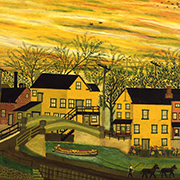
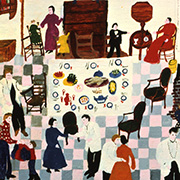
In 1942, Sidney Janis published his book They Taught Themselves: American Primitive Painters of the 20th Century. Later hailed as classic, this was the first study of its kind. Janis's book established the framework and foundation for the field of contemporary self-taught art as we know it today. In an introduction that feels remarkably fresh, the author grappled with issues that still confound scholars: nomenclature, quality and definitions. Relying as much as possible on his subjects' own words, he presented capsule biographies of 30 artists. Of these, five (Morris Hirshfield, John Kane, Grandma Moses, Joseph Pickett and Horace Pippin) are considered among the most important self-taught artists of the twentieth century, and an additional seven (Emile Branchard, Henry Church, William Doriani, Lawrence Lebduska, Israel Litwak, Patsy Santo and Patrick J. Sullivan), while not as well remembered, made significant contributions to the field in the first decades of that century. Although Alfred Barr, in his introduction to They Taught Themselves, gently chided Janis for being overly inclusive, the author's selections have, on the whole, held up remarkably well. As an initial attempt to codify a field then in its infancy, They Taught Themselves is today considered a beginning. But the book was, in its own time, the culmination of a fascination with the "primitive" that had gradually permeated the art world over the course of the two preceding decades. After World War I, which temporarily stifled international cultural activity, America began to grapple intently with the lessons of European modernism introduced at the 1913 Armory Show. Proclaiming as its motto "No Jury! No Prizes!" the Society of Independent Artists, incorporated in 1917 and supported by leading figures like Childe Hassam, Maurice Prendergast and William Glackens, made a concerted attempt to bring greater expressive freedom to the New York art scene. It was soon emulated by similar organizations in other cities. Although the embrace of self-taught artists was not explicitly part of the Independents' program, the Society's unjuried annual exhibitions provided a ready outlet for untrained painters, among them Emile Branchard and Patrick J. Sullivan. Inevitably, some forward-thinking artists and dealers began to make the same connection between unschooled talent and modernism that had earlier attracted Kandinsky and Picasso to Henri Rousseau. The New York dealer Stephan Bourgeois exhibited Branchard and later Lawrence Lebduska along with contemporary modernists such as Gaston Lachaise and George Ault. "The future," Bourgeois declared in 1923, "belongs to the Naives and the children." During the 1920s, interest in the work of contemporary self-taught painters was for the most part exceeded by interest in early American folk art and artifacts. Cutting-edge artists like Charles Demuth, Yasuo Kuniyoshi, Elie Nadelman and Charles Sheeler collected the older material, which was publicly exhibited at the Whitney Studio Club (the Whitney Museum's predecessor) in 1924. The dealer Edith Gregor Halpert, who represented Sheeler, Kuniyoshi and Nadelman, was prompted to focus professionally on folk art after the 1929 stock-market crash curtailed the demand for more expensive work by trained American and European masters. Halpert found a willing, and solvent, buyer in Abby Aldrich Rockefeller, whose patronage in turn helped legitimize the folk field. In 1931, Halpert established the American Folk Art Gallery as an offshoot of her Downtown Gallery. Works by trained and untrained artists, seen as complementary components of the modernist enterprise, were often exhibited side-by-side. A decisive step in the art world's embrace of self-taught painters came in 1927, when the artist Andrew Dasburg convinced the jury of the Carnegie Institute's prestigious Annual International Exhibition of Paintings to accept the work of a common laborer, John Kane. Kane's acceptance occasioned some nasty grumbling on the part of the many trained artists who were rejected by the Carnegie's jury, but Kane went on to prove his mettle, exhibiting at every subsequent International until his death in 1934. He was also included in "annuals" at the Art Institute of Chicago and the Cincinnati Art Museum, and in the first and second Biennial Exhibitions at the Whitney Museum (which was founded in 1931). In 1930, Duncan Phillips, a stalwart champion of modern art, purchased the first of several John Kane paintings for his Washington, D.C., museum. A key catalyst in legitimatizing the field of self-taught art was Holger Cahill, who worked as a curator at the Newark Museum and the Museum of Modern Art before being tapped, in 1935, to head up the Federal Art Project. (Edith Halpert's lover in the early 1930s, Cahill subsequently married Dorothy Miller, a curator at MoMA.) Cahill organized groundbreaking exhibitions of American Primitives and American Folk Sculpture at the Newark Museum in 1930 and 1931 respectively. But his most important curatorial effort was undoubtedly American Folk Art: The Art of the Common Man in America, an exhibition organized in 1932 at MoMA, where Cahill was serving as Acting Director. All three exhibitions focused on pre-twentieth-century material and intermingled utilitarian and non-utilitarian creations indiscriminately. In Cahill's view, it was all "art," regardless of its original context or the maker's intention. While Cahill clearly exerted a significant influence on the Museum of Modern Art, its founding Director, Alfred Barr, was himself an enthusiastic advocate of self-taught art who readily embraced twentieth-century exponents of the genre. In the decade following its establishment in 1929, MoMA included John Kane in no fewer than four surveys of contemporary trends, among them its fifth-anniversary exhibition, Modern Works of Art. The 1932 American Folk Art show was followed up by a 1938 survey of contemporary self-taught American and European artists,Masters of Popular Painting. In the catalogue for that exhibition, Barr described the self-taught field as one of the "major . . . movements of modern art," on a par with Cubism and Surrealism. Masters of Popular Painting was supplemented in 1939 by a showing of Unknown American Painters. Organized by Sidney Janis, a member of the museum's Advisory Committee, the Unknowns exhibition was a forerunner to They Taught Themselves. In 1941, when MoMA opened its first gallery devoted to the permanent collection, the selection was limited to the work of untrained painters. The Museum Bulletin at the time put forth the guiding premise that "Modern Primitives" (as they were then frequently called) were both more "international in character" than their trained American colleagues and more democratic, in that they "all express the straightforward, innocent and convincing vision of the common man." Barr thought the new display was an ideal way to introduce the American public to the broader tenets of modernism. As indicated by the oft-repeated phrase "common man," the modernist impulses of the 1920s had by the '30s melded with Depression-era populism. The adjective "popular" in the title Masters of Popular Painting was not intended to connote popularity, let alone commercial success, but rather was used as a synonym for "of the people." Untrained artists represented beliefs America needed in order to survive the Great Depression: democratic egalitarianism, self-made success and resilience in the face of adversity. These artists, plucked from obscurity by the arbiters of art-world trends, represented the melting-pot ideal: they came from all walks of life, all racial, religious and ethnic backgrounds; many of them were immigrants. In the catalogue for the Masters exhibition, Cahill accused traditional art critics of practicing "esthetic Calvinism" by confining their attentions to rarified individuals, ostensibly distinguished from "the great mass of the non-elect by a special sensitiveness." Janis equated unschooled artists with Abraham Lincoln, the iconic hero of the day who happened to be a favorite subject of many self--taught painters. "[Lincoln's] obscure beginnings, his silent struggles with knowledge and his open conflicts with life are their own," Janis wrote. The Depression had created a steady supply of potential self-taught artists (most of whom had previously been employed in other areas), as well as a demand for the grass-roots sensibilities they personified. Almost all the canonical American self-taught artists of the early twentieth century were "discovered" in the period between John Kane's 1927 debut and the publication of They Taught Themselves in 1942. Like aficionados of "outsider" art in the later twentieth century, those that pioneered the field in the 1930s took to the road (often unpaved in the deeper countryside) to ferret out hidden treasures. Cahill, who regularly went on scouting trips for Halpert, found the paintings of Joseph Pickett, a one-time carnival worker and shopkeeper, in the artist's hometown of New Hope, Pennsylvania, where they had languished unappreciated since his death in 1918. Cahill saw to it that three of Pickett's four surviving works went quickly into the collections of the Newark Museum, the Whitney and MoMA, which included the artist in both its 1932 and 1938 exhibitions of self-taught art. Among the many painters in that 1938 exhibition were some, like John Kane, who already had a track record, and others, such as the disabled World-War-I veteran Horace Pippin, who had only recently come to light. Lawrence Lebduska worked as a decorative muralist for the interior designer Elsie de Wolfe and had been exhibiting since the late 1920s, when he attracted the attention of the violinist and art patron Louis Kaufman. Emile Branchard, who began to paint while recovering from tuberculosis, was discovered by the dealer Stephen Bourgeois at the Society of Independent Artists in 1919. Patrick J. Sullivan likewise showed with the Independents, where his work caught the eyes of Sidney Janis and his wife Harriet in 1937. An unemployed housepainter, Sullivan created a small oeuvre of idiosyncratic, densely layered paintings that he called "parables in picture form." It is not clear exactly when Sidney and Harriet Janis began collecting, and ultimately championing, self-taught artists. Among modernist masterpieces that included paintings by Picasso, Matisse and Leger, the couple owned Henri Rousseau's famous canvas The Dream, and it may be that this inspired them to start looking for American counterparts to the "Douanier." By the time of the 1938 Masters show, Janis's interest was well-enough known that an itinerant collector named Louis Caldor was advised to bring him some amateur paintings he'd found in Upstate New York. They were by an elderly farmwife named Anna Mary Robertson Moses, later to become world famous as "Grandma" Moses. It was the dealer Hudson Walker who introduced Janis to the work of Morris Hirshfield--a retired clothing manufacturer and Janis?s foremost protégé. Around this time, Janis also became aware of the housepainter Patsy Santo, who was discovered by the artist Walt Kuhn at the Rutland [Vermont] State Fair in 1937. Israel Litwak, a laid-off cabinet-maker, was accorded the honor of a one-man show at the Brooklyn Museum in 1939. Josephine Joy, who attracted notice at an exhibition sponsored by the California Art Project, was among many self-taught artists (including Lebduska and William Doriani) supported by Depression-era government works programs, which accepted artists regardless of their professional qualifications. Janis found Doriani at the Washington Square Outdoor Art Mart, Gregorio Valdes in the back room of a Greenwich Village gallery, and Cleo Crawford when visiting a friend in New City, New York. Many of these artists were included in the 1939 Contemporary Unknowns show at MoMA, and all were accorded chapters in They Taught Themselves. The central roles played by the Carnegie, the Whitney, Duncan Phillips and other early enthusiasts notwithstanding, the importance of MoMA's commitment to self-taught artists cannot be overestimated. The museum counted among its trustees the wealthiest and most powerful collectors of the period: Stephen C. Clark, Marshall Field, A. Conger Goodyear, Mrs. Simon Guggenheim, Sam Lewishon, Henry Luce, William S. Palely, Mrs. John D. Rockefeller, Nelson Rockefeller and John Hay Whitney. Where MoMA led, dealers and collectors followed. At the time of John Kane's 1927 debut, there were few galleries interested in showing the work of an untrained housepainter, and Kane for the most part had to deal directly with potential customers. By the time of the artist's death in 1934, the situation had changed dramatically. Valentine Dudensing, a New York dealer who counted such luminaries as Mondrian and Matisse in his "stable," became the first representative of the Kane estate. The Philadelphia dealer Robert Carlen forged a successful relationship with Horace Pippin a year after his 1938 debut at MoMA. European emigré dealers such as J.B. Neumann and Otto Kallir arrived in America already aware of the connection between modernism and self-taught art. Kallir, best remembered for introducing the Austrian Expressionists to the U.S., launched Grandma Moses's career at the Galerie St. Etienne in 1940, and Neumann showed Litwak and Lebduska--alongside Munch, Klee, Kandinsky and Beckmann. Janis (who would open his own gallery in 1948) formed an alliance with the dealer Marie Harriman, wife of prominent Democratic politician Averell Harriman. Marie Harriman's gallery exhibited Branchard, Doriani, Pippin and Santo, and hosted a show of the They Taught Themselves group following the book's publication. The social cachet of collecting self-taught artists in the 1930s and early '40s was affirmed by celebrity buyers like Katherine Cornell, Hedy Lamarr, Charles Laughton, Clifford Odets, Cole Porter, Claude Rains, Edward G. Robinson and Helena Rubenstein. Nevertheless, and despite the undeniable human-interest appeal of the artists' colorful biographies, the press was never entirely enamored of the "primitive" trend. The Pittsburgh Sun Telegraph, egged on by a jealous local artist, declared that John Kane was a "fraud" because he had painted over a photograph. Damning with faint praise, a 1936 Lebduska review concluded that, "The large canvases would be [as] easy and fascinating to live with as a Persian rug, and the small ones could decorate the room of a fortunate child." Of Lebduska's 1939 show at the Dudensing gallery, the New York Post wrote, "Not very profound, but attractive." A relatively positive review of Doriani, by Edward Alden Jewell of the New York Times, lauded the artist's sense of "design" but added that, "His color is often ghastly." "Recognizing naiveté and honest, untutored expression of this sort, one may, at the same time, be prone to overrate it," a reviewer noted in reference to Horace Pippin's first New York exhibition in 1940. At best, the genre was (in the words of Times critic Howard Devree) "an interesting side alley of art." By the early 1940s, reviewers were complaining about a glut of "primitives" in the galleries; they seemed sick of the whole thing. Rising antipathy toward self-taught artists and resentment of the Museum of Modern Art's enormous influence on the art market came to a head in 1943, when Barr mounted a one-man show of paintings by Morris Hirshfield. The conservative Art Digest scathingly dubbed Hirshfield "The Master of the Two Left Feet," because (as Janis explained in They Taught Themselves) slipper samples were made only for left feet, and the artist followed a pattern familiar to him from his days as a garment manufacturer. "Unfortunately," wrote Peyton Boswell in the Digest, "the Museum of Modern Art has the vested power to 'make' any artist its lighthearted officials decide to 'take up.' While serious professional artists fight for the recognition that means life to them, the Modern fiddles away its resources building a precious cult around amateurism." Hirshfield was described as a "fumbling old man," and Emily Genauer of The World Telegram believed he had been pitifully "exploited for a stunt." "Enough is enough of an oddity," wrote another critic. The Hirshfield retrospective was one of MoMA's most reviled exhibitions ever, and it gave ammunition to Barr's adversaries on the Museum's Board. Stephen C. Clark, perceiving Barr as a threat to MoMA's dignity and viability, had him removed forthwith from his post as Director. Barr remained on in an advisory capacity, but the Museum's advocacy of self-taught artists was over. The artists chronicled in They Taught Themselves were products of an era that was coming to a close by the early 1940s. Many of them, elderly at the time of their discovery, were not even alive when the book was published, or died soon thereafter. Some, like Sullivan, went back to their original jobs as the economy improved and more or less stopped painting. Of the group, only Grandma Moses survived and went on to ever greater fame in the post-World-War-II period. But she was sui generis; arguably the first artist ever to be accorded "superstar" status by the general public, Moses was rarely taken seriously by the art-world elite. Self-taught art was no longer seen as part of the modern movement, and connoisseurs of American folk art tended to reject twentieth-century material. Untrained American artists continued to work in obscurity, but the "field" as such went into a protracted period of dormancy. The rediscovery and rebranding of these artists as "outsiders" was likewise a protracted process, spearheaded by such pioneering collectors as Michael and Julie Hall and Herbert Waide Hemphill, Jr., and demarcated by public phenomena like Roger Cardinal's 1972 book Outsider Art and the 1982 "Black Folk Art" exhibition at the Corcoran Gallery in Washington, D.C. Ensconced within specialized institutions such as the American Folk Art Museum and the annual Outsider Art Fair, self-taught art has gradually become a legitimate art-historical genre in its own right. And yet, the field remains hobbled by a seemingly inescapable paradox, separate and therefore inherently unequal. The "outsider" artists who found favor in the late twentieth century tended to lead more marginalized lives than their self-taught predecessors, and "outsider" art tends to depict inner visions rather than the external surroundings (landscapes, portraits and so on) featured in paintings by early twentieth-century self-taught artists. Nevertheless, it is hard to draw a clear-cut distinction, based either on biography or subject matter, between the two groups. More to the point, both groups represent similar ideals: Dubuffet's idea of an art untainted by "received culture" (the premise of "outsider" art's prototype, art brut) is the same holy grail sought by the original modernists in Rousseau and his American counterparts. Sidney Janis described the subjects of his book as "innocents" who "rarely learn from a developed painting culture, because it is far removed from their perceptions and, being removed, cannot touch them. Each creates his own world." According to the 1938 MoMA catalogue, "primitives" embody "absolute and unqualified purity." For all their alleged "innocence," however, self-taught artists then and subsequently often battled with harsh realities that included poverty, mental illness and alcoholism. Like all artists, self-taught painters were and are attuned to visual stimuli in their environments, absorbing influences on an ad-hoc basis. Contrary to Janis's belief that these artists lack the critical capacity to judge and learn from their own work, the best of them grow and develop just as trained artists do. The ideals that have historically been projected onto self-taught artists have little bearing on them or their work, but rather reflect the needs of a jaded art world. Fuzzy concepts like "innocence" and "purity" act as a shield for lapses in quality and at the same time prevent the work of the better artists from being studied as rigorously as it should be. These concepts keep self-taught artists in a cultural ghetto. The rupture that, sixty-five years ago, severed the field of self-taught art from the mainstream art world was produced by stresses resulting from America's attempt to absorb the lessons of European modernism. The more provincial members of the domestic art establishment felt they were being passed over, and they resented the ascendancy of self-taught artists, whom they believed to be unqualified. Those who dreamed that America would one day spawn a sophisticated modernist culture of its own were ashamed to think that Hirshfield was our answer to Picasso. Despite, or perhaps because of, their humble democratic roots, mid-century American art critics were particularly dismissive of "low brow" culture, including the so-called "art of the common man." Today, however, the concepts of "high" and "low" art have lost much of their former power and meaning. As the boundaries between "high" and "low" blur, the divide between self-taught and schooled artists likewise diminishes. All draw from an open-ended panoply of visual resources, and all must be judged, ultimately, by the same standards. It is time for self-taught artists to move out of the ghetto and be recognized as equals. We would like to express our heartfelt appreciation to all the lenders whose generosity made this exhibition possible, including Merrill C. Berman, Carroll Janis, Annette Kaufman and several anonymous collectors. Special thanks go to the Metropolitan Museum of Art, the Museum of Modern Art and the Whitney Museum of American Art, whose collections of self-taught art, now rarely on public view, document the close connection that once existed between these institutions and the self-taught field. Copies of Sidney Janis's book They Taught Themselves (236 pages, paperback), reprinted by Sanford Smith and Associates in 1999, may be purchased for $30. Postage and handling charges are $10; N.Y. residents, please also add sales tax. Checklist entries include references to the original edition of the Janis book and catalogue raisonné numbers, where applicable.