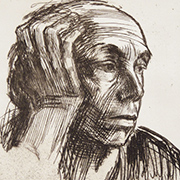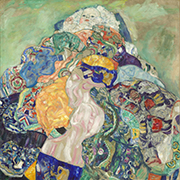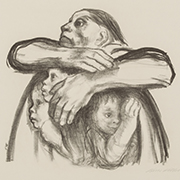

The Ins and Outs of Self-Taught Art
Reflections on a Shifting Field
January 10, 2012 - April 7, 2012
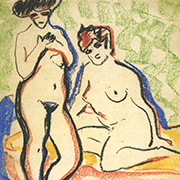
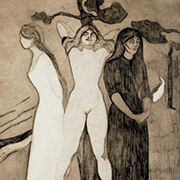
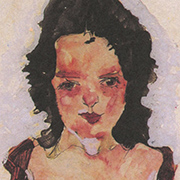
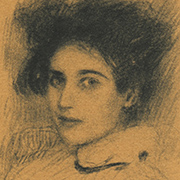
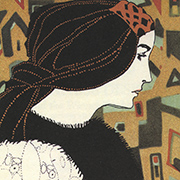
The Lady and the Tramp
Images of Women in Austrian and German Art
October 11, 2011 - December 30, 2011
Recent Acquisitions
(And Some Thoughts on the Current Art Market)
July 5, 2011 - September 30, 2011
Decadence & Decay
Max Beckmann, Otto Dix, George Grosz
April 12, 2011 - June 24, 2011
Self-Taught Painters in American 1800-1950
Revisiting the Tradition
January 11, 2011 - April 2, 2011
Marie-Louise Motesiczky
Paradise Lost & Found
October 12, 2010 - December 30, 2010
Recent Acquisitions
(And Some Thoughts on the Current Art Market)
July 13, 2010 - October 1, 2010
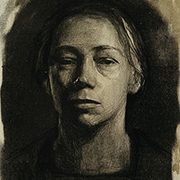
Käthe Kollwitz
A Portrait of the Artist
April 13, 2010 - June 25, 2010
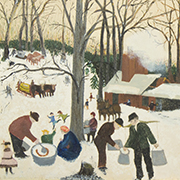
Seventy Years Grandma Moses
A Loan Exhibition Celebrating the 70th Anniversary of the Artist's "Discovery"
February 3, 2010 - April 3, 2010
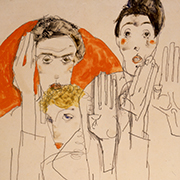
Egon Schiele as Printmaker
A Loan Exhibition Celebrating the 70th Anniversary of the Galerie St. Etienne
November 3, 2009 - January 23, 2010
From Brücke To Bauhaus
The Meanings of Modernity in Germany, 1905-1933
March 31, 2009 - June 26, 2009
They Taught Themselves
American Self-Taught Painters Between the World Wars
January 9, 2009 - March 14, 2009
Elephants We Must Never Forget
New Paintings Drawings and Prints by Sue Coe
October 14, 2008 - December 20, 2008
Recent Acquisitions
(And Some Thoughts on the Current Art Market)
June 24, 2008 - September 26, 2008
Hope or Menace?
Communism in Germany Between the World Wars
March 25, 2008 - June 13, 2008
Transforming Reality
Pattern and Design in Modern and Self-Taught Art
January 15, 2008 - March 8, 2008
Leonard Baskin
Proofs and Process
October 9, 2007 - January 5, 2008
Recent Acquisitions
(And Some Thoughts on the Current Art Market)
June 5, 2007 - September 28, 2007
Who Paid the Piper?
The Art of Patronage in Fin-de-Siècle Vienna
March 8, 2007 - May 26, 2007
Fairy Tale, Myth and Fantasy
Approaches to Spirituality in Art
December 7, 2006 - February 3, 2007
More Than Coffee was Served
Café Culture in Fin-de-Siècle Vienna and Weimar Germany
September 19, 2006 - November 25, 2006
Recent Acquisitions
(And Some Thoughts on the Current Art Market)
June 6, 2006 - September 8, 2006
Parallel Visions II
"Outsider" and "Insider" Art Today
April 5, 2006 - May 26, 2006
Ilija!
His First American Exhibtion
January 17, 2006 - March 18, 2006
Coming of Age
Egon Schiele and the Modernist Culture of Youth
November 15, 2005 - January 7, 2006
Sue Coe:
Sheep of Fools
September 20, 2005 - November 5, 2005
Recent Acquisitions
And Some Thoughts on the Current Art Market
June 7, 2005 - September 9, 2005
Every Picture Tells a Story
The Narrative Impulse in Modern and Contemporary Art
April 5, 2005 - May 27, 2005
65th Anniversary Exhibition, Part II
Self-Taught Artists
January 18, 2005 - March 26, 2005
65th Anniversary Exhibition, Part I
Austrian and German Expressionism
October 28, 2004 - January 8, 2005
Sue Coe: Bully: Master of the Global Merry-Go-Round and Recent Acquisitions
(And Some Thoughts on the Current Art Market)
June 8, 2004 - October 16, 2004
Animals & Us
The Animal in Contemporary Art
April 1, 2004 - May 22, 2004
Henry Darger
Art and Myth
January 15, 2004 - March 20, 2004
Body and Soul
Expressionism and the Human Figure
October 7, 2003 - January 3, 2004
Recent Acquisitions
(And Some Thoughts on the Current Art Market)
June 24, 2003 - September 12, 2003
In Search of the "Total Artwork"
Viennese Art and Design 1897–1932
April 8, 2003 - June 14, 2003
Russia's Self-Taught Artists
A New Perspective on the "Outsider"
January 14, 2003 - March 29, 2003
Käthe Kollwitz:
Master Printmaker
October 1, 2002 - January 4, 2003
Recent Acquisitions
(And Some Thoughts on the Current Art Market)
June 25, 2002 - September 20, 2002
Workers of the World
Modern Images of Labor
April 2, 2002 - June 15, 2002
Grandma Moses
Reflections of America
January 15, 2002 - March 16, 2002
Gustav Klimt/Egon Schiele/Oskar Kokoscha
From Art Nouveau to Expressionism
November 23, 2001 - January 5, 2002
The "Black-and-White" Show
Expressionist Graphics in Austria & Germany
September 20, 2001 - November 10, 2001
Recent Acquisitions (And Some Thoughts on the Current Art Market)
June 26, 2001 - September 7, 2001
Art with an Agenda
Politics, Persuasion, Illustration and Decoration
April 10, 2001 - June 16, 2001
"Our Beautiful and Tormented Austria!": Art Brut in the Land of Freud
January 18, 2001 - March 17, 2001
The Tragedy of War
November 16, 2000 - January 6, 2001
The Expressionist City
September 19, 2000 - November 4, 2000
Recent Acquisitions (And Some Thoughts on the Current Art Market)
June 20, 2000 - September 8, 2000
From Façade to Psyche
Turn-of-the-Century Portraiture in Austria & Germany
March 28, 2000 - June 10, 2000
European Self-Taught Art
Brut or Naive?
January 18, 2000 - March 11, 2000
Saved From Europe
In Commemoration of the 60th Anniversary of the Galerie St. Etienne
November 6, 1999 - January 8, 2000
The Modern Child
(Images of Children in Twentieth-Century Art)
September 14, 1999 - November 6, 1999
Recent Acquisitions
(And a Look at Sixty Years of Art Dealing)
June 15, 1999 - September 3, 1999
Sue Coe: The Pit
The Tragical Tale of the Rise and Fall of a Vivisector
March 30, 1999 - June 5, 1999
Henry Darger and His Realms
January 14, 1999 - March 13, 1999
Becoming Käthe Kollwitz
An Artist and Her Influences
November 17, 1998 - December 31, 1998
George Grosz - Elfriede Lohse-Wächtler
Art & Gender in Weimar Germany
September 23, 1998 - November 11, 1998
Recent Acquisitions
(And Some Thoughts About Looted Art)
June 9, 1998 - September 11, 1998
Taboo
Repression and Revolt in Modern Art
March 26, 1998 - May 30, 1998
Sacred & Profane
Michel Nedjar and Expressionist Primitivism
January 13, 1998 - March 14, 1998
Egon Schiele (1890-1918)
Master Draughtsman
November 18, 1997 - January 3, 1998
The New Objectivity
Realism in Weimar-Era Germany
September 16, 1997 - November 8, 1997
Recent Acquisitions
A Question of Quality
June 10, 1997 - September 5, 1997
Käthe Kollwitz - Lea Grundig
Two German Women & The Art of Protest
March 25, 1997 - May 31, 1997
That Way Madness Lies
Expressionism and the Art of Gugging
January 14, 1997 - March 15, 1997
The Viennese Line
Art and Design Circa 1900
November 18, 1996 - January 4, 1997
Emil Nolde - Christian Rohlfs
Two German Expressionist Masters
September 24, 1996 - November 9, 1996
Breaking All The Rules
Art in Transition
June 11, 1996 - September 6, 1996
Sue Coe's Ship of Fools
March 26, 1996 - May 24, 1996
New York Folk
Lawrence Lebduska, Abraham Levin, Isreal Litwak
January 16, 1996 - March 16, 1996
The Fractured Form
Expressionism and the Human Body
November 15, 1995 - January 6, 1996
From Left to Right
Social Realism in Germany and Russia, Circa 1919-1933
September 19, 1995 - November 4, 1995
Recent Acquisitions
June 20, 1995 - September 8, 1995
On the Brink 1900-2000
The Turning of Two Centuries
March 28, 1995 - May 26, 1995
Earl Cummingham - Grandma Moses
Visions of America
January 17, 1995 - March 18, 1995
Three Berlin Artists of the Weimar Era: Hannah Höch, Käthe Kollwitz, Jeanne Mam
September 13, 1994 - November 5, 1994
55th Anniversary Exhibition in Memory of Otto Kallir
June 7, 1994 - September 2, 1994
Drawn to Text: Comix Artists as Book Illustrators
May 15, 1994 - January 7, 1995
Sue Coe: We All Fall Down
March 29, 1994 - May 27, 1994
The Forgotten Folk Art of the 1940's
January 18, 1994 - March 19, 1994
Symbolism and the Austrian Avant Garde
Klimt, Schiele and their Contemporaries
November 16, 1993 - January 8, 1994
Art and Politics in Weimar Germany
September 14, 1993 - November 6, 1993
Recent Acquisitions
June 8, 1993 - September 3, 1993
The "Outsider" Question
Non-Academic Art from 1900 to the Present
March 23, 1993 - May 28, 1993
The Dance of Death
Images of Mortality in German Art
January 19, 1993 - March 13, 1993
Art Spiegelman
The Road to Maus
November 17, 1992 - January 9, 1993
Käthe Kollwitz
In Celebration of the 125th Anniversary of the Artist's Birth
September 15, 1992 - November 7, 1992
Naive Visions/Art Nouveau and Expressionism/Sue Coe: The Road to the White House
May 19, 1992 - September 4, 1992
Richard Gerstl/Oskar Kokoschka
March 17, 1992 - May 9, 1992
Scandal, Outrage, Censorship
Controversy in Modern Art
January 21, 1992 - March 7, 1992
Viennese Graphic Design
From Secession to Expressionism
November 19, 1991 - January 11, 1992
The Expressionist Figure
September 10, 1991 - November 9, 1991
Recent Acquisitions
Themes and Variations
May 14, 1991 - August 16, 1991
Sue Coe Retrospective
Political Document of a Decade
March 12, 1991 - May 5, 1991
Gustav Klimt, Egon Schiele, Oskar Kokoschka
Watercolors, drawings and prints
January 22, 1991 - March 2, 1991
Egon Schiele
November 13, 1990 - January 12, 1991
Lovis Corinth
A Retrospective
September 11, 1990 - November 3, 1990
Recent Acquisitions
June 12, 1990 - August 31, 1990
Max Klinger, Käthe Kollwitz, Alfred Kubin
A Study in Influences
March 27, 1990 - June 2, 1990
The Narrative in Art
January 23, 1990 - March 17, 1990
Grandma Moses
November 14, 1989 - January 13, 1990
Sue Coe
Porkopolis--Animals and Industry
September 19, 1989 - November 4, 1989
Galerie St. Etienne
A History in Documents and Pictures
June 20, 1989 - September 8, 1989
Gustav Klimt
Paintings and Drawings
April 11, 1989 - June 10, 1989
Fifty Years Galerie St. Etienne: An Overview
February 14, 1989 - April 1, 1989
Folk Artists at Work
Morris Hirshfield, John Kane and Grandma Moses
November 15, 1988 - January 14, 1989
Recent Acquisitions and Works From the Collection
June 14, 1988 - September 16, 1988
From Art Nouveau to Expressionism
April 12, 1988 - May 27, 1988
Three Pre-Expressionists
Lovis Corinth Käthe Kollwitz Paula Modersohn-Becker
January 26, 1988 - March 12, 1988
Käthe Kollwitz
The Power of the Print
November 17, 1987 - January 16, 1988
Recent Acquisitions and Works From the Collection
April 7, 1987 - October 31, 1987
Folk Art of This Century
February 10, 1987 - March 28, 1987
Oskar Kokoschka and His Time
November 25, 1986 - January 31, 1987
Viennese Design and Wiener Werkstätte
September 23, 1986 - November 8, 1986
Gustav Klimt/Egon Schiele/Oskar Kokoschka
Watercolors, Drawings and Prints
May 27, 1986 - September 13, 1986
Expressionist Painters
March 25, 1986 - May 10, 1986
Käthe Kollwitz/Paula Modersohn-Becker
January 28, 1986 - March 15, 1986
The Art of Giving
December 3, 1985 - January 18, 1986
Expressionists on Paper
October 8, 1985 - November 23, 1985
European and American Landscapes
June 4, 1985 - September 13, 1985
Expressionist Printmaking
Aspects of its Genesis and Development
April 1, 1985 - May 24, 1985
Expressionist Masters
January 18, 1985 - March 23, 1985
Arnold Schoenberg's Vienna
November 13, 1984 - January 5, 1985
Grandma Moses and Selected Folk Paintings
September 25, 1984 - November 3, 1984
American Folk Art
People, Places and Things
June 12, 1984 - September 14, 1984
John Kane
Modern America's First Folk Painter
April 17, 1984 - May 25, 1984
Eugène Mihaesco
The Illustrator as Artist
February 28, 1984 - April 7, 1984
Early Expressionist Masters
January 17, 1984 - February 18, 1984
Paula Modersohn-Becker
Germany's Pioneer Modernist
November 15, 1983 - January 7, 1984
Gustav Klimt
Drawings and Selected Paintings
September 20, 1983 - November 5, 1983
Early and Late
Drawings, Paintings & Prints from Academicism to Expressionism
June 1, 1983 - September 2, 1983
Alfred Kubin
Visions From The Other Side
March 22, 1983 - May 7, 1983
20th Century Folk
The First Generation
January 18, 1983 - March 12, 1983
Grandma Moses
The Artist Behind the Myth
November 15, 1982 - January 8, 1983
Kollwitz
The Artist as Printmaker
September 28, 1982 - November 6, 1982
Aspects of Modernism
June 1, 1982 - September 3, 1982
The Human Perspective
Recent Acquisitions
March 16, 1982 - May 15, 1982
19th and 20th Century European and American Folk Art
January 19, 1982 - March 6, 1982
The Folk Art Tradition
Naïve Painting in Europe and the United States
November 17, 1981 - January 9, 1982
Austria's Expressionism
April 21, 1981 - May 30, 1981
Eugène Mihaesco
His First American One-Man Show
March 3, 1981 - April 11, 1981
Gustav Klimt, Egon Schiele
November 12, 1980 - December 27, 1980
Summer Exhibition
June 17, 1980 - October 31, 1980
Kollwitz: The Drawing and The Print
May 1, 1980 - June 10, 1980
40th Anniversary Exhibition
November 13, 1979 - December 28, 1979
American Primitive Art
November 22, 1977
Käthe Kollwitz
December 1, 1976
Neue Galerie-Galerie St. Etienne
A Documentary Exhibition
May 1, 1976
Martin Pajeck
January 27, 1976
Georges Rouault and Frans Masereel
April 29, 1972
Branko Paradis
December 1, 1971
Käthe Kollwitz
February 3, 1971
Egon Schiele
The Graphic Work
October 19, 1970
Gustav Klimt
March 20, 1970
Friedrich Hundertwasser
May 6, 1969
Austrian Art of the 20th Century
March 21, 1969
Egon Schiele
Memorial Exhibition
October 31, 1968
Yugoslav Primitive Art
April 30, 1968
Alfred Kubin
January 30, 1968
Käthe Kollwitz
In the Cause of Humanity
October 23, 1967
Abraham Levin
September 26, 1967
Karl Stark
April 5, 1967
Gustav Klimt
February 4, 1967
The Wiener Werkstätte
November 16, 1966
Oskar Laske
October 25, 1965
Käthe Kollwitz
May 1, 1965
Egon Schiele
Watercolors and Drawings from American Collections
March 1, 1965
25th Anniversary Exhibition
Part II
November 21, 1964
25th Anniversary Exhibition
Part I
October 17, 1964
Mary Urban
June 9, 1964
Werner Berg, Jane Muus and Mura Dehn
May 5, 1964
Eugen Spiro
April 4, 1964
B. F. Dolbin
Drawings of an Epoch
March 3, 1964
Austrian Expressionists
January 6, 1964
Joseph Rifesser
December 3, 1963
Panorama of Yugoslav Primitive Art
October 21, 1963
Joe Henry
Watercolors of Vermont
May 1, 1963
French Impressionists
March 8, 1963
Grandma Moses
Memorial Exhibition
November 26, 1962
Group Show
October 15, 1962
Ernst Barlach
March 23, 1962
Martin Pajeck
February 24, 1962
Paintings by Expressionists
January 27, 1962
Käthe Kollwitz
November 11, 1961
Grandma Moses
September 7, 1961
My Friends
Fourth Biennial of Pictures by American School Children
May 27, 1961
Raimonds Staprans
April 17, 1961
Gustav Klimt, Egon Schiele, Oskar Kokoschka and Alfred Kubin
March 14, 1961
Marvin Meisels
January 23, 1961
Egon Schiele
November 15, 1960
My Life's History
Paintings by Grandma Moses
September 12, 1960
Watercolors and Drawings by Austrian Artists from the Dial Collection
May 2, 1960
Martin Pajeck
February 29, 1960
Eugen Spiro
February 6, 1960
Käthe Kollwitz
December 14, 1959
Josef Scharl
Last Paintings and Drawings
November 11, 1959
European and American Expressionists
September 22, 1959
Our Town
One Hundred Paintings by American School Children
May 23, 1959
Marvin Meisels and Martin Pajeck
May 1, 1959
Gustav Klimt
April 1, 1959
Käthe Kollwitz
January 12, 1959
Oskar Kokoschka
October 28, 1958
Village Life in Guatemala
Paintings by Andres Curuchich
June 3, 1958
Two Unknown American Expressionists
Paintings by Marvin Meisels and Martin Pajeck
April 28, 1958
Paula Modersohn-Becker
March 15, 1958
The Great Tradition in American Painting
American Primitive Art
January 20, 1958
Jules Lefranc and Dominique Lagru
Two French Primitives
November 18, 1957
Margret Bilger
October 22, 1957
The Four Seasons
One Hundred Paintings by American School Children
June 11, 1957
Grandma Moses
May 6, 1957
Alfred Kubin
April 3, 1957
Franz Lerch
March 2, 1957
Egon Schiele
January 21, 1957
Josef Scharl
Memorial Exhibition
November 17, 1956
Irma Rothstein
May 19, 1956
Käthe Kollwitz
April 16, 1956
A Tribute to Grandma Moses
November 28, 1955
As I See Myself
One Hundred Paintings by American School Children
May 20, 1955
Juan De'Prey
April 19, 1955
Erich Heckel
March 29, 1955
Freddy Homburger
March 2, 1955
Masters of the 19th Century
January 18, 1955
Oskar Kokoschka
November 29, 1954
Isabel Case Borgatta and Josef Scharl
October 12, 1954
James N. Rosenberg and Eugen Spiro
April 30, 1954
Per Krogh
April 2, 1954
Cuno Amiet
February 16, 1954
Eniar Jolin
January 14, 1954
Irma Rothstein
December 8, 1953
Josef Scharl
November 11, 1953
Grandma Moses
October 21, 1953 - October 24, 1953
Wilhelm Kaufmann
September 30, 1953
Lovis Corinth, Oskar Kokoschka and Egon Schiele
May 27, 1953
A Grandma Moses Album
Recent Paintings, 1950-1953
April 15, 1953
Streeter Blair
American Primitive
February 26, 1953
Paintings on Glass
Austrian Religious Folk Art of the 17th to 19th Centuries
December 4, 1952
Hasan Kaptan
Paintings of a Ten-Year-Old Turkish Painter
October 29, 1952
Margret Bilger
May 10, 1952
American Natural Painters
March 31, 1952
Ten Years of New York Concert Impressions by Eugen Spiro; Four New Paintings by
January 26, 1952
I-Fa-Wei
Watercolors of New York by a Chinese Artist
December 1, 1951
Käthe Kollwitz
October 25, 1951
Drawings and Watercolors by Austrian Children
May 21, 1951
Grandma Moses
Twenty-Five Masterpieces of Primitive Art
March 17, 1951
Roswitha Bitterlich
January 18, 1951
Oskar Laske
Watercolors of Vienna and the Salzkammergut
October 14, 1950
Tenth Anniversary Exhibition
Part II
May 11, 1950
Austrian Art of the 19th Century
From Wadlmüller to Klimt
April 1, 1950
Chiao Ssu-Tu
February 18, 1950
Anton Faistauer
January 1, 1950
Tenth Anniversary Exhibition
Part I
November 30, 1949
Autograph Exhibition
October 26, 1949
Gladys Wertheim Bachrach
May 24, 1949
Oskar Kokoschka
March 30, 1949
Eugen Spiro
February 19, 1949
Frans Masereel
January 13, 1949
Ten Years Grandma Moses
November 22, 1948
Käthe Kollwitz
Masterworks
October 18, 1948
American Primitives
June 3, 1948
Egon Schiele
Memorial Exhibition
April 5, 1948
Miriam Richman
February 7, 1948
Vally Wieselthier
Memorial Exhibition
January 10, 1948
Christmas Exhibition
December 4, 1947
Fritz von Unruh
November 10, 1947
Käthe Kollwitz
October 4, 1947
Grandma Moses
May 17, 1947
Lovis Corinth
April 16, 1947
Hugo Steiner-Prag
March 15, 1947
Mark Baum
January 11, 1947
Eugen Spiro
November 25, 1946
Henri de Toulouse-Lautrec
May 17, 1946
Ladis W. Sabo
Paintings by a New Primitive Artist
April 8, 1946
Georges Rouault
The Graphic Work
February 26, 1946
Käthe Kollwitz
Memorial Exhibition
November 21, 1945
Fred E. Robertson
Paintings by an American Primitive
June 13, 1945
Max Liebermann
The Graphic Work
April 18, 1945
Vienna through Four Centuries
March 1, 1945
Eugen Spiro
January 20, 1945
Grandma Moses
New Paintings
December 5, 1944
Käthe Kollwitz
Part II
October 26, 1944
A Century of French Graphic Art
From Géricault to Picasso
September 28, 1944
Max Liebermann
Memorial Exhibition
June 9, 1944
Juan De'Prey
Paintings by a Self-Taught Artist from Puerto Rico
May 6, 1944
Abraham Levin
April 15, 1944
Lesser Ury
Memorial Exhibition
March 21, 1944
Grandma Moses
Paintings by the Senior of the American Primitives
February 9, 1944
Betty Lane
January 11, 1944
WaIt Disney Cavalcade
December 9, 1943
Käthe Kollwitz
Part I
November 3, 1943
Will Barnet
September 29, 1943
Lovis Corinth
May 26, 1943
Josephine Joy
Paintings by an American Primitive
May 3, 1943
Oskar Kokoschka
Aspects of His Art
March 31, 1943
Eugen Spiro
February 13, 1943
Seymour Lipton
January 18, 1943
Illuminated Gothic Woodcuts
Printed and Painted, 1477-1493
December 5, 1942
Abraham Levin
November 4, 1942
Walt Disney Originals
September 23, 1942
Documents which Relate History
Documents of Historical Importance and Landmarks of Human Development
June 10, 1942
Honoré Daumier
April 29, 1942
Bertha Trabich
Memorial Exhibition of a Russian-American Primitive
March 25, 1942
Alfred Kubin
Master of Drawing
December 4, 1941
Egon Schiele
November 7, 1941
Betty Lane
June 3, 1941
Flowers from Old Vienna
18th and Early 19th Century Flower Painting
May 7, 1941
Weavings by Navaho and Hopi Indians and Photos of Indians by Helen M. Post
January 29, 1941
Georg Merkel
November 7, 1940
What a Farm Wife Painted
Works by Mrs. Anna Mary Moses
October 9, 1940
Saved from Europe
Masterpieces of European Art
July 1, 1940
American Abstract Art
May 22, 1940
Franz Lerch
May 1, 1940
Wilhelm Thöny
April 3, 1940
French Masters of the 19th and 20th Centuries
February 29, 1940
H. W. Hannau
Metropolis, Photographic Studies of New York
February 2, 1940
Oskar Kokoschka
January 9, 1940
Austrian Masters
November 13, 1939
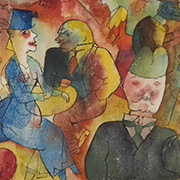
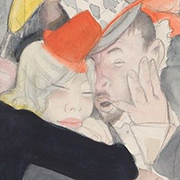
THE LADY AND THE TRAMP
Images of Women in Austrian and German Art
Beckmann, Max
Corinth, Lovis
Dix, Otto
Grosz, George
Grundig, Lea
Heckel, Erich
Kirchner, Ernst Ludwig
Klimt, Gustav
Klinger, Max
Kokoschka, Oskar
Kollwitz, Käthe
Kubin, Alfred
Modersohn-Becker, Paula
Motesiczky, Marie-Louise
Mueller, Otto
Pechstein, Hermann Max
Schiele, Egon
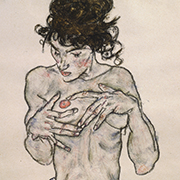
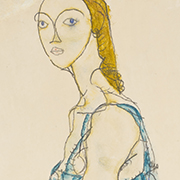
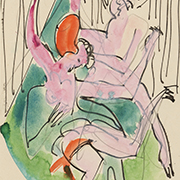
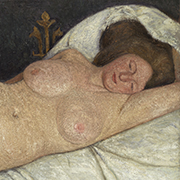
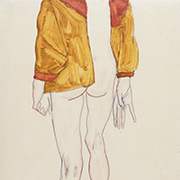
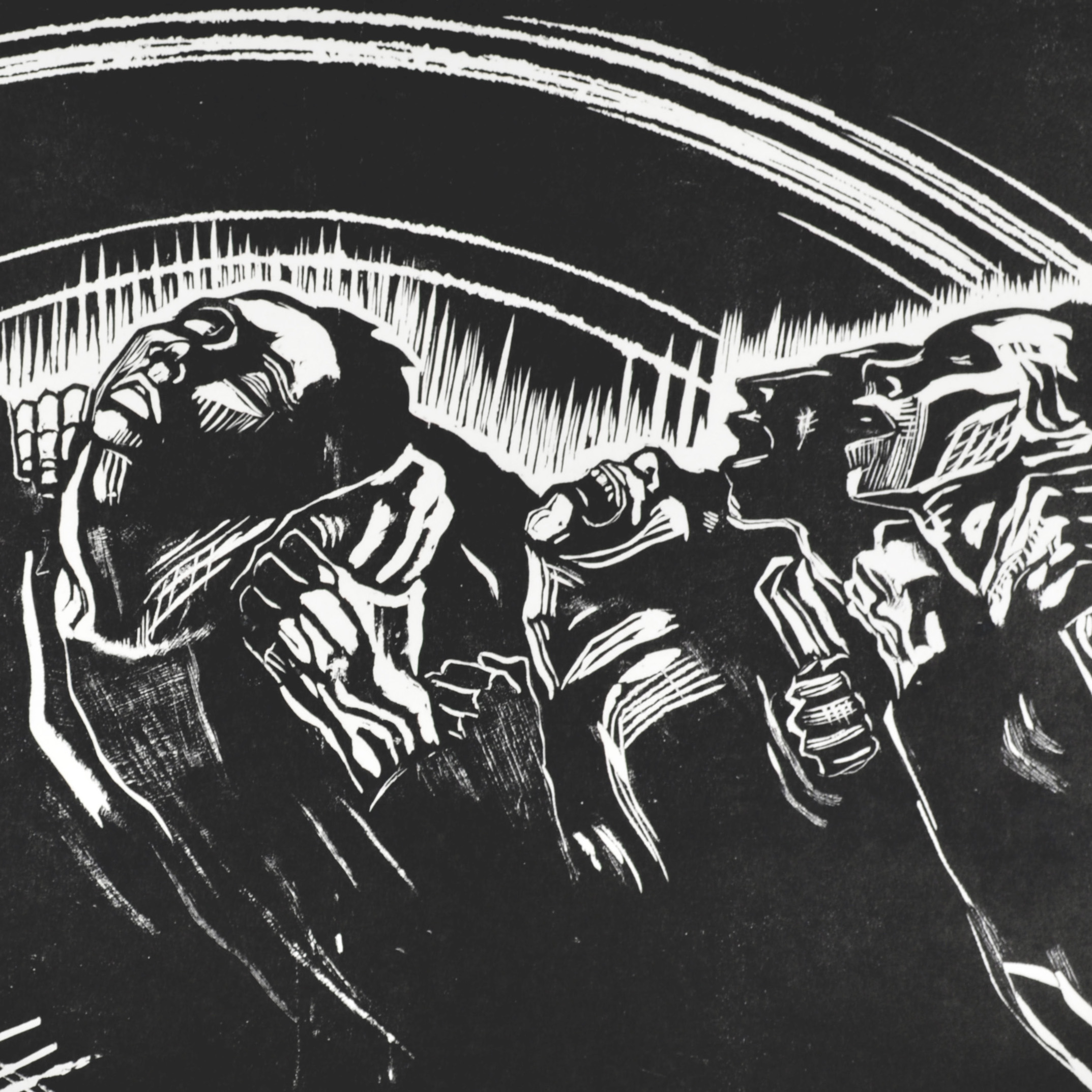
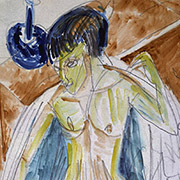
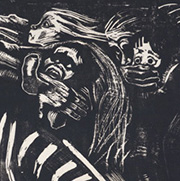
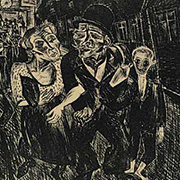
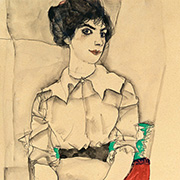
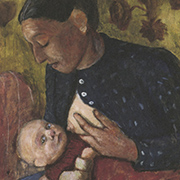
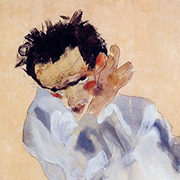
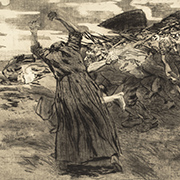
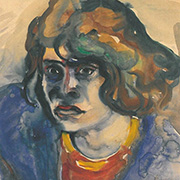
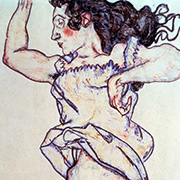
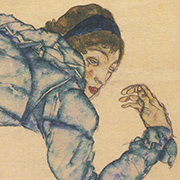
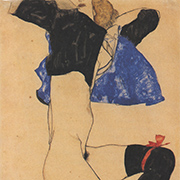
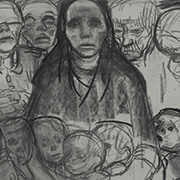
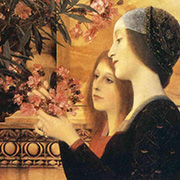
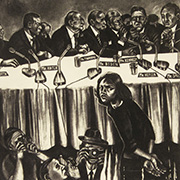
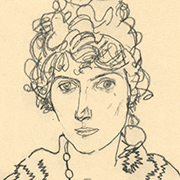
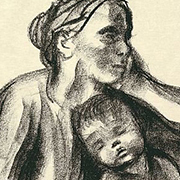
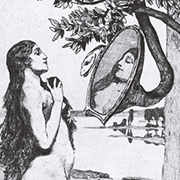
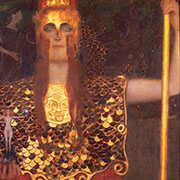
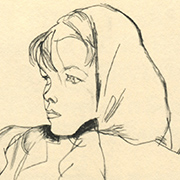
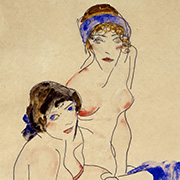
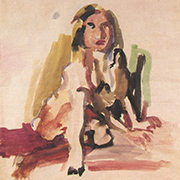
In the early years of the twentieth century, artists, writers, scientists and philosophers in Central Europe were preoccupied with what was commonly referred to as the "Woman Question." The changing roles of men and women in industrial society had spawned both the women’s emancipation movement and a plethora of studies on gender difference, many of which purported to offer “objective” proof of female inferiority. Riffing on the latest scientific discoveries, men opined that evolution had hard-wired women to be physically weaker, stupider and more submissive. Many of these misogynistic theories were united in Otto Weininger’s hugely popular 1903 tract Sex and Character. “In…the absolute female,” Weininger wrote, “there are no logical and ethical phenomena, and therefore the ground for the assumption of a soul is absent.” Of particular concern to fin-de-siècle men was female sexuality. “The woman is devoted totally to sexual matters,” Weininger explained, “that is to say, to the spheres of begetting and reproduction.” She was, essentially, all vagina and no brain. However other theorists, including Sigmund Freud, held that libido was an inherently masculine trait, and that sexual desire in a woman was abnormal. “Healthy” women successfully sublimated their erotic instincts in the service of bearing and raising children. This line of thought affirmed the age-old Christian paradigms of the “Madonna” and the “whore,” as exemplified by the Virgin Mary and Eve, the first sinner. Women were either asexual maternal types, or evil nymphomaniacs. The Madonna/whore dichotomy forms a recurrent leitmotif in the work of Gustav Klimt. His famous portraits of Viennese society ladies look like Byzantine or Russian religious icons. Small faces peek out from vast expanses of ornamentation, which not only conceal the women’s bodies but render them flat and virtually sexless. The subjects’ erotic power is subsumed within a sensuous decorative surround. In Klimt’s allegorical paintings and many of his studio drawings, on the other hand, sexuality is addressed in an extremely forthright manner. Often the women appear lost in an erotic trance, seemingly oblivious to their charms, yet nonetheless ruled by them. Writing enthusiastically about Klimt’s nudes, the Viennese critic Hermann Bahr echoed Weininger: “Everything about the woman belongs to lust,” he wrote. “Every part of woman is ‘sex’.” Klimt did not shy away from depicting “taboo” subjects such as masturbation or lesbian couplings, but the unabashed beauty of these works kept their erotic power in check. The nudes’ frequently supine positions reinforced their passive objecthood, and even in the artist’s most abstract renderings, foreshortening anchored the female subjects in their own separate spaces, thereby securely pinioning them before the gaze of the (presumptively) male viewer. Egon Schiele, on the other hand, willfully violated every aesthetic device that had traditionally been used to contain the nude’s innate eroticism. In his drawings, recumbent figures are frequently depicted vertically rather than horizontally, tipping forward so as to breach the previously sacrosanct boundary between female object and male subject. Schiele’s nudes, especially in the years 1910-15, are seldom beautiful in the usual sense. Body parts are lopped at disconcerting locations and angles, contours are ragged, lines jagged and fevered. Color serves a purely expressive function: it does not hew to the volumes of a three-dimensional body, nor does it observe any other laws of nature. So radical were Schiele’s transgressions of standard artistic practice in his representations of the female nude that some of these works remain controversial to this day. Like Klimt’s, Schiele’s drawings of the nude were very different in outlook from his formal portraits of women. Unlike Klimt, Schiele evidenced a persistent interest in the female personality, and his portraits deepened in incisiveness and sensitivity after his marriage in 1915. The doe-eyed, lovelorn Wally, the elegant ingénue Elisabeth Lederer, and Schiele’s fearsome, slightly depressed mother, all come off as complex, complete human beings—the antitheses of the “soulless” creatures described by Weininger. Curiously, as Schiele’s portraits of women increased in complexity, his renderings of the nude became more conventional. His lines became smoother, more classically beautiful. Though he still sometimes employed skewed viewpoints and disconcerting perspectives, the artist’s use of foreshortening and the rounded contours in his 1917-18 drawings created a palpable illusion of three-dimensional volume. Many of the late nudes were studies for contemporaneous allegories, and so the figures often represented generic “every-women” rather than distinctive individuals. Having fearlessly explored female sexuality in his early twenties, Schiele now reverted to the old Madonna/whore paradigm: the proper bourgeois “lady” had a soul; the naked “tramp” was by comparison a cipher. Female artists in the early twentieth century were by no means immune to prevalent gender stereotypes. Käthe Kollwitz, internalizing the common view that professionally ambitious women were “hermaphrodites,” acknowledged that “the tinge of masculinity within me helped me in my work.” Many feminists advocated employment opportunities only for women (such as widows, orphans and “spinsters”) who through misfortune were denied male providers. Kollwitz’s father encouraged her to pursue artistic training because he thought she was too ugly to find a husband. She, for her part, bemoaned the silliness of her female colleagues, many of whom were merely biding their time in art school as a prelude to marriage. Women were not admitted to the official art academies in Germany or Austria until after World War I, and the separate female art schools were for the most part distinctly inferior. To preserve their virginity, bourgeois girls at the turn of the last century were kept largely ignorant of sexual matters. Because women could as a result study life drawing only at the private academies Julian and Colarossi in Paris, many foreigners (including Kollwitz and Paula Modersohn-Becker) traveled there to study. Lack of experience in drawing naked models, as well as relative unease with her own sexuality, are reflected in the work of Kollwitz and many other female artists of her generation. The nude is “still foreign to me,” she wrote in 1919, when she was already in her fifties. “Only the total attitude and the face and hands speak to me.” Although Kollwitz did produce a small, “secret” body of erotic drawings in response to a short-lived extra-marital affair, Freud would have approved of the way in which she on the whole sublimated her sexuality in the service of motherhood. Many have commented that Kollwitz’s depictions of mothers are her only happy works. Nurturing the seed of future generations was woman’s primary duty, making her also a powerful crusader for social justice and a promoter of pacifism. For Kollwitz, the roles of activist, artist and mother were integrally connected. “As you, the children of my body, have been my tasks,” she told her son Hans, “so too are my other works.” She remained rooted in a biological concept of femininity that was strongly conditioned by contemporary social imperatives. Paula Modersohn-Becker was far more skeptical about the virtues of motherhood. The peasant mothers in her paintings and drawings seem worn down by narrowly circumscribed lives. Their children are like little aliens, lost in separate worlds of fantasy or fear. Of course when Modersohn-Becker created these works she had never really experienced motherhood herself, nor would she. Married in 1901 to the much older painter Otto Modersohn, she soon chafed at his attempts to control her artistic and personal agenda. Recognizing that marriage was at the time incompatible with creative independence, she fled to Paris in 1906. Unfortunately, without support from her husband or family, Paula could not last long, and about a year later Otto brought her back to Germany. She died in November 1907, several days after giving birth to their daughter. Her last words were “Too bad.” Male attempts to force women into the increasingly untenable molds of “lady” or “tramp” spawned a number of debasing moral clichés. Men did not necessarily condemn prostitution, so long as the “tramps” remained socially and economically beholden to them. For example, Max Klinger’s 1884 etching cycle, A Life, chronicles the path of a woman who, after being abandoned by her lover, takes to the stage (at the time considered a compromising vocation), then to the street and finally descends Into the Gutter! She is eventually redeemed by Christ before falling Back into Nothingness in the final plate. Male viewers were prepared to offer sympathy in exchange for female humility and loss. On the other hand, unbridled female sexuality was perceived as a threat. Images of deadly temptresses turn up repeatedly in the early work of Alfred Kubin and in the many popular fin-de-siècle representations of Judith, the Old Testament heroine who seduces and then decapitates Holofernes. Oskar Kokoschka presented a stark iteration of the theme in his 1909 drama Murderer, Hope of Women: if you were a man, it was kill or be killed. Beyond the Madonna/whore divide lay a deeper philosophical chasm. For centuries the male had been associated with civilization, culture, spirituality and intelligence, and the female with primitivism, nature, lust and instinct. While the former qualities were for the most part considered positive and the latter qualities negative, there was a contrarian line of thought, derived from the eighteenth-century writings of Jean-Jacques Rousseau, that idealized the “noble savage.” In the late nineteenth century, as European intellectuals grew increasingly dissatisfied with “rational” civilization, a cult of the “primitive” emerged. Rebelling against bourgeois norms, Expressionists such as Kokoschka and Ernst Ludwig Kirchner educated themselves at local ethnographic museums, appropriating the stylized forms and bright colors of tribal art. Posing their naked models outdoors in the countryside near Dresden, the Brücke artists achieved a perfect synthesis of primitivism, nature and female sexuality. Hermann Max Pechstein and Emil Nolde even traveled to the South Seas in pursuit of exotica, and Otto Mueller joined a band of Gypsies, intrigued by the women’s shameless nudity. Female dancers and circus performers, who likewise embodied uninhibited sensuality, were popular both on the stage and as artistic subjects. Woman thus became the emblem of man’s revolt against convention without in any sense being divested of her inferior cultural associations. Artists’ attempts to recreate a primitive idyll beyond the reaches of modern industrial society were doomed to failure. The city was the engine of economic growth and consequently an unavoidable center of the art market. Two years after the Brücke group relocated from Dresden to Berlin in 1911, it lost its communal integrity and disbanded. Kirchner, nonetheless, was inspired in Berlin to produce some of his strongest works. The artist is justly celebrated for his depictions of sophisticated urban streetwalkers, although his attitude toward his subjects remains difficult to decode. It is not clear whether these seductive sex merchants are symbols of modern alienation, or rather an extension of Kirchner’s fascination with erotic exotica, earlier expressed in terms of bucolic innocence. The rejection of bourgeois mores was for many avant-garde thinkers linked with an opposition to capitalism. Prostitution thus came to represent the dehumanizing commodification of daily life. In Germany after World War I, artists often used prostitutes as symbols of socio-economic exploitation. It had quickly become evident that the ostensibly socialist government of the Weimar Republic was in cahoots with the capitalist industrialists whom leftist thinkers like George Grosz blamed for the war. At the same time, the women’s emancipation movement had made strides only dreamed of before the war. This was the era of the “new woman,” suddenly free to wander public spaces without a chaperone, to work outside the home, to study at the universities and art academies, and to vote. She cropped her hair, abandoned her corsets and shortened her skirts. Even proper young ladies began to acknowledge their sexuality and to recognize that it gave them a degree of power over men. In the cinema, the “tramp” morphed into the “vamp,” a character invented by the American silent-film star Theda Bara. These phenomena breathed new life into the prewar image of woman as vampiric sexual predator. Men’s fear of women was heightened by the feelings of vulnerability and impotence that soldiers had experienced during the war. Returning home, they were determined to take charge, to recoup in the battle of the sexes what had been lost on the battlefield. The carnage of combat had accustomed men to violence, and both Otto Dix and Grosz vented their post-traumatic rage on female subjects. The ugliness of their nudes subverts the classical ideal not in the interest of unleashing female erotic power, but to the contrary, for the purpose of killing all desire. The literal killing (and sometimes dismemberment) of a naked woman, the Lustmord (sex murder), was a favorite theme for Dix and Grosz. Neither artist was especially concerned with women’s personalities. “I could give a shit about depth in a woman,” Grosz wrote. “Usually that means they suffer from a repulsive excess of male characteristics…. I am the only one with a mind.” With a few exceptions, men’s formal portraits of women in the immediate postwar period were as ugly as the nudes. For the most part the “lady” was eclipsed by the “tramp” in Weimar Germany. As a female artist coming of age in the 1920s, Marie-Louise Motesiczky benefited from the period’s new freedoms, but her creative autonomy was protected less by these circumstances than by her family’s wealth. She did not need to marry, nor did she have to sell her work. She could travel as she pleased throughout Europe and America, studying now in Paris, then in Frankfurt with Max Beckmann. A strikingly beautiful woman, she had many lovers, but a special attraction to unavailable geniuses. She vied with her friend Mathilde (Quappi) Kaulbach for Beckmann’s affections and later flirted with Kokoschka (who would shortly marry Olda Palkovská). Finally Motesiczky embarked on a five-decades-long affair with the married writer Elias Canetti. Although Canetti, a notorious philanderer, would eventually break her heart, he was supportive of the artist’s vocation in a way that a husband probably would not have been. Motesiczky knew well what marriage to a great man entailed: Quappi had given up her singing career to marry Beckmann. It seems likely that Motesiczky subconsciously acquiesced to the trade-off implicit in the Canetti affair: better an intellectual love match than the constraints of a conventional marriage. Much of Motesiczky’s work is semiautobiographical, duly chronicling her various relationships—romantic and otherwise. In these works, she is neither lady nor tramp, but a fully rounded human being, in confident command of her personal identity as well as her sexuality. Today it is common to see the lady/tramp dichotomy and the Madonna/whore divide as artifacts of a benighted bygone age. The blatant misogyny of someone like Otto Weininger now has little traction in the West. Nonetheless a debate still quietly rages regarding woman’s biological destiny, and the conflicting demands of motherhood and career are difficult to reconcile. While men have so far been harder hit by the current economic downturn than women, females still earn less than males. As middle-class wages stagnate, males become more likely to vent their anger on the opposite sex, and females to seek economic security in a rich husband. Popular culture teaches little girls to exaggerate their “sex appeal” long before they reach puberty, and grown women resort to extremes of surgical intervention and dieting that are at best dehumanizing and at worst lethal. Men want women to act and look like whores and then blame them if they get raped. As the Dominique Strauss-Kahn story illustrates, in cases of alleged sexual assault the man’s word still carries more weight than the woman’s, especially if mercenary motives can be ascribed to her testimony. Sex remains a commodity, both overtly and covertly. Male dominance is abetted by a moral code designed to denigrate women. Copies of the recently published correspondence between Marie-Louse Motesiczky and Elias Canetti, Liebhaber ohne Adresse (in German, 384 pages, hardbound) may be ordered for $50.00, plus $10.00 per book postage and handling. New York residents please add sales tax. Checklist entries include catalogue raisonné numbers, where applicable. Unless otherwise indicated, image dimensions are given for the prints and full dimensions for all other works.