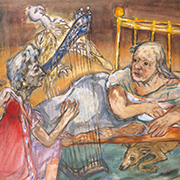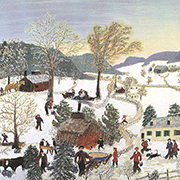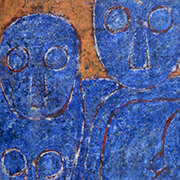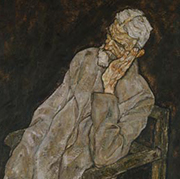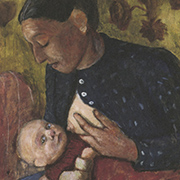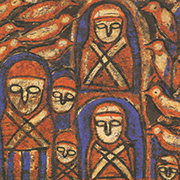
The Ins and Outs of Self-Taught Art
Reflections on a Shifting Field
January 10, 2012 - April 7, 2012
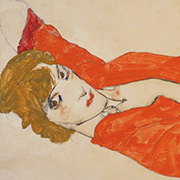
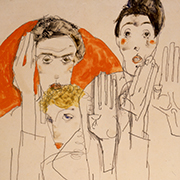
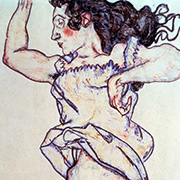
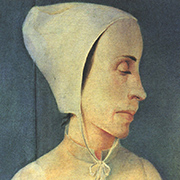
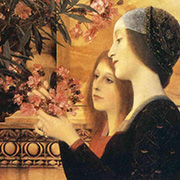
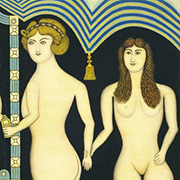
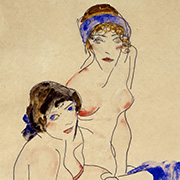
The Lady and the Tramp
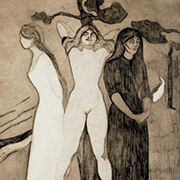
Images of Women in Austrian and German Art
October 11, 2011 - December 30, 2011
Recent Acquisitions
(And Some Thoughts on the Current Art Market)
July 5, 2011 - September 30, 2011
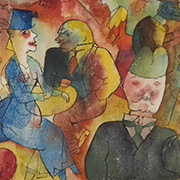
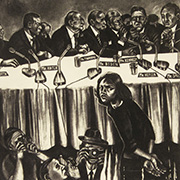
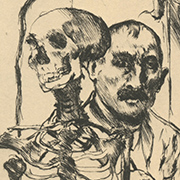
Decadence & Decay
Max Beckmann, Otto Dix, George Grosz
April 12, 2011 - June 24, 2011
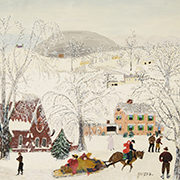
Self-Taught Painters in American 1800-1950
Revisiting the Tradition
January 11, 2011 - April 2, 2011
Marie-Louise Motesiczky
Paradise Lost & Found
October 12, 2010 - December 30, 2010
Recent Acquisitions
(And Some Thoughts on the Current Art Market)
July 13, 2010 - October 1, 2010
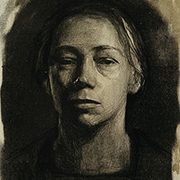
Käthe Kollwitz
A Portrait of the Artist
April 13, 2010 - June 25, 2010
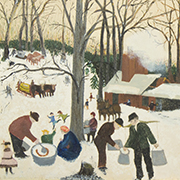
Seventy Years Grandma Moses
A Loan Exhibition Celebrating the 70th Anniversary of the Artist's "Discovery"
February 3, 2010 - April 3, 2010
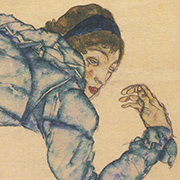
Egon Schiele as Printmaker
A Loan Exhibition Celebrating the 70th Anniversary of the Galerie St. Etienne
November 3, 2009 - January 23, 2010
From Brücke To Bauhaus
The Meanings of Modernity in Germany, 1905-1933
March 31, 2009 - June 26, 2009
They Taught Themselves
American Self-Taught Painters Between the World Wars
January 9, 2009 - March 14, 2009
Elephants We Must Never Forget
New Paintings Drawings and Prints by Sue Coe
October 14, 2008 - December 20, 2008
Recent Acquisitions
(And Some Thoughts on the Current Art Market)
June 24, 2008 - September 26, 2008
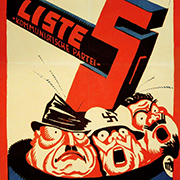
Hope or Menace?
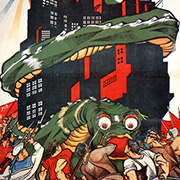
Communism in Germany Between the World Wars
March 25, 2008 - June 13, 2008
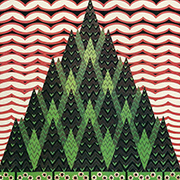
Transforming Reality
Pattern and Design in Modern and Self-Taught Art
January 15, 2008 - March 8, 2008
Leonard Baskin
Proofs and Process
October 9, 2007 - January 5, 2008
Recent Acquisitions
(And Some Thoughts on the Current Art Market)
June 5, 2007 - September 28, 2007
Who Paid the Piper?
The Art of Patronage in Fin-de-Siècle Vienna
March 8, 2007 - May 26, 2007
Fairy Tale, Myth and Fantasy
Approaches to Spirituality in Art
December 7, 2006 - February 3, 2007
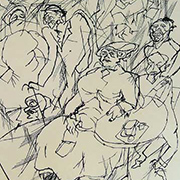
More Than Coffee was Served
Café Culture in Fin-de-Siècle Vienna and Weimar Germany
September 19, 2006 - November 25, 2006
Recent Acquisitions
(And Some Thoughts on the Current Art Market)
June 6, 2006 - September 8, 2006
Parallel Visions II
"Outsider" and "Insider" Art Today
April 5, 2006 - May 26, 2006
Ilija!
His First American Exhibtion
January 17, 2006 - March 18, 2006
Coming of Age
Egon Schiele and the Modernist Culture of Youth
November 15, 2005 - January 7, 2006
Sue Coe:
Sheep of Fools
September 20, 2005 - November 5, 2005
Recent Acquisitions
And Some Thoughts on the Current Art Market
June 7, 2005 - September 9, 2005
Every Picture Tells a Story
The Narrative Impulse in Modern and Contemporary Art
April 5, 2005 - May 27, 2005
65th Anniversary Exhibition, Part II
Self-Taught Artists
January 18, 2005 - March 26, 2005
65th Anniversary Exhibition, Part I
Austrian and German Expressionism
October 28, 2004 - January 8, 2005
Sue Coe: Bully: Master of the Global Merry-Go-Round and Recent Acquisitions
(And Some Thoughts on the Current Art Market)
June 8, 2004 - October 16, 2004
Animals & Us
The Animal in Contemporary Art
April 1, 2004 - May 22, 2004
Henry Darger
Art and Myth
January 15, 2004 - March 20, 2004
Body and Soul
Expressionism and the Human Figure
October 7, 2003 - January 3, 2004
Recent Acquisitions
(And Some Thoughts on the Current Art Market)
June 24, 2003 - September 12, 2003
In Search of the "Total Artwork"
Viennese Art and Design 1897–1932
April 8, 2003 - June 14, 2003
Russia's Self-Taught Artists
A New Perspective on the "Outsider"
January 14, 2003 - March 29, 2003
Käthe Kollwitz:
Master Printmaker
October 1, 2002 - January 4, 2003
Recent Acquisitions
(And Some Thoughts on the Current Art Market)
June 25, 2002 - September 20, 2002
Workers of the World
Modern Images of Labor
April 2, 2002 - June 15, 2002
Grandma Moses
Reflections of America
January 15, 2002 - March 16, 2002
Gustav Klimt/Egon Schiele/Oskar Kokoscha
From Art Nouveau to Expressionism
November 23, 2001 - January 5, 2002
The "Black-and-White" Show
Expressionist Graphics in Austria & Germany
September 20, 2001 - November 10, 2001
Recent Acquisitions (And Some Thoughts on the Current Art Market)
June 26, 2001 - September 7, 2001
Art with an Agenda
Politics, Persuasion, Illustration and Decoration
April 10, 2001 - June 16, 2001
"Our Beautiful and Tormented Austria!": Art Brut in the Land of Freud
January 18, 2001 - March 17, 2001
The Tragedy of War
November 16, 2000 - January 6, 2001
The Expressionist City
September 19, 2000 - November 4, 2000
Recent Acquisitions (And Some Thoughts on the Current Art Market)
June 20, 2000 - September 8, 2000
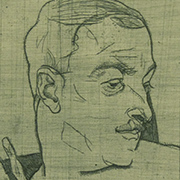
From Façade to Psyche
Turn-of-the-Century Portraiture in Austria & Germany
March 28, 2000 - June 10, 2000
European Self-Taught Art
Brut or Naive?
January 18, 2000 - March 11, 2000
Saved From Europe
In Commemoration of the 60th Anniversary of the Galerie St. Etienne
November 6, 1999 - January 8, 2000
The Modern Child
(Images of Children in Twentieth-Century Art)
September 14, 1999 - November 6, 1999
Recent Acquisitions
(And a Look at Sixty Years of Art Dealing)
June 15, 1999 - September 3, 1999
Sue Coe: The Pit
The Tragical Tale of the Rise and Fall of a Vivisector
March 30, 1999 - June 5, 1999
Henry Darger and His Realms
January 14, 1999 - March 13, 1999
Becoming Käthe Kollwitz
An Artist and Her Influences
November 17, 1998 - December 31, 1998
George Grosz - Elfriede Lohse-Wächtler
Art & Gender in Weimar Germany
September 23, 1998 - November 11, 1998
Recent Acquisitions
(And Some Thoughts About Looted Art)
June 9, 1998 - September 11, 1998
Taboo
Repression and Revolt in Modern Art
March 26, 1998 - May 30, 1998
Sacred & Profane
Michel Nedjar and Expressionist Primitivism
January 13, 1998 - March 14, 1998
Egon Schiele (1890-1918)
Master Draughtsman
November 18, 1997 - January 3, 1998
The New Objectivity
Realism in Weimar-Era Germany
September 16, 1997 - November 8, 1997
Recent Acquisitions
A Question of Quality
June 10, 1997 - September 5, 1997
Käthe Kollwitz - Lea Grundig
Two German Women & The Art of Protest
March 25, 1997 - May 31, 1997
That Way Madness Lies
Expressionism and the Art of Gugging
January 14, 1997 - March 15, 1997
The Viennese Line
Art and Design Circa 1900
November 18, 1996 - January 4, 1997
Emil Nolde - Christian Rohlfs
Two German Expressionist Masters
September 24, 1996 - November 9, 1996
Breaking All The Rules
Art in Transition
June 11, 1996 - September 6, 1996
Sue Coe's Ship of Fools
March 26, 1996 - May 24, 1996
New York Folk
Lawrence Lebduska, Abraham Levin, Isreal Litwak
January 16, 1996 - March 16, 1996
The Fractured Form
Expressionism and the Human Body
November 15, 1995 - January 6, 1996
From Left to Right
Social Realism in Germany and Russia, Circa 1919-1933
September 19, 1995 - November 4, 1995
Recent Acquisitions
June 20, 1995 - September 8, 1995
On the Brink 1900-2000
The Turning of Two Centuries
March 28, 1995 - May 26, 1995
Earl Cummingham - Grandma Moses
Visions of America
January 17, 1995 - March 18, 1995
Three Berlin Artists of the Weimar Era: Hannah Höch, Käthe Kollwitz, Jeanne Mam
September 13, 1994 - November 5, 1994
55th Anniversary Exhibition in Memory of Otto Kallir
June 7, 1994 - September 2, 1994
Drawn to Text: Comix Artists as Book Illustrators
May 15, 1994 - January 7, 1995
Sue Coe: We All Fall Down
March 29, 1994 - May 27, 1994
The Forgotten Folk Art of the 1940's
January 18, 1994 - March 19, 1994
Symbolism and the Austrian Avant Garde
Klimt, Schiele and their Contemporaries
November 16, 1993 - January 8, 1994
Art and Politics in Weimar Germany
September 14, 1993 - November 6, 1993
Recent Acquisitions
June 8, 1993 - September 3, 1993
The "Outsider" Question
Non-Academic Art from 1900 to the Present
March 23, 1993 - May 28, 1993
The Dance of Death
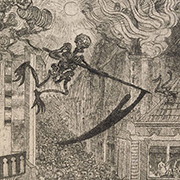
Images of Mortality in German Art
January 19, 1993 - March 13, 1993
Art Spiegelman
The Road to Maus
November 17, 1992 - January 9, 1993
Käthe Kollwitz
In Celebration of the 125th Anniversary of the Artist's Birth
September 15, 1992 - November 7, 1992
Naive Visions/Art Nouveau and Expressionism/Sue Coe: The Road to the White House
May 19, 1992 - September 4, 1992
Richard Gerstl/Oskar Kokoschka
March 17, 1992 - May 9, 1992
Scandal, Outrage, Censorship
Controversy in Modern Art
January 21, 1992 - March 7, 1992
Viennese Graphic Design
From Secession to Expressionism
November 19, 1991 - January 11, 1992
The Expressionist Figure
September 10, 1991 - November 9, 1991
Recent Acquisitions
Themes and Variations
May 14, 1991 - August 16, 1991
Sue Coe Retrospective
Political Document of a Decade
March 12, 1991 - May 5, 1991
Gustav Klimt, Egon Schiele, Oskar Kokoschka
Watercolors, drawings and prints
January 22, 1991 - March 2, 1991
Egon Schiele
November 13, 1990 - January 12, 1991
Lovis Corinth
A Retrospective
September 11, 1990 - November 3, 1990
Recent Acquisitions
June 12, 1990 - August 31, 1990
Max Klinger, Käthe Kollwitz, Alfred Kubin
A Study in Influences
March 27, 1990 - June 2, 1990
The Narrative in Art
January 23, 1990 - March 17, 1990
Grandma Moses
November 14, 1989 - January 13, 1990
Sue Coe
Porkopolis--Animals and Industry
September 19, 1989 - November 4, 1989
Galerie St. Etienne
A History in Documents and Pictures
June 20, 1989 - September 8, 1989
Gustav Klimt
Paintings and Drawings
April 11, 1989 - June 10, 1989
Fifty Years Galerie St. Etienne: An Overview
February 14, 1989 - April 1, 1989
Folk Artists at Work
Morris Hirshfield, John Kane and Grandma Moses
November 15, 1988 - January 14, 1989
Recent Acquisitions and Works From the Collection
June 14, 1988 - September 16, 1988
From Art Nouveau to Expressionism
April 12, 1988 - May 27, 1988
Three Pre-Expressionists
Lovis Corinth Käthe Kollwitz Paula Modersohn-Becker
January 26, 1988 - March 12, 1988
Käthe Kollwitz
The Power of the Print
November 17, 1987 - January 16, 1988
Recent Acquisitions and Works From the Collection
April 7, 1987 - October 31, 1987
Folk Art of This Century
February 10, 1987 - March 28, 1987
Oskar Kokoschka and His Time
November 25, 1986 - January 31, 1987
Viennese Design and Wiener Werkstätte
September 23, 1986 - November 8, 1986
Gustav Klimt/Egon Schiele/Oskar Kokoschka
Watercolors, Drawings and Prints
May 27, 1986 - September 13, 1986
Expressionist Painters
March 25, 1986 - May 10, 1986
Käthe Kollwitz/Paula Modersohn-Becker
January 28, 1986 - March 15, 1986
The Art of Giving
December 3, 1985 - January 18, 1986
Expressionists on Paper
October 8, 1985 - November 23, 1985
European and American Landscapes
June 4, 1985 - September 13, 1985
Expressionist Printmaking
Aspects of its Genesis and Development
April 1, 1985 - May 24, 1985
Expressionist Masters
January 18, 1985 - March 23, 1985
Arnold Schoenberg's Vienna
November 13, 1984 - January 5, 1985
Grandma Moses and Selected Folk Paintings
September 25, 1984 - November 3, 1984
American Folk Art
People, Places and Things
June 12, 1984 - September 14, 1984
John Kane
Modern America's First Folk Painter
April 17, 1984 - May 25, 1984
Eugène Mihaesco
The Illustrator as Artist
February 28, 1984 - April 7, 1984
Early Expressionist Masters
January 17, 1984 - February 18, 1984
Paula Modersohn-Becker
Germany's Pioneer Modernist
November 15, 1983 - January 7, 1984
Gustav Klimt
Drawings and Selected Paintings
September 20, 1983 - November 5, 1983
Early and Late
Drawings, Paintings & Prints from Academicism to Expressionism
June 1, 1983 - September 2, 1983
Alfred Kubin
Visions From The Other Side
March 22, 1983 - May 7, 1983
20th Century Folk
The First Generation
January 18, 1983 - March 12, 1983
Grandma Moses
The Artist Behind the Myth
November 15, 1982 - January 8, 1983
Kollwitz
The Artist as Printmaker
September 28, 1982 - November 6, 1982
Aspects of Modernism
June 1, 1982 - September 3, 1982
The Human Perspective
Recent Acquisitions
March 16, 1982 - May 15, 1982
19th and 20th Century European and American Folk Art
January 19, 1982 - March 6, 1982
The Folk Art Tradition
Naïve Painting in Europe and the United States
November 17, 1981 - January 9, 1982
Austria's Expressionism
April 21, 1981 - May 30, 1981
Eugène Mihaesco
His First American One-Man Show
March 3, 1981 - April 11, 1981
Gustav Klimt, Egon Schiele
November 12, 1980 - December 27, 1980
Summer Exhibition
June 17, 1980 - October 31, 1980
Kollwitz: The Drawing and The Print
May 1, 1980 - June 10, 1980
40th Anniversary Exhibition
November 13, 1979 - December 28, 1979
American Primitive Art
November 22, 1977
Käthe Kollwitz
December 1, 1976
Neue Galerie-Galerie St. Etienne
A Documentary Exhibition
May 1, 1976
Martin Pajeck
January 27, 1976
Georges Rouault and Frans Masereel
April 29, 1972
Branko Paradis
December 1, 1971
Käthe Kollwitz
February 3, 1971
Egon Schiele
The Graphic Work
October 19, 1970
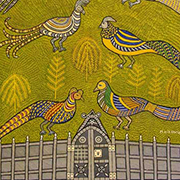
Gustav Klimt
March 20, 1970
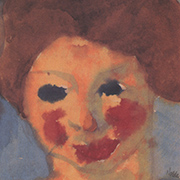
Friedrich Hundertwasser
May 6, 1969
Austrian Art of the 20th Century
March 21, 1969
Egon Schiele
Memorial Exhibition
October 31, 1968
Yugoslav Primitive Art
April 30, 1968
Alfred Kubin
January 30, 1968
Käthe Kollwitz
In the Cause of Humanity
October 23, 1967
Abraham Levin
September 26, 1967
Karl Stark
April 5, 1967
Gustav Klimt
February 4, 1967
The Wiener Werkstätte
November 16, 1966
Oskar Laske
October 25, 1965
Käthe Kollwitz
May 1, 1965
Egon Schiele
Watercolors and Drawings from American Collections
March 1, 1965
25th Anniversary Exhibition
Part II
November 21, 1964
25th Anniversary Exhibition
Part I
October 17, 1964
Mary Urban
June 9, 1964
Werner Berg, Jane Muus and Mura Dehn
May 5, 1964
Eugen Spiro
April 4, 1964
B. F. Dolbin
Drawings of an Epoch
March 3, 1964
Austrian Expressionists
January 6, 1964
Joseph Rifesser
December 3, 1963
Panorama of Yugoslav Primitive Art
October 21, 1963
Joe Henry
Watercolors of Vermont
May 1, 1963
French Impressionists
March 8, 1963
Grandma Moses
Memorial Exhibition
November 26, 1962
Group Show
October 15, 1962
Ernst Barlach
March 23, 1962
Martin Pajeck
February 24, 1962
Paintings by Expressionists
January 27, 1962
Käthe Kollwitz
November 11, 1961
Grandma Moses
September 7, 1961
My Friends
Fourth Biennial of Pictures by American School Children
May 27, 1961
Raimonds Staprans
April 17, 1961
Gustav Klimt, Egon Schiele, Oskar Kokoschka and Alfred Kubin
March 14, 1961
Marvin Meisels
January 23, 1961
Egon Schiele
November 15, 1960
My Life's History
Paintings by Grandma Moses
September 12, 1960
Watercolors and Drawings by Austrian Artists from the Dial Collection
May 2, 1960
Martin Pajeck
February 29, 1960
Eugen Spiro
February 6, 1960
Käthe Kollwitz
December 14, 1959
Josef Scharl
Last Paintings and Drawings
November 11, 1959
European and American Expressionists
September 22, 1959
Our Town
One Hundred Paintings by American School Children
May 23, 1959
Marvin Meisels and Martin Pajeck
May 1, 1959
Gustav Klimt
April 1, 1959
Käthe Kollwitz
January 12, 1959
Oskar Kokoschka
October 28, 1958
Village Life in Guatemala
Paintings by Andres Curuchich
June 3, 1958
Two Unknown American Expressionists
Paintings by Marvin Meisels and Martin Pajeck
April 28, 1958
Paula Modersohn-Becker
March 15, 1958
The Great Tradition in American Painting
American Primitive Art
January 20, 1958
Jules Lefranc and Dominique Lagru
Two French Primitives
November 18, 1957
Margret Bilger
October 22, 1957
The Four Seasons
One Hundred Paintings by American School Children
June 11, 1957
Grandma Moses
May 6, 1957
Alfred Kubin
April 3, 1957
Franz Lerch
March 2, 1957
Egon Schiele
January 21, 1957
Josef Scharl
Memorial Exhibition
November 17, 1956
Irma Rothstein
May 19, 1956
Käthe Kollwitz
April 16, 1956
A Tribute to Grandma Moses
November 28, 1955
As I See Myself
One Hundred Paintings by American School Children
May 20, 1955
Juan De'Prey
April 19, 1955
Erich Heckel
March 29, 1955
Freddy Homburger
March 2, 1955
Masters of the 19th Century
January 18, 1955
Oskar Kokoschka
November 29, 1954
Isabel Case Borgatta and Josef Scharl
October 12, 1954
James N. Rosenberg and Eugen Spiro
April 30, 1954
Per Krogh
April 2, 1954
Cuno Amiet
February 16, 1954
Eniar Jolin
January 14, 1954
Irma Rothstein
December 8, 1953
Josef Scharl
November 11, 1953
Grandma Moses
October 21, 1953 - October 24, 1953
Wilhelm Kaufmann
September 30, 1953
Lovis Corinth, Oskar Kokoschka and Egon Schiele
May 27, 1953
A Grandma Moses Album
Recent Paintings, 1950-1953
April 15, 1953
Streeter Blair
American Primitive
February 26, 1953
Paintings on Glass
Austrian Religious Folk Art of the 17th to 19th Centuries
December 4, 1952
Hasan Kaptan
Paintings of a Ten-Year-Old Turkish Painter
October 29, 1952
Margret Bilger
May 10, 1952
American Natural Painters
March 31, 1952
Ten Years of New York Concert Impressions by Eugen Spiro; Four New Paintings by
January 26, 1952
I-Fa-Wei
Watercolors of New York by a Chinese Artist
December 1, 1951
Käthe Kollwitz
October 25, 1951
Drawings and Watercolors by Austrian Children
May 21, 1951
Grandma Moses
Twenty-Five Masterpieces of Primitive Art
March 17, 1951
Roswitha Bitterlich
January 18, 1951
Oskar Laske
Watercolors of Vienna and the Salzkammergut
October 14, 1950
Tenth Anniversary Exhibition
Part II
May 11, 1950
Austrian Art of the 19th Century
From Wadlmüller to Klimt
April 1, 1950
Chiao Ssu-Tu
February 18, 1950
Anton Faistauer
January 1, 1950
Tenth Anniversary Exhibition
Part I
November 30, 1949
Autograph Exhibition
October 26, 1949
Gladys Wertheim Bachrach
May 24, 1949
Oskar Kokoschka
March 30, 1949
Eugen Spiro
February 19, 1949
Frans Masereel
January 13, 1949
Ten Years Grandma Moses
November 22, 1948
Käthe Kollwitz
Masterworks
October 18, 1948
American Primitives
June 3, 1948
Egon Schiele
Memorial Exhibition
April 5, 1948
Miriam Richman
February 7, 1948
Vally Wieselthier
Memorial Exhibition
January 10, 1948
Christmas Exhibition
December 4, 1947
Fritz von Unruh
November 10, 1947
Käthe Kollwitz
October 4, 1947
Grandma Moses
May 17, 1947
Lovis Corinth
April 16, 1947
Hugo Steiner-Prag
March 15, 1947
Mark Baum
January 11, 1947
Eugen Spiro
November 25, 1946
Henri de Toulouse-Lautrec
May 17, 1946
Ladis W. Sabo
Paintings by a New Primitive Artist
April 8, 1946
Georges Rouault
The Graphic Work
February 26, 1946
Käthe Kollwitz
Memorial Exhibition
November 21, 1945
Fred E. Robertson
Paintings by an American Primitive
June 13, 1945
Max Liebermann
The Graphic Work
April 18, 1945
Vienna through Four Centuries
March 1, 1945
Eugen Spiro
January 20, 1945
Grandma Moses
New Paintings
December 5, 1944
Käthe Kollwitz
Part II
October 26, 1944
A Century of French Graphic Art
From Géricault to Picasso
September 28, 1944
Max Liebermann
Memorial Exhibition
June 9, 1944
Juan De'Prey
Paintings by a Self-Taught Artist from Puerto Rico
May 6, 1944
Abraham Levin
April 15, 1944
Lesser Ury
Memorial Exhibition
March 21, 1944
Grandma Moses
Paintings by the Senior of the American Primitives
February 9, 1944
Betty Lane
January 11, 1944
WaIt Disney Cavalcade
December 9, 1943
Käthe Kollwitz
Part I
November 3, 1943
Will Barnet
September 29, 1943
Lovis Corinth
May 26, 1943
Josephine Joy
Paintings by an American Primitive
May 3, 1943
Oskar Kokoschka
Aspects of His Art
March 31, 1943
Eugen Spiro
February 13, 1943
Seymour Lipton
January 18, 1943
Illuminated Gothic Woodcuts
Printed and Painted, 1477-1493
December 5, 1942
Abraham Levin
November 4, 1942
Walt Disney Originals
September 23, 1942
Documents which Relate History
Documents of Historical Importance and Landmarks of Human Development
June 10, 1942
Honoré Daumier
April 29, 1942
Bertha Trabich
Memorial Exhibition of a Russian-American Primitive
March 25, 1942
Alfred Kubin
Master of Drawing
December 4, 1941
Egon Schiele
November 7, 1941
Betty Lane
June 3, 1941
Flowers from Old Vienna
18th and Early 19th Century Flower Painting
May 7, 1941
Weavings by Navaho and Hopi Indians and Photos of Indians by Helen M. Post
January 29, 1941
Georg Merkel
November 7, 1940
What a Farm Wife Painted
Works by Mrs. Anna Mary Moses
October 9, 1940
Saved from Europe
Masterpieces of European Art
July 1, 1940
American Abstract Art
May 22, 1940
Franz Lerch
May 1, 1940
Wilhelm Thöny
April 3, 1940
French Masters of the 19th and 20th Centuries
February 29, 1940
H. W. Hannau
Metropolis, Photographic Studies of New York
February 2, 1940
Oskar Kokoschka
January 9, 1940
Austrian Masters
November 13, 1939
THE FRACTURED FORM
Expressionism and the Human Body
Beckmann, Max
Corinth, Lovis
Dix, Otto
Gerstl, Richard
Grosz, George
Heckel, Erich
Höch, Hannah
Kirchner, Ernst Ludwig
Klee, Paul
Klimt, Gustav
Kokoschka, Oskar
Nolde, Emil
Richter, Hans
Schiele, Egon
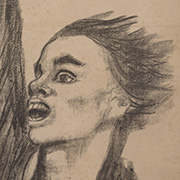
As the academic realist tradition was systematically dismantled over the course of the nineteenth century, the human figure began to function, both visually and symbolically, in bizarre new ways. Artists as far ranging as Pablo Picasso, Francis Bacon and Cindy Sherman (to name but a random three) have each used the body to express distinctive sociological, cultural or psychological preoccupations in a formal vocabulary that intentionally undermines the soothing verisimilitude of pre-modern art. The art historian Linda Nochlin, in a seminal 1994 essay, "The Body in Pieces: The Fragment as Metaphor of Modernity," contends that the advent of the modernist era constituted a decisive break with a more cohesive past. In her view, the fractured forms employed by so many modern and post-modern artists are metaphors for the fragmentation that is endemic to contemporary living conditions. Whereas the past, at least in retrospect, is seen to be whole and coherent, the present seems lacking in fixed values, hierarchies and connections.
Nochlin traces the political as well as the artistic birth of the modern age to the French Revolution. However, Enlightenment ideals percolated more gradually through Austria and Germany, where monarchistic rule prevailed until 1918. Possibly there is a connection between the relative political retardation of these two lands and the rather slow dawning of modernism there (as compared with France). On the other hand, when revolution did come to Austria and Germany, it arrived in the wake of full-scale industrialization and with ideological input from Marx and Engels. The Expressionist era, which began around 1905 with the founding of Die Brücke group and faded out during the 1920s, encompassed both the buildup and the reaction to massive political and social changes. Many artists working during this tumultuous period employed the human body as a cipher on which to project the pressures of the moment. Abstracted, distorted, shattered, truncated, fractured, pulled apart and then reassembled anew, the Expressionist figure became a highly charged site.
The path toward Expressionist fragmentation was blazed by Impressionism, which by the turn of the century was widely known across Europe. The dissolution of form into particolored dabs of paint, as well as the use of erratic cropping (in a manner owing something to the slice-of-life views facilitated by photography), influenced artists as diverse as Lovis Corinth, an Impressionist in name only, and Gustav Klimt, who had virtually nothing to do with the French movement. Although Corinth's 1884 etching Alexander and Diogenes (checklist nos. 5 and 6) depicts a classical scene that harkens back to pre-modern times, the cut-off figures along the left side and top would have been inconceivable in Germany a hundred years earlier. The disjointed hatching intrinsic to etching, as well as the choice of this comparatively minor medium (as opposed to painting or sculpture) for the portrayal of a weighty subject, also bespeak a quintessentially modernist attraction to the transitory and ephemeral. Nevertheless, Corinth presents the story of Alexander and Diogenes in a setting that is reassuringly three-dimensional when compared with the work of younger artists such as Max Beckmann. Beckmann would later render traditional themes like The Descent from the Cross and The Resurrection (see checklist no. 3) as a hodgepodge of strangely skewed bodies and vignettes with little concrete connection to a plausible reality. The redemptive certainties of orthodox Christianity are thereby implicitly challenged.
The Austrian Klimt was, like Corinth, a transitional artist, and his early work was filled with fluid and smoothly modeled bodies, as promulgated by conservative academies throughout Europe (checklist nos. 27-30). However, Klimt's lines became looser over the course of his career. He began to trace and retrace the contours of his figures, as though somehow suddenly in doubt of their precise boundaries (checklist nos. 31-36). Corinth's lines, too, gradually flew apart as he aged. The protracted evolution of this effect indicates that it was not (as some contend) solely the result of the artist's 1911 stroke. It is moreover evident that the fracturing of form in Corinth's late self-portraits (checklist nos. 9-12) to a degree reflects the artist's growing pessimism in the face of his physical decline and the demise of the ancien régime after 1918.
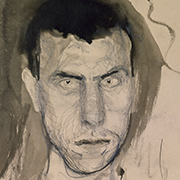
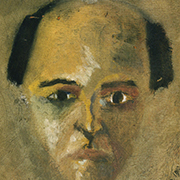
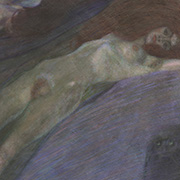
Though artists have always injected personal feelings into their work, the notion that an artist's psychic preoccupations per se are a fitting subject for art is peculiar to the modernist--and especially the Expressionist--sensibility. Richard Gerstl, for example, adopted pointillism (originally a fairly cold-blooded theoretical construct) to chart his descent into madness. In a series of poignant self-portraits from 1905-06 (checklist nos. 16 and 17), he simultaneously captured and negated his own image through the use of divided strokes. The artist's face literally fragments and then reconstitutes itself, communicating a sense of insecurity and insubstantiality which the viewer by extension shares.
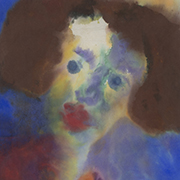
Similarly, after his affair with the notoriously fickle Alma Mahler ended, Oskar Kokoschka nursed his sorrow in a series of portraits and allegorical reenactments of the relationship. Karl Kraus' essay The Great Wall of China describes the brutal murder of a Caucasian woman in the Chinese quarter, but the female protagonist in Kokoschka's lithographic illustrations is clearly Alma (checklist no. 38). Alma is also the subject of the 1916 drawing Mania--the seductress as elusive siren, dissolving into a web of crazed lines (checklist no. 39). The brighter palette of Kokoschka's Dresden years (1916-24), indicates both a lightening of the artist's pain and the recognition of his true calling as a colorist (checklist nos. 40 and 41). Yet even so, his subjects remain suffused in a patchwork of brushstrokes--not palpably real, but rather obviously products of the artist's creative mind.
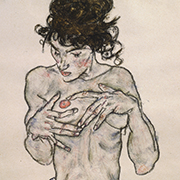
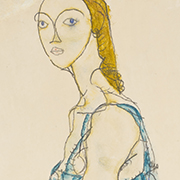
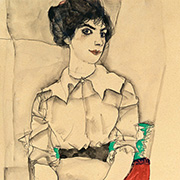
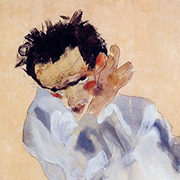
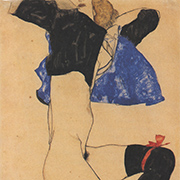
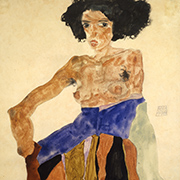
Among the most exquisite aesthetic exposés of psychic turmoil extant are those undertaken by Egon Schiele. Indeed, the human body looms so large in Schiele's oeuvre and is used to such a multitude of ends that he is among the prototypical exemplars of this modernist phenomenon. As with many of his colleagues, Schiele's attraction to fractured forms was both a rejection of his academic training and a repudiation of the bourgeois tradition which that training represented. Yet while on the one hand Schiele eagerly sought to destroy a past that was no longer viable, he was also intensely distraught at the void left by this destruction. At times disjointed and frenetic, his lines rarely convey hesitancy or insecurity, but rather great speed and explosive energy. Overall, however, Schiele was in search of the perfect, seamless line, the great unifier capable of binding up the chaotic forces of existential uncertainty.
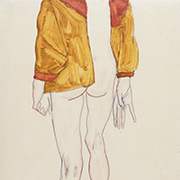
Loss of wholeness is signaled in Schiele's work through unnatural cropping: figures that seem to slide off the page (checklist no. 53), bodies that are missing legs (checklist no. 54) or that inexplicably end at the neck or thigh (checklist no. 52). The elimination of a female model's face by cropping or extreme stylization in certain drawings conveys a fetishistic interest in the anonymous naked body, an adolescent delight in forbidden views and taboo topics (checklist no. 58). However, although this tactic can be used to focus attention on the genitalia, not all such works are overtly sexual. In some drawings (checklist nos. 56 and 64), there is rather an allusion to the headless casts of antiquity, an elegiac mourning for a ruptured past. Schiele's sense of impotence is graphically expressed in the blurring or elimination of the penis in many of his nude self-portraits (checklist no. 57). Castration and mutilation function together with a vast repertoire of exaggerated body language to express such varied emotional states as anguish, turmoil, fear, longing, devotion, desire, lust and even spiritual redemption. Schiele is the perennial explorer, and the human figure his preferred vehicle for personal discovery and conquest.
The introspective--indeed, almost solipsistic--nature of much early twentieth-century Austrian art was in part conditioned by that nation's relative isolation. To the extent that cutting-edge artists were aware of innovations in other countries, they tended to gravitate to the emotional probings of the Symbolists. The Germans, by comparison, had closer ties to a wider range of European developments, and the influences of bright, Fauvist coloring, angular Cubist design and Futurist dynamism imparted greater formal distance to their brand of Expressionism. This does not, of course, mean that the Germans were uninterested in emotional content, but rather that they tended to express their feelings in more universal terms than did the Austrians. As a group, they sought a new language of form capable of capturing underlying psychological truths rather than superficial appearances.
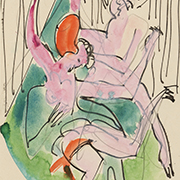
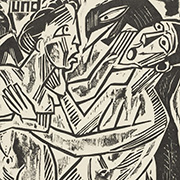
The fracturing of form thus served a variety of possible goals. In portraiture, the genuine self could be revealed only if the realistic facade was shattered and broken. Seeking pure, unmediated responses to experience, the Expressionists endeavored to overthrow both the personal and the aesthetic constraints of civilization. These cravings found a concrete outlet in the Brücke artists' attempts to commune with nature and in the idealization of "primitive" cultures. By abstracting the human body, artists created an illusion of unity with the abstract forms of nature, or alluded to those of tribal art (see checklist nos. 66 and 68). The flip-side of such preoccupations emerged in a general contempt for the metropolis, although the jarring juxtapositions and truncated forms found in many Expressionist cityscapes were often intended merely to reflect the pace and intensity of urban life. The city was alternatively alienating or invigorating, and a vocabulary of disjointed lines, shapes and impasto could be adapted to either purpose.
A common yearning to eradicate bourgeois society prompted many Expressionists to greet the outbreak of World War I with an enthusiasm that has surprised and dismayed later observers. The naïve excitement and thrill of war soon dissipated, however, as artists were overcome with grief at the loss of their colleagues and the senselessness of combat. In realistically cataloguing the destruction and horrors of the war, the later Expressionists transformed the human body from metaphorical emblem into a site of actual pain and suffering. Lost limbs and crippled veterans were rendered with harsh brutality by Rudolf Schlichter and George Grosz (checklist nos. 18 and 65). Short, rough strokes lent immediacy to Beckmann's war sketches, executed compulsively in the trenches. His grenade literally catapults human body parts into the air (checklist no. 2), and the broken body in his operating room is obviously beyond repair (see checklist no. 3).
The trajectory from glee to disillusionment and despair which characterized the avant garde's reaction to World War I was to be recapitulated in artists' responses to the political upheavals of the Weimar period. The utopian promise of democratic socialism was soon dashed by the German regime's entrenched ties to the military, industrial and religious establishment. Rampant inflation and unemployment were constant reminders of the inequities of society. Weimar-era artists reverted to the fractured body as a metaphor for lost hopes and shattered dreams. In Beckmann's tension-filled depictions of city life, bodies are compressed in claustrophobic spaces that cannot logically be "read," or eliminated entirely: social interaction consists of a whirlwind of freefloating, yapping heads. Incomplete bodies, also found in the work of Otto Dix, represent the decay and decadence that were eating away at contemporary German society. Prostitution and venereal disease, as shown in Dix's Syphilitic (a man whose head is literally composed of evil, teeming female flesh; checklist no. 15), became a symbol of wider social degeneration.
The most innovative dissections of the human form performed during the Weimar years were those undertaken by artists associated with the Dada movement. The Dadaists--many of whom first met during the war in neutral Switzerland-- subsequently launched a sustained attack on all forms of authority and anything smacking of middle-class respectability. Disowning the prewar avant-garde for its lack of political engagement, these artists looked to create a new style which could capture the chaotic, irrational nature of contemporary existence. Collage, by dismembering and mixing disparate elements culled from popular sources, highlighted the ephemerality and the artificiality of such supposedly "objective" records. Reflecting the cacophony of advertising, photographic and film images that suffuse modern life, the medium had the added advantage of eliminating all traces of the artist's hand--thought to betray bourgeois individualism. A deliberate emphasis on disjunctive associations, and especially the use of severed and savagely reconfigured body parts, simultaneously expressed and critiqued the sense of dislocation produced by rapid social and economic change (checklists nos. 1 and 43). Franz Roh’s buoyant babyface--mouth frozen somewhere between a yawn and a scream---is an apt correlative for the artist's frustration and unhappiness (checklist no. 51). Hannah Höch affixed the top-hatted heads of businessmen to the bodies of preening female beauties, simultaneously questioning gender stereotypes and indicting the exploitative captains of industry (checklist no. 23).
As is evident from even this brief overview of Austrian and German art during the first decades of the twentieth century, the fragmentary nature of modern life could evoke a disparate array of aesthetic responses. Some artists greeted the annihilation of precedent with undisguised glee and actively abetted the destructive tendencies of their time. Others, more troubled by what they saw as civilization's downward trajectory, crafted scathing denunciations or sought a return to a more perfect past. The fractured form could express sorrow and elation, revolutionary iconoclasm or utopian idealism. While Schiele, for example, was willfully hacking the human body to bits, older compatriots such as Klimt were painstakingly trying to rebuild a cohesive reality in the form of the Gesamtkunstwerk (a total aesthetic environment encompassing art, architecture and the decorative arts). The desire to destroy inevitably brought with it a need to rebuild, and both tendencies frequently existed side by side.