
The Ins and Outs of Self-Taught Art
Reflections on a Shifting Field
January 10, 2012 - April 7, 2012
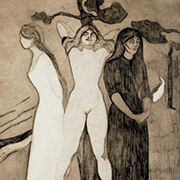
The Lady and the Tramp
Images of Women in Austrian and German Art
October 11, 2011 - December 30, 2011
Recent Acquisitions
(And Some Thoughts on the Current Art Market)
July 5, 2011 - September 30, 2011
Decadence & Decay
Max Beckmann, Otto Dix, George Grosz
April 12, 2011 - June 24, 2011
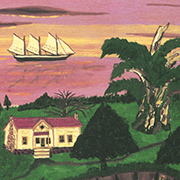
Self-Taught Painters in American 1800-1950
Revisiting the Tradition
January 11, 2011 - April 2, 2011
Marie-Louise Motesiczky
Paradise Lost & Found
October 12, 2010 - December 30, 2010
Recent Acquisitions
(And Some Thoughts on the Current Art Market)
July 13, 2010 - October 1, 2010
Käthe Kollwitz
A Portrait of the Artist
April 13, 2010 - June 25, 2010
Seventy Years Grandma Moses
A Loan Exhibition Celebrating the 70th Anniversary of the Artist's "Discovery"
February 3, 2010 - April 3, 2010
Egon Schiele as Printmaker
A Loan Exhibition Celebrating the 70th Anniversary of the Galerie St. Etienne
November 3, 2009 - January 23, 2010
From Brücke To Bauhaus
The Meanings of Modernity in Germany, 1905-1933
March 31, 2009 - June 26, 2009
They Taught Themselves
American Self-Taught Painters Between the World Wars
January 9, 2009 - March 14, 2009
Elephants We Must Never Forget
New Paintings Drawings and Prints by Sue Coe
October 14, 2008 - December 20, 2008
Recent Acquisitions
(And Some Thoughts on the Current Art Market)
June 24, 2008 - September 26, 2008
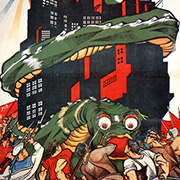
Hope or Menace?
Communism in Germany Between the World Wars
March 25, 2008 - June 13, 2008
Transforming Reality
Pattern and Design in Modern and Self-Taught Art
January 15, 2008 - March 8, 2008
Leonard Baskin
Proofs and Process
October 9, 2007 - January 5, 2008
Recent Acquisitions
(And Some Thoughts on the Current Art Market)
June 5, 2007 - September 28, 2007
Who Paid the Piper?
The Art of Patronage in Fin-de-Siècle Vienna
March 8, 2007 - May 26, 2007
Fairy Tale, Myth and Fantasy
Approaches to Spirituality in Art
December 7, 2006 - February 3, 2007
More Than Coffee was Served
Café Culture in Fin-de-Siècle Vienna and Weimar Germany
September 19, 2006 - November 25, 2006
Recent Acquisitions
(And Some Thoughts on the Current Art Market)
June 6, 2006 - September 8, 2006
Parallel Visions II
"Outsider" and "Insider" Art Today
April 5, 2006 - May 26, 2006
Ilija!
His First American Exhibtion
January 17, 2006 - March 18, 2006
Coming of Age
Egon Schiele and the Modernist Culture of Youth
November 15, 2005 - January 7, 2006
Sue Coe:
Sheep of Fools
September 20, 2005 - November 5, 2005
Recent Acquisitions
And Some Thoughts on the Current Art Market
June 7, 2005 - September 9, 2005
Every Picture Tells a Story
The Narrative Impulse in Modern and Contemporary Art
April 5, 2005 - May 27, 2005
65th Anniversary Exhibition, Part II
Self-Taught Artists
January 18, 2005 - March 26, 2005
65th Anniversary Exhibition, Part I
Austrian and German Expressionism
October 28, 2004 - January 8, 2005
Sue Coe: Bully: Master of the Global Merry-Go-Round and Recent Acquisitions
(And Some Thoughts on the Current Art Market)
June 8, 2004 - October 16, 2004
Animals & Us
The Animal in Contemporary Art
April 1, 2004 - May 22, 2004
Henry Darger
Art and Myth
January 15, 2004 - March 20, 2004
Body and Soul
Expressionism and the Human Figure
October 7, 2003 - January 3, 2004
Recent Acquisitions
(And Some Thoughts on the Current Art Market)
June 24, 2003 - September 12, 2003
In Search of the "Total Artwork"
Viennese Art and Design 1897–1932
April 8, 2003 - June 14, 2003
Russia's Self-Taught Artists
A New Perspective on the "Outsider"
January 14, 2003 - March 29, 2003
Käthe Kollwitz:
Master Printmaker
October 1, 2002 - January 4, 2003
Recent Acquisitions
(And Some Thoughts on the Current Art Market)
June 25, 2002 - September 20, 2002
Workers of the World
Modern Images of Labor
April 2, 2002 - June 15, 2002
Grandma Moses
Reflections of America
January 15, 2002 - March 16, 2002
Gustav Klimt/Egon Schiele/Oskar Kokoscha
From Art Nouveau to Expressionism
November 23, 2001 - January 5, 2002
The "Black-and-White" Show
Expressionist Graphics in Austria & Germany
September 20, 2001 - November 10, 2001
Recent Acquisitions (And Some Thoughts on the Current Art Market)
June 26, 2001 - September 7, 2001
Art with an Agenda
Politics, Persuasion, Illustration and Decoration
April 10, 2001 - June 16, 2001
"Our Beautiful and Tormented Austria!": Art Brut in the Land of Freud
January 18, 2001 - March 17, 2001
The Tragedy of War
November 16, 2000 - January 6, 2001
The Expressionist City
September 19, 2000 - November 4, 2000
Recent Acquisitions (And Some Thoughts on the Current Art Market)
June 20, 2000 - September 8, 2000
From Façade to Psyche
Turn-of-the-Century Portraiture in Austria & Germany
March 28, 2000 - June 10, 2000
European Self-Taught Art
Brut or Naive?
January 18, 2000 - March 11, 2000
Saved From Europe
In Commemoration of the 60th Anniversary of the Galerie St. Etienne
November 6, 1999 - January 8, 2000
The Modern Child
(Images of Children in Twentieth-Century Art)
September 14, 1999 - November 6, 1999
Recent Acquisitions
(And a Look at Sixty Years of Art Dealing)
June 15, 1999 - September 3, 1999
Sue Coe: The Pit
The Tragical Tale of the Rise and Fall of a Vivisector
March 30, 1999 - June 5, 1999
Henry Darger and His Realms
January 14, 1999 - March 13, 1999
Becoming Käthe Kollwitz
An Artist and Her Influences
November 17, 1998 - December 31, 1998
George Grosz - Elfriede Lohse-Wächtler
Art & Gender in Weimar Germany
September 23, 1998 - November 11, 1998
Recent Acquisitions
(And Some Thoughts About Looted Art)
June 9, 1998 - September 11, 1998
Taboo
Repression and Revolt in Modern Art
March 26, 1998 - May 30, 1998
Sacred & Profane
Michel Nedjar and Expressionist Primitivism
January 13, 1998 - March 14, 1998
Egon Schiele (1890-1918)
Master Draughtsman
November 18, 1997 - January 3, 1998
The New Objectivity
Realism in Weimar-Era Germany
September 16, 1997 - November 8, 1997
Recent Acquisitions
A Question of Quality
June 10, 1997 - September 5, 1997
Käthe Kollwitz - Lea Grundig
Two German Women & The Art of Protest
March 25, 1997 - May 31, 1997
That Way Madness Lies
Expressionism and the Art of Gugging
January 14, 1997 - March 15, 1997
The Viennese Line
Art and Design Circa 1900
November 18, 1996 - January 4, 1997
Emil Nolde - Christian Rohlfs
Two German Expressionist Masters
September 24, 1996 - November 9, 1996
Breaking All The Rules
Art in Transition
June 11, 1996 - September 6, 1996
Sue Coe's Ship of Fools
March 26, 1996 - May 24, 1996
New York Folk
Lawrence Lebduska, Abraham Levin, Isreal Litwak
January 16, 1996 - March 16, 1996
The Fractured Form
Expressionism and the Human Body
November 15, 1995 - January 6, 1996
From Left to Right
Social Realism in Germany and Russia, Circa 1919-1933
September 19, 1995 - November 4, 1995
Recent Acquisitions
June 20, 1995 - September 8, 1995
On the Brink 1900-2000
The Turning of Two Centuries
March 28, 1995 - May 26, 1995
Earl Cummingham - Grandma Moses
Visions of America
January 17, 1995 - March 18, 1995
Three Berlin Artists of the Weimar Era: Hannah Höch, Käthe Kollwitz, Jeanne Mam
September 13, 1994 - November 5, 1994
55th Anniversary Exhibition in Memory of Otto Kallir
June 7, 1994 - September 2, 1994
Drawn to Text: Comix Artists as Book Illustrators
May 15, 1994 - January 7, 1995
Sue Coe: We All Fall Down
March 29, 1994 - May 27, 1994
The Forgotten Folk Art of the 1940's
January 18, 1994 - March 19, 1994
Symbolism and the Austrian Avant Garde
Klimt, Schiele and their Contemporaries
November 16, 1993 - January 8, 1994
Art and Politics in Weimar Germany
September 14, 1993 - November 6, 1993
Recent Acquisitions
June 8, 1993 - September 3, 1993
The "Outsider" Question
Non-Academic Art from 1900 to the Present
March 23, 1993 - May 28, 1993
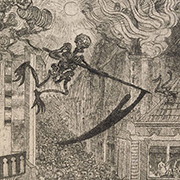
The Dance of Death
Images of Mortality in German Art
January 19, 1993 - March 13, 1993
Art Spiegelman
The Road to Maus
November 17, 1992 - January 9, 1993
Käthe Kollwitz
In Celebration of the 125th Anniversary of the Artist's Birth
September 15, 1992 - November 7, 1992
Naive Visions/Art Nouveau and Expressionism/Sue Coe: The Road to the White House
May 19, 1992 - September 4, 1992
Richard Gerstl/Oskar Kokoschka
March 17, 1992 - May 9, 1992
Scandal, Outrage, Censorship
Controversy in Modern Art
January 21, 1992 - March 7, 1992
Viennese Graphic Design
From Secession to Expressionism
November 19, 1991 - January 11, 1992
The Expressionist Figure
September 10, 1991 - November 9, 1991
Recent Acquisitions
Themes and Variations
May 14, 1991 - August 16, 1991
Sue Coe Retrospective
Political Document of a Decade
March 12, 1991 - May 5, 1991
Gustav Klimt, Egon Schiele, Oskar Kokoschka
Watercolors, drawings and prints
January 22, 1991 - March 2, 1991
Egon Schiele
November 13, 1990 - January 12, 1991
Lovis Corinth
A Retrospective
September 11, 1990 - November 3, 1990
Recent Acquisitions
June 12, 1990 - August 31, 1990
Max Klinger, Käthe Kollwitz, Alfred Kubin
A Study in Influences
March 27, 1990 - June 2, 1990
The Narrative in Art
January 23, 1990 - March 17, 1990
Grandma Moses
November 14, 1989 - January 13, 1990
Sue Coe
Porkopolis--Animals and Industry
September 19, 1989 - November 4, 1989
Galerie St. Etienne
A History in Documents and Pictures
June 20, 1989 - September 8, 1989
Gustav Klimt
Paintings and Drawings
April 11, 1989 - June 10, 1989
Fifty Years Galerie St. Etienne: An Overview
February 14, 1989 - April 1, 1989
Folk Artists at Work
Morris Hirshfield, John Kane and Grandma Moses
November 15, 1988 - January 14, 1989
Recent Acquisitions and Works From the Collection
June 14, 1988 - September 16, 1988
From Art Nouveau to Expressionism
April 12, 1988 - May 27, 1988
Three Pre-Expressionists
Lovis Corinth Käthe Kollwitz Paula Modersohn-Becker
January 26, 1988 - March 12, 1988
Käthe Kollwitz
The Power of the Print
November 17, 1987 - January 16, 1988
Recent Acquisitions and Works From the Collection
April 7, 1987 - October 31, 1987
Folk Art of This Century
February 10, 1987 - March 28, 1987
Oskar Kokoschka and His Time
November 25, 1986 - January 31, 1987
Viennese Design and Wiener Werkstätte
September 23, 1986 - November 8, 1986
Gustav Klimt/Egon Schiele/Oskar Kokoschka
Watercolors, Drawings and Prints
May 27, 1986 - September 13, 1986
Expressionist Painters
March 25, 1986 - May 10, 1986
Käthe Kollwitz/Paula Modersohn-Becker
January 28, 1986 - March 15, 1986
The Art of Giving
December 3, 1985 - January 18, 1986
Expressionists on Paper
October 8, 1985 - November 23, 1985
European and American Landscapes
June 4, 1985 - September 13, 1985
Expressionist Printmaking
Aspects of its Genesis and Development
April 1, 1985 - May 24, 1985
Expressionist Masters
January 18, 1985 - March 23, 1985
Arnold Schoenberg's Vienna
November 13, 1984 - January 5, 1985
Grandma Moses and Selected Folk Paintings
September 25, 1984 - November 3, 1984
American Folk Art
People, Places and Things
June 12, 1984 - September 14, 1984
John Kane
Modern America's First Folk Painter
April 17, 1984 - May 25, 1984
Eugène Mihaesco
The Illustrator as Artist
February 28, 1984 - April 7, 1984
Early Expressionist Masters
January 17, 1984 - February 18, 1984
Paula Modersohn-Becker
Germany's Pioneer Modernist
November 15, 1983 - January 7, 1984
Gustav Klimt
Drawings and Selected Paintings
September 20, 1983 - November 5, 1983
Early and Late
Drawings, Paintings & Prints from Academicism to Expressionism
June 1, 1983 - September 2, 1983
Alfred Kubin
Visions From The Other Side
March 22, 1983 - May 7, 1983
20th Century Folk
The First Generation
January 18, 1983 - March 12, 1983
Grandma Moses
The Artist Behind the Myth
November 15, 1982 - January 8, 1983
Kollwitz
The Artist as Printmaker
September 28, 1982 - November 6, 1982
Aspects of Modernism
June 1, 1982 - September 3, 1982
The Human Perspective
Recent Acquisitions
March 16, 1982 - May 15, 1982
19th and 20th Century European and American Folk Art
January 19, 1982 - March 6, 1982
The Folk Art Tradition
Naïve Painting in Europe and the United States
November 17, 1981 - January 9, 1982
Austria's Expressionism
April 21, 1981 - May 30, 1981
Eugène Mihaesco
His First American One-Man Show
March 3, 1981 - April 11, 1981
Gustav Klimt, Egon Schiele
November 12, 1980 - December 27, 1980
Summer Exhibition
June 17, 1980 - October 31, 1980
Kollwitz: The Drawing and The Print
May 1, 1980 - June 10, 1980
40th Anniversary Exhibition
November 13, 1979 - December 28, 1979
American Primitive Art
November 22, 1977
Käthe Kollwitz
December 1, 1976
Neue Galerie-Galerie St. Etienne
A Documentary Exhibition
May 1, 1976
Martin Pajeck
January 27, 1976
Georges Rouault and Frans Masereel
April 29, 1972
Branko Paradis
December 1, 1971
Käthe Kollwitz
February 3, 1971
Egon Schiele
The Graphic Work
October 19, 1970
Gustav Klimt
March 20, 1970
Friedrich Hundertwasser
May 6, 1969
Austrian Art of the 20th Century
March 21, 1969
Egon Schiele
Memorial Exhibition
October 31, 1968
Yugoslav Primitive Art
April 30, 1968
Alfred Kubin
January 30, 1968
Käthe Kollwitz
In the Cause of Humanity
October 23, 1967
Abraham Levin
September 26, 1967
Karl Stark
April 5, 1967
Gustav Klimt
February 4, 1967
The Wiener Werkstätte
November 16, 1966
Oskar Laske
October 25, 1965
Käthe Kollwitz
May 1, 1965
Egon Schiele
Watercolors and Drawings from American Collections
March 1, 1965
25th Anniversary Exhibition
Part II
November 21, 1964
25th Anniversary Exhibition
Part I
October 17, 1964
Mary Urban
June 9, 1964
Werner Berg, Jane Muus and Mura Dehn
May 5, 1964
Eugen Spiro
April 4, 1964
B. F. Dolbin
Drawings of an Epoch
March 3, 1964
Austrian Expressionists
January 6, 1964
Joseph Rifesser
December 3, 1963
Panorama of Yugoslav Primitive Art
October 21, 1963
Joe Henry
Watercolors of Vermont
May 1, 1963
French Impressionists
March 8, 1963
Grandma Moses
Memorial Exhibition
November 26, 1962
Group Show
October 15, 1962
Ernst Barlach
March 23, 1962
Martin Pajeck
February 24, 1962
Paintings by Expressionists
January 27, 1962
Käthe Kollwitz
November 11, 1961
Grandma Moses
September 7, 1961
My Friends
Fourth Biennial of Pictures by American School Children
May 27, 1961
Raimonds Staprans
April 17, 1961
Gustav Klimt, Egon Schiele, Oskar Kokoschka and Alfred Kubin
March 14, 1961
Marvin Meisels
January 23, 1961
Egon Schiele
November 15, 1960
My Life's History
Paintings by Grandma Moses
September 12, 1960
Watercolors and Drawings by Austrian Artists from the Dial Collection
May 2, 1960
Martin Pajeck
February 29, 1960
Eugen Spiro
February 6, 1960
Käthe Kollwitz
December 14, 1959
Josef Scharl
Last Paintings and Drawings
November 11, 1959
European and American Expressionists
September 22, 1959
Our Town
One Hundred Paintings by American School Children
May 23, 1959
Marvin Meisels and Martin Pajeck
May 1, 1959
Gustav Klimt
April 1, 1959
Käthe Kollwitz
January 12, 1959
Oskar Kokoschka
October 28, 1958
Village Life in Guatemala
Paintings by Andres Curuchich
June 3, 1958
Two Unknown American Expressionists
Paintings by Marvin Meisels and Martin Pajeck
April 28, 1958
Paula Modersohn-Becker
March 15, 1958
The Great Tradition in American Painting
American Primitive Art
January 20, 1958
Jules Lefranc and Dominique Lagru
Two French Primitives
November 18, 1957
Margret Bilger
October 22, 1957
The Four Seasons
One Hundred Paintings by American School Children
June 11, 1957
Grandma Moses
May 6, 1957
Alfred Kubin
April 3, 1957
Franz Lerch
March 2, 1957
Egon Schiele
January 21, 1957
Josef Scharl
Memorial Exhibition
November 17, 1956
Irma Rothstein
May 19, 1956
Käthe Kollwitz
April 16, 1956
A Tribute to Grandma Moses
November 28, 1955
As I See Myself
One Hundred Paintings by American School Children
May 20, 1955
Juan De'Prey
April 19, 1955
Erich Heckel
March 29, 1955
Freddy Homburger
March 2, 1955
Masters of the 19th Century
January 18, 1955
Oskar Kokoschka
November 29, 1954
Isabel Case Borgatta and Josef Scharl
October 12, 1954
James N. Rosenberg and Eugen Spiro
April 30, 1954
Per Krogh
April 2, 1954
Cuno Amiet
February 16, 1954
Eniar Jolin
January 14, 1954
Irma Rothstein
December 8, 1953
Josef Scharl
November 11, 1953
Grandma Moses
October 21, 1953 - October 24, 1953
Wilhelm Kaufmann
September 30, 1953
Lovis Corinth, Oskar Kokoschka and Egon Schiele
May 27, 1953
A Grandma Moses Album
Recent Paintings, 1950-1953
April 15, 1953
Streeter Blair
American Primitive
February 26, 1953
Paintings on Glass
Austrian Religious Folk Art of the 17th to 19th Centuries
December 4, 1952
Hasan Kaptan
Paintings of a Ten-Year-Old Turkish Painter
October 29, 1952
Margret Bilger
May 10, 1952
American Natural Painters
March 31, 1952
Ten Years of New York Concert Impressions by Eugen Spiro; Four New Paintings by
January 26, 1952
I-Fa-Wei
Watercolors of New York by a Chinese Artist
December 1, 1951
Käthe Kollwitz
October 25, 1951
Drawings and Watercolors by Austrian Children
May 21, 1951
Grandma Moses
Twenty-Five Masterpieces of Primitive Art
March 17, 1951
Roswitha Bitterlich
January 18, 1951
Oskar Laske
Watercolors of Vienna and the Salzkammergut
October 14, 1950
Tenth Anniversary Exhibition
Part II
May 11, 1950
Austrian Art of the 19th Century
From Wadlmüller to Klimt
April 1, 1950
Chiao Ssu-Tu
February 18, 1950
Anton Faistauer
January 1, 1950
Tenth Anniversary Exhibition
Part I
November 30, 1949
Autograph Exhibition
October 26, 1949
Gladys Wertheim Bachrach
May 24, 1949
Oskar Kokoschka
March 30, 1949
Eugen Spiro
February 19, 1949
Frans Masereel
January 13, 1949
Ten Years Grandma Moses
November 22, 1948
Käthe Kollwitz
Masterworks
October 18, 1948
American Primitives
June 3, 1948
Egon Schiele
Memorial Exhibition
April 5, 1948
Miriam Richman
February 7, 1948
Vally Wieselthier
Memorial Exhibition
January 10, 1948
Christmas Exhibition
December 4, 1947
Fritz von Unruh
November 10, 1947
Käthe Kollwitz
October 4, 1947
Grandma Moses
May 17, 1947
Lovis Corinth
April 16, 1947
Hugo Steiner-Prag
March 15, 1947
Mark Baum
January 11, 1947
Eugen Spiro
November 25, 1946
Henri de Toulouse-Lautrec
May 17, 1946
Ladis W. Sabo
Paintings by a New Primitive Artist
April 8, 1946
Georges Rouault
The Graphic Work
February 26, 1946
Käthe Kollwitz
Memorial Exhibition
November 21, 1945
Fred E. Robertson
Paintings by an American Primitive
June 13, 1945
Max Liebermann
The Graphic Work
April 18, 1945
Vienna through Four Centuries
March 1, 1945
Eugen Spiro
January 20, 1945
Grandma Moses
New Paintings
December 5, 1944
Käthe Kollwitz
Part II
October 26, 1944
A Century of French Graphic Art
From Géricault to Picasso
September 28, 1944
Max Liebermann
Memorial Exhibition
June 9, 1944
Juan De'Prey
Paintings by a Self-Taught Artist from Puerto Rico
May 6, 1944
Abraham Levin
April 15, 1944
Lesser Ury
Memorial Exhibition
March 21, 1944
Grandma Moses
Paintings by the Senior of the American Primitives
February 9, 1944
Betty Lane
January 11, 1944
WaIt Disney Cavalcade
December 9, 1943
Käthe Kollwitz
Part I
November 3, 1943
Will Barnet
September 29, 1943
Lovis Corinth
May 26, 1943
Josephine Joy
Paintings by an American Primitive
May 3, 1943
Oskar Kokoschka
Aspects of His Art
March 31, 1943
Eugen Spiro
February 13, 1943
Seymour Lipton
January 18, 1943
Illuminated Gothic Woodcuts
Printed and Painted, 1477-1493
December 5, 1942
Abraham Levin
November 4, 1942
Walt Disney Originals
September 23, 1942
Documents which Relate History
Documents of Historical Importance and Landmarks of Human Development
June 10, 1942
Honoré Daumier
April 29, 1942
Bertha Trabich
Memorial Exhibition of a Russian-American Primitive
March 25, 1942
Alfred Kubin
Master of Drawing
December 4, 1941
Egon Schiele
November 7, 1941
Betty Lane
June 3, 1941
Flowers from Old Vienna
18th and Early 19th Century Flower Painting
May 7, 1941
Weavings by Navaho and Hopi Indians and Photos of Indians by Helen M. Post
January 29, 1941
Georg Merkel
November 7, 1940
What a Farm Wife Painted
Works by Mrs. Anna Mary Moses
October 9, 1940
Saved from Europe
Masterpieces of European Art
July 1, 1940
American Abstract Art
May 22, 1940
Franz Lerch
May 1, 1940
Wilhelm Thöny
April 3, 1940
French Masters of the 19th and 20th Centuries
February 29, 1940
H. W. Hannau
Metropolis, Photographic Studies of New York
February 2, 1940
Oskar Kokoschka
January 9, 1940
Austrian Masters
November 13, 1939
THE "BLACK-AND-WHITE" SHOW
Expressionist Graphics in Austria & Germany
Barlach, Ernst
Beckmann, Max
Campendonk, Heinrich
Corinth, Lovis
Dix, Otto
Feininger, Lyonel
Heckel, Erich
Jansen, Franz M.
Kandinsky, Vasily
Kirchner, Ernst Ludwig
Klinger, Max
Kokoschka, Oskar
Kollwitz, Käthe
Kubin, Alfred
Kurzweil, Maximillian
Liebermann, Max
Modersohn-Becker, Paula
Mueller, Otto
Nolde, Emil
Orlik, Emil
Pechstein, Hermann Max
Schaefler, Fritz
Schiele, Egon
Schmidt-Rottluff, Karl
Vogeler, Heinrich
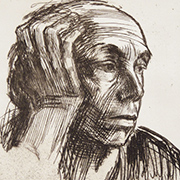
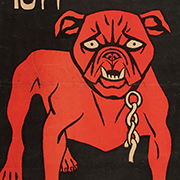
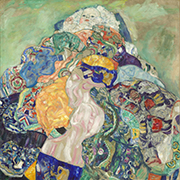
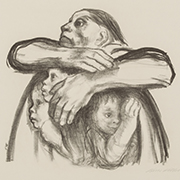
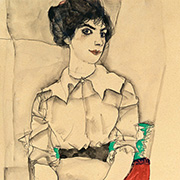
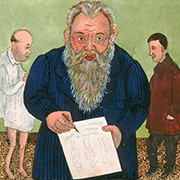
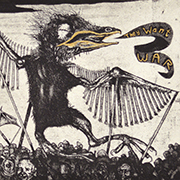
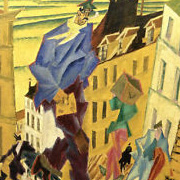
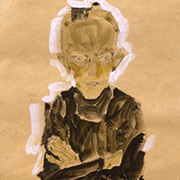
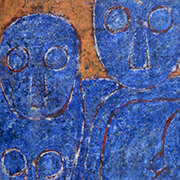
The present exhibition takes its subject from the Schwarz-Weiss Ausstellung (Black-and-White Exhibition), a staple of the German and Austrian art scene in the early decades of the twentieth century. Many more recent exhibitions and studies have highlighted the centrality of printmaking to Expressionism, but the Schwarz-Weiss Ausstellung differed from these comparatively academic efforts in that it had a broader sweep and enjoyed greater input from the artists themselves. In its original incarnation, the "Black-and-White Show" usually included drawings as well as prints and, despite its name, comprised colored as well as monochromatic works. While these presentations were endemic to Germany and Austria, their content was not necessarily confined to local contributions. The "International Black-and-White Exhibition" was a cost-effective way to import an array of foreign art, as well as a means of demonstrating the transnational camaraderie that characterized modernism before World War I. A Schwarz-Weiss Ausstellung did not focus on a specific style, nationality or medium, but rather on the aesthetic qualities peculiar to line and graphic expression. By endeavoring to elevate the graphic arts to the stature enjoyed by painting and sculpture, these exhibitions helped legitimize printmaking and may be held partly responsible for the preeminence enjoyed by graphics within the Expressionist canon.
In mid-nineteenth-century Germany, printmaking flourished as a means of mechanical reproduction but was almost never viewed as a creative medium by fine artists. Etching societies, which proliferated in England in the 1860s and subsequently became popular in Germany, helped to gradually undermine this prejudice. However, the turning point in the evolution of German printmaking came with Max Klinger, the first major artist in several generations to etch and proof his own plates. Not only were Klinger's print cycles, such as A Glove, Dramas and A Life, models of their kind, they illustrated a creative philosophy that was to reverberate among artists for decades to come. In his seminal 1891 treatise, Malerei und Zeichnung (Painting and Drawing), Klinger argued for the unique role--separate but equal--of drawing and graphic expression among the various arts. Painting and color are suited to the replication of observed reality, he wrote, while drawing and printmaking are best reserved for fantasy and ideas. Painting, in this view, was almost vulgar, leaving nothing to the imagination, while black-and-white art allowed access to a much wider realm of thoughts and feelings. Klinger's theories in essence paved the way for the Expressionists' wholesale restructuring of artistic goals, sanctioning an expanded agenda that could range from the intensely personal to the overtly political. It is probably no coincidence that many Expressionists evolved their formal vocabulary first through printmaking, and only later applied these lessons to painting.
In one fell swoop, Klinger freed drawing from its former subservience to painting, and printmaking from the limitations of rote reproduction. His own work, though hardly revolutionary by present-day standards, proved extremely influential. Klinger's aesthetic hovered somewhere between the nineteenth century and the twentieth. Modern in content but academic in execution, his etching cycles tended to focus on elaborate narratives depicted in meticulously detailed representational settings. Käthe Kollwitz was inspired by these works to craft her socio-political print series, The Revolt of the Weavers and Peasants' War, while Alfred Kubin and others saw Klinger as a stepping-stone toward Surrealism. Both Kollwitz and Kubin, in their earliest works, approximated Klinger's narrative approach, which seduced the audience into accepting the artist's views by presenting them in the guise of a shared reality.
Where Klinger encouraged artists to craft alternate realities that served their particular visions, his followers would eventually invent an entirely new, abstract formal language more directly in sync with their expressive goals. Carrying Klinger's theories beyond the realm of mere content, artists began to investigate the graphic qualities intrinsic to each of the printmaking mediums. Klinger and Kollwitz had exploited the multitude of etching techniques designed to replicate light and shade and volume, but later artists were drawn to drypoint, a medium that allowed for far greater immediacy at the expense of tonal range. Even more so than drypoint, lithography could duplicate with breathtaking fidelity the spontaneity of an artist's drawing. But the signature printmaking medium of the Expressionist generation was woodcut. Revived in the 1890s by artists like Aubrey Beardsley and Felix Valloton, the art of woodblock printing was furthered by the contemporaneous interest in Japanese prints and the flat graphic style prevalent during the Art Nouveau period. However, the key influence in Germany was Edvard Munch, the first artist to directly incorporate the tactile qualities of wood into his prints.
By the turn of the twentieth century, a decisive rift had developed between the conventional forces of academia and the still inchoate modern movement. This rift manifested itself in periodic art-world scandals and found organizational acknowledgment in the Secession movements that sprouted throughout Germany and Austria in the 1890s. The Secessions' leaders were members of a transitional generation: artists like Lovis Corinth, Gustav Klimt, Max Liebermann and Carl Moll, who were not capable of altogether severing their ties to the academic traditions which had nurtured them in their youths. Nonetheless, by routinely exhibiting foreign modernism, the Secessionists established an international network for the exchange of new ideas that helped prepare the ground for Expressionism.
Graphics featured prominently in the Secessionist agenda, particularly in Berlin, where an annual "Black-and-White Exhibition" was held every winter. As business manager of the Berlin Secession, the dealer Paul Cassirer played a pivotal role in capitalizing and expanding upon the burgeoning interest in prints. In 1908, he brought over a group of master printers from Paris and established his own publishing enterprise, the Pan-Presse. Cassirer encouraged a number of artists to make lithographs and etchings, including Ernst Barlach, Max Beckmann, Lovis Corinth and Max Liebermann. Some of these, like Corinth and Liebermann, had earlier tried their hands at printmaking with no success, while Barlach, who would become one of the great printmakers of the Expressionist era, had never before even considered lithography.
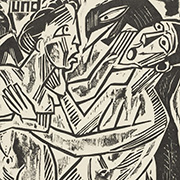
Expressionism ultimately emerged without the benefit of backing from the Secessions or any other formal institution. In fact, it was just as the most advanced artists were leaving the Vienna Secession, in 1905, that Germany spawned its first full-fledged modernist cell, the Brücke (Bridge) group. As was typical of such groups, membership shifted over time, but the Brücke's core included Erich Heckel, Ernst Ludwig Kirchner, Emil Nolde, Max Pechstein and Karl Schmidt-Rottluff. These artists, initially based in Dresden, were up on all the latest foreign trends, and they embraced an amalgam of influences that encompassed the work of Gauguin, Van Gogh and the Fauves, as well as African and Melanesian art. Eschewing the meticulous craftsmanship and finish of their academic forebears, the Brücke artists sought an immediacy of effect that naturally gave pride of place to drawing and printmaking.
Perhaps because many of its members were essentially self-taught, the Brücke blithely ignored generations of technical tradition and essentially reinvented the arts of etching, lithography and woodcut. The artists' direct involvement, not just with the creation of the plate, stone or block, but with the printing process itself, was so intense and personal that often no two prints from the same edition looked exactly alike. The group's total output was prodigious: Heckel, for example, produced more than 1,000 prints, Pechstein 805, and Kirchner over 2,000. Printmaking was also used to great promotional effect by the Brücke, which circulated more than 50 traveling exhibitions featuring graphics, and solicited support from "passive" members, who were rewarded with an annual print portfolio.
Printmaking was less crucial to the Blauer Reiter (Blue Rider), Germany's other principal Expressionist group. The Blauer Reiter, which counted among its followers Lyonel Feininger, Vasily Kandinsky, Paul Klee, Alfred Kubin, August Macke, Franz Marc and Gabriele Münter, was shorter lived and less cohesive than the Brücke. Of the various members, Feininger, Kandinsky and Kubin produced the most substantive print oeuvres, the latter two for the most part long after they had severed any formal ties to Expressionism. Still, it is noteworthy that the Blauer Reiter's second public show, held at the Galerie Goltz in Munich in 1912, was a Schwarz-Weiss Ausstellung. A survey of over 300 Expressionist prints, watercolors and drawings, it included works by many artists beyond the limited circle of the Blauer Reiter, and summarized, as it were, the state of the art at that historical moment.
At this time, the term "Expressionist," when it was used at all, often encompassed both foreign and domestic art. Marc made it clear in the Blauer Reiter's famous "Almanac" that he considered himself and his comrades counterparts to the French Fauves (dubbed "Wilden" in German). While the drive to create a new type of art might momentarily coalesce in groups such as the Brücke or the Blauer Reiter, the underlying impulse was ultimately too unruly and too widespread to be constrained for long in that manner. In Austria, there never were any particularly effective formal groups associated with Expressionism. Egon Schiele tried in vain to unite his jealous and back-stabbing colleagues, while Oskar Kokoschka quickly embarked for the friendlier environment of Berlin, where he found succor with Herwarth Walden's Sturm gallery. Thus Expressionism, in the period prior to World War I, had neither a cohesive identity nor a generally
accepted name.
Even before the war, the Austrian and German avant-garde had periodically been assaulted by nationalistic attacks. Where some saw the Secessions' promotion of foreign art as beneficial to domestic production, others whined that these exhibitions sullied the nation's artistic integrity. The move to define and defend Expressionism as a distinctly Germanic style grew out of such critiques. Some printmakers justified their efforts by allying themselves with Dürer and the native Gothic tradition, invoking a mystical German reverence for wood. Arguments like these gathered steam after World War I, which had decisively shattered all illusions of transnational European cohesion. In the catalogue of what may have been the last significant "International Black-and-White Exhibition," held in Salzburg in 1921, a hope was expressed that art could somehow heal the nationalistic wounds left by the war. It was not to be.
Printmaking, too, was transformed by World War I. Ironically, the inflation that hit Germany and Austria in the years immediately following the war proved a boon to print publishers, as consumers rushed to invest their nearly worthless currency in any sort of tangible property. Unfortunately for the publishers, even sold-out editions often did not meet production costs, so much had the money been devalued by the time the bills came due. The rush to publish generated an outpouring of print cycles and portfolios by such artists as Beckmann, Otto Dix and Kokoschka. In this manner, the Expressionist print went out in a blaze of glory. After currency stabilization in 1923, the print market collapsed, and many artists never returned to the medium with comparable vigor.
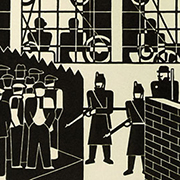
Other factors also contributed to the demise of the Expressionist print. In the highly politicized atmosphere of postwar Germany and Austria, Expressionism was considered to be a bourgeois affectation. Printmaking was still important as a way of delivering political messages to the masses, but the specifically individualistic, personal and tactile aspects of the Expressionist print were anathema to a new generation of artists who, like George Grosz, worked in the service of a hoped-for socialist revolution. Many Expressionists, of course, continued to produce prints in the 1920s, but some of the most successful printmakers of that era were actually members of the earlier, transitional generation. Artists like Kollwitz and Barlach perfected a direct graphic style that adapted the Expressionists' formal innovations to the presentation of the social and political themes that had always interested them and that were now at the forefront of public consciousness.
In retrospect, the goals set forth by the most ardent ideologues of the Schwarz-Weiss Ausstellung were never fully realized. Drawing did not entirely cease to be subordinate to the "higher" arts of painting and sculpture. Nor did printmaking ever altogether lose its utility as a means of reproducing works in other mediums. Not all the Expressionists, after all, had the inclination to become deeply involved with the printmaking process. Many were quite happy with transfer lithography, which allowed for the easy reproduction of ink or crayon drawings. Throughout Europe, the print came to play a hybrid role: often more fully realized than a drawing, yet freer and more spontaneous than a painting. Certainly Expressionism improved the status of drawing and printmaking, but the "Black-and-White" shows were probably most important for the manner in which they realigned medium and message, creating a new relationship between form and content that in effect set the tone for the entire modernist enterprise.
We would like to extend our grateful thanks to the colleagues and private collectors whose generous contributions made this exhibition possible. Checklist entries include catalogue raisonné numbers, where applicable. Unless otherwise indicated, image dimensions are given for the prints and full dimensions for all other works.