The Ins and Outs of Self-Taught Art
Reflections on a Shifting Field
January 10, 2012 - April 7, 2012
The Lady and the Tramp
Images of Women in Austrian and German Art
October 11, 2011 - December 30, 2011
Recent Acquisitions
(And Some Thoughts on the Current Art Market)
July 5, 2011 - September 30, 2011
Decadence & Decay
Max Beckmann, Otto Dix, George Grosz
April 12, 2011 - June 24, 2011
Self-Taught Painters in American 1800-1950
Revisiting the Tradition
January 11, 2011 - April 2, 2011
Marie-Louise Motesiczky
Paradise Lost & Found
October 12, 2010 - December 30, 2010
Recent Acquisitions
(And Some Thoughts on the Current Art Market)
July 13, 2010 - October 1, 2010
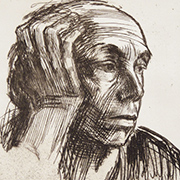
Käthe Kollwitz
A Portrait of the Artist
April 13, 2010 - June 25, 2010
Seventy Years Grandma Moses
A Loan Exhibition Celebrating the 70th Anniversary of the Artist's "Discovery"
February 3, 2010 - April 3, 2010
Egon Schiele as Printmaker
A Loan Exhibition Celebrating the 70th Anniversary of the Galerie St. Etienne
November 3, 2009 - January 23, 2010
From Brücke To Bauhaus
The Meanings of Modernity in Germany, 1905-1933
March 31, 2009 - June 26, 2009
They Taught Themselves
American Self-Taught Painters Between the World Wars
January 9, 2009 - March 14, 2009
Elephants We Must Never Forget
New Paintings Drawings and Prints by Sue Coe
October 14, 2008 - December 20, 2008
Recent Acquisitions
(And Some Thoughts on the Current Art Market)
June 24, 2008 - September 26, 2008
Hope or Menace?
Communism in Germany Between the World Wars
March 25, 2008 - June 13, 2008
Transforming Reality
Pattern and Design in Modern and Self-Taught Art
January 15, 2008 - March 8, 2008
Leonard Baskin
Proofs and Process
October 9, 2007 - January 5, 2008
Recent Acquisitions
(And Some Thoughts on the Current Art Market)
June 5, 2007 - September 28, 2007
Who Paid the Piper?
The Art of Patronage in Fin-de-Siècle Vienna
March 8, 2007 - May 26, 2007
Fairy Tale, Myth and Fantasy
Approaches to Spirituality in Art
December 7, 2006 - February 3, 2007
More Than Coffee was Served
Café Culture in Fin-de-Siècle Vienna and Weimar Germany
September 19, 2006 - November 25, 2006
Recent Acquisitions
(And Some Thoughts on the Current Art Market)
June 6, 2006 - September 8, 2006
Parallel Visions II
"Outsider" and "Insider" Art Today
April 5, 2006 - May 26, 2006
Ilija!
His First American Exhibtion
January 17, 2006 - March 18, 2006
Coming of Age
Egon Schiele and the Modernist Culture of Youth
November 15, 2005 - January 7, 2006
Sue Coe:
Sheep of Fools
September 20, 2005 - November 5, 2005
Recent Acquisitions
And Some Thoughts on the Current Art Market
June 7, 2005 - September 9, 2005
Every Picture Tells a Story
The Narrative Impulse in Modern and Contemporary Art
April 5, 2005 - May 27, 2005
65th Anniversary Exhibition, Part II
Self-Taught Artists
January 18, 2005 - March 26, 2005
65th Anniversary Exhibition, Part I
Austrian and German Expressionism
October 28, 2004 - January 8, 2005
Sue Coe: Bully: Master of the Global Merry-Go-Round and Recent Acquisitions
(And Some Thoughts on the Current Art Market)
June 8, 2004 - October 16, 2004
Animals & Us
The Animal in Contemporary Art
April 1, 2004 - May 22, 2004
Henry Darger
Art and Myth
January 15, 2004 - March 20, 2004
Body and Soul
Expressionism and the Human Figure
October 7, 2003 - January 3, 2004
Recent Acquisitions
(And Some Thoughts on the Current Art Market)
June 24, 2003 - September 12, 2003
In Search of the "Total Artwork"
Viennese Art and Design 1897–1932
April 8, 2003 - June 14, 2003
Russia's Self-Taught Artists
A New Perspective on the "Outsider"
January 14, 2003 - March 29, 2003
Käthe Kollwitz:
Master Printmaker
October 1, 2002 - January 4, 2003
Recent Acquisitions
(And Some Thoughts on the Current Art Market)
June 25, 2002 - September 20, 2002
Workers of the World
Modern Images of Labor
April 2, 2002 - June 15, 2002
Grandma Moses
Reflections of America
January 15, 2002 - March 16, 2002
Gustav Klimt/Egon Schiele/Oskar Kokoscha
From Art Nouveau to Expressionism
November 23, 2001 - January 5, 2002
The "Black-and-White" Show
Expressionist Graphics in Austria & Germany
September 20, 2001 - November 10, 2001
Recent Acquisitions (And Some Thoughts on the Current Art Market)
June 26, 2001 - September 7, 2001
Art with an Agenda
Politics, Persuasion, Illustration and Decoration
April 10, 2001 - June 16, 2001
"Our Beautiful and Tormented Austria!": Art Brut in the Land of Freud
January 18, 2001 - March 17, 2001
The Tragedy of War
November 16, 2000 - January 6, 2001
The Expressionist City
September 19, 2000 - November 4, 2000
Recent Acquisitions (And Some Thoughts on the Current Art Market)
June 20, 2000 - September 8, 2000
From Façade to Psyche
Turn-of-the-Century Portraiture in Austria & Germany
March 28, 2000 - June 10, 2000
European Self-Taught Art
Brut or Naive?
January 18, 2000 - March 11, 2000
Saved From Europe
In Commemoration of the 60th Anniversary of the Galerie St. Etienne
November 6, 1999 - January 8, 2000
The Modern Child
(Images of Children in Twentieth-Century Art)
September 14, 1999 - November 6, 1999
Recent Acquisitions
(And a Look at Sixty Years of Art Dealing)
June 15, 1999 - September 3, 1999
Sue Coe: The Pit
The Tragical Tale of the Rise and Fall of a Vivisector
March 30, 1999 - June 5, 1999
Henry Darger and His Realms
January 14, 1999 - March 13, 1999
Becoming Käthe Kollwitz
An Artist and Her Influences
November 17, 1998 - December 31, 1998
George Grosz - Elfriede Lohse-Wächtler
Art & Gender in Weimar Germany
September 23, 1998 - November 11, 1998
Recent Acquisitions
(And Some Thoughts About Looted Art)
June 9, 1998 - September 11, 1998
Taboo
Repression and Revolt in Modern Art
March 26, 1998 - May 30, 1998
Sacred & Profane
Michel Nedjar and Expressionist Primitivism
January 13, 1998 - March 14, 1998
Egon Schiele (1890-1918)
Master Draughtsman
November 18, 1997 - January 3, 1998
The New Objectivity
Realism in Weimar-Era Germany
September 16, 1997 - November 8, 1997
Recent Acquisitions
A Question of Quality
June 10, 1997 - September 5, 1997
Käthe Kollwitz - Lea Grundig
Two German Women & The Art of Protest
March 25, 1997 - May 31, 1997
That Way Madness Lies
Expressionism and the Art of Gugging
January 14, 1997 - March 15, 1997
The Viennese Line
Art and Design Circa 1900
November 18, 1996 - January 4, 1997
Emil Nolde - Christian Rohlfs
Two German Expressionist Masters
September 24, 1996 - November 9, 1996
Breaking All The Rules
Art in Transition
June 11, 1996 - September 6, 1996
Sue Coe's Ship of Fools
March 26, 1996 - May 24, 1996
New York Folk
Lawrence Lebduska, Abraham Levin, Isreal Litwak
January 16, 1996 - March 16, 1996
The Fractured Form
Expressionism and the Human Body
November 15, 1995 - January 6, 1996
From Left to Right
Social Realism in Germany and Russia, Circa 1919-1933
September 19, 1995 - November 4, 1995
Recent Acquisitions
June 20, 1995 - September 8, 1995
On the Brink 1900-2000
The Turning of Two Centuries
March 28, 1995 - May 26, 1995
Earl Cummingham - Grandma Moses
Visions of America
January 17, 1995 - March 18, 1995
Three Berlin Artists of the Weimar Era: Hannah Höch, Käthe Kollwitz, Jeanne Mam
September 13, 1994 - November 5, 1994
55th Anniversary Exhibition in Memory of Otto Kallir
June 7, 1994 - September 2, 1994
Drawn to Text: Comix Artists as Book Illustrators
May 15, 1994 - January 7, 1995
Sue Coe: We All Fall Down
March 29, 1994 - May 27, 1994
The Forgotten Folk Art of the 1940's
January 18, 1994 - March 19, 1994
Symbolism and the Austrian Avant Garde
Klimt, Schiele and their Contemporaries
November 16, 1993 - January 8, 1994
Art and Politics in Weimar Germany
September 14, 1993 - November 6, 1993
Recent Acquisitions
June 8, 1993 - September 3, 1993
The "Outsider" Question
Non-Academic Art from 1900 to the Present
March 23, 1993 - May 28, 1993
The Dance of Death
Images of Mortality in German Art
January 19, 1993 - March 13, 1993
Art Spiegelman
The Road to Maus
November 17, 1992 - January 9, 1993
Käthe Kollwitz
In Celebration of the 125th Anniversary of the Artist's Birth
September 15, 1992 - November 7, 1992
Naive Visions/Art Nouveau and Expressionism/Sue Coe: The Road to the White House
May 19, 1992 - September 4, 1992
Richard Gerstl/Oskar Kokoschka
March 17, 1992 - May 9, 1992
Scandal, Outrage, Censorship
Controversy in Modern Art
January 21, 1992 - March 7, 1992
Viennese Graphic Design
From Secession to Expressionism
November 19, 1991 - January 11, 1992
The Expressionist Figure
September 10, 1991 - November 9, 1991
Recent Acquisitions
Themes and Variations
May 14, 1991 - August 16, 1991
Sue Coe Retrospective
Political Document of a Decade
March 12, 1991 - May 5, 1991
Gustav Klimt, Egon Schiele, Oskar Kokoschka
Watercolors, drawings and prints
January 22, 1991 - March 2, 1991
Egon Schiele
November 13, 1990 - January 12, 1991
Lovis Corinth
A Retrospective
September 11, 1990 - November 3, 1990
Recent Acquisitions
June 12, 1990 - August 31, 1990
Max Klinger, Käthe Kollwitz, Alfred Kubin
A Study in Influences
March 27, 1990 - June 2, 1990
The Narrative in Art
January 23, 1990 - March 17, 1990
Grandma Moses
November 14, 1989 - January 13, 1990
Sue Coe
Porkopolis--Animals and Industry
September 19, 1989 - November 4, 1989
Galerie St. Etienne
A History in Documents and Pictures
June 20, 1989 - September 8, 1989
Gustav Klimt
Paintings and Drawings
April 11, 1989 - June 10, 1989
Fifty Years Galerie St. Etienne: An Overview
February 14, 1989 - April 1, 1989
Folk Artists at Work
Morris Hirshfield, John Kane and Grandma Moses
November 15, 1988 - January 14, 1989
Recent Acquisitions and Works From the Collection
June 14, 1988 - September 16, 1988
From Art Nouveau to Expressionism
April 12, 1988 - May 27, 1988
Three Pre-Expressionists
Lovis Corinth Käthe Kollwitz Paula Modersohn-Becker
January 26, 1988 - March 12, 1988
Käthe Kollwitz
The Power of the Print
November 17, 1987 - January 16, 1988
Recent Acquisitions and Works From the Collection
April 7, 1987 - October 31, 1987
Folk Art of This Century
February 10, 1987 - March 28, 1987
Oskar Kokoschka and His Time
November 25, 1986 - January 31, 1987
Viennese Design and Wiener Werkstätte
September 23, 1986 - November 8, 1986
Gustav Klimt/Egon Schiele/Oskar Kokoschka
Watercolors, Drawings and Prints
May 27, 1986 - September 13, 1986
Expressionist Painters
March 25, 1986 - May 10, 1986
Käthe Kollwitz/Paula Modersohn-Becker
January 28, 1986 - March 15, 1986
The Art of Giving
December 3, 1985 - January 18, 1986
Expressionists on Paper
October 8, 1985 - November 23, 1985
European and American Landscapes
June 4, 1985 - September 13, 1985
Expressionist Printmaking
Aspects of its Genesis and Development
April 1, 1985 - May 24, 1985
Expressionist Masters
January 18, 1985 - March 23, 1985
Arnold Schoenberg's Vienna
November 13, 1984 - January 5, 1985
Grandma Moses and Selected Folk Paintings
September 25, 1984 - November 3, 1984
American Folk Art
People, Places and Things
June 12, 1984 - September 14, 1984
John Kane
Modern America's First Folk Painter
April 17, 1984 - May 25, 1984
Eugène Mihaesco
The Illustrator as Artist
February 28, 1984 - April 7, 1984
Early Expressionist Masters
January 17, 1984 - February 18, 1984
Paula Modersohn-Becker
Germany's Pioneer Modernist
November 15, 1983 - January 7, 1984
Gustav Klimt
Drawings and Selected Paintings
September 20, 1983 - November 5, 1983
Early and Late
Drawings, Paintings & Prints from Academicism to Expressionism
June 1, 1983 - September 2, 1983
Alfred Kubin
Visions From The Other Side
March 22, 1983 - May 7, 1983
20th Century Folk
The First Generation
January 18, 1983 - March 12, 1983
Grandma Moses
The Artist Behind the Myth
November 15, 1982 - January 8, 1983
Kollwitz
The Artist as Printmaker
September 28, 1982 - November 6, 1982
Aspects of Modernism
June 1, 1982 - September 3, 1982
The Human Perspective
Recent Acquisitions
March 16, 1982 - May 15, 1982
19th and 20th Century European and American Folk Art
January 19, 1982 - March 6, 1982
The Folk Art Tradition
Naïve Painting in Europe and the United States
November 17, 1981 - January 9, 1982
Austria's Expressionism
April 21, 1981 - May 30, 1981
Eugène Mihaesco
His First American One-Man Show
March 3, 1981 - April 11, 1981
Gustav Klimt, Egon Schiele
November 12, 1980 - December 27, 1980
Summer Exhibition
June 17, 1980 - October 31, 1980
Kollwitz: The Drawing and The Print
May 1, 1980 - June 10, 1980
40th Anniversary Exhibition
November 13, 1979 - December 28, 1979
American Primitive Art
November 22, 1977
Käthe Kollwitz
December 1, 1976
Neue Galerie-Galerie St. Etienne
A Documentary Exhibition
May 1, 1976
Martin Pajeck
January 27, 1976
Georges Rouault and Frans Masereel
April 29, 1972
Branko Paradis
December 1, 1971
Käthe Kollwitz
February 3, 1971
Egon Schiele
The Graphic Work
October 19, 1970
Gustav Klimt
March 20, 1970
Friedrich Hundertwasser
May 6, 1969
Austrian Art of the 20th Century
March 21, 1969
Egon Schiele
Memorial Exhibition
October 31, 1968
Yugoslav Primitive Art
April 30, 1968
Alfred Kubin
January 30, 1968
Käthe Kollwitz
In the Cause of Humanity
October 23, 1967
Abraham Levin
September 26, 1967
Karl Stark
April 5, 1967
Gustav Klimt
February 4, 1967
The Wiener Werkstätte
November 16, 1966
Oskar Laske
October 25, 1965
Käthe Kollwitz
May 1, 1965
Egon Schiele
Watercolors and Drawings from American Collections
March 1, 1965
25th Anniversary Exhibition
Part II
November 21, 1964
25th Anniversary Exhibition
Part I
October 17, 1964
Mary Urban
June 9, 1964
Werner Berg, Jane Muus and Mura Dehn
May 5, 1964
Eugen Spiro
April 4, 1964
B. F. Dolbin
Drawings of an Epoch
March 3, 1964
Austrian Expressionists
January 6, 1964
Joseph Rifesser
December 3, 1963
Panorama of Yugoslav Primitive Art
October 21, 1963
Joe Henry
Watercolors of Vermont
May 1, 1963
French Impressionists
March 8, 1963
Grandma Moses
Memorial Exhibition
November 26, 1962
Group Show
October 15, 1962
Ernst Barlach
March 23, 1962
Martin Pajeck
February 24, 1962
Paintings by Expressionists
January 27, 1962
Käthe Kollwitz
November 11, 1961
Grandma Moses
September 7, 1961
My Friends
Fourth Biennial of Pictures by American School Children
May 27, 1961
Raimonds Staprans
April 17, 1961
Gustav Klimt, Egon Schiele, Oskar Kokoschka and Alfred Kubin
March 14, 1961
Marvin Meisels
January 23, 1961
Egon Schiele
November 15, 1960
My Life's History
Paintings by Grandma Moses
September 12, 1960
Watercolors and Drawings by Austrian Artists from the Dial Collection
May 2, 1960
Martin Pajeck
February 29, 1960
Eugen Spiro
February 6, 1960
Käthe Kollwitz
December 14, 1959
Josef Scharl
Last Paintings and Drawings
November 11, 1959
European and American Expressionists
September 22, 1959
Our Town
One Hundred Paintings by American School Children
May 23, 1959
Marvin Meisels and Martin Pajeck
May 1, 1959
Gustav Klimt
April 1, 1959
Käthe Kollwitz
January 12, 1959
Oskar Kokoschka
October 28, 1958
Village Life in Guatemala
Paintings by Andres Curuchich
June 3, 1958
Two Unknown American Expressionists
Paintings by Marvin Meisels and Martin Pajeck
April 28, 1958
Paula Modersohn-Becker
March 15, 1958
The Great Tradition in American Painting
American Primitive Art
January 20, 1958
Jules Lefranc and Dominique Lagru
Two French Primitives
November 18, 1957
Margret Bilger
October 22, 1957
The Four Seasons
One Hundred Paintings by American School Children
June 11, 1957
Grandma Moses
May 6, 1957
Alfred Kubin
April 3, 1957
Franz Lerch
March 2, 1957
Egon Schiele
January 21, 1957
Josef Scharl
Memorial Exhibition
November 17, 1956
Irma Rothstein
May 19, 1956
Käthe Kollwitz
April 16, 1956
A Tribute to Grandma Moses
November 28, 1955
As I See Myself
One Hundred Paintings by American School Children
May 20, 1955
Juan De'Prey
April 19, 1955
Erich Heckel
March 29, 1955
Freddy Homburger
March 2, 1955
Masters of the 19th Century
January 18, 1955
Oskar Kokoschka
November 29, 1954
Isabel Case Borgatta and Josef Scharl
October 12, 1954
James N. Rosenberg and Eugen Spiro
April 30, 1954
Per Krogh
April 2, 1954
Cuno Amiet
February 16, 1954
Eniar Jolin
January 14, 1954
Irma Rothstein
December 8, 1953
Josef Scharl
November 11, 1953
Grandma Moses
October 21, 1953 - October 24, 1953
Wilhelm Kaufmann
September 30, 1953
Lovis Corinth, Oskar Kokoschka and Egon Schiele
May 27, 1953
A Grandma Moses Album
Recent Paintings, 1950-1953
April 15, 1953
Streeter Blair
American Primitive
February 26, 1953
Paintings on Glass
Austrian Religious Folk Art of the 17th to 19th Centuries
December 4, 1952
Hasan Kaptan
Paintings of a Ten-Year-Old Turkish Painter
October 29, 1952
Margret Bilger
May 10, 1952
American Natural Painters
March 31, 1952
Ten Years of New York Concert Impressions by Eugen Spiro; Four New Paintings by
January 26, 1952
I-Fa-Wei
Watercolors of New York by a Chinese Artist
December 1, 1951
Käthe Kollwitz
October 25, 1951
Drawings and Watercolors by Austrian Children
May 21, 1951
Grandma Moses
Twenty-Five Masterpieces of Primitive Art
March 17, 1951
Roswitha Bitterlich
January 18, 1951
Oskar Laske
Watercolors of Vienna and the Salzkammergut
October 14, 1950
Tenth Anniversary Exhibition
Part II
May 11, 1950
Austrian Art of the 19th Century
From Wadlmüller to Klimt
April 1, 1950
Chiao Ssu-Tu
February 18, 1950
Anton Faistauer
January 1, 1950
Tenth Anniversary Exhibition
Part I
November 30, 1949
Autograph Exhibition
October 26, 1949
Gladys Wertheim Bachrach
May 24, 1949
Oskar Kokoschka
March 30, 1949
Eugen Spiro
February 19, 1949
Frans Masereel
January 13, 1949
Ten Years Grandma Moses
November 22, 1948
Käthe Kollwitz
Masterworks
October 18, 1948
American Primitives
June 3, 1948
Egon Schiele
Memorial Exhibition
April 5, 1948
Miriam Richman
February 7, 1948
Vally Wieselthier
Memorial Exhibition
January 10, 1948
Christmas Exhibition
December 4, 1947
Fritz von Unruh
November 10, 1947
Käthe Kollwitz
October 4, 1947
Grandma Moses
May 17, 1947
Lovis Corinth
April 16, 1947
Hugo Steiner-Prag
March 15, 1947
Mark Baum
January 11, 1947
Eugen Spiro
November 25, 1946
Henri de Toulouse-Lautrec
May 17, 1946
Ladis W. Sabo
Paintings by a New Primitive Artist
April 8, 1946
Georges Rouault
The Graphic Work
February 26, 1946
Käthe Kollwitz
Memorial Exhibition
November 21, 1945
Fred E. Robertson
Paintings by an American Primitive
June 13, 1945
Max Liebermann
The Graphic Work
April 18, 1945
Vienna through Four Centuries
March 1, 1945
Eugen Spiro
January 20, 1945
Grandma Moses
New Paintings
December 5, 1944
Käthe Kollwitz
Part II
October 26, 1944
A Century of French Graphic Art
From Géricault to Picasso
September 28, 1944
Max Liebermann
Memorial Exhibition
June 9, 1944
Juan De'Prey
Paintings by a Self-Taught Artist from Puerto Rico
May 6, 1944
Abraham Levin
April 15, 1944
Lesser Ury
Memorial Exhibition
March 21, 1944
Grandma Moses
Paintings by the Senior of the American Primitives
February 9, 1944
Betty Lane
January 11, 1944
WaIt Disney Cavalcade
December 9, 1943
Käthe Kollwitz
Part I
November 3, 1943
Will Barnet
September 29, 1943
Lovis Corinth
May 26, 1943
Josephine Joy
Paintings by an American Primitive
May 3, 1943
Oskar Kokoschka
Aspects of His Art
March 31, 1943
Eugen Spiro
February 13, 1943
Seymour Lipton
January 18, 1943
Illuminated Gothic Woodcuts
Printed and Painted, 1477-1493
December 5, 1942
Abraham Levin
November 4, 1942
Walt Disney Originals
September 23, 1942
Documents which Relate History
Documents of Historical Importance and Landmarks of Human Development
June 10, 1942
Honoré Daumier
April 29, 1942
Bertha Trabich
Memorial Exhibition of a Russian-American Primitive
March 25, 1942
Alfred Kubin
Master of Drawing
December 4, 1941
Egon Schiele
November 7, 1941
Betty Lane
June 3, 1941
Flowers from Old Vienna
18th and Early 19th Century Flower Painting
May 7, 1941
Weavings by Navaho and Hopi Indians and Photos of Indians by Helen M. Post
January 29, 1941
Georg Merkel
November 7, 1940
What a Farm Wife Painted
Works by Mrs. Anna Mary Moses
October 9, 1940
Saved from Europe
Masterpieces of European Art
July 1, 1940
American Abstract Art
May 22, 1940
Franz Lerch
May 1, 1940
Wilhelm Thöny
April 3, 1940
French Masters of the 19th and 20th Centuries
February 29, 1940
H. W. Hannau
Metropolis, Photographic Studies of New York
February 2, 1940
Oskar Kokoschka
January 9, 1940
Austrian Masters
November 13, 1939
TABOO
Repression and Revolt in Modern Art
Coe, Sue
Dix, Otto
Fischl, Eric
Grosz, George
Heckel, Erich
Kirchner, Ernst Ludwig
Klimt, Gustav
Kokoschka, Oskar
Mapplethorpe, Robert
Picasso, Pablo
Serrano, Andres
Sherman, Cindy
Warhol, Andy
Wilke, Hannah
The breaking of taboos has long been considered a key component of the modernist mandate. From Pablo Picasso's Demoiselles d'Avignon to Andres Serrano's Piss Christ, from Egon Schiele to Cindy Sherman, twentieth-century artists have consistently questioned accepted values and normative standards. According to this prevalent paradigm, the avant garde cultivated expressive freedom and sexual honesty as antidotes to the bourgeois rigidity and sexual hypocrisy associated with the Victorian era. Just as Sigmund Freud exposed the repressed instincts underlying human behavior, modern artists chose to root out and elucidate a range of previously inadmissible feelings and subjects. Exploring the full range of modern life, artists set foot in places--slums and honky-tonk cafes, teeming urban boulevards and brothels--that were formerly off limits or simply had not existed before on a comparable scale. Such investigations of previously unseen realities could, under the right circumstances, prove as shocking as the more notorious depictions of explicit nudity and copulation. No less radical was the stylistic assault on the academic tradition, and the elimination of any single official canon of form or representation.
Compelling though the foregoing traditional sketch of modernism may be, it posits a dichotomy between Victorian prudery and twentieth-century liberation that is, at best, an oversimplification. Starting in the early nineteenth century, the stresses and strains of industrial capitalism created massive economic shifts that affected both artists and their public. Artists, formerly integrated within the extant power structure, now willfully set themselves apart from the rising bourgeoisie, to whom they ascribed a Philistine materialism. What the historian Peter Gay has called "bourgeoisphobia" was a leitmotif in forward-thinking artistic circles throughout the nineteenth century. Nonetheless, many radical artists were themselves resolutely middle-class, their bohemianism largely a matter of posturing. Moreover, the avant garde relied on the financial support of the despised bourgeoisie, which (contrary to the common stereotype) encompassed progressives as well as reactionaries. Certainly, some Victorians did resort to repressive stratagems and dogma, but then again in certain respects this has hardly changed; the conservative rhetoric of "family values" has as much resonance today as did its equivalent a hundred years ago. The modernist rebellion was not so pure as its proponents would have us believe, nor was its victory as complete as its partisans would have wished.
If recent studies, such as Gay's, provide a more nuanced picture of the Victorian era, then the avant garde's antagonistic stance also needs to be examined in a new light. In this regard, it is interesting to note that the Polynesian word "taboo," having no synonym in any European language, was first introduced to the West by ethnographers and then, in the early twentieth century, given broader domestic applications by Freud and others following his lead. Freud himself defined "taboo" as the conscious prohibition of an unconscious wish (e.g., the desire of a male child to sleep with his mother or to murder his father). According to Freud's reading, taboos are both the origin of moral conscience (since the prohibited act is acknowledged as truly wrong) and an expression of profound ambivalence, since there is no need to prohibit something which is not also desired. Recognizing taboos in the Freudian sense, then, does not mean that one can do away with them. However, many others came to equate taboos with a kind of false morality and to seek liberation in their eradication.
The concept of "taboo" was thus, in effect, only called into popular existence so that the thing it came to represent could be unmasked and destroyed. The deliberate violation of perceived taboos--in the name of honesty but also, at times, for the sake of publicity--left a variety of imprints on modern art. Injecting the personal into their work, many artists explored arcane areas of experience and sensation that had seldom before been considered fit for public viewing. Other artists went further, deliberately fostering the new and outrageous for its own sake. Picasso's friend, the poet Guillaume Apollinaire, defined art as the "perpetual immoral subversion of the existing order," a mission which many relentlessly pursued. Though some artists (such as Schiele) recoiled in the face of the scandals they aroused, others (for example, Oskar Kokoschka) openly enjoyed or even encouraged controversy. In the topsy-turvy world of the avant garde, success (i.e., selling out to bourgeois tastes) was failure, and failure or scandal could be taken as a sign of artistic success.
For all its fixation on taboos, its fomenting of scandal and proud talk of change, modern art was seldom the revolutionary social force it purported to be. From the time of the French Revolution on, there was an implicit association between vanguard art and left-wing politics, and until the 1930s, the term "avant garde" continued to have political connotations. Still, the widespread belief that art could and would transform society remained on the whole vague and insubstantial. As progressive artists distanced themselves from the material world of the bourgeoisie, most also distanced themselves from practical political realities. Marginalized by choice from the extant power structure, many artists occupied a rarefied cultural sphere ruled by the concept of "art for art's sake."
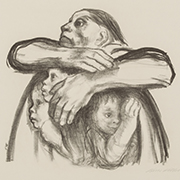
Granted, there were always a few artists--Käthe Kollwitz foremost among them--who dealt with the facts of oppression, but only during the brief period following World War I did a significant number of modernists adopt an overtly political stance. Shaken by the war and emboldened by the prospects of a true socialist revolution, artists throughout Europe, but especially in Weimar Germany and Russia, energetically directed both the content and form of their work to social ends. However, even then, much art was less a blueprint for transformation than, as with the Dadaists, an impassioned protest against the dehumanizing aspects of the industrial age or, as with the Surrealists, an anarchistic retreat into the unconscious. Any hope artists may have had of initiating real change faded again with the advent of Hitler and Stalin. Their professed aversion to capitalism notwithstanding, avant-garde artists served a revolution that either did not materialize or, when it did (as in Russia) ultimately had no use for them.
The political failure of the avant garde may in part be ascribed to its ambivalent relationship with the bourgoisie, which modernists both despised and relied on economically. In a sense, the art world's persistent attraction to taboos may be seen as an acting out of this ambivalence: a century-long bad-boy act in which artists shock without directly threatening the status quo, and are then ultimately forgiven and rewarded. This repetitive pattern of provocation, punishment and acceptance (most often revolving around art of a sexual nature) may also be seen as part of the larger power dance whereby sexuality is administered in modern society. Michel Foucault has analyzed the manner in which governments have, over the course of the last centuries, become increasingly concerned with regulating the daily lives of their citizenry. In this process, sexuality has become an important means of control that colors all types of relationships. Contrary to the prevailing stereotype, the Victorians did not repress sexuality but rather obsessed about it constantly, compiling a vast catalogue of "unnatural" acts as a means of monitoring private behavior. And it is these same acts and images---fellatio and various types of intercourse, fetishism, masturbation, pedophilia, homo-eroticism and transvestitism--that have constituted the taboo substance of so much modern art.
For the early modernists, sexual freedom entailed both a revolt against the prior generation's standards and a search for authenticity. Artists as diverse as Lovis Corinth and Pablo Picasso delved into the ancient Greek myths--the wellspring of classical art and also a fertile source for Freud--seeking their inherent erotic content. Gustav Klimt raised a ruckus simply by painting nudes without any guise of historical or allegorical context. "Primitivism" attracted both French and German artists with visions of untrammeled libido. Schiele came closest to revealing his inner thoughts and feelings about sex--and perhaps for that reason remains one of the more disturbing artists of his generation. But for the most part, modern art was not about sex per se; one has only to compare these images to Japanese or Indian erotic art to note how little interested Westerners were in capturing the intimate sensations of coitus. Western artists could not depict sexual subject matter without simultaneously engaging the power structure which our society as a whole uses to control sexuality: to condemn, to manipulate, to revile or to adulate, titillate or censure.
The aesthetics of the classical female nude (e.g., symmetry, harmony and clarity of form) objectified and largely neutralized female sexuality. Modernist styles like Cubism and Expressionism were initially shocking in part because they violated these traditional standards of beauty, yet often the end result was merely a new form of objectification. More recently, however, artists--especially those, such as women or homosexuals, who were long ostracized--have used sexual imagery to consciously overturn these traditional power relationships. Dotty Attie, for example, deconstructs nudes by artists such as Gustave Courbet as a way of drawing attention to manipulative pictorial stratagems that are otherwise so ingrained in our society that we do not normally notice them. Zoe Leonard's portrait of "bearded lady" Jennifer Miller posing as Marilyn Monroe is a similar attempt to expose male-dominated iconographic conventions. On the other hand, male artists' explorations of drag--by such artists as Pierre Molinier or Andy Warhol--are emotionally larger than life, imbued with the artist's awe of a seductive world from which he is excluded by gender. Robert Mapplethorpe forced the art world to confront homo-erotic subject-matter by applying to it the same standards of beauty that had long been de rigeur in heterosexual image-making.
Controversial though much of this art has been, our society is today so saturated by sex that it is hard to understand how these images can retain any power to offend. There are, indeed, many subjects that are far harder for us to confront than sex. For example, in our youth-obsessed culture, images of aging and death, once accepted as natural components of life, have become increasingly provocative. At the turn of the century, artists such as Klimt and Corinth could still draw on the venerable tradition of the memento mori without raising eyebrows. Today, Erika Rothenberg's body-bags are in their way as disturbing as Robert Mapplethorpe's homo-erotic photographs. Hannah Wilke's forthright photograph of her mother's mastectomy (intentionally juxtaposed with the artist's beautiful nude self-portrait) is probably one of the more transgressive images in the current exhibition. Serrano's photographs exploring the debasement of religion in contemporary culture have, ironically, been viciously censured as blasphemous. Carrie Mae Weems is one of a number of artists who explode the racist stereotypes still so prevalent in our supposedly liberal society. And Sue Coe, following in the footsteps of Kollwitz, doggedly seeks out and documents capitalism's less visible victims. While most of these artists are not technically violating taboos, their exploration of concealed truths is a more overt attack on contemporary values than many more heavily publicized sexual exposés.
It is in some respects difficult to determine just what constitutes a taboo in contemporary art. Much of the work in the present exhibition has functioned on two levels: accepted for prominent display in galleries and museums even while provoking censorship and outrage on the part of certain individuals. Is this then merely a cat-and-mouse game? Do any of these works have genuine subversive content? The answer depends on to whom one is talking. For an audience that is heavily invested in preserving a rigid system of allegedly moral values--which, for example, believes that homosexuality is wrong--Mapplethorpe seems a dangerous artist. Coe, on the other hand, may have a better chance of inspiring substantive political action because she tries as much as possible to take her message directly to the working-class public. Most art, by contrast, remains shut off in a separate and largely impotent realm, speaking to the already converted. Twentieth-century art has sometimes been shocking by accident and at other times by intent, but in either case the end result has seldom been to instigate true change. Overall, the adversarial relationship between modern art and bourgeois society has yielded a stalemate.