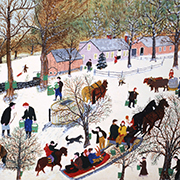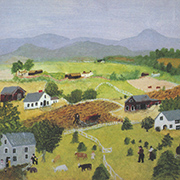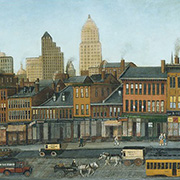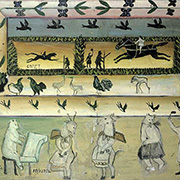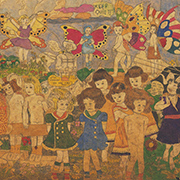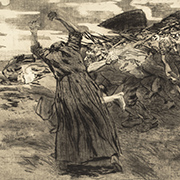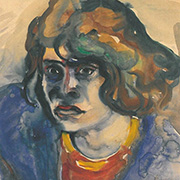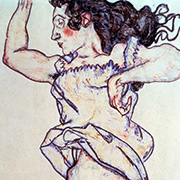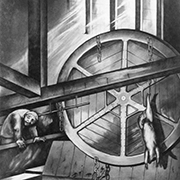
The Ins and Outs of Self-Taught Art
Reflections on a Shifting Field
January 10, 2012 - April 7, 2012
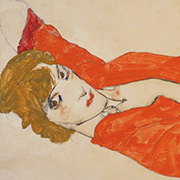
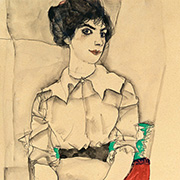
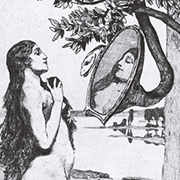
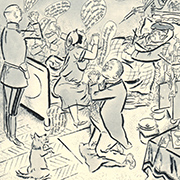
The Lady and the Tramp
Images of Women in Austrian and German Art
October 11, 2011 - December 30, 2011
Recent Acquisitions
(And Some Thoughts on the Current Art Market)
July 5, 2011 - September 30, 2011
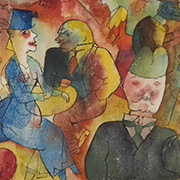
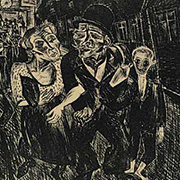
Decadence & Decay
Max Beckmann, Otto Dix, George Grosz
April 12, 2011 - June 24, 2011
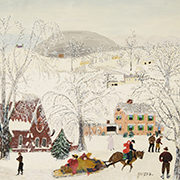
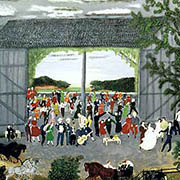
Self-Taught Painters in American 1800-1950
Revisiting the Tradition
January 11, 2011 - April 2, 2011
Marie-Louise Motesiczky
Paradise Lost & Found
October 12, 2010 - December 30, 2010
Recent Acquisitions
(And Some Thoughts on the Current Art Market)
July 13, 2010 - October 1, 2010
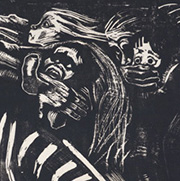
Käthe Kollwitz
A Portrait of the Artist
April 13, 2010 - June 25, 2010
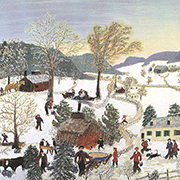
Seventy Years Grandma Moses
A Loan Exhibition Celebrating the 70th Anniversary of the Artist's "Discovery"
February 3, 2010 - April 3, 2010
Egon Schiele as Printmaker
A Loan Exhibition Celebrating the 70th Anniversary of the Galerie St. Etienne
November 3, 2009 - January 23, 2010
From Brücke To Bauhaus
The Meanings of Modernity in Germany, 1905-1933
March 31, 2009 - June 26, 2009
They Taught Themselves
American Self-Taught Painters Between the World Wars
January 9, 2009 - March 14, 2009
Elephants We Must Never Forget
New Paintings Drawings and Prints by Sue Coe
October 14, 2008 - December 20, 2008
Recent Acquisitions
(And Some Thoughts on the Current Art Market)
June 24, 2008 - September 26, 2008
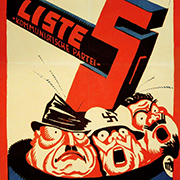
Hope or Menace?
Communism in Germany Between the World Wars
March 25, 2008 - June 13, 2008
Transforming Reality
Pattern and Design in Modern and Self-Taught Art
January 15, 2008 - March 8, 2008
Leonard Baskin
Proofs and Process
October 9, 2007 - January 5, 2008
Recent Acquisitions
(And Some Thoughts on the Current Art Market)
June 5, 2007 - September 28, 2007
Who Paid the Piper?
The Art of Patronage in Fin-de-Siècle Vienna
March 8, 2007 - May 26, 2007
Fairy Tale, Myth and Fantasy
Approaches to Spirituality in Art
December 7, 2006 - February 3, 2007
More Than Coffee was Served
Café Culture in Fin-de-Siècle Vienna and Weimar Germany
September 19, 2006 - November 25, 2006
Recent Acquisitions
(And Some Thoughts on the Current Art Market)
June 6, 2006 - September 8, 2006
Parallel Visions II
"Outsider" and "Insider" Art Today
April 5, 2006 - May 26, 2006
Ilija!
His First American Exhibtion
January 17, 2006 - March 18, 2006
Coming of Age
Egon Schiele and the Modernist Culture of Youth
November 15, 2005 - January 7, 2006
Sue Coe:
Sheep of Fools
September 20, 2005 - November 5, 2005
Recent Acquisitions
And Some Thoughts on the Current Art Market
June 7, 2005 - September 9, 2005
Every Picture Tells a Story
The Narrative Impulse in Modern and Contemporary Art
April 5, 2005 - May 27, 2005
65th Anniversary Exhibition, Part II
Self-Taught Artists
January 18, 2005 - March 26, 2005
65th Anniversary Exhibition, Part I
Austrian and German Expressionism
October 28, 2004 - January 8, 2005
Sue Coe: Bully: Master of the Global Merry-Go-Round and Recent Acquisitions
(And Some Thoughts on the Current Art Market)
June 8, 2004 - October 16, 2004
Animals & Us
The Animal in Contemporary Art
April 1, 2004 - May 22, 2004
Henry Darger
Art and Myth
January 15, 2004 - March 20, 2004
Body and Soul
Expressionism and the Human Figure
October 7, 2003 - January 3, 2004
Recent Acquisitions
(And Some Thoughts on the Current Art Market)
June 24, 2003 - September 12, 2003
In Search of the "Total Artwork"
Viennese Art and Design 1897–1932
April 8, 2003 - June 14, 2003
Russia's Self-Taught Artists
A New Perspective on the "Outsider"
January 14, 2003 - March 29, 2003
Käthe Kollwitz:
Master Printmaker
October 1, 2002 - January 4, 2003
Recent Acquisitions
(And Some Thoughts on the Current Art Market)
June 25, 2002 - September 20, 2002
Workers of the World
Modern Images of Labor
April 2, 2002 - June 15, 2002
Grandma Moses
Reflections of America
January 15, 2002 - March 16, 2002
Gustav Klimt/Egon Schiele/Oskar Kokoscha
From Art Nouveau to Expressionism
November 23, 2001 - January 5, 2002
The "Black-and-White" Show
Expressionist Graphics in Austria & Germany
September 20, 2001 - November 10, 2001
Recent Acquisitions (And Some Thoughts on the Current Art Market)
June 26, 2001 - September 7, 2001
Art with an Agenda
Politics, Persuasion, Illustration and Decoration
April 10, 2001 - June 16, 2001
"Our Beautiful and Tormented Austria!": Art Brut in the Land of Freud
January 18, 2001 - March 17, 2001
The Tragedy of War
November 16, 2000 - January 6, 2001
The Expressionist City
September 19, 2000 - November 4, 2000
Recent Acquisitions (And Some Thoughts on the Current Art Market)
June 20, 2000 - September 8, 2000
From Façade to Psyche
Turn-of-the-Century Portraiture in Austria & Germany
March 28, 2000 - June 10, 2000
European Self-Taught Art
Brut or Naive?
January 18, 2000 - March 11, 2000
Saved From Europe
In Commemoration of the 60th Anniversary of the Galerie St. Etienne
November 6, 1999 - January 8, 2000
The Modern Child
(Images of Children in Twentieth-Century Art)
September 14, 1999 - November 6, 1999
Recent Acquisitions
(And a Look at Sixty Years of Art Dealing)
June 15, 1999 - September 3, 1999
Sue Coe: The Pit
The Tragical Tale of the Rise and Fall of a Vivisector
March 30, 1999 - June 5, 1999
Henry Darger and His Realms
January 14, 1999 - March 13, 1999
Becoming Käthe Kollwitz
An Artist and Her Influences
November 17, 1998 - December 31, 1998
George Grosz - Elfriede Lohse-Wächtler
Art & Gender in Weimar Germany
September 23, 1998 - November 11, 1998
Recent Acquisitions
(And Some Thoughts About Looted Art)
June 9, 1998 - September 11, 1998
Taboo
Repression and Revolt in Modern Art
March 26, 1998 - May 30, 1998
Sacred & Profane
Michel Nedjar and Expressionist Primitivism
January 13, 1998 - March 14, 1998
Egon Schiele (1890-1918)
Master Draughtsman
November 18, 1997 - January 3, 1998
The New Objectivity
Realism in Weimar-Era Germany
September 16, 1997 - November 8, 1997
Recent Acquisitions
A Question of Quality
June 10, 1997 - September 5, 1997
Käthe Kollwitz - Lea Grundig
Two German Women & The Art of Protest
March 25, 1997 - May 31, 1997
That Way Madness Lies
Expressionism and the Art of Gugging
January 14, 1997 - March 15, 1997
The Viennese Line
Art and Design Circa 1900
November 18, 1996 - January 4, 1997
Emil Nolde - Christian Rohlfs
Two German Expressionist Masters
September 24, 1996 - November 9, 1996
Breaking All The Rules
Art in Transition
June 11, 1996 - September 6, 1996
Sue Coe's Ship of Fools
March 26, 1996 - May 24, 1996
New York Folk
Lawrence Lebduska, Abraham Levin, Isreal Litwak
January 16, 1996 - March 16, 1996
The Fractured Form
Expressionism and the Human Body
November 15, 1995 - January 6, 1996
From Left to Right
Social Realism in Germany and Russia, Circa 1919-1933
September 19, 1995 - November 4, 1995
Recent Acquisitions
June 20, 1995 - September 8, 1995
On the Brink 1900-2000
The Turning of Two Centuries
March 28, 1995 - May 26, 1995
Earl Cummingham - Grandma Moses
Visions of America
January 17, 1995 - March 18, 1995
Three Berlin Artists of the Weimar Era: Hannah Höch, Käthe Kollwitz, Jeanne Mam
September 13, 1994 - November 5, 1994
55th Anniversary Exhibition in Memory of Otto Kallir
June 7, 1994 - September 2, 1994
Drawn to Text: Comix Artists as Book Illustrators
May 15, 1994 - January 7, 1995
Sue Coe: We All Fall Down
March 29, 1994 - May 27, 1994
The Forgotten Folk Art of the 1940's
January 18, 1994 - March 19, 1994
Symbolism and the Austrian Avant Garde
Klimt, Schiele and their Contemporaries
November 16, 1993 - January 8, 1994
Art and Politics in Weimar Germany
September 14, 1993 - November 6, 1993
Recent Acquisitions
June 8, 1993 - September 3, 1993
The "Outsider" Question
Non-Academic Art from 1900 to the Present
March 23, 1993 - May 28, 1993
The Dance of Death
Images of Mortality in German Art
January 19, 1993 - March 13, 1993
Art Spiegelman
The Road to Maus
November 17, 1992 - January 9, 1993
Käthe Kollwitz
In Celebration of the 125th Anniversary of the Artist's Birth
September 15, 1992 - November 7, 1992
Naive Visions/Art Nouveau and Expressionism/Sue Coe: The Road to the White House
May 19, 1992 - September 4, 1992
Richard Gerstl/Oskar Kokoschka
March 17, 1992 - May 9, 1992
Scandal, Outrage, Censorship
Controversy in Modern Art
January 21, 1992 - March 7, 1992
Viennese Graphic Design
From Secession to Expressionism
November 19, 1991 - January 11, 1992
The Expressionist Figure
September 10, 1991 - November 9, 1991
Recent Acquisitions
Themes and Variations
May 14, 1991 - August 16, 1991
Sue Coe Retrospective
Political Document of a Decade
March 12, 1991 - May 5, 1991
Gustav Klimt, Egon Schiele, Oskar Kokoschka
Watercolors, drawings and prints
January 22, 1991 - March 2, 1991
Egon Schiele
November 13, 1990 - January 12, 1991
Lovis Corinth
A Retrospective
September 11, 1990 - November 3, 1990
Recent Acquisitions
June 12, 1990 - August 31, 1990
Max Klinger, Käthe Kollwitz, Alfred Kubin
A Study in Influences
March 27, 1990 - June 2, 1990
The Narrative in Art
January 23, 1990 - March 17, 1990
Grandma Moses
November 14, 1989 - January 13, 1990
Sue Coe
Porkopolis--Animals and Industry
September 19, 1989 - November 4, 1989
Galerie St. Etienne
A History in Documents and Pictures
June 20, 1989 - September 8, 1989
Gustav Klimt
Paintings and Drawings
April 11, 1989 - June 10, 1989
Fifty Years Galerie St. Etienne: An Overview
February 14, 1989 - April 1, 1989
Folk Artists at Work
Morris Hirshfield, John Kane and Grandma Moses
November 15, 1988 - January 14, 1989
Recent Acquisitions and Works From the Collection
June 14, 1988 - September 16, 1988
From Art Nouveau to Expressionism
April 12, 1988 - May 27, 1988
Three Pre-Expressionists
Lovis Corinth Käthe Kollwitz Paula Modersohn-Becker
January 26, 1988 - March 12, 1988
Käthe Kollwitz
The Power of the Print
November 17, 1987 - January 16, 1988
Recent Acquisitions and Works From the Collection
April 7, 1987 - October 31, 1987
Folk Art of This Century
February 10, 1987 - March 28, 1987
Oskar Kokoschka and His Time
November 25, 1986 - January 31, 1987
Viennese Design and Wiener Werkstätte
September 23, 1986 - November 8, 1986
Gustav Klimt/Egon Schiele/Oskar Kokoschka
Watercolors, Drawings and Prints
May 27, 1986 - September 13, 1986
Expressionist Painters
March 25, 1986 - May 10, 1986
Käthe Kollwitz/Paula Modersohn-Becker
January 28, 1986 - March 15, 1986
The Art of Giving
December 3, 1985 - January 18, 1986
Expressionists on Paper
October 8, 1985 - November 23, 1985
European and American Landscapes
June 4, 1985 - September 13, 1985
Expressionist Printmaking
Aspects of its Genesis and Development
April 1, 1985 - May 24, 1985
Expressionist Masters
January 18, 1985 - March 23, 1985
Arnold Schoenberg's Vienna
November 13, 1984 - January 5, 1985
Grandma Moses and Selected Folk Paintings
September 25, 1984 - November 3, 1984
American Folk Art
People, Places and Things
June 12, 1984 - September 14, 1984
John Kane
Modern America's First Folk Painter
April 17, 1984 - May 25, 1984
Eugène Mihaesco
The Illustrator as Artist
February 28, 1984 - April 7, 1984
Early Expressionist Masters
January 17, 1984 - February 18, 1984
Paula Modersohn-Becker
Germany's Pioneer Modernist
November 15, 1983 - January 7, 1984
Gustav Klimt
Drawings and Selected Paintings
September 20, 1983 - November 5, 1983
Early and Late
Drawings, Paintings & Prints from Academicism to Expressionism
June 1, 1983 - September 2, 1983
Alfred Kubin
Visions From The Other Side
March 22, 1983 - May 7, 1983
20th Century Folk
The First Generation
January 18, 1983 - March 12, 1983
Grandma Moses
The Artist Behind the Myth
November 15, 1982 - January 8, 1983
Kollwitz
The Artist as Printmaker
September 28, 1982 - November 6, 1982
Aspects of Modernism
June 1, 1982 - September 3, 1982
The Human Perspective
Recent Acquisitions
March 16, 1982 - May 15, 1982
19th and 20th Century European and American Folk Art
January 19, 1982 - March 6, 1982
The Folk Art Tradition
Naïve Painting in Europe and the United States
November 17, 1981 - January 9, 1982
Austria's Expressionism
April 21, 1981 - May 30, 1981
Eugène Mihaesco
His First American One-Man Show
March 3, 1981 - April 11, 1981
Gustav Klimt, Egon Schiele
November 12, 1980 - December 27, 1980
Summer Exhibition
June 17, 1980 - October 31, 1980
Kollwitz: The Drawing and The Print
May 1, 1980 - June 10, 1980
40th Anniversary Exhibition
November 13, 1979 - December 28, 1979
American Primitive Art
November 22, 1977
Käthe Kollwitz
December 1, 1976
Neue Galerie-Galerie St. Etienne
A Documentary Exhibition
May 1, 1976
Martin Pajeck
January 27, 1976
Georges Rouault and Frans Masereel
April 29, 1972
Branko Paradis
December 1, 1971
Käthe Kollwitz
February 3, 1971
Egon Schiele
The Graphic Work
October 19, 1970
Gustav Klimt
March 20, 1970
Friedrich Hundertwasser
May 6, 1969
Austrian Art of the 20th Century
March 21, 1969
Egon Schiele
Memorial Exhibition
October 31, 1968
Yugoslav Primitive Art
April 30, 1968
Alfred Kubin
January 30, 1968
Käthe Kollwitz
In the Cause of Humanity
October 23, 1967
Abraham Levin
September 26, 1967
Karl Stark
April 5, 1967
Gustav Klimt
February 4, 1967
The Wiener Werkstätte
November 16, 1966
Oskar Laske
October 25, 1965
Käthe Kollwitz
May 1, 1965
Egon Schiele
Watercolors and Drawings from American Collections
March 1, 1965
25th Anniversary Exhibition
Part II
November 21, 1964
25th Anniversary Exhibition
Part I
October 17, 1964
Mary Urban
June 9, 1964
Werner Berg, Jane Muus and Mura Dehn
May 5, 1964
Eugen Spiro
April 4, 1964
B. F. Dolbin
Drawings of an Epoch
March 3, 1964
Austrian Expressionists
January 6, 1964
Joseph Rifesser
December 3, 1963
Panorama of Yugoslav Primitive Art
October 21, 1963
Joe Henry
Watercolors of Vermont
May 1, 1963
French Impressionists
March 8, 1963
Grandma Moses
Memorial Exhibition
November 26, 1962
Group Show
October 15, 1962
Ernst Barlach
March 23, 1962
Martin Pajeck
February 24, 1962
Paintings by Expressionists
January 27, 1962
Käthe Kollwitz
November 11, 1961
Grandma Moses
September 7, 1961
My Friends
Fourth Biennial of Pictures by American School Children
May 27, 1961
Raimonds Staprans
April 17, 1961
Gustav Klimt, Egon Schiele, Oskar Kokoschka and Alfred Kubin
March 14, 1961
Marvin Meisels
January 23, 1961
Egon Schiele
November 15, 1960
My Life's History
Paintings by Grandma Moses
September 12, 1960
Watercolors and Drawings by Austrian Artists from the Dial Collection
May 2, 1960
Martin Pajeck
February 29, 1960
Eugen Spiro
February 6, 1960
Käthe Kollwitz
December 14, 1959
Josef Scharl
Last Paintings and Drawings
November 11, 1959
European and American Expressionists
September 22, 1959
Our Town
One Hundred Paintings by American School Children
May 23, 1959
Marvin Meisels and Martin Pajeck
May 1, 1959
Gustav Klimt
April 1, 1959
Käthe Kollwitz
January 12, 1959
Oskar Kokoschka
October 28, 1958
Village Life in Guatemala
Paintings by Andres Curuchich
June 3, 1958
Two Unknown American Expressionists
Paintings by Marvin Meisels and Martin Pajeck
April 28, 1958
Paula Modersohn-Becker
March 15, 1958
The Great Tradition in American Painting
American Primitive Art
January 20, 1958
Jules Lefranc and Dominique Lagru
Two French Primitives
November 18, 1957
Margret Bilger
October 22, 1957
The Four Seasons
One Hundred Paintings by American School Children
June 11, 1957
Grandma Moses
May 6, 1957
Alfred Kubin
April 3, 1957
Franz Lerch
March 2, 1957
Egon Schiele
January 21, 1957
Josef Scharl
Memorial Exhibition
November 17, 1956
Irma Rothstein
May 19, 1956
Käthe Kollwitz
April 16, 1956
A Tribute to Grandma Moses
November 28, 1955
As I See Myself
One Hundred Paintings by American School Children
May 20, 1955
Juan De'Prey
April 19, 1955
Erich Heckel
March 29, 1955
Freddy Homburger
March 2, 1955
Masters of the 19th Century
January 18, 1955
Oskar Kokoschka
November 29, 1954
Isabel Case Borgatta and Josef Scharl
October 12, 1954
James N. Rosenberg and Eugen Spiro
April 30, 1954
Per Krogh
April 2, 1954
Cuno Amiet
February 16, 1954
Eniar Jolin
January 14, 1954
Irma Rothstein
December 8, 1953
Josef Scharl
November 11, 1953
Grandma Moses
October 21, 1953 - October 24, 1953
Wilhelm Kaufmann
September 30, 1953
Lovis Corinth, Oskar Kokoschka and Egon Schiele
May 27, 1953
A Grandma Moses Album
Recent Paintings, 1950-1953
April 15, 1953
Streeter Blair
American Primitive
February 26, 1953
Paintings on Glass
Austrian Religious Folk Art of the 17th to 19th Centuries
December 4, 1952
Hasan Kaptan
Paintings of a Ten-Year-Old Turkish Painter
October 29, 1952
Margret Bilger
May 10, 1952
American Natural Painters
March 31, 1952
Ten Years of New York Concert Impressions by Eugen Spiro; Four New Paintings by
January 26, 1952
I-Fa-Wei
Watercolors of New York by a Chinese Artist
December 1, 1951
Käthe Kollwitz
October 25, 1951
Drawings and Watercolors by Austrian Children
May 21, 1951
Grandma Moses
Twenty-Five Masterpieces of Primitive Art
March 17, 1951
Roswitha Bitterlich
January 18, 1951
Oskar Laske
Watercolors of Vienna and the Salzkammergut
October 14, 1950
Tenth Anniversary Exhibition
Part II
May 11, 1950
Austrian Art of the 19th Century
From Wadlmüller to Klimt
April 1, 1950
Chiao Ssu-Tu
February 18, 1950
Anton Faistauer
January 1, 1950
Tenth Anniversary Exhibition
Part I
November 30, 1949
Autograph Exhibition
October 26, 1949
Gladys Wertheim Bachrach
May 24, 1949
Oskar Kokoschka
March 30, 1949
Eugen Spiro
February 19, 1949
Frans Masereel
January 13, 1949
Ten Years Grandma Moses
November 22, 1948
Käthe Kollwitz
Masterworks
October 18, 1948
American Primitives
June 3, 1948
Egon Schiele
Memorial Exhibition
April 5, 1948
Miriam Richman
February 7, 1948
Vally Wieselthier
Memorial Exhibition
January 10, 1948
Christmas Exhibition
December 4, 1947
Fritz von Unruh
November 10, 1947
Käthe Kollwitz
October 4, 1947
Grandma Moses
May 17, 1947
Lovis Corinth
April 16, 1947
Hugo Steiner-Prag
March 15, 1947
Mark Baum
January 11, 1947
Eugen Spiro
November 25, 1946
Henri de Toulouse-Lautrec
May 17, 1946
Ladis W. Sabo
Paintings by a New Primitive Artist
April 8, 1946
Georges Rouault
The Graphic Work
February 26, 1946
Käthe Kollwitz
Memorial Exhibition
November 21, 1945
Fred E. Robertson
Paintings by an American Primitive
June 13, 1945
Max Liebermann
The Graphic Work
April 18, 1945
Vienna through Four Centuries
March 1, 1945
Eugen Spiro
January 20, 1945
Grandma Moses
New Paintings
December 5, 1944
Käthe Kollwitz
Part II
October 26, 1944
A Century of French Graphic Art
From Géricault to Picasso
September 28, 1944
Max Liebermann
Memorial Exhibition
June 9, 1944
Juan De'Prey
Paintings by a Self-Taught Artist from Puerto Rico
May 6, 1944
Abraham Levin
April 15, 1944
Lesser Ury
Memorial Exhibition
March 21, 1944
Grandma Moses
Paintings by the Senior of the American Primitives
February 9, 1944
Betty Lane
January 11, 1944
WaIt Disney Cavalcade
December 9, 1943
Käthe Kollwitz
Part I
November 3, 1943
Will Barnet
September 29, 1943
Lovis Corinth
May 26, 1943
Josephine Joy
Paintings by an American Primitive
May 3, 1943
Oskar Kokoschka
Aspects of His Art
March 31, 1943
Eugen Spiro
February 13, 1943
Seymour Lipton
January 18, 1943
Illuminated Gothic Woodcuts
Printed and Painted, 1477-1493
December 5, 1942
Abraham Levin
November 4, 1942
Walt Disney Originals
September 23, 1942
Documents which Relate History
Documents of Historical Importance and Landmarks of Human Development
June 10, 1942
Honoré Daumier
April 29, 1942
Bertha Trabich
Memorial Exhibition of a Russian-American Primitive
March 25, 1942
Alfred Kubin
Master of Drawing
December 4, 1941
Egon Schiele
November 7, 1941
Betty Lane
June 3, 1941
Flowers from Old Vienna
18th and Early 19th Century Flower Painting
May 7, 1941
Weavings by Navaho and Hopi Indians and Photos of Indians by Helen M. Post
January 29, 1941
Georg Merkel
November 7, 1940
What a Farm Wife Painted
Works by Mrs. Anna Mary Moses
October 9, 1940
Saved from Europe
Masterpieces of European Art
July 1, 1940
American Abstract Art
May 22, 1940
Franz Lerch
May 1, 1940
Wilhelm Thöny
April 3, 1940
French Masters of the 19th and 20th Centuries
February 29, 1940
H. W. Hannau
Metropolis, Photographic Studies of New York
February 2, 1940
Oskar Kokoschka
January 9, 1940
Austrian Masters
November 13, 1939
SAVED FROM EUROPE
In Commemoration of the 60th Anniversary of the Galerie St. Etienne
Corinth, Lovis
Klimt, Gustav
Kokoschka, Oskar
Kollwitz, Käthe
Kubin, Alfred
Modersohn-Becker, Paula
Schiele, Egon
On November 13, 1939, having been forced by the Nazi Anschluss to abandon his original Neue Galerie in Vienna, Otto Kallir opened the Galerie St. Etienne in New York. The French name--an homage to Vienna’s famed Cathedral of St. Stephen--had been adopted by Kallir in Paris, where he briefly operated a gallery after fleeing Austria in 1938. Very much a product of the cultural Diaspora precipitated by Hitler, the Galerie St. Etienne was to play a formative role in introducing Austrian Expressionism to the United States. World War II, of course, shaped modern history in innumerable ways, and this is why, as the twentieth century draws to a close, Americans have been re-examining the war years with new vigor. The story of the Galerie St. Etienne constitutes one small chapter in the sweeping saga of the Hitler period, and it thus seems especially appropriate to take a look back at the gallery's origins on the occasion of its 60th anniversary.
The title of the present exhibition, Saved From Europe, derives from a show mounted by Kallir at the Galerie St. Etienne in the summer of 1940. Yet this title can serve as well to describe everything Kallir did during his first decade in America, for not only did almost all his initial exhibitions revolve around art rescued from war-torn Europe, but Kallir was also deeply involved with helping people flee Nazi persecution, and even with trying to secure some sort of viable postwar future for his benighted former homeland. After World War II, he endeavored to aid people in the recovery of art they had lost to Hitler. Deliberate study and the particular circumstances of his life had made Kallir supremely aware of the force of history, and this awareness proved the salvation, not just of himself, his family and the many refugees whom he helped emigrate, but also of the art he loved.
Kallir’s beginnings had hardly been auspicious: the son of a well-to-do Jewish attorney who lost almost everything following the collapse of the Austro-Hungarian Monarchy in 1918, he was forced to build his business from scratch. Although the Austrian economy was exceedingly rocky in the 1920s and downright desperate in the ‘30s, the Neue Galerie (founded in 1923) prospered modestly. That said, Kallir’s passion for modernists such as Richard Gerstl, Gustav Klimt, Oskar Kokoschka, Alfred Kubin and Egon Schiele was chiefly a personal indulgence; the bills were largely paid by sales of more conservative nineteenth-century art. Kallir may now be best remembered for such achievements as discovering Gerstl and compiling the first Schiele catalogue raisonné (published in 1930), but he always combined prescience with practicality, undergirding his more visionary pursuits with a healthy respect for grim realities.
After Hitler came to power in 1933, Kallir paid close attention to developments in neighboring Germany. He feared that it might be only a matter of time before National Socialism came to Austria. As early as 1935, he sold a part of his collection in Switzerland and banked the proceeds abroad, in case his family should one day have to flee. That day came in June 1938, three months after the Anschluss. Kallir had made arrangements to leave as quickly as possible, transferring the Neue Galerie to his "Aryan" secretary, Vita Maria Künstler (who would run the gallery through the war years and then return it to him more or less intact), and arranging for the export of much of his art and household goods. Kallir, who had tried to rally opposition against Hitler in the months before the Anschluss, knew he was in imminent danger. In the end, he and his family managed to escape Austria just hours ahead of the Gestapo.
Nevertheless, arranging to immigrate permanently proved tricky. Because the family had sufficient cash assets, Switzerland granted them entrance visas, but the Swiss would not permit Kallir to work. The French would give Kallir a work permit, but for some reason refused visas to his wife and two children. The Kallirs therefore spent over a year split up between Lucerne and Paris, until they were finally able to obtain American visas. The family set sail for New York in late August 1939, landing a few days before war broke out in Europe.
Since most of the artists whom Kallir favored had been branded “degenerate” by the Nazi regime, he was not prevented from exporting their work, and he arrived in New York with an inventory of masterpieces by Klimt, Kokoschka and Schiele. Of these artists, however, only Kokoschka at the time had any international standing. Kallir therefore placed his initial business hopes in thirteen Kokoschka oils he’d purchased shortly before leaving Vienna, as well as in a consignment of French paintings that included major works by Van Gogh and Cézanne. Not only had it proved more difficult to get export permits for the nineteenth-century art which had been the Neue Galerie’s principal source of revenue, but Kallir quickly learned that Americans had absolutely no interest in such material. Starting from scratch for the second time in his life, he now found it most prudent to go with the modern art he had always loved best.
This is not to suggest that investing in modern Austrian art was a popular business strategy in the years just before World War II. German Expressionism, featured in an exhibition at the Museum of Modern Art in 1931, had a much higher profile than its Austrian counterpart. Results of the Galerie St. Etienne’s first shows of Kokoschka, Schiele and Kubin were dismal. Schiele drawings at the time sold for $20, watercolors for $60. Even when these prices are adjusted for inflation, the figures--$225 and $700 respectively--are hardly more impressive. And no one was buying: Schiele was known only to refugees, who had no money. Kallir scarcely fared better with his stock of French paintings. Possessing scant knowledge of English and almost no professional connections or stature in America, Kallir initially found it virtually impossible to make any headway.
Nevertheless, Kallir did not want for energy or ideas. He tried his hand at everything from publishing postcards to patenting a thermometer design. And even as his gallery stumbled along, he found time to look after less fortunate compatriots stranded back in Nazi Austria. As chairman of the Austrian-American League from 1940 through 1941, Kallir personally gave affidavits pledging financial support to facilitate the immigration of nearly eighty Austrians to the United States. Unwilling to accept that their country had willingly succumbed to Nazism, and hoping as well to protect their status both as residents of the United States and as former (and possibly future) citizens of Austria, the refugee community struggled to convince the American government that Austria was a victim (rather than an ally) of Hitler. Achieving this end meant Austrians did not have to register as enemy aliens during World War II, but it also had unforeseen results after the war. Kallir would live to regret the fact that Austria, as an "overrun" nation, was not forced to undergo the same rigorous process of de-Nazification and reparation payments which the Allies imposed on Germany.
During the early 1940s, the Galerie St. Etienne managed to stay in the black with an eclectic mix of relatively low-budget efforts (including the first one-woman exhibition of Grandma Moses), but it was only after World War II that Kallir began to achieve any substantial success for the Austrian Expressionists. The American economy emerged from the war far stronger than it had been going in, and for the first time since 1929 people could afford to think seriously about buying art. Although relatively few of the many dealers and art historians who had been expelled from Europe during the Hitler years were specifically interested in Austrian and German modernism, those who were introduced a new awareness of the genre to America's museums, universities and collectors. In addition to people, Hitler's predations had deposited a large trove of objects on America's shores. Many refugees had, like Kallir, been able to export their "degenerate" collections, and those less fortunate in this regard now endeavored to reclaim the works that had been lost or stolen during the war. Wherever possible, Kallir--who had renewed his professional contacts in Austria--tried to help people negotiate the legal thicket surrounding their misappropriated treasures.
Kallir used a three-pronged approach--consisting of exhibitions, museum exposure and scholarship--to establish "his" artists in the United States. Repeated showings of Oskar Kokoschka (initially seen at St. Etienne in 1940), Egon Schiele (introduced to the U.S. by Kallir in 1941), Alfred Kubin (first shown that same year) and Gustav Klimt (who amazingly did not have an American one-man show until his 1959 St. Etienne debut) gradually achieved a cumulative effect. Through sale or (when that was impossible) donation, Kallir strategically placed major paintings by Klimt, Kokoschka and Schiele in such institutions as the Albright-Knox Art Gallery in Buffalo (checklist no. __), the Fogg Art Museum at Harvard, the Minneapolis Institute of Art, the Museum of Modern Art (checklist no. __), the Guggenheim Museum (no. __), the Allen Memorial Art Gallery at Oberlin College (no. __), the Carnegie Museum of Art in Pittsburgh and the National Gallery of Art (no. __). Kallir also collaborated with Thomas M. Messer on the first American museum shows of Schiele's work (which traveled to five institutions in 1960-61) and of Schiele and Klimt (held at the Guggenheim in 1965). Toward the end of his life, Kallir capped his career with catalogues raisonnés of Gerstl (1974), Grandma Moses (1973) and Schiele (1966 and 1970).
When Kallir died in 1978, fin-de-siècle Vienna was finally enjoying a vogue in America. Interdisciplinary historical studies as well as books specific to the visual arts launched a mild frenzy, which ultimately affected even interior design and culminated in a string of highly popular exhibitions, both here and abroad. For several decades, the Galerie St. Etienne had been virtually the only place outside Austria to consistently and repeatedly exhibit that nation's modern art, but by the 1970s, Kallir's diligence had finally won a host of converts. Hildegard Bachert and Jane Kallir (Otto's granddaughter), who became co-directors of the Galerie St. Etienne after 1978, thus perceived a clear mandate to consolidate and expand upon Kallir's accomplishments.
Otto Kallir's successes did not mean that Austrian and German art had achieved parity with French modernism, which still dominates accounts of early twentieth-century art history. The Galerie St. Etienne has therefore maintained its commitment to scholarship and museum exhibitions. Over the past two decades, Jane Kallir has written nearly a dozen book-length publications, most notably the first comprehensive Schiele catalogue raisonné (published in 1990 and revised in 1998). The gallery's exhibition policies are if anything more ambitious than they were in Otto Kallir's time, not only in terms of major loan shows (including the present one) mounted on its own premises, but especially with regard to exhibitions curated for outside institutions. In the latter category, pride of place goes to the Schiele retrospective that opened at the National Gallery of Art in 1994 and then traveled to the Indianapolis Museum of Art and the San Diego Museum of Art.
Programming at the Galerie St. Etienne since 1978 has also entailed a logical extension of the policies and preferences introduced by the gallery's founder. The major Austrian modernists--Klimt, Kokoschka, Kubin and Schiele--have continued to be perennial favorites, and all have been featured here in museum loan shows. In some cases, Otto Kallir's successors were able to achieve things he could not: for example, in 1992 the gallery managed, for the first time, to borrow from Europe enough Gerstl paintings to properly introduce the artist to the United States. In other cases, as with Käthe Kollwitz (the subject, since 1943, of over twenty St. Etienne exhibitions) and Paula Modersohn-Becker (first shown in the U.S. at St. Etienne in 1958), the gallery simply perpetuated long-standing interests. Just as Otto Kallir had worked with Lovis Corinth's widow in the 1940s to show her husband's paintings (which she salvaged from Nazi Germany), the gallery's current directors have collaborated with the artist's children. So it is that art work "saved from Europe" continues to circulate through the Galerie St. Etienne, while the gallery's files have become an important source in assisting with the ongoing restitution of Nazi-looted art.
It is one of the great ironies of Nazi policy that Hitler's campaign against "degenerate" art ended up seeding the globe with modern Austrian and German pictures. Had Otto Kallir remained in Vienna, and had he and other emigrés like him been prevented from bringing along their "degenerate" collections, it is unlikely that Austrian modernism would have achieved the international renown it now enjoys. For Kallir, the loss of his homeland to the Nazi scourge was somehow redeemed by art's transcendent nature. And at the Galerie St. Etienne, his vision of Austria lived on, through the difficult war years and to the present day.
Lenders are the key to any exhibition project, and grateful thanks are herewith expressed to all who made Saved from Europe possible: The Albright-Knox Art Gallery in Buffalo, New York; Annetta and Robert Chester; the Albert Grokoest Collection; Lucy C. Mitchell; Mr. and Mrs. K. Fred Netter; the Solomon R. Guggenheim Museum and the Museum of Modern Art in New York; the Allen Memorial Art Gallery in Oberlin, Ohio; the Museum of Art at the Rhode Island School of Design in Providence; the Esther Leah Ritz Collection; the National Gallery of Art in Washington D.C. (and in particular, Andrew Robison and Earl A. Powell III); the Kunsthaus Zug, Switzerland (with much appreciated help from Peter and Christine Kamm); and numerous anonymous lenders. We would also like to warmly thank the Austrian Cultural Institute for their generous support of this project.