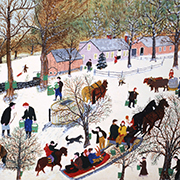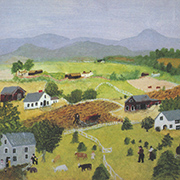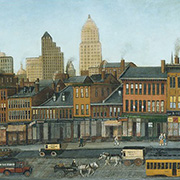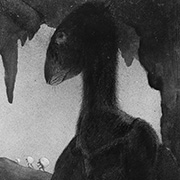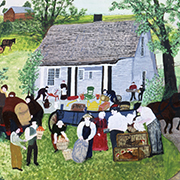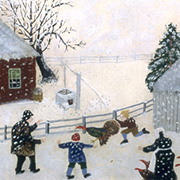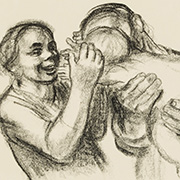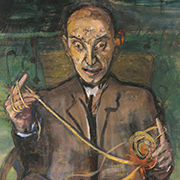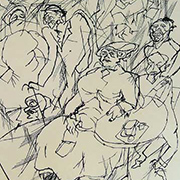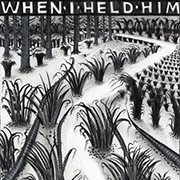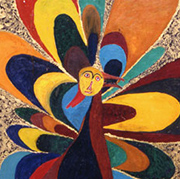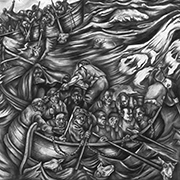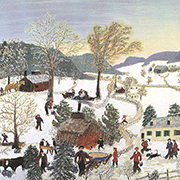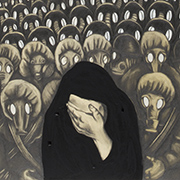

The Ins and Outs of Self-Taught Art
Reflections on a Shifting Field
January 10, 2012 - April 7, 2012
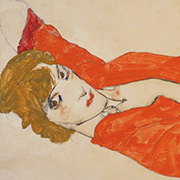
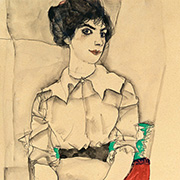
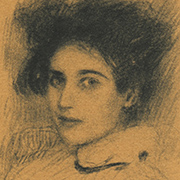
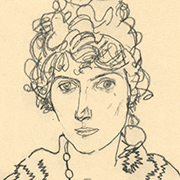
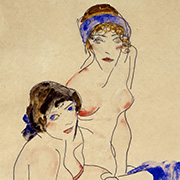
The Lady and the Tramp
Images of Women in Austrian and German Art
October 11, 2011 - December 30, 2011
Recent Acquisitions
(And Some Thoughts on the Current Art Market)
July 5, 2011 - September 30, 2011
Decadence & Decay
Max Beckmann, Otto Dix, George Grosz
April 12, 2011 - June 24, 2011
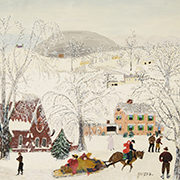
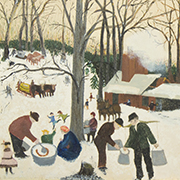
Self-Taught Painters in American 1800-1950
Revisiting the Tradition
January 11, 2011 - April 2, 2011
Marie-Louise Motesiczky
Paradise Lost & Found
October 12, 2010 - December 30, 2010
Recent Acquisitions
(And Some Thoughts on the Current Art Market)
July 13, 2010 - October 1, 2010
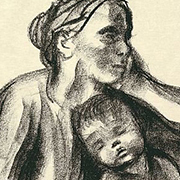
Käthe Kollwitz
A Portrait of the Artist
April 13, 2010 - June 25, 2010
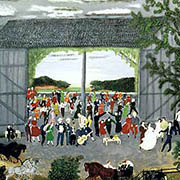
Seventy Years Grandma Moses
A Loan Exhibition Celebrating the 70th Anniversary of the Artist's "Discovery"
February 3, 2010 - April 3, 2010
Egon Schiele as Printmaker
A Loan Exhibition Celebrating the 70th Anniversary of the Galerie St. Etienne
November 3, 2009 - January 23, 2010
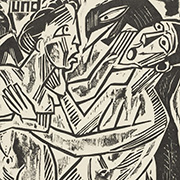
From Brücke To Bauhaus
The Meanings of Modernity in Germany, 1905-1933
March 31, 2009 - June 26, 2009
They Taught Themselves
American Self-Taught Painters Between the World Wars
January 9, 2009 - March 14, 2009
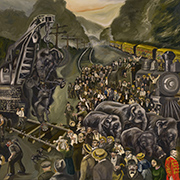
Elephants We Must Never Forget
New Paintings Drawings and Prints by Sue Coe
October 14, 2008 - December 20, 2008
Recent Acquisitions
(And Some Thoughts on the Current Art Market)
June 24, 2008 - September 26, 2008
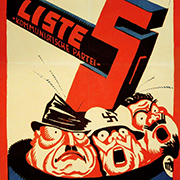
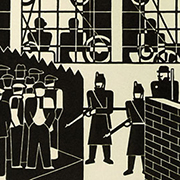
Hope or Menace?
Communism in Germany Between the World Wars
March 25, 2008 - June 13, 2008
Transforming Reality
Pattern and Design in Modern and Self-Taught Art
January 15, 2008 - March 8, 2008
Leonard Baskin
Proofs and Process
October 9, 2007 - January 5, 2008
Recent Acquisitions
(And Some Thoughts on the Current Art Market)
June 5, 2007 - September 28, 2007
Who Paid the Piper?
The Art of Patronage in Fin-de-Siècle Vienna
March 8, 2007 - May 26, 2007
Fairy Tale, Myth and Fantasy
Approaches to Spirituality in Art
December 7, 2006 - February 3, 2007
More Than Coffee was Served
Café Culture in Fin-de-Siècle Vienna and Weimar Germany
September 19, 2006 - November 25, 2006
Recent Acquisitions
(And Some Thoughts on the Current Art Market)
June 6, 2006 - September 8, 2006
Parallel Visions II
"Outsider" and "Insider" Art Today
April 5, 2006 - May 26, 2006
Ilija!
His First American Exhibtion
January 17, 2006 - March 18, 2006
Coming of Age
Egon Schiele and the Modernist Culture of Youth
November 15, 2005 - January 7, 2006
Sue Coe:
Sheep of Fools
September 20, 2005 - November 5, 2005
Recent Acquisitions
And Some Thoughts on the Current Art Market
June 7, 2005 - September 9, 2005
Every Picture Tells a Story
The Narrative Impulse in Modern and Contemporary Art
April 5, 2005 - May 27, 2005
65th Anniversary Exhibition, Part II
Self-Taught Artists
January 18, 2005 - March 26, 2005
65th Anniversary Exhibition, Part I
Austrian and German Expressionism
October 28, 2004 - January 8, 2005
Sue Coe: Bully: Master of the Global Merry-Go-Round and Recent Acquisitions
(And Some Thoughts on the Current Art Market)
June 8, 2004 - October 16, 2004
Animals & Us
The Animal in Contemporary Art
April 1, 2004 - May 22, 2004
Henry Darger
Art and Myth
January 15, 2004 - March 20, 2004
Body and Soul
Expressionism and the Human Figure
October 7, 2003 - January 3, 2004
Recent Acquisitions
(And Some Thoughts on the Current Art Market)
June 24, 2003 - September 12, 2003
In Search of the "Total Artwork"
Viennese Art and Design 1897–1932
April 8, 2003 - June 14, 2003
Russia's Self-Taught Artists
A New Perspective on the "Outsider"
January 14, 2003 - March 29, 2003
Käthe Kollwitz:
Master Printmaker
October 1, 2002 - January 4, 2003
Recent Acquisitions
(And Some Thoughts on the Current Art Market)
June 25, 2002 - September 20, 2002
Workers of the World
Modern Images of Labor
April 2, 2002 - June 15, 2002
Grandma Moses
Reflections of America
January 15, 2002 - March 16, 2002
Gustav Klimt/Egon Schiele/Oskar Kokoscha
From Art Nouveau to Expressionism
November 23, 2001 - January 5, 2002
The "Black-and-White" Show
Expressionist Graphics in Austria & Germany
September 20, 2001 - November 10, 2001
Recent Acquisitions (And Some Thoughts on the Current Art Market)
June 26, 2001 - September 7, 2001
Art with an Agenda
Politics, Persuasion, Illustration and Decoration
April 10, 2001 - June 16, 2001
"Our Beautiful and Tormented Austria!": Art Brut in the Land of Freud
January 18, 2001 - March 17, 2001
The Tragedy of War
November 16, 2000 - January 6, 2001
The Expressionist City
September 19, 2000 - November 4, 2000
Recent Acquisitions (And Some Thoughts on the Current Art Market)
June 20, 2000 - September 8, 2000
From Façade to Psyche
Turn-of-the-Century Portraiture in Austria & Germany
March 28, 2000 - June 10, 2000
European Self-Taught Art
Brut or Naive?
January 18, 2000 - March 11, 2000
Saved From Europe
In Commemoration of the 60th Anniversary of the Galerie St. Etienne
November 6, 1999 - January 8, 2000
The Modern Child
(Images of Children in Twentieth-Century Art)
September 14, 1999 - November 6, 1999
Recent Acquisitions
(And a Look at Sixty Years of Art Dealing)
June 15, 1999 - September 3, 1999
Sue Coe: The Pit
The Tragical Tale of the Rise and Fall of a Vivisector
March 30, 1999 - June 5, 1999
Henry Darger and His Realms
January 14, 1999 - March 13, 1999
Becoming Käthe Kollwitz
An Artist and Her Influences
November 17, 1998 - December 31, 1998
George Grosz - Elfriede Lohse-Wächtler
Art & Gender in Weimar Germany
September 23, 1998 - November 11, 1998
Recent Acquisitions
(And Some Thoughts About Looted Art)
June 9, 1998 - September 11, 1998
Taboo
Repression and Revolt in Modern Art
March 26, 1998 - May 30, 1998
Sacred & Profane
Michel Nedjar and Expressionist Primitivism
January 13, 1998 - March 14, 1998
Egon Schiele (1890-1918)
Master Draughtsman
November 18, 1997 - January 3, 1998
The New Objectivity
Realism in Weimar-Era Germany
September 16, 1997 - November 8, 1997
Recent Acquisitions
A Question of Quality
June 10, 1997 - September 5, 1997
Käthe Kollwitz - Lea Grundig
Two German Women & The Art of Protest
March 25, 1997 - May 31, 1997
That Way Madness Lies
Expressionism and the Art of Gugging
January 14, 1997 - March 15, 1997
The Viennese Line
Art and Design Circa 1900
November 18, 1996 - January 4, 1997
Emil Nolde - Christian Rohlfs
Two German Expressionist Masters
September 24, 1996 - November 9, 1996
Breaking All The Rules
Art in Transition
June 11, 1996 - September 6, 1996
Sue Coe's Ship of Fools
March 26, 1996 - May 24, 1996
New York Folk
Lawrence Lebduska, Abraham Levin, Isreal Litwak
January 16, 1996 - March 16, 1996
The Fractured Form
Expressionism and the Human Body
November 15, 1995 - January 6, 1996
From Left to Right
Social Realism in Germany and Russia, Circa 1919-1933
September 19, 1995 - November 4, 1995
Recent Acquisitions
June 20, 1995 - September 8, 1995
On the Brink 1900-2000
The Turning of Two Centuries
March 28, 1995 - May 26, 1995
Earl Cummingham - Grandma Moses
Visions of America
January 17, 1995 - March 18, 1995
Three Berlin Artists of the Weimar Era: Hannah Höch, Käthe Kollwitz, Jeanne Mam
September 13, 1994 - November 5, 1994
55th Anniversary Exhibition in Memory of Otto Kallir
June 7, 1994 - September 2, 1994
Drawn to Text: Comix Artists as Book Illustrators
May 15, 1994 - January 7, 1995
Sue Coe: We All Fall Down
March 29, 1994 - May 27, 1994
The Forgotten Folk Art of the 1940's
January 18, 1994 - March 19, 1994
Symbolism and the Austrian Avant Garde
Klimt, Schiele and their Contemporaries
November 16, 1993 - January 8, 1994
Art and Politics in Weimar Germany
September 14, 1993 - November 6, 1993
Recent Acquisitions
June 8, 1993 - September 3, 1993
The "Outsider" Question
Non-Academic Art from 1900 to the Present
March 23, 1993 - May 28, 1993
The Dance of Death
Images of Mortality in German Art
January 19, 1993 - March 13, 1993
Art Spiegelman
The Road to Maus
November 17, 1992 - January 9, 1993
Käthe Kollwitz
In Celebration of the 125th Anniversary of the Artist's Birth
September 15, 1992 - November 7, 1992
Naive Visions/Art Nouveau and Expressionism/Sue Coe: The Road to the White House
May 19, 1992 - September 4, 1992
Richard Gerstl/Oskar Kokoschka
March 17, 1992 - May 9, 1992
Scandal, Outrage, Censorship
Controversy in Modern Art
January 21, 1992 - March 7, 1992
Viennese Graphic Design
From Secession to Expressionism
November 19, 1991 - January 11, 1992
The Expressionist Figure
September 10, 1991 - November 9, 1991
Recent Acquisitions
Themes and Variations
May 14, 1991 - August 16, 1991
Sue Coe Retrospective
Political Document of a Decade
March 12, 1991 - May 5, 1991
Gustav Klimt, Egon Schiele, Oskar Kokoschka
Watercolors, drawings and prints
January 22, 1991 - March 2, 1991
Egon Schiele
November 13, 1990 - January 12, 1991
Lovis Corinth
A Retrospective
September 11, 1990 - November 3, 1990
Recent Acquisitions
June 12, 1990 - August 31, 1990
Max Klinger, Käthe Kollwitz, Alfred Kubin
A Study in Influences
March 27, 1990 - June 2, 1990
The Narrative in Art
January 23, 1990 - March 17, 1990
Grandma Moses
November 14, 1989 - January 13, 1990
Sue Coe
Porkopolis--Animals and Industry
September 19, 1989 - November 4, 1989
Galerie St. Etienne
A History in Documents and Pictures
June 20, 1989 - September 8, 1989
Gustav Klimt
Paintings and Drawings
April 11, 1989 - June 10, 1989
Fifty Years Galerie St. Etienne: An Overview
February 14, 1989 - April 1, 1989
Folk Artists at Work
Morris Hirshfield, John Kane and Grandma Moses
November 15, 1988 - January 14, 1989
Recent Acquisitions and Works From the Collection
June 14, 1988 - September 16, 1988
From Art Nouveau to Expressionism
April 12, 1988 - May 27, 1988
Three Pre-Expressionists
Lovis Corinth Käthe Kollwitz Paula Modersohn-Becker
January 26, 1988 - March 12, 1988
Käthe Kollwitz
The Power of the Print
November 17, 1987 - January 16, 1988
Recent Acquisitions and Works From the Collection
April 7, 1987 - October 31, 1987
Folk Art of This Century
February 10, 1987 - March 28, 1987
Oskar Kokoschka and His Time
November 25, 1986 - January 31, 1987
Viennese Design and Wiener Werkstätte
September 23, 1986 - November 8, 1986
Gustav Klimt/Egon Schiele/Oskar Kokoschka
Watercolors, Drawings and Prints
May 27, 1986 - September 13, 1986
Expressionist Painters
March 25, 1986 - May 10, 1986
Käthe Kollwitz/Paula Modersohn-Becker
January 28, 1986 - March 15, 1986
The Art of Giving
December 3, 1985 - January 18, 1986
Expressionists on Paper
October 8, 1985 - November 23, 1985
European and American Landscapes
June 4, 1985 - September 13, 1985
Expressionist Printmaking
Aspects of its Genesis and Development
April 1, 1985 - May 24, 1985
Expressionist Masters
January 18, 1985 - March 23, 1985
Arnold Schoenberg's Vienna
November 13, 1984 - January 5, 1985
Grandma Moses and Selected Folk Paintings
September 25, 1984 - November 3, 1984
American Folk Art
People, Places and Things
June 12, 1984 - September 14, 1984
John Kane
Modern America's First Folk Painter
April 17, 1984 - May 25, 1984
Eugène Mihaesco
The Illustrator as Artist
February 28, 1984 - April 7, 1984
Early Expressionist Masters
January 17, 1984 - February 18, 1984
Paula Modersohn-Becker
Germany's Pioneer Modernist
November 15, 1983 - January 7, 1984
Gustav Klimt
Drawings and Selected Paintings
September 20, 1983 - November 5, 1983
Early and Late
Drawings, Paintings & Prints from Academicism to Expressionism
June 1, 1983 - September 2, 1983
Alfred Kubin
Visions From The Other Side
March 22, 1983 - May 7, 1983
20th Century Folk
The First Generation
January 18, 1983 - March 12, 1983
Grandma Moses
The Artist Behind the Myth
November 15, 1982 - January 8, 1983
Kollwitz
The Artist as Printmaker
September 28, 1982 - November 6, 1982
Aspects of Modernism
June 1, 1982 - September 3, 1982
The Human Perspective
Recent Acquisitions
March 16, 1982 - May 15, 1982
19th and 20th Century European and American Folk Art
January 19, 1982 - March 6, 1982
The Folk Art Tradition
Naïve Painting in Europe and the United States
November 17, 1981 - January 9, 1982
Austria's Expressionism
April 21, 1981 - May 30, 1981
Eugène Mihaesco
His First American One-Man Show
March 3, 1981 - April 11, 1981
Gustav Klimt, Egon Schiele
November 12, 1980 - December 27, 1980
Summer Exhibition
June 17, 1980 - October 31, 1980
Kollwitz: The Drawing and The Print
May 1, 1980 - June 10, 1980
40th Anniversary Exhibition
November 13, 1979 - December 28, 1979
American Primitive Art
November 22, 1977
Käthe Kollwitz
December 1, 1976
Neue Galerie-Galerie St. Etienne
A Documentary Exhibition
May 1, 1976
Martin Pajeck
January 27, 1976
Georges Rouault and Frans Masereel
April 29, 1972
Branko Paradis
December 1, 1971
Käthe Kollwitz
February 3, 1971
Egon Schiele
The Graphic Work
October 19, 1970
Gustav Klimt
March 20, 1970
Friedrich Hundertwasser
May 6, 1969
Austrian Art of the 20th Century
March 21, 1969
Egon Schiele
Memorial Exhibition
October 31, 1968
Yugoslav Primitive Art
April 30, 1968
Alfred Kubin
January 30, 1968
Käthe Kollwitz
In the Cause of Humanity
October 23, 1967
Abraham Levin
September 26, 1967
Karl Stark
April 5, 1967
Gustav Klimt
February 4, 1967
The Wiener Werkstätte
November 16, 1966
Oskar Laske
October 25, 1965
Käthe Kollwitz
May 1, 1965
Egon Schiele
Watercolors and Drawings from American Collections
March 1, 1965
25th Anniversary Exhibition
Part II
November 21, 1964
25th Anniversary Exhibition
Part I
October 17, 1964
Mary Urban
June 9, 1964
Werner Berg, Jane Muus and Mura Dehn
May 5, 1964
Eugen Spiro
April 4, 1964
B. F. Dolbin
Drawings of an Epoch
March 3, 1964
Austrian Expressionists
January 6, 1964
Joseph Rifesser
December 3, 1963
Panorama of Yugoslav Primitive Art
October 21, 1963
Joe Henry
Watercolors of Vermont
May 1, 1963
French Impressionists
March 8, 1963
Grandma Moses
Memorial Exhibition
November 26, 1962
Group Show
October 15, 1962
Ernst Barlach
March 23, 1962
Martin Pajeck
February 24, 1962
Paintings by Expressionists
January 27, 1962
Käthe Kollwitz
November 11, 1961
Grandma Moses
September 7, 1961
My Friends
Fourth Biennial of Pictures by American School Children
May 27, 1961
Raimonds Staprans
April 17, 1961
Gustav Klimt, Egon Schiele, Oskar Kokoschka and Alfred Kubin
March 14, 1961
Marvin Meisels
January 23, 1961
Egon Schiele
November 15, 1960
My Life's History
Paintings by Grandma Moses
September 12, 1960
Watercolors and Drawings by Austrian Artists from the Dial Collection
May 2, 1960
Martin Pajeck
February 29, 1960
Eugen Spiro
February 6, 1960
Käthe Kollwitz
December 14, 1959
Josef Scharl
Last Paintings and Drawings
November 11, 1959
European and American Expressionists
September 22, 1959
Our Town
One Hundred Paintings by American School Children
May 23, 1959
Marvin Meisels and Martin Pajeck
May 1, 1959
Gustav Klimt
April 1, 1959
Käthe Kollwitz
January 12, 1959
Oskar Kokoschka
October 28, 1958
Village Life in Guatemala
Paintings by Andres Curuchich
June 3, 1958
Two Unknown American Expressionists
Paintings by Marvin Meisels and Martin Pajeck
April 28, 1958
Paula Modersohn-Becker
March 15, 1958
The Great Tradition in American Painting
American Primitive Art
January 20, 1958
Jules Lefranc and Dominique Lagru
Two French Primitives
November 18, 1957
Margret Bilger
October 22, 1957
The Four Seasons
One Hundred Paintings by American School Children
June 11, 1957
Grandma Moses
May 6, 1957
Alfred Kubin
April 3, 1957
Franz Lerch
March 2, 1957
Egon Schiele
January 21, 1957
Josef Scharl
Memorial Exhibition
November 17, 1956
Irma Rothstein
May 19, 1956
Käthe Kollwitz
April 16, 1956
A Tribute to Grandma Moses
November 28, 1955
As I See Myself
One Hundred Paintings by American School Children
May 20, 1955
Juan De'Prey
April 19, 1955
Erich Heckel
March 29, 1955
Freddy Homburger
March 2, 1955
Masters of the 19th Century
January 18, 1955
Oskar Kokoschka
November 29, 1954
Isabel Case Borgatta and Josef Scharl
October 12, 1954
James N. Rosenberg and Eugen Spiro
April 30, 1954
Per Krogh
April 2, 1954
Cuno Amiet
February 16, 1954
Eniar Jolin
January 14, 1954
Irma Rothstein
December 8, 1953
Josef Scharl
November 11, 1953
Grandma Moses
October 21, 1953 - October 24, 1953
Wilhelm Kaufmann
September 30, 1953
Lovis Corinth, Oskar Kokoschka and Egon Schiele
May 27, 1953
A Grandma Moses Album
Recent Paintings, 1950-1953
April 15, 1953
Streeter Blair
American Primitive
February 26, 1953
Paintings on Glass
Austrian Religious Folk Art of the 17th to 19th Centuries
December 4, 1952
Hasan Kaptan
Paintings of a Ten-Year-Old Turkish Painter
October 29, 1952
Margret Bilger
May 10, 1952
American Natural Painters
March 31, 1952
Ten Years of New York Concert Impressions by Eugen Spiro; Four New Paintings by
January 26, 1952
I-Fa-Wei
Watercolors of New York by a Chinese Artist
December 1, 1951
Käthe Kollwitz
October 25, 1951
Drawings and Watercolors by Austrian Children
May 21, 1951
Grandma Moses
Twenty-Five Masterpieces of Primitive Art
March 17, 1951
Roswitha Bitterlich
January 18, 1951
Oskar Laske
Watercolors of Vienna and the Salzkammergut
October 14, 1950
Tenth Anniversary Exhibition
Part II
May 11, 1950
Austrian Art of the 19th Century
From Wadlmüller to Klimt
April 1, 1950
Chiao Ssu-Tu
February 18, 1950
Anton Faistauer
January 1, 1950
Tenth Anniversary Exhibition
Part I
November 30, 1949
Autograph Exhibition
October 26, 1949
Gladys Wertheim Bachrach
May 24, 1949
Oskar Kokoschka
March 30, 1949
Eugen Spiro
February 19, 1949
Frans Masereel
January 13, 1949
Ten Years Grandma Moses
November 22, 1948
Käthe Kollwitz
Masterworks
October 18, 1948
American Primitives
June 3, 1948
Egon Schiele
Memorial Exhibition
April 5, 1948
Miriam Richman
February 7, 1948
Vally Wieselthier
Memorial Exhibition
January 10, 1948
Christmas Exhibition
December 4, 1947
Fritz von Unruh
November 10, 1947
Käthe Kollwitz
October 4, 1947
Grandma Moses
May 17, 1947
Lovis Corinth
April 16, 1947
Hugo Steiner-Prag
March 15, 1947
Mark Baum
January 11, 1947
Eugen Spiro
November 25, 1946
Henri de Toulouse-Lautrec
May 17, 1946
Ladis W. Sabo
Paintings by a New Primitive Artist
April 8, 1946
Georges Rouault
The Graphic Work
February 26, 1946
Käthe Kollwitz
Memorial Exhibition
November 21, 1945
Fred E. Robertson
Paintings by an American Primitive
June 13, 1945
Max Liebermann
The Graphic Work
April 18, 1945
Vienna through Four Centuries
March 1, 1945
Eugen Spiro
January 20, 1945
Grandma Moses
New Paintings
December 5, 1944
Käthe Kollwitz
Part II
October 26, 1944
A Century of French Graphic Art
From Géricault to Picasso
September 28, 1944
Max Liebermann
Memorial Exhibition
June 9, 1944
Juan De'Prey
Paintings by a Self-Taught Artist from Puerto Rico
May 6, 1944
Abraham Levin
April 15, 1944
Lesser Ury
Memorial Exhibition
March 21, 1944
Grandma Moses
Paintings by the Senior of the American Primitives
February 9, 1944
Betty Lane
January 11, 1944
WaIt Disney Cavalcade
December 9, 1943
Käthe Kollwitz
Part I
November 3, 1943
Will Barnet
September 29, 1943
Lovis Corinth
May 26, 1943
Josephine Joy
Paintings by an American Primitive
May 3, 1943
Oskar Kokoschka
Aspects of His Art
March 31, 1943
Eugen Spiro
February 13, 1943
Seymour Lipton
January 18, 1943
Illuminated Gothic Woodcuts
Printed and Painted, 1477-1493
December 5, 1942
Abraham Levin
November 4, 1942
Walt Disney Originals
September 23, 1942
Documents which Relate History
Documents of Historical Importance and Landmarks of Human Development
June 10, 1942
Honoré Daumier
April 29, 1942
Bertha Trabich
Memorial Exhibition of a Russian-American Primitive
March 25, 1942
Alfred Kubin
Master of Drawing
December 4, 1941
Egon Schiele
November 7, 1941
Betty Lane
June 3, 1941
Flowers from Old Vienna
18th and Early 19th Century Flower Painting
May 7, 1941
Weavings by Navaho and Hopi Indians and Photos of Indians by Helen M. Post
January 29, 1941
Georg Merkel
November 7, 1940
What a Farm Wife Painted
Works by Mrs. Anna Mary Moses
October 9, 1940
Saved from Europe
Masterpieces of European Art
July 1, 1940
American Abstract Art
May 22, 1940
Franz Lerch
May 1, 1940
Wilhelm Thöny
April 3, 1940
French Masters of the 19th and 20th Centuries
February 29, 1940
H. W. Hannau
Metropolis, Photographic Studies of New York
February 2, 1940
Oskar Kokoschka
January 9, 1940
Austrian Masters
November 13, 1939
RUSSIA'S SELF-TAUGHT ARTISTS
A New Perspective on the "Outsider"
Darger, Henry
Leonov, Pavel
Romanenkov, Vasilij
Zaiatz, Nikifor
Zharkikh, Rosa
Since 1972, when Roger Cardinal chose the term “outsider art” as a rough English-language equivalent of Jean Dubuffet’s art brut, the concept has won a conflicted following in the United States. To be sure, the name proved a stellar marketing tool, as evidenced by the success of the annual Outsider Art Fair (which will celebrate its 11th anniversary at New York's Puck Building this year from January 23 to 26). But whereas the notion of the “outsider” plays to Americans’ ideal of themselves as individualistic mavericks, it also contradicts the equally cherished myth that, in our supposedly egalitarian society, there are no "outsiders." Critics have pointed out that some of the artists branded with the "outsider" label, especially African Americans, were operating very much within their own communities, albeit beyond the racially circumscribed purview of white society. To label an artist an "outsider" has, from this perspective, become an implicitly racist act, an unwarranted judgement by the dominant culture.
The lionization of the “outsider,” nevertheless, has a long and complex history in Western culture. The belief that societal norms and civilization in general have done more harm than good dates back to the Romantic era, which touted the “noble savage” as an exemplar of pure, untainted humanity. This belief acquired a specifically artistic focus in the late nineteenth century with the modernists’ rejection of the European academic system. Paul Gauguin found his “noble savages” in Tahiti, and many subsequent modernists, including Pablo Picasso, collected African tribal art, but the most enduring exponents of unadulterated “otherness” proved to be artists living and working within the confines of Western civilization. The idealization of untrained European and American artists threaded its way through the entire history of modernism, reminding the trained artists of their rebel mandate whenever academic rigidity threatened to reassert itself.
In a totalitarian state, however, the notion of the “outsider” has implications that make the rebellious antics of European and American modernists seem like bad-boy playacting. Whereas in the West, modernism gradually became the accepted mainstream art tradition, in Stalin’s Russia, modernism was forcibly replaced by Socialist Realism. Self-taught artists were not persecuted per se (unless they also engaged in more overtly subversive activities), but they were nonetheless ostracized. Yet at the same time that they were alienated from the Soviet system, Russia’s self-taught artists were completely innocent of Western culture: its television shows, films, fashions, rock music and the relentless bleating of the capitalist media remained largely unknown in the Soviet Union. The Russians were thus "outsiders" twice over.
Russia’s engagement with self-taught art both intertwines with and deviates from the history of the genre in the West. Like Western Europe, Russia had a longstanding folk tradition that began to fizzle in the nineteenth century due to encroaching industrialization. Russia was at this time also beset by a widening rift between its elite ruling classes, who had adopted European cultural mannerisms, and the peasantry, which still adhered to largely indigenous traditions. As political tensions mounted, the idealization and preservation of rural folkways became a way to cement national identity by isolating a kind of pure Russian essence to which all classes could on some level relate. By the turn of the twentieth century, avant-garde Russian artists had begun consciously incorporating folk styles and motifs in their work.
It was, in fact, a Russian, Vasilij Kandinsky, who became one of the most forceful advocates for adding folk art to the mix of non-academic influences favored by modernists in Western Europe. Like his European colleagues, Kandinsky also admired Asian and African imagery, believing that all these unconventional art forms provided access to a new means of expressing fundamental “internal truths.” His approach was distinctly different from that of fellow Russians such as Natalia Goncharova, Mikhail Larionov and Kasimir Malevich, who gradually turned away from the West. Rather than searching for internal truths, these artists felt that an entirely new formal language could be crafted based on the precedent of Russian folk art. In addition to incorporating elements from such traditional popular arts as lubki (broadsheets) in their own work, these artists organized exhibitions that included folk art and paintings by the self-taught Georgian master Niko Pirosmanashvili. The abstract and semi-abstract styles developed by Goncharova, Larionov and Malevich could therefore claim quintessentially Russian roots.
After the Bolshevik revolution in 1917, the Soviet regime remained concerned with cementing national identity. Malevich and his colleagues were eager to help out, but it quickly became evident that abstraction held little mass appeal. Russian folk art was another matter: widely accessible, community-oriented and anti-elitist, it was an ideal vehicle for Soviet propaganda. Once brought under Soviet domination, however, folk creation lost its original character. Crafts traditions were preserved in state-operated workshops, which systematized the forms and means of production. Amateur art was promoted as a way of bringing creativity into the lives of ordinary citizens, but the permitted subjects were strictly controlled. All traces of individualism were prohibited, for this was deemed threatening to Soviet authority.
The attitude toward self-taught art began to change gradually in the 1960s, with the so-called “thaw” initiated by Nikita Khrushchev. For the first time, it became possible to criticize Stalin. Resistance to the Soviet regime, though still subject to harsh punishment, began to percolate slowly beneath the surface of public life. Artists and intellectuals allied with the resistance felt an instinctive kinship with self-taught artists, who were unwitting resisters. The inherent nature of great self-taught art—individual autonomy and imperviousness to external creative dictates—assumed a poignant new relevance. The political circumstances peculiar to the Soviet Union thus rekindled the turn-of-the-century alliance between self-taught artists and the avant-grade.
As the Soviet era drew to a close in the 1980s, the gap between public and private pronouncements widened, and the whole of Russian society seemed to acquire a split personality. Intellectuals became increasingly fascinated by the criteria distinguishing normalcy from insanity. Within this context, Russians for the first time developed a sustained interest in the art of the mentally ill as art (rather than as an outgrowth of psychiatric pathology). This interest found its initial expression in 1990, when the first public exhibition of work by mental patients was held at the Medical Museum in Moscow. From this evolved Moscow’s Museum of Outsider Art, which opened its doors to the public in 1996. Following the theoretical precepts of Jean Dubuffet, the Museum of Outsider Art complements the efforts of the scholar/collector Ksenia Bogemskaya, who has been studying Russian naïve art since the 1980s. However, in Russia, as elsewhere, the boundaries between art brut and naïve art are sometimes fluid, if not altogether meaningless.
It is no coincidence that all four artists in the present exhibition began working after the “thaw” and came to international attention only in the 1980s and ‘90s. Although their art and their biographies are consistent with the styles and habits we have come to associate with Western “outsiders,” these artists also incorporate distinctly Russian influences. The fact that none of the four would have been approved by the Communist regime does not mean that their Soviet upbringing did not affect them. Additionally, elements of older Russian folk traditions remain alive in the work of that nation’s self-taught artists. These elements may derive both from the artificial folk culture preserved by the Soviets, and from surviving authentic practices in outlying rural areas. Occasionally, one can detect non-Russian influences, which the artists picked up like flotsam on a beach.
Pavel Leonov, probably the most widely known artist in our exhibition, may in some regards be considered paradigmatic of the Russian “outsider.” His father, whom the artist has described as a “professional alcoholic,” was a government official in the provincial village of Volotovsky, south of Moscow. Leonov’s troubles with the law began with his father (who was not above turning the teenage boy over to the authorities) and continued when he fled to the Ukraine. Here he was prosecuted for fighting with an army officer. For this and similar minor infractions, Leonov spent the years from 1940 to 1955 in and out of labor camps. During this period and thereafter, he became an inveterate wanderer who pursued a variety of trades, including carpentry, road-building, farming, sign-painting and metalwork. In 1968, Leonov fell in love with a woman named Zina, and shortly thereafter they married and settled in the rural village of Mekhovitsy. Here they live in a primitive shack, beneath a rookery filled with raucous birds. Old age has not much softened Leonov’s fractious personality; he is beset by real and imagined grudges, undoubtedly exacerbated by his neighbors’ disdain for his artistic vocation.
Leonov has had a life-long interest in art. Prior to his first arrest, when he was living in the Ukraine, he attempted to teach himself drawing from a manual, but it was not until his final release from prison, in 1955, that he began to paint. Seeking the official certificate that would allow him to work as an artist, he enrolled in a correspondence course offered by the Extramural People's University of Art. His instructor there was Mikhail Roginsky, a noted “Pop” artist who, like many practitioners of unapproved styles, was forced to earn a living by teaching. Leonov makes a distinction between the style preached by the correspondence school—which he terms “naturalism”--and his own self-invented style, which he calls “constructionism” or “architecturalism.” Roginsky, for his part, knew to leave well enough alone and did not try in any way to influence Leonov’s direction. In 1970, the teacher arranged for his pupil's paintings to be shown at the school with other work by "amateurs." In 1988, Leonov was included in an exhibition of Russian self-taught artists in Paris and Laval, France (birthplace of the first “naïve,” Henri Rousseau). Exhibitions, both at home and abroad, increased considerably in the 1990s. Leonov has been shown several times at Charlotte Zander’s museum of naïve art in Bönnigheim, Germany, and in 1997 received first prize at the fifth Triennale of Naïve Art (INSITA) in Bratislava.
Leonov's “constructionism” can best be described as a grid system facilitating the combination of multiple vignettes, divided by vertical and horizontal crossbars that are analogous to architectural pillars and beams. Similar compositions, with vignettes separated by decorative borders, can be found on Russian folk objects such as chests, carpets and distaffs. Appearances to the contrary, Leonov’s vignettes do not form a single scene, but rather represent projections of parallel realities. He refers to these as “rooms” or “television sets.” Television is still a novelty to the artist, and he seems entranced by the idea that visions from a separate world can, in fact, be beamed into an actual room. The subjects that appear in Leonov's “rooms” and “televisions” include his beloved wife Zina, nudes, self-portraits and the ubiquitous birds, as well as glorified images of modern technology. Long parades of buses, airplanes, tanks and helicopters recall Soviet propaganda. Popular entertainments, such as carousels, circuses and theaters, as well as abundant water (in fact a scarce resource in Mekhovitsy) round out Leonov’s view of paradise. He knows these visions are not real, but he offers his paintings as a blueprint for a better society.
The paradox and ultimate downfall of the Soviet system lay in the fact that it promised a utopia it could not deliver. Socialist Realism was, in this sense, no more “realistic” than Leonov’s fantasies. Therein lay the danger of accepting the Soviet promise at face value, for the line between promoting an ideal society and critiquing the real one was fine indeed. This ideological contradiction lies at the heart not just of Leonov's work, but of an 84-page instructional booklet drawn by Nikifor Zaiatz in the early 1970s. Little is known of Zaiatz, who lived in remote Siberia. Over a period that may have involved many months or even years, he assembled his ideas on an array of subjects including farm machinery, fashion, architecture, industrial design, photography, art and behavior. Minimally educated, he resented the greater esteem and authority accorded those with more schooling. He believed in conserving valuable materials, opposed the use of fur, and felt women should dress more modestly. When he was done with his treatise, Zaiatz sent it to a Moscow publisher. The manuscript was of course unpublishable, and it ended up as a form of samizdat (forbidden literature), collected and preserved by the conceptual artist Vagrich Bakhchanyan.
Probably an outgrowth of Communist indoctrination, utopianism is an undercurrent in the work of many Russian self-taught artists. The contrast between the dreams put forth by Soviet propaganda and the harsh realities of Soviet life may have prompted some artists to seek refuge in an alternate spirit universe—despite the fact that the open practice of religion was strictly forbidden. This seems to have been the case with Rosa Zharkikh, a Moscow factory worker who began receiving visions at the age of 46, after suffering a near-death experience. Directed by an unseen external force, she started to draw. Several years later, Zharkikh retired from the factory and moved more completely into the world of her visions. Using thread and fabric, she tried to replicate the magical, flower-like costumes that appeared in her dreams, often working for several years on a single embroidery. She drew more quickly, eventually filling her tiny apartment with hundreds of colorful sheets documenting what she terms the “parallel world.” It is her goal to construct a bridge between this imaginary world and the real one.
Without adhering to any one spiritual discipline, Zharkikh combines references from Christianity and Eastern religion in her works. In the 1990s, as a result of improved communications between Russia and the outside world, she became intrigued by Tibetan philosophy, which she felt offered a model of spiritual transformation akin to what she, on her own, had been trying to achieve. Both her drawings and her embroideries use nested skeins of differing colors to represent graduated stages of consciousness and to enfold self-portraits and symbolic images. Lately, the artist has also been depicting “heroes” from the spirit realm, such as her deceased mother and sister. Zharkikh hopes to be reunited with these perfect spirits, and to this end she has adopted a precise regimen of personal improvement and purification. She eschews television, follows a strict diet and avoids contact with other people. Only grudgingly will she talk about her work, which she refers to as “children” rather than as art. Beyond the pictorial symbols, Zharkikh imbeds her drawings with messages in a secret hieroglyphic code that only she can understand, but which she refuses to translate. Public recognition would probably mean little to her, and in any case would be difficult to achieve on a large scale in Russia, given the ingrained suspicion of unconventional art that is part of the Socialist Realist legacy. Nevertheless, over the last ten years, Zharkikh has been supported by and exhibited regularly at Moscow's Museum of Outsider Art. She was also included in the fifth and sixth INSITA exhibitions in Bratislava in 1997 and 2000, as well as in the Biennale of Naïve Art in Jagodina in 2001.
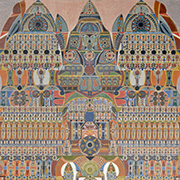
Vasilij Romanenkov, the youngest artist in the present exhibition, hovers somewhere between the arcane mysticism of Zharkikh and a more accessible folk idiom. He was born in Bogdanovka, a remote village where vestiges of ancient folk traditions still survive. At the age of 15, he came to Moscow, where he was taken in by relatives and trained as a cabinet maker. After some years working on construction sites, he obtained his current job as a gardener for the Moscow parks department. (The artist's interest in trees and topiary is evident in his work.) Romanenkov began painting in 1975, at the age of 22. His earliest works, done in oil, usually depict large peasant gatherings in settings that suggest three-dimensional space. However, as he continued to work, his spaces grew flatter, his figures smaller and more stylized, his compositions more strictly geometric and symmetrical. Romanenkov also switched from paint to a combination of graphite, ballpoint pen and colored pencil. Typically, the artist pastes sheets of paper on a hard backboard, which allows him to achieve extremely crisp lines. His drawings are filled with an abundance of minute detail, the surfaces covered by a lace-like network of tightly intertwined lines.
As Romanenkov's work lost its folksy, narrative quality, his images have become more iconic and universal. Instead of painting a specific event, like a wedding feast, he now presents such rituals as generic markers in the passage from birth to death. Baptisms, childhood, old age and funerals reflect the life cycle that binds the generations. Romanenkov, who leads a solitary existence and believes that his hand is guided "by someone from the cosmos," seeks to depict the continuum linking the mundane sphere with the surrounding spirit world. His drawings often incorporate archaic motifs such as the tree of life, the sun and the "Earth Mother" (symbolizing fertility). The artist's stylized figures and propensity for creating triptychs and polyptychs also recall Russian icons. Some have seen a relationship between Romanenkov's intricate surface ornamentation and the geometric patterns found in Russian folk textiles, but he himself contends that these ornaments represent the internal thoughts and conversations of his characters. As with Zharkikh's hieroglyphics, these "conversations" are encoded in a language that only the artist can comprehend. Romanenkov's drawings were exhibited at INSITA in 1994 and 1997, at the Museum Charlotte Zander in 1999 and at the Museum der Stadshof in Zwolle, The Netherlands, in 2000.
From the outset, the promulgation of self-taught art has had a pronounced political dimension. European modernists in the early twentieth century turned to non-academic art in part as a protest against the social and artistic dictates of bourgeois society. When Dubuffet "invented" the idea of art brut in the 1940s, he was very conscious of the fact that Adolf Hitler had recently equated modernism with madness. Similarly, Russian intellectuals in the 1980s and '90s championed self-taught art as an expression of the creative freedom that was banned for so many years under Soviet rule. Over the course of the last century, the most vociferous advocates of self-taught art have often exaggerated its purity, its degree of remove from the surrounding culture. Some Americans, on the other hand, now complain that the notion of the "outsider" is antithetical to democratic egalitarianism.
The truth is that all societies endorse normative values of one kind or another. Humans, collectively as well as individually, are constantly making choices, and the act of choosing one thing invariably entails the neglect of something else. The hallmark of a truly free and democratic society is not an absence of value judgements, but the flexibility to assimilate disparate viewpoints and thereby to change. The appeal of "outsider art," by whatever name, is that it gives us access to aspects of our beings that we have previously been wont to repress. That is why homegrown self-taught art has had a more enduring relationship to the modernist aesthetic than the non-Western art forms once promoted by Picasso and his colleagues. The appeal of "outsiders" lies less in their "otherness" than in the things they can teach us about ourselves. Russia's "outsiders" in this sense have profound lessons to offer to those of us living in the West. For half a century or more, the Soviet Union was the biggest "other": the enemy, the antipode of everything we ostensibly stood for, the brunt of our sometimes misguided foreign policy. How amazing that we can at last explore our common humanity!
The present exhibition owes its genesis to the pioneering legwork of a number of colleagues. Three years ago, at the suggestion of the Dutch dealer Nico van der Endt, the Galerie St. Etienne first included Vasilij Romanenkov in a survey of European self-taught artists. This show caught the attention of Ksenia Bogemskaya, who in the meantime has become a loyal supporter and friend. Additionally, as a result of that exhibition, we met the Russian emigré photography dealer Nailya Alexander, who introduced us to the work of Pavel Leonov. (A show of Leonov's work, curated by Ms. Alexander, will take place at Baltimore's American Visionary Art Museum from February 1 through April 1.) Through Ms. Alexander, we also established contact with the Museum of Outsider Art in Moscow. The museum's director, Vladimir Abakumov, and his able assistants, Anya Yarkina and Andrea Rutherford, were instrumental in helping us obtain Rosa Zharkikh's work for the present exhibition. In addition to the foregoing dealers and scholars, we would like to express our heartfelt thanks to Irene Bakhchanyan, who showed us the samizdat collection of her husband Vagrich and provided a partial translation of Nikifor Zaiatz's manuscript. The literature on Russian self-taught art remains scant, and the portion in English is even more limited. Within this context, however, the writings of Ksenia Bogemskaya and Anya Yarkina are exemplary, and both these experts have been extraordinarily generous with their advice and assistance. For a more general grounding in the subject, Alison Hilton's 1995 book Russian Folk Art is indispensable.