The Ins and Outs of Self-Taught Art
Reflections on a Shifting Field
January 10, 2012 - April 7, 2012
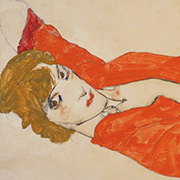
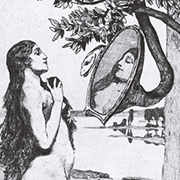
The Lady and the Tramp
Images of Women in Austrian and German Art
October 11, 2011 - December 30, 2011
Recent Acquisitions
(And Some Thoughts on the Current Art Market)
July 5, 2011 - September 30, 2011
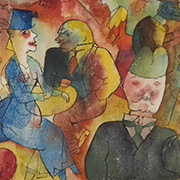
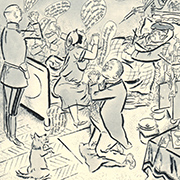
Decadence & Decay
Max Beckmann, Otto Dix, George Grosz
April 12, 2011 - June 24, 2011
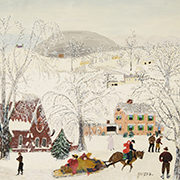
Self-Taught Painters in American 1800-1950
Revisiting the Tradition
January 11, 2011 - April 2, 2011
Marie-Louise Motesiczky
Paradise Lost & Found
October 12, 2010 - December 30, 2010
Recent Acquisitions
(And Some Thoughts on the Current Art Market)
July 13, 2010 - October 1, 2010
Käthe Kollwitz
A Portrait of the Artist
April 13, 2010 - June 25, 2010
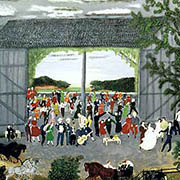
Seventy Years Grandma Moses
A Loan Exhibition Celebrating the 70th Anniversary of the Artist's "Discovery"
February 3, 2010 - April 3, 2010
Egon Schiele as Printmaker
A Loan Exhibition Celebrating the 70th Anniversary of the Galerie St. Etienne
November 3, 2009 - January 23, 2010
From Brücke To Bauhaus
The Meanings of Modernity in Germany, 1905-1933
March 31, 2009 - June 26, 2009
They Taught Themselves
American Self-Taught Painters Between the World Wars
January 9, 2009 - March 14, 2009
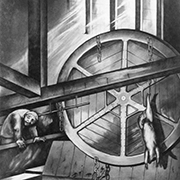
Elephants We Must Never Forget
New Paintings Drawings and Prints by Sue Coe
October 14, 2008 - December 20, 2008
Recent Acquisitions
(And Some Thoughts on the Current Art Market)
June 24, 2008 - September 26, 2008
Hope or Menace?
Communism in Germany Between the World Wars
March 25, 2008 - June 13, 2008
Transforming Reality
Pattern and Design in Modern and Self-Taught Art
January 15, 2008 - March 8, 2008
Leonard Baskin
Proofs and Process
October 9, 2007 - January 5, 2008
Recent Acquisitions
(And Some Thoughts on the Current Art Market)
June 5, 2007 - September 28, 2007
Who Paid the Piper?
The Art of Patronage in Fin-de-Siècle Vienna
March 8, 2007 - May 26, 2007
Fairy Tale, Myth and Fantasy
Approaches to Spirituality in Art
December 7, 2006 - February 3, 2007
More Than Coffee was Served
Café Culture in Fin-de-Siècle Vienna and Weimar Germany
September 19, 2006 - November 25, 2006
Recent Acquisitions
(And Some Thoughts on the Current Art Market)
June 6, 2006 - September 8, 2006
Parallel Visions II
"Outsider" and "Insider" Art Today
April 5, 2006 - May 26, 2006
Ilija!
His First American Exhibtion
January 17, 2006 - March 18, 2006
Coming of Age
Egon Schiele and the Modernist Culture of Youth
November 15, 2005 - January 7, 2006
Sue Coe:
Sheep of Fools
September 20, 2005 - November 5, 2005
Recent Acquisitions
And Some Thoughts on the Current Art Market
June 7, 2005 - September 9, 2005
Every Picture Tells a Story
The Narrative Impulse in Modern and Contemporary Art
April 5, 2005 - May 27, 2005
65th Anniversary Exhibition, Part II
Self-Taught Artists
January 18, 2005 - March 26, 2005
65th Anniversary Exhibition, Part I
Austrian and German Expressionism
October 28, 2004 - January 8, 2005
Sue Coe: Bully: Master of the Global Merry-Go-Round and Recent Acquisitions
(And Some Thoughts on the Current Art Market)
June 8, 2004 - October 16, 2004
Animals & Us
The Animal in Contemporary Art
April 1, 2004 - May 22, 2004
Henry Darger
Art and Myth
January 15, 2004 - March 20, 2004
Body and Soul
Expressionism and the Human Figure
October 7, 2003 - January 3, 2004
Recent Acquisitions
(And Some Thoughts on the Current Art Market)
June 24, 2003 - September 12, 2003
In Search of the "Total Artwork"
Viennese Art and Design 1897–1932
April 8, 2003 - June 14, 2003
Russia's Self-Taught Artists
A New Perspective on the "Outsider"
January 14, 2003 - March 29, 2003
Käthe Kollwitz:
Master Printmaker
October 1, 2002 - January 4, 2003
Recent Acquisitions
(And Some Thoughts on the Current Art Market)
June 25, 2002 - September 20, 2002
Workers of the World
Modern Images of Labor
April 2, 2002 - June 15, 2002
Grandma Moses
Reflections of America
January 15, 2002 - March 16, 2002
Gustav Klimt/Egon Schiele/Oskar Kokoscha
From Art Nouveau to Expressionism
November 23, 2001 - January 5, 2002
The "Black-and-White" Show
Expressionist Graphics in Austria & Germany
September 20, 2001 - November 10, 2001
Recent Acquisitions (And Some Thoughts on the Current Art Market)
June 26, 2001 - September 7, 2001
Art with an Agenda
Politics, Persuasion, Illustration and Decoration
April 10, 2001 - June 16, 2001
"Our Beautiful and Tormented Austria!": Art Brut in the Land of Freud
January 18, 2001 - March 17, 2001
The Tragedy of War
November 16, 2000 - January 6, 2001
The Expressionist City
September 19, 2000 - November 4, 2000
Recent Acquisitions (And Some Thoughts on the Current Art Market)
June 20, 2000 - September 8, 2000
From Façade to Psyche
Turn-of-the-Century Portraiture in Austria & Germany
March 28, 2000 - June 10, 2000
European Self-Taught Art
Brut or Naive?
January 18, 2000 - March 11, 2000
Saved From Europe
In Commemoration of the 60th Anniversary of the Galerie St. Etienne
November 6, 1999 - January 8, 2000
The Modern Child
(Images of Children in Twentieth-Century Art)
September 14, 1999 - November 6, 1999
Recent Acquisitions
(And a Look at Sixty Years of Art Dealing)
June 15, 1999 - September 3, 1999
Sue Coe: The Pit
The Tragical Tale of the Rise and Fall of a Vivisector
March 30, 1999 - June 5, 1999
Henry Darger and His Realms
January 14, 1999 - March 13, 1999
Becoming Käthe Kollwitz
An Artist and Her Influences
November 17, 1998 - December 31, 1998
George Grosz - Elfriede Lohse-Wächtler
Art & Gender in Weimar Germany
September 23, 1998 - November 11, 1998
Recent Acquisitions
(And Some Thoughts About Looted Art)
June 9, 1998 - September 11, 1998
Taboo
Repression and Revolt in Modern Art
March 26, 1998 - May 30, 1998
Sacred & Profane
Michel Nedjar and Expressionist Primitivism
January 13, 1998 - March 14, 1998
Egon Schiele (1890-1918)
Master Draughtsman
November 18, 1997 - January 3, 1998
The New Objectivity
Realism in Weimar-Era Germany
September 16, 1997 - November 8, 1997
Recent Acquisitions
A Question of Quality
June 10, 1997 - September 5, 1997
Käthe Kollwitz - Lea Grundig
Two German Women & The Art of Protest
March 25, 1997 - May 31, 1997
That Way Madness Lies
Expressionism and the Art of Gugging
January 14, 1997 - March 15, 1997
The Viennese Line
Art and Design Circa 1900
November 18, 1996 - January 4, 1997
Emil Nolde - Christian Rohlfs
Two German Expressionist Masters
September 24, 1996 - November 9, 1996
Breaking All The Rules
Art in Transition
June 11, 1996 - September 6, 1996
Sue Coe's Ship of Fools
March 26, 1996 - May 24, 1996
New York Folk
Lawrence Lebduska, Abraham Levin, Isreal Litwak
January 16, 1996 - March 16, 1996
The Fractured Form
Expressionism and the Human Body
November 15, 1995 - January 6, 1996
From Left to Right
Social Realism in Germany and Russia, Circa 1919-1933
September 19, 1995 - November 4, 1995
Recent Acquisitions
June 20, 1995 - September 8, 1995
On the Brink 1900-2000
The Turning of Two Centuries
March 28, 1995 - May 26, 1995
Earl Cummingham - Grandma Moses
Visions of America
January 17, 1995 - March 18, 1995
Three Berlin Artists of the Weimar Era: Hannah Höch, Käthe Kollwitz, Jeanne Mam
September 13, 1994 - November 5, 1994
55th Anniversary Exhibition in Memory of Otto Kallir
June 7, 1994 - September 2, 1994
Drawn to Text: Comix Artists as Book Illustrators
May 15, 1994 - January 7, 1995
Sue Coe: We All Fall Down
March 29, 1994 - May 27, 1994
The Forgotten Folk Art of the 1940's
January 18, 1994 - March 19, 1994
Symbolism and the Austrian Avant Garde
Klimt, Schiele and their Contemporaries
November 16, 1993 - January 8, 1994
Art and Politics in Weimar Germany
September 14, 1993 - November 6, 1993
Recent Acquisitions
June 8, 1993 - September 3, 1993
The "Outsider" Question
Non-Academic Art from 1900 to the Present
March 23, 1993 - May 28, 1993
The Dance of Death
Images of Mortality in German Art
January 19, 1993 - March 13, 1993
Art Spiegelman
The Road to Maus
November 17, 1992 - January 9, 1993
Käthe Kollwitz
In Celebration of the 125th Anniversary of the Artist's Birth
September 15, 1992 - November 7, 1992
Naive Visions/Art Nouveau and Expressionism/Sue Coe: The Road to the White House
May 19, 1992 - September 4, 1992
Richard Gerstl/Oskar Kokoschka
March 17, 1992 - May 9, 1992
Scandal, Outrage, Censorship
Controversy in Modern Art
January 21, 1992 - March 7, 1992
Viennese Graphic Design
From Secession to Expressionism
November 19, 1991 - January 11, 1992
The Expressionist Figure
September 10, 1991 - November 9, 1991
Recent Acquisitions
Themes and Variations
May 14, 1991 - August 16, 1991
Sue Coe Retrospective
Political Document of a Decade
March 12, 1991 - May 5, 1991
Gustav Klimt, Egon Schiele, Oskar Kokoschka
Watercolors, drawings and prints
January 22, 1991 - March 2, 1991
Egon Schiele
November 13, 1990 - January 12, 1991
Lovis Corinth
A Retrospective
September 11, 1990 - November 3, 1990
Recent Acquisitions
June 12, 1990 - August 31, 1990
Max Klinger, Käthe Kollwitz, Alfred Kubin
A Study in Influences
March 27, 1990 - June 2, 1990
The Narrative in Art
January 23, 1990 - March 17, 1990
Grandma Moses
November 14, 1989 - January 13, 1990
Sue Coe
Porkopolis--Animals and Industry
September 19, 1989 - November 4, 1989
Galerie St. Etienne
A History in Documents and Pictures
June 20, 1989 - September 8, 1989
Gustav Klimt
Paintings and Drawings
April 11, 1989 - June 10, 1989
Fifty Years Galerie St. Etienne: An Overview
February 14, 1989 - April 1, 1989
Folk Artists at Work
Morris Hirshfield, John Kane and Grandma Moses
November 15, 1988 - January 14, 1989
Recent Acquisitions and Works From the Collection
June 14, 1988 - September 16, 1988
From Art Nouveau to Expressionism
April 12, 1988 - May 27, 1988
Three Pre-Expressionists
Lovis Corinth Käthe Kollwitz Paula Modersohn-Becker
January 26, 1988 - March 12, 1988
Käthe Kollwitz
The Power of the Print
November 17, 1987 - January 16, 1988
Recent Acquisitions and Works From the Collection
April 7, 1987 - October 31, 1987
Folk Art of This Century
February 10, 1987 - March 28, 1987
Oskar Kokoschka and His Time
November 25, 1986 - January 31, 1987
Viennese Design and Wiener Werkstätte
September 23, 1986 - November 8, 1986
Gustav Klimt/Egon Schiele/Oskar Kokoschka
Watercolors, Drawings and Prints
May 27, 1986 - September 13, 1986
Expressionist Painters
March 25, 1986 - May 10, 1986
Käthe Kollwitz/Paula Modersohn-Becker
January 28, 1986 - March 15, 1986
The Art of Giving
December 3, 1985 - January 18, 1986
Expressionists on Paper
October 8, 1985 - November 23, 1985
European and American Landscapes
June 4, 1985 - September 13, 1985
Expressionist Printmaking
Aspects of its Genesis and Development
April 1, 1985 - May 24, 1985
Expressionist Masters
January 18, 1985 - March 23, 1985
Arnold Schoenberg's Vienna
November 13, 1984 - January 5, 1985
Grandma Moses and Selected Folk Paintings
September 25, 1984 - November 3, 1984
American Folk Art
People, Places and Things
June 12, 1984 - September 14, 1984
John Kane
Modern America's First Folk Painter
April 17, 1984 - May 25, 1984
Eugène Mihaesco
The Illustrator as Artist
February 28, 1984 - April 7, 1984
Early Expressionist Masters
January 17, 1984 - February 18, 1984
Paula Modersohn-Becker
Germany's Pioneer Modernist
November 15, 1983 - January 7, 1984
Gustav Klimt
Drawings and Selected Paintings
September 20, 1983 - November 5, 1983
Early and Late
Drawings, Paintings & Prints from Academicism to Expressionism
June 1, 1983 - September 2, 1983
Alfred Kubin
Visions From The Other Side
March 22, 1983 - May 7, 1983
20th Century Folk
The First Generation
January 18, 1983 - March 12, 1983
Grandma Moses
The Artist Behind the Myth
November 15, 1982 - January 8, 1983
Kollwitz
The Artist as Printmaker
September 28, 1982 - November 6, 1982
Aspects of Modernism
June 1, 1982 - September 3, 1982
The Human Perspective
Recent Acquisitions
March 16, 1982 - May 15, 1982
19th and 20th Century European and American Folk Art
January 19, 1982 - March 6, 1982
The Folk Art Tradition
Naïve Painting in Europe and the United States
November 17, 1981 - January 9, 1982
Austria's Expressionism
April 21, 1981 - May 30, 1981
Eugène Mihaesco
His First American One-Man Show
March 3, 1981 - April 11, 1981
Gustav Klimt, Egon Schiele
November 12, 1980 - December 27, 1980
Summer Exhibition
June 17, 1980 - October 31, 1980
Kollwitz: The Drawing and The Print
May 1, 1980 - June 10, 1980
40th Anniversary Exhibition
November 13, 1979 - December 28, 1979
American Primitive Art
November 22, 1977
Käthe Kollwitz
December 1, 1976
Neue Galerie-Galerie St. Etienne
A Documentary Exhibition
May 1, 1976
Martin Pajeck
January 27, 1976
Georges Rouault and Frans Masereel
April 29, 1972
Branko Paradis
December 1, 1971
Käthe Kollwitz
February 3, 1971
Egon Schiele
The Graphic Work
October 19, 1970
Gustav Klimt
March 20, 1970
Friedrich Hundertwasser
May 6, 1969
Austrian Art of the 20th Century
March 21, 1969
Egon Schiele
Memorial Exhibition
October 31, 1968
Yugoslav Primitive Art
April 30, 1968
Alfred Kubin
January 30, 1968
Käthe Kollwitz
In the Cause of Humanity
October 23, 1967
Abraham Levin
September 26, 1967
Karl Stark
April 5, 1967
Gustav Klimt
February 4, 1967
The Wiener Werkstätte
November 16, 1966
Oskar Laske
October 25, 1965
Käthe Kollwitz
May 1, 1965
Egon Schiele
Watercolors and Drawings from American Collections
March 1, 1965
25th Anniversary Exhibition
Part II
November 21, 1964
25th Anniversary Exhibition
Part I
October 17, 1964
Mary Urban
June 9, 1964
Werner Berg, Jane Muus and Mura Dehn
May 5, 1964
Eugen Spiro
April 4, 1964
B. F. Dolbin
Drawings of an Epoch
March 3, 1964
Austrian Expressionists
January 6, 1964
Joseph Rifesser
December 3, 1963
Panorama of Yugoslav Primitive Art
October 21, 1963
Joe Henry
Watercolors of Vermont
May 1, 1963
French Impressionists
March 8, 1963
Grandma Moses
Memorial Exhibition
November 26, 1962
Group Show
October 15, 1962
Ernst Barlach
March 23, 1962
Martin Pajeck
February 24, 1962
Paintings by Expressionists
January 27, 1962
Käthe Kollwitz
November 11, 1961
Grandma Moses
September 7, 1961
My Friends
Fourth Biennial of Pictures by American School Children
May 27, 1961
Raimonds Staprans
April 17, 1961
Gustav Klimt, Egon Schiele, Oskar Kokoschka and Alfred Kubin
March 14, 1961
Marvin Meisels
January 23, 1961
Egon Schiele
November 15, 1960
My Life's History
Paintings by Grandma Moses
September 12, 1960
Watercolors and Drawings by Austrian Artists from the Dial Collection
May 2, 1960
Martin Pajeck
February 29, 1960
Eugen Spiro
February 6, 1960
Käthe Kollwitz
December 14, 1959
Josef Scharl
Last Paintings and Drawings
November 11, 1959
European and American Expressionists
September 22, 1959
Our Town
One Hundred Paintings by American School Children
May 23, 1959
Marvin Meisels and Martin Pajeck
May 1, 1959
Gustav Klimt
April 1, 1959
Käthe Kollwitz
January 12, 1959
Oskar Kokoschka
October 28, 1958
Village Life in Guatemala
Paintings by Andres Curuchich
June 3, 1958
Two Unknown American Expressionists
Paintings by Marvin Meisels and Martin Pajeck
April 28, 1958
Paula Modersohn-Becker
March 15, 1958
The Great Tradition in American Painting
American Primitive Art
January 20, 1958
Jules Lefranc and Dominique Lagru
Two French Primitives
November 18, 1957
Margret Bilger
October 22, 1957
The Four Seasons
One Hundred Paintings by American School Children
June 11, 1957
Grandma Moses
May 6, 1957
Alfred Kubin
April 3, 1957
Franz Lerch
March 2, 1957
Egon Schiele
January 21, 1957
Josef Scharl
Memorial Exhibition
November 17, 1956
Irma Rothstein
May 19, 1956
Käthe Kollwitz
April 16, 1956
A Tribute to Grandma Moses
November 28, 1955
As I See Myself
One Hundred Paintings by American School Children
May 20, 1955
Juan De'Prey
April 19, 1955
Erich Heckel
March 29, 1955
Freddy Homburger
March 2, 1955
Masters of the 19th Century
January 18, 1955
Oskar Kokoschka
November 29, 1954
Isabel Case Borgatta and Josef Scharl
October 12, 1954
James N. Rosenberg and Eugen Spiro
April 30, 1954
Per Krogh
April 2, 1954
Cuno Amiet
February 16, 1954
Eniar Jolin
January 14, 1954
Irma Rothstein
December 8, 1953
Josef Scharl
November 11, 1953
Grandma Moses
October 21, 1953 - October 24, 1953
Wilhelm Kaufmann
September 30, 1953
Lovis Corinth, Oskar Kokoschka and Egon Schiele
May 27, 1953
A Grandma Moses Album
Recent Paintings, 1950-1953
April 15, 1953
Streeter Blair
American Primitive
February 26, 1953
Paintings on Glass
Austrian Religious Folk Art of the 17th to 19th Centuries
December 4, 1952
Hasan Kaptan
Paintings of a Ten-Year-Old Turkish Painter
October 29, 1952
Margret Bilger
May 10, 1952
American Natural Painters
March 31, 1952
Ten Years of New York Concert Impressions by Eugen Spiro; Four New Paintings by
January 26, 1952
I-Fa-Wei
Watercolors of New York by a Chinese Artist
December 1, 1951
Käthe Kollwitz
October 25, 1951
Drawings and Watercolors by Austrian Children
May 21, 1951
Grandma Moses
Twenty-Five Masterpieces of Primitive Art
March 17, 1951
Roswitha Bitterlich
January 18, 1951
Oskar Laske
Watercolors of Vienna and the Salzkammergut
October 14, 1950
Tenth Anniversary Exhibition
Part II
May 11, 1950
Austrian Art of the 19th Century
From Wadlmüller to Klimt
April 1, 1950
Chiao Ssu-Tu
February 18, 1950
Anton Faistauer
January 1, 1950
Tenth Anniversary Exhibition
Part I
November 30, 1949
Autograph Exhibition
October 26, 1949
Gladys Wertheim Bachrach
May 24, 1949
Oskar Kokoschka
March 30, 1949
Eugen Spiro
February 19, 1949
Frans Masereel
January 13, 1949
Ten Years Grandma Moses
November 22, 1948
Käthe Kollwitz
Masterworks
October 18, 1948
American Primitives
June 3, 1948
Egon Schiele
Memorial Exhibition
April 5, 1948
Miriam Richman
February 7, 1948
Vally Wieselthier
Memorial Exhibition
January 10, 1948
Christmas Exhibition
December 4, 1947
Fritz von Unruh
November 10, 1947
Käthe Kollwitz
October 4, 1947
Grandma Moses
May 17, 1947
Lovis Corinth
April 16, 1947
Hugo Steiner-Prag
March 15, 1947
Mark Baum
January 11, 1947
Eugen Spiro
November 25, 1946
Henri de Toulouse-Lautrec
May 17, 1946
Ladis W. Sabo
Paintings by a New Primitive Artist
April 8, 1946
Georges Rouault
The Graphic Work
February 26, 1946
Käthe Kollwitz
Memorial Exhibition
November 21, 1945
Fred E. Robertson
Paintings by an American Primitive
June 13, 1945
Max Liebermann
The Graphic Work
April 18, 1945
Vienna through Four Centuries
March 1, 1945
Eugen Spiro
January 20, 1945
Grandma Moses
New Paintings
December 5, 1944
Käthe Kollwitz
Part II
October 26, 1944
A Century of French Graphic Art
From Géricault to Picasso
September 28, 1944
Max Liebermann
Memorial Exhibition
June 9, 1944
Juan De'Prey
Paintings by a Self-Taught Artist from Puerto Rico
May 6, 1944
Abraham Levin
April 15, 1944
Lesser Ury
Memorial Exhibition
March 21, 1944
Grandma Moses
Paintings by the Senior of the American Primitives
February 9, 1944
Betty Lane
January 11, 1944
WaIt Disney Cavalcade
December 9, 1943
Käthe Kollwitz
Part I
November 3, 1943
Will Barnet
September 29, 1943
Lovis Corinth
May 26, 1943
Josephine Joy
Paintings by an American Primitive
May 3, 1943
Oskar Kokoschka
Aspects of His Art
March 31, 1943
Eugen Spiro
February 13, 1943
Seymour Lipton
January 18, 1943
Illuminated Gothic Woodcuts
Printed and Painted, 1477-1493
December 5, 1942
Abraham Levin
November 4, 1942
Walt Disney Originals
September 23, 1942
Documents which Relate History
Documents of Historical Importance and Landmarks of Human Development
June 10, 1942
Honoré Daumier
April 29, 1942
Bertha Trabich
Memorial Exhibition of a Russian-American Primitive
March 25, 1942
Alfred Kubin
Master of Drawing
December 4, 1941
Egon Schiele
November 7, 1941
Betty Lane
June 3, 1941
Flowers from Old Vienna
18th and Early 19th Century Flower Painting
May 7, 1941
Weavings by Navaho and Hopi Indians and Photos of Indians by Helen M. Post
January 29, 1941
Georg Merkel
November 7, 1940
What a Farm Wife Painted
Works by Mrs. Anna Mary Moses
October 9, 1940
Saved from Europe
Masterpieces of European Art
July 1, 1940
American Abstract Art
May 22, 1940
Franz Lerch
May 1, 1940
Wilhelm Thöny
April 3, 1940
French Masters of the 19th and 20th Centuries
February 29, 1940
H. W. Hannau
Metropolis, Photographic Studies of New York
February 2, 1940
Oskar Kokoschka
January 9, 1940
Austrian Masters
November 13, 1939
PARALLEL VISIONS II
"Outsider" and "Insider" Art Today
Amezcua, Chelo
Blagdon, Emery
Coe, Sue
Consalvos, Felipe Jesus
Crepin, Joseph
Darger, Henry
DeBellevue, Lucky
DiBenedetto, Steve
Doi, Hiroyuki
Dzama, Marcel
Fahlstrom, Oyvind
Gordon, Sam
Hipkiss, Chris
Johnson, Howard
Johnson, Ray
Jones, Frank
Lesage, Augustin
Murry, J.B.
Nedjar, Michel
Pettibon, Raymond
Sheehy, Sandra
Siena, James
Temple, Mary
Thompson, Martin
Wölfli, Adolf
Zemankova, Anna
Zharkikh, Rosa
Zinelli, Carlo
In 1992, the Los Angeles County Museum of Art presented a groundbreaking exhibition titled “Parallel Visions,” which traced the connections between modern artists and their self-taught colleagues. This exhibition played a major role in establishing the field of “outsider” art as it exists today. However, just as our view of modernism has changed in the intervening years, the boundaries between “outsider” and “insider” art have gradually begun to blur. Many elements that once seemed exclusive to “outsider” art—obsessive repetition of form, a pop-culture frame of reference, the conjuring of fantastic alternative realities, crudeness of execution and the use of debased, non-art materials—have infiltrated the mainstream art world. Of course, the appropriation of “low” art attributes by practitioners of “high” art is nothing new and was in fact the subject of the original “Parallel Visions” show. It is thus worth asking, what, if anything, has really changed?
The title “Parallel Visions” itself implied a certain bias on the part of the exhibition’s organizers: the fields of “insider” and “outsider” art were separate but not quite equal. This last point was brought home by the subtitle, “Modern Artists and Outsider Art” [italics added]. It was the mainstream artists who were in control, who chose which aspects of “outsider” art to accept and which to reject or, more often, simply to ignore. In this sense, "Parallel Visions" was in the tradition of its two predecessors at New York’s Museum of Modern Art, “High and Low: Modern Art and Popular Culture” (1990) and “Primitivism and 20th Century Art” (1984), both of which were widely criticized for enforcing an imperialistic, Eurocentric reading of cultural exploitation. However, while all three exhibitions dealt with the relationship between mainstream modernism and its various unorthodox tributaries, “Parallel Visions” was more progressive in questioning modernism’s own internal orthodoxies. LACMA’s curators, Maurice Tuchman and Carol Eliel, saw their presentation as a sequel to the museum’s 1986 exhibition “The Spiritual in Art,” which posited a mystically oriented alternative to the formalist paradigm that had previously dominated analyses of abstraction. By viewing the modernists’ fascination with the “other” in terms of content as well as form, Tuchman and EIiel in fact broke with accepted art-historical practice and anticipated the more expansive approach to influence that has come to characterize postmodernist critical discourse.
The obsession with “otherness” that is so intrinsic to modernism originated around the turn of the last century. Although a broad array of non-academic art—folk craft, amateur painting and art by the mentally ill—existed in earlier eras, the arbiters of high culture paid such lowly creations no mind. The “noble savage” existed as a concept in philosophy but not in art, which was the unchallenged purview of the hereditary aristocracy and, in democratic America, of the educated moneyed classes. During the nineteenth century, however, the readjustment of class boundaries occasioned by industrialization and the mingling of disparate populations through migration and imperialism sparked heretofore unknown confrontations between dominant and subservient peoples. The simultaneous need and inability to deal with the “other” became a leitmotif of twentieth-century history, contributing to its many genocides. The crumbling of once stable aristocratic empires touched off World War I, which in turn triggered Hitler’s retaliatory quest for European domination and World War II. And for each world war, there was a concomitant surge of interest in self-taught art, the art of the “other,” on the part of the cultural elite.
The waves of interest in self-taught art that recurred throughout the twentieth century tended to emphasize differing aspects of the “other.” The first “outsider” to be brought “inside” was the famous painting toll collector Henri Rousseau. Embraced by Picasso in France and Kandinsky in Germany, Rousseau was the original “naïf,” a paragon of childlike innocence. It was Kandinsky, a prolific theorist, who promulgated the notion that artists without formal training are better able to capture the “inner resonance” of their subjects than those whose spontaneity has been dulled by rote schooling. After World War I, this ideal of artistic purity would find broader commercial acceptance through the intervention of the art historian and dealer Wilhelm Uhde, who cobbled together a whole group of untrained “Painters of the Sacred Heart.” However, in the 1920s another, darker view of the “outsider” also emerged, courtesy of the psychiatrists Hans Prinzhorn and Walter Morgenthaler. Working, respectively, with mental patients at the Heidelberg Psychiatric Clinic and with the brilliant Swiss psychotic Adolf Wölfli, these two doctors sought access to the elemental depths of the creative spirit. The harnessing of unconscious impulses became a primary goal of the Surrealists, many of whom were familiar with Prinzhorn’s and Morgenthaler’s work.
Surrealism spawned the preeminent post-World War-II champion of “outsiders,” the artist Jean Dubuffet. Art Brut (raw art), the term he coined to describe art untainted by received culture, was a direct response to the insanity of global war. Despairing of civilization, Dubuffet looked to its margins for hope and inspiration, which he found in the work of mental patients, spiritual mediums and extreme outcasts. In effect, Dubuffet melded the two pre-war conceptions of self-taught art, ascribing primordial innocence and purity to the work of social deviants. Art Brut in turn spawned “outsider” art, but something was literally lost in translation and in the transplantation of the genre from Europe to the United States.
Mainstream recognition of self-taught art, like modernism itself, was a European import that was welcomed to the U.S. rather belatedly and, in the process, given a uniquely American interpretation. As in Europe, America’s early modernists used self-taught art to ratify their own unorthodox formal experiments. But in the depths of the Depression, when America’s first homegrown self-taught painters were “discovered,” the genre quickly became a repository for all sorts of notions about national identity. Like the contemporary Regionalists, self-taught artists of the 1930s represented the strength of the heartland as against the corrupt big city. They represented native ingenuity, freedom and individualism. In America, where class divisions are more commonly denied than is the case in Europe, self-taught artists bolstered the myth of egalitarianism. Thus the art-world elite lauded working-class artists during the Depression. More recently, in the face of entrenched racism, that same elite has promoted African-American creators. Whereas in Europe, a sharp rift developed between proponents of “naïve” art and avatars of Art Brut, Americans were far less inclined to engage in such theoretical hair-splitting. To them, folk art, “naïve” art, self-taught art and “outsider” art were all different expressions of pretty much the same thing.
Despite the divergent aspects of the “other” highlighted in the first and second halves of the twentieth century, in Europe and in America, all approaches to self-taught art suffered from similar inherent contradictions. For one thing, the ascription of intrinsic purity to self-taught artists was neither objectively verifiable nor true. It is, after all, no more possible to determine whether an artist has a “sacred heart” than it is to X-ray his or her soul. And the paradigm of purity clashed head-on with the fact of external influence. As it turns out, many self-taught artists teach themselves in exactly the same way that trained artists do: they look at things and then poach from an array of preexisting sources. Only for self-taught artists, those sources are ad hoc, rather than selected by the art-world’s educational superstructure. There was also something insidious about the mainstream’s idealization of the self-taught artist’s ostensible purity. A self-taught artist could be disqualified, driven from the temple of Art Brut and back into the no-man’s land of inept anonymity, for being too knowing or too ambitious. The whole point was that self-taught artists were accidental modernists, creating works that looked like sophisticated art without deliberately intending to. By denying the self-taught artist’s intentionality, the art-world mainstream denied these artists the right to be taken seriously. Insofar as the discipline of art history has traditionally treated art works as texts, the purpose of which is to communicate an artist’s conscious or unconscious intent, the doctrine of “purity” made it impossible to properly study self-taught artists and therefore impossible to admit them to the canon. The “other” was acknowledged, even petted and pampered, but at the same time safely ensconced in a position subordinate to that of the mainstream elite.
Most of the attributes—purity, innocence, iconoclasm, individualism—ascribed to “outsiders” had less to do with them than with the projected needs of the mainstream. In practice, the mainstream’s relationship to self-taught artists was largely formal, as though by claiming a similar pictorial language, trained artists could appropriate those self-same projected values. This formal relationship was double-edged: the mainstream singled out self-taught artists who unwittingly confirmed its own preexisting aesthetic proclivities, and trained artists also borrowed specific stylistic tropes from their uneducated colleagues. Formalism became the primary way in which modernism was explained and sold to the broader public, especially in the U.S. In the years immediately after World War II, the histories of diverse modernist movements in places like Russia, Italy, Germany and Austria were pruned in order to present a clean, linear developmental trajectory from prewar Paris to postwar New York. The whole idea of a single international art “center” presupposed a high degree of coordination and unity of intent. Modernism’s subsidiary “isms” were seen to comprise cohesive teams of artists engaged in a joint mission to advance the global cause of art. Tastemakers such as MoMA’s founding director Alfred Barr and the art critic Clement Greenberg wielded immense influence through their ability to channel the messy products of artistic enterprise into neat formalist schemes.
Today, the formalist linearity once ascribed to modernist development has been generally discredited, both as art history and as a prescriptive mandate for aspiring artists. Artists are encouraged to take their inspiration from anything and everything that moves them, reaching back in time through all of art history, and absorbing more recent visual phenomena like cartoons, comics and film as well. Artists such as Öyvind Fahlstrom and Ray Johnson, who were considered peripheral to the Pop Art movement because of their unwillingness to subordinate pop imagery to a high-art schema, are now admired for their unmediated heterogeneity. Artists like Fahlstrom, Marcel Dzama and Raymond Pettibon give all cultural sources equal weight, drawing no distinction between the “high” and the “low.” There are no rules or restrictions regarding the use of materials, either. “New media” such as video and computers are welcomed in the high-art arena once dominated by painting and sculpture, as are formerly “inferior” modes of expression like photography and the pottery of Grayson Perry. This diversity has created a confusing welter of objects and styles. There are no longer any gatekeepers comparable to Barr or Greenberg controlling access to the citadel of high art. For the most part, curators and critics now follow paths blazed in an increasingly freewheeling and decentralized marketplace. Globalization has for the first time created a true “art world,” assimilating collectors and artists from all over. Although many dealers are still based in New York, the art scene has become a moveable feast, decamping regularly to Basel, Miami, London or wherever in accordance with art-fair schedules. Globalization has forced a new confrontation with the “other,” both in terms of individual players and in terms of diverse traditions.
The current approach to self-taught art is in many respects an extension of the heterogeneity born of globalization, and as such differs decisively from the earlier, modernist approach to the genre. The pairing of Henry Darger with the Chapman Brothers and Grayson Perry in recent exhibitions was predicated not on formal similarities, but on a kinship of content. Perry has cited Darger as a key influence in helping him come to terms artistically with his own legacy of childhood abuse as well as in dealing with the larger subjects of war, violence and the exploitation of the weak by the strong. Darger’s use of children’s-book iconography to explore adult issues of sexual aggression finds further echoes in Dzama’s watercolors. Conquering evil by confronting and taming it may well be one of the primordial functions of art. Thus Frank Jones drew nests of colored-pencil cells to imprison the devils he called “haints.” Steve DiBenedetto explores childhood fears by crafting tortured mindscapes that combine organic and mechanical forms. The idea of mapping the unconscious—either through semi-abstract images like DiBenedetto’s or though literal maps like those of Darger, Perry and Pettibon—are recurrent themes these days.
Closely related to the impetus to conquer evil is a belief that art has redemptive potential. Many artists have seen art-making as a devotional act. Chelo Amezcua commemorated the completion of each of her meticulously wrought, filigreed drawings with a period of prayer and meditation. Hiroyuki Doi began drawing after the death of his brother, depicting amalgams of tiny, bubble-like cells that represent the transmigration of the soul and link the artist’s earthly being to the cosmos. Emery Blagdon constructed “healing machines,” composed of chemicals, scrap metal and found objects, that emitted a mild, ostensibly curative electrical charge. Roger Ackling harnesses the energy of the sun to scarify bits of found wood with fine parallel lines. The painstaking process of directing the sun’s rays through a magnifying glass is akin to meditating, and the resulting object becomes an affirmation of the world’s wonders, a combined product of earth and sky. For Ackling, as for Michel Nedjar, the found object itself carries a certain spiritual potency. Nedjar, many of whose family perished in the Holocaust, considers it important to salvage materials that would otherwise be lost or destroyed.
Ritual, the repetition of a seemingly meaningless act or form, can be viewed as delusional, obsessive, profound or sacred, depending on one’s frame of reference. Counting, for example, informs both the art of Joseph Crépin (who was told in a vision that if he painted a certain number of pictures, he could ensure peace on earth) and Mary Temple, who is trying to concretize the enormity of our modern world by drawing a million brightly colored ellipses. Martin Thompson creates brilliant geometric patterns on graph paper according to precise mathematical formulae, and then repeats the same pattern in reverse on a matching sheet. James Siena is similarly interested in the mathematical roots of abstraction, and his tightly nested skeins of lines and forms conform to predetermined algorithms. By revealing the patterns underlying the visible world, many of these works suggest a connection with the divine.
Often these days one has the sneaking suspicion that the only difference between “insider” and “outsider” artists is the way they are labeled and marketed. Chris Hipkiss, whose meticulous graphite fantasies reference such sources as Bosch, Breughel and Hogarth, chanced upon John Maizels and Monika Kinley (both important supporters of “outsider” art in Britain) early in his career, and he has been typecast accordingly ever since. Sue Coe, who shares many of Hipkiss's specific influences as well as his concern with animal rights and environmental apocalypse, likewise entered the art world through the backdoor (in her case, commercial illustration), but she has never been considered an “outsider” artist. The need to vet “outsiders” by fixating on their biographies is beginning to seem increasingly shallow and pointless. The minor detail of having gone, or not gone, to art school seems similarly irrelevant when all the world’s a school. To the extent that they exist outside the nine-to-five job grind that preoccupies most people, all artists are economic “outsiders.” And all artists, if they are any good, are passionate and driven. As the boundaries between “outsiders” and “insiders” disintegrate, so too do the boundaries between us and the “other.” At a time when we are hyper-aware of globalization’s negative effects, from economic exploitation and environmental degradation to terrorism, it is encouraging to think that at least on some level, the divisions between disparate peoples are diminishing in the face of our common humanity.
The present exhibition, covering such a vast variety of art and artists, would not have been possible without the help and input of a great many people. First and foremost, we must express our gratitude to our co-curator Don Hanson, who has long served as our tireless guide to the mysteries of the contemporary art world, and to Elizabeth Marcus, who also advised on the selection of artists. Warmest thanks go as well to our many lenders, including Martina Batan, Shari Cavin and Randall Morris, Feature, Inc., Richard Feigen and Frances F. L. Beatty, Harlan and Weaver, Phyllis Kind, Mixed Greens, John Ollman, Selig D. Sacks, the Von Lintel Gallery and David Zwirner. Unless otherwise indicated, checklist entries cite image dimensions for the prints and full dimensions for all other works.