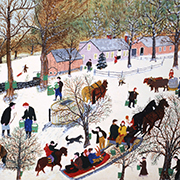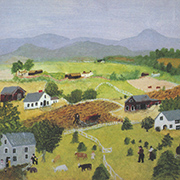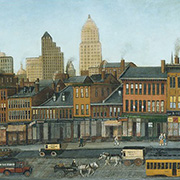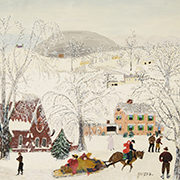

The Ins and Outs of Self-Taught Art
Reflections on a Shifting Field
January 10, 2012 - April 7, 2012
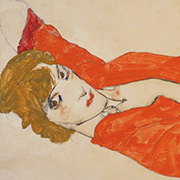
The Lady and the Tramp
Images of Women in Austrian and German Art
October 11, 2011 - December 30, 2011
Recent Acquisitions
(And Some Thoughts on the Current Art Market)
July 5, 2011 - September 30, 2011
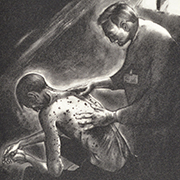
Decadence & Decay
Max Beckmann, Otto Dix, George Grosz
April 12, 2011 - June 24, 2011
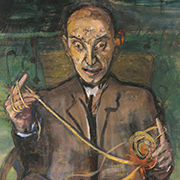
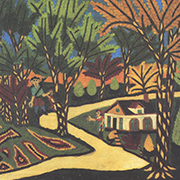
Self-Taught Painters in American 1800-1950
Revisiting the Tradition
January 11, 2011 - April 2, 2011
Marie-Louise Motesiczky
Paradise Lost & Found
October 12, 2010 - December 30, 2010
Recent Acquisitions
(And Some Thoughts on the Current Art Market)
July 13, 2010 - October 1, 2010
Käthe Kollwitz
A Portrait of the Artist
April 13, 2010 - June 25, 2010
Seventy Years Grandma Moses
A Loan Exhibition Celebrating the 70th Anniversary of the Artist's "Discovery"
February 3, 2010 - April 3, 2010
Egon Schiele as Printmaker
A Loan Exhibition Celebrating the 70th Anniversary of the Galerie St. Etienne
November 3, 2009 - January 23, 2010
From Brücke To Bauhaus
The Meanings of Modernity in Germany, 1905-1933
March 31, 2009 - June 26, 2009
They Taught Themselves
American Self-Taught Painters Between the World Wars
January 9, 2009 - March 14, 2009
Elephants We Must Never Forget
New Paintings Drawings and Prints by Sue Coe
October 14, 2008 - December 20, 2008
Recent Acquisitions
(And Some Thoughts on the Current Art Market)
June 24, 2008 - September 26, 2008
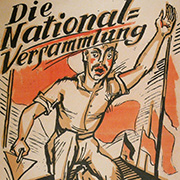
Hope or Menace?
Communism in Germany Between the World Wars
March 25, 2008 - June 13, 2008
Transforming Reality
Pattern and Design in Modern and Self-Taught Art
January 15, 2008 - March 8, 2008
Leonard Baskin
Proofs and Process
October 9, 2007 - January 5, 2008
Recent Acquisitions
(And Some Thoughts on the Current Art Market)
June 5, 2007 - September 28, 2007
Who Paid the Piper?
The Art of Patronage in Fin-de-Siècle Vienna
March 8, 2007 - May 26, 2007
Fairy Tale, Myth and Fantasy
Approaches to Spirituality in Art
December 7, 2006 - February 3, 2007
More Than Coffee was Served
Café Culture in Fin-de-Siècle Vienna and Weimar Germany
September 19, 2006 - November 25, 2006
Recent Acquisitions
(And Some Thoughts on the Current Art Market)
June 6, 2006 - September 8, 2006
Parallel Visions II
"Outsider" and "Insider" Art Today
April 5, 2006 - May 26, 2006
Ilija!
His First American Exhibtion
January 17, 2006 - March 18, 2006
Coming of Age
Egon Schiele and the Modernist Culture of Youth
November 15, 2005 - January 7, 2006
Sue Coe:
Sheep of Fools
September 20, 2005 - November 5, 2005
Recent Acquisitions
And Some Thoughts on the Current Art Market
June 7, 2005 - September 9, 2005
Every Picture Tells a Story
The Narrative Impulse in Modern and Contemporary Art
April 5, 2005 - May 27, 2005
65th Anniversary Exhibition, Part II
Self-Taught Artists
January 18, 2005 - March 26, 2005
65th Anniversary Exhibition, Part I
Austrian and German Expressionism
October 28, 2004 - January 8, 2005
Sue Coe: Bully: Master of the Global Merry-Go-Round and Recent Acquisitions
(And Some Thoughts on the Current Art Market)
June 8, 2004 - October 16, 2004
Animals & Us
The Animal in Contemporary Art
April 1, 2004 - May 22, 2004
Henry Darger
Art and Myth
January 15, 2004 - March 20, 2004
Body and Soul
Expressionism and the Human Figure
October 7, 2003 - January 3, 2004
Recent Acquisitions
(And Some Thoughts on the Current Art Market)
June 24, 2003 - September 12, 2003
In Search of the "Total Artwork"
Viennese Art and Design 1897–1932
April 8, 2003 - June 14, 2003
Russia's Self-Taught Artists
A New Perspective on the "Outsider"
January 14, 2003 - March 29, 2003
Käthe Kollwitz:
Master Printmaker
October 1, 2002 - January 4, 2003
Recent Acquisitions
(And Some Thoughts on the Current Art Market)
June 25, 2002 - September 20, 2002
Workers of the World
Modern Images of Labor
April 2, 2002 - June 15, 2002
Grandma Moses
Reflections of America
January 15, 2002 - March 16, 2002
Gustav Klimt/Egon Schiele/Oskar Kokoscha
From Art Nouveau to Expressionism
November 23, 2001 - January 5, 2002
The "Black-and-White" Show
Expressionist Graphics in Austria & Germany
September 20, 2001 - November 10, 2001
Recent Acquisitions (And Some Thoughts on the Current Art Market)
June 26, 2001 - September 7, 2001
Art with an Agenda
Politics, Persuasion, Illustration and Decoration
April 10, 2001 - June 16, 2001
"Our Beautiful and Tormented Austria!": Art Brut in the Land of Freud
January 18, 2001 - March 17, 2001
The Tragedy of War
November 16, 2000 - January 6, 2001
The Expressionist City
September 19, 2000 - November 4, 2000
Recent Acquisitions (And Some Thoughts on the Current Art Market)
June 20, 2000 - September 8, 2000
From Façade to Psyche
Turn-of-the-Century Portraiture in Austria & Germany
March 28, 2000 - June 10, 2000
European Self-Taught Art
Brut or Naive?
January 18, 2000 - March 11, 2000
Saved From Europe
In Commemoration of the 60th Anniversary of the Galerie St. Etienne
November 6, 1999 - January 8, 2000
The Modern Child
(Images of Children in Twentieth-Century Art)
September 14, 1999 - November 6, 1999
Recent Acquisitions
(And a Look at Sixty Years of Art Dealing)
June 15, 1999 - September 3, 1999
Sue Coe: The Pit
The Tragical Tale of the Rise and Fall of a Vivisector
March 30, 1999 - June 5, 1999
Henry Darger and His Realms
January 14, 1999 - March 13, 1999
Becoming Käthe Kollwitz
An Artist and Her Influences
November 17, 1998 - December 31, 1998
George Grosz - Elfriede Lohse-Wächtler
Art & Gender in Weimar Germany
September 23, 1998 - November 11, 1998
Recent Acquisitions
(And Some Thoughts About Looted Art)
June 9, 1998 - September 11, 1998
Taboo
Repression and Revolt in Modern Art
March 26, 1998 - May 30, 1998
Sacred & Profane
Michel Nedjar and Expressionist Primitivism
January 13, 1998 - March 14, 1998
Egon Schiele (1890-1918)
Master Draughtsman
November 18, 1997 - January 3, 1998
The New Objectivity
Realism in Weimar-Era Germany
September 16, 1997 - November 8, 1997
Recent Acquisitions
A Question of Quality
June 10, 1997 - September 5, 1997
Käthe Kollwitz - Lea Grundig
Two German Women & The Art of Protest
March 25, 1997 - May 31, 1997
That Way Madness Lies
Expressionism and the Art of Gugging
January 14, 1997 - March 15, 1997
The Viennese Line
Art and Design Circa 1900
November 18, 1996 - January 4, 1997
Emil Nolde - Christian Rohlfs
Two German Expressionist Masters
September 24, 1996 - November 9, 1996
Breaking All The Rules
Art in Transition
June 11, 1996 - September 6, 1996
Sue Coe's Ship of Fools
March 26, 1996 - May 24, 1996
New York Folk
Lawrence Lebduska, Abraham Levin, Isreal Litwak
January 16, 1996 - March 16, 1996
The Fractured Form
Expressionism and the Human Body
November 15, 1995 - January 6, 1996
From Left to Right
Social Realism in Germany and Russia, Circa 1919-1933
September 19, 1995 - November 4, 1995
Recent Acquisitions
June 20, 1995 - September 8, 1995
On the Brink 1900-2000
The Turning of Two Centuries
March 28, 1995 - May 26, 1995
Earl Cummingham - Grandma Moses
Visions of America
January 17, 1995 - March 18, 1995
Three Berlin Artists of the Weimar Era: Hannah Höch, Käthe Kollwitz, Jeanne Mam
September 13, 1994 - November 5, 1994
55th Anniversary Exhibition in Memory of Otto Kallir
June 7, 1994 - September 2, 1994
Drawn to Text: Comix Artists as Book Illustrators
May 15, 1994 - January 7, 1995
Sue Coe: We All Fall Down
March 29, 1994 - May 27, 1994
The Forgotten Folk Art of the 1940's
January 18, 1994 - March 19, 1994
Symbolism and the Austrian Avant Garde
Klimt, Schiele and their Contemporaries
November 16, 1993 - January 8, 1994
Art and Politics in Weimar Germany
September 14, 1993 - November 6, 1993
Recent Acquisitions
June 8, 1993 - September 3, 1993
The "Outsider" Question
Non-Academic Art from 1900 to the Present
March 23, 1993 - May 28, 1993
The Dance of Death
Images of Mortality in German Art
January 19, 1993 - March 13, 1993
Art Spiegelman
The Road to Maus
November 17, 1992 - January 9, 1993
Käthe Kollwitz
In Celebration of the 125th Anniversary of the Artist's Birth
September 15, 1992 - November 7, 1992
Naive Visions/Art Nouveau and Expressionism/Sue Coe: The Road to the White House
May 19, 1992 - September 4, 1992
Richard Gerstl/Oskar Kokoschka
March 17, 1992 - May 9, 1992
Scandal, Outrage, Censorship
Controversy in Modern Art
January 21, 1992 - March 7, 1992
Viennese Graphic Design
From Secession to Expressionism
November 19, 1991 - January 11, 1992
The Expressionist Figure
September 10, 1991 - November 9, 1991
Recent Acquisitions
Themes and Variations
May 14, 1991 - August 16, 1991
Sue Coe Retrospective
Political Document of a Decade
March 12, 1991 - May 5, 1991
Gustav Klimt, Egon Schiele, Oskar Kokoschka
Watercolors, drawings and prints
January 22, 1991 - March 2, 1991
Egon Schiele
November 13, 1990 - January 12, 1991
Lovis Corinth
A Retrospective
September 11, 1990 - November 3, 1990
Recent Acquisitions
June 12, 1990 - August 31, 1990
Max Klinger, Käthe Kollwitz, Alfred Kubin
A Study in Influences
March 27, 1990 - June 2, 1990
The Narrative in Art
January 23, 1990 - March 17, 1990
Grandma Moses
November 14, 1989 - January 13, 1990
Sue Coe
Porkopolis--Animals and Industry
September 19, 1989 - November 4, 1989
Galerie St. Etienne
A History in Documents and Pictures
June 20, 1989 - September 8, 1989
Gustav Klimt
Paintings and Drawings
April 11, 1989 - June 10, 1989
Fifty Years Galerie St. Etienne: An Overview
February 14, 1989 - April 1, 1989
Folk Artists at Work
Morris Hirshfield, John Kane and Grandma Moses
November 15, 1988 - January 14, 1989
Recent Acquisitions and Works From the Collection
June 14, 1988 - September 16, 1988
From Art Nouveau to Expressionism
April 12, 1988 - May 27, 1988
Three Pre-Expressionists
Lovis Corinth Käthe Kollwitz Paula Modersohn-Becker
January 26, 1988 - March 12, 1988
Käthe Kollwitz
The Power of the Print
November 17, 1987 - January 16, 1988
Recent Acquisitions and Works From the Collection
April 7, 1987 - October 31, 1987
Folk Art of This Century
February 10, 1987 - March 28, 1987
Oskar Kokoschka and His Time
November 25, 1986 - January 31, 1987
Viennese Design and Wiener Werkstätte
September 23, 1986 - November 8, 1986
Gustav Klimt/Egon Schiele/Oskar Kokoschka
Watercolors, Drawings and Prints
May 27, 1986 - September 13, 1986
Expressionist Painters
March 25, 1986 - May 10, 1986
Käthe Kollwitz/Paula Modersohn-Becker
January 28, 1986 - March 15, 1986
The Art of Giving
December 3, 1985 - January 18, 1986
Expressionists on Paper
October 8, 1985 - November 23, 1985
European and American Landscapes
June 4, 1985 - September 13, 1985
Expressionist Printmaking
Aspects of its Genesis and Development
April 1, 1985 - May 24, 1985
Expressionist Masters
January 18, 1985 - March 23, 1985
Arnold Schoenberg's Vienna
November 13, 1984 - January 5, 1985
Grandma Moses and Selected Folk Paintings
September 25, 1984 - November 3, 1984
American Folk Art
People, Places and Things
June 12, 1984 - September 14, 1984
John Kane
Modern America's First Folk Painter
April 17, 1984 - May 25, 1984
Eugène Mihaesco
The Illustrator as Artist
February 28, 1984 - April 7, 1984
Early Expressionist Masters
January 17, 1984 - February 18, 1984
Paula Modersohn-Becker
Germany's Pioneer Modernist
November 15, 1983 - January 7, 1984
Gustav Klimt
Drawings and Selected Paintings
September 20, 1983 - November 5, 1983
Early and Late
Drawings, Paintings & Prints from Academicism to Expressionism
June 1, 1983 - September 2, 1983
Alfred Kubin
Visions From The Other Side
March 22, 1983 - May 7, 1983
20th Century Folk
The First Generation
January 18, 1983 - March 12, 1983
Grandma Moses
The Artist Behind the Myth
November 15, 1982 - January 8, 1983
Kollwitz
The Artist as Printmaker
September 28, 1982 - November 6, 1982
Aspects of Modernism
June 1, 1982 - September 3, 1982
The Human Perspective
Recent Acquisitions
March 16, 1982 - May 15, 1982
19th and 20th Century European and American Folk Art
January 19, 1982 - March 6, 1982
The Folk Art Tradition
Naïve Painting in Europe and the United States
November 17, 1981 - January 9, 1982
Austria's Expressionism
April 21, 1981 - May 30, 1981
Eugène Mihaesco
His First American One-Man Show
March 3, 1981 - April 11, 1981
Gustav Klimt, Egon Schiele
November 12, 1980 - December 27, 1980
Summer Exhibition
June 17, 1980 - October 31, 1980
Kollwitz: The Drawing and The Print
May 1, 1980 - June 10, 1980
40th Anniversary Exhibition
November 13, 1979 - December 28, 1979
American Primitive Art
November 22, 1977
Käthe Kollwitz
December 1, 1976
Neue Galerie-Galerie St. Etienne
A Documentary Exhibition
May 1, 1976
Martin Pajeck
January 27, 1976
Georges Rouault and Frans Masereel
April 29, 1972
Branko Paradis
December 1, 1971
Käthe Kollwitz
February 3, 1971
Egon Schiele
The Graphic Work
October 19, 1970
Gustav Klimt
March 20, 1970
Friedrich Hundertwasser
May 6, 1969
Austrian Art of the 20th Century
March 21, 1969
Egon Schiele
Memorial Exhibition
October 31, 1968
Yugoslav Primitive Art
April 30, 1968
Alfred Kubin
January 30, 1968
Käthe Kollwitz
In the Cause of Humanity
October 23, 1967
Abraham Levin
September 26, 1967
Karl Stark
April 5, 1967
Gustav Klimt
February 4, 1967
The Wiener Werkstätte
November 16, 1966
Oskar Laske
October 25, 1965
Käthe Kollwitz
May 1, 1965
Egon Schiele
Watercolors and Drawings from American Collections
March 1, 1965
25th Anniversary Exhibition
Part II
November 21, 1964
25th Anniversary Exhibition
Part I
October 17, 1964
Mary Urban
June 9, 1964
Werner Berg, Jane Muus and Mura Dehn
May 5, 1964
Eugen Spiro
April 4, 1964
B. F. Dolbin
Drawings of an Epoch
March 3, 1964
Austrian Expressionists
January 6, 1964
Joseph Rifesser
December 3, 1963
Panorama of Yugoslav Primitive Art
October 21, 1963
Joe Henry
Watercolors of Vermont
May 1, 1963
French Impressionists
March 8, 1963
Grandma Moses
Memorial Exhibition
November 26, 1962
Group Show
October 15, 1962
Ernst Barlach
March 23, 1962
Martin Pajeck
February 24, 1962
Paintings by Expressionists
January 27, 1962
Käthe Kollwitz
November 11, 1961
Grandma Moses
September 7, 1961
My Friends
Fourth Biennial of Pictures by American School Children
May 27, 1961
Raimonds Staprans
April 17, 1961
Gustav Klimt, Egon Schiele, Oskar Kokoschka and Alfred Kubin
March 14, 1961
Marvin Meisels
January 23, 1961
Egon Schiele
November 15, 1960
My Life's History
Paintings by Grandma Moses
September 12, 1960
Watercolors and Drawings by Austrian Artists from the Dial Collection
May 2, 1960
Martin Pajeck
February 29, 1960
Eugen Spiro
February 6, 1960
Käthe Kollwitz
December 14, 1959
Josef Scharl
Last Paintings and Drawings
November 11, 1959
European and American Expressionists
September 22, 1959
Our Town
One Hundred Paintings by American School Children
May 23, 1959
Marvin Meisels and Martin Pajeck
May 1, 1959
Gustav Klimt
April 1, 1959
Käthe Kollwitz
January 12, 1959
Oskar Kokoschka
October 28, 1958
Village Life in Guatemala
Paintings by Andres Curuchich
June 3, 1958
Two Unknown American Expressionists
Paintings by Marvin Meisels and Martin Pajeck
April 28, 1958
Paula Modersohn-Becker
March 15, 1958
The Great Tradition in American Painting
American Primitive Art
January 20, 1958
Jules Lefranc and Dominique Lagru
Two French Primitives
November 18, 1957
Margret Bilger
October 22, 1957
The Four Seasons
One Hundred Paintings by American School Children
June 11, 1957
Grandma Moses
May 6, 1957
Alfred Kubin
April 3, 1957
Franz Lerch
March 2, 1957
Egon Schiele
January 21, 1957
Josef Scharl
Memorial Exhibition
November 17, 1956
Irma Rothstein
May 19, 1956
Käthe Kollwitz
April 16, 1956
A Tribute to Grandma Moses
November 28, 1955
As I See Myself
One Hundred Paintings by American School Children
May 20, 1955
Juan De'Prey
April 19, 1955
Erich Heckel
March 29, 1955
Freddy Homburger
March 2, 1955
Masters of the 19th Century
January 18, 1955
Oskar Kokoschka
November 29, 1954
Isabel Case Borgatta and Josef Scharl
October 12, 1954
James N. Rosenberg and Eugen Spiro
April 30, 1954
Per Krogh
April 2, 1954
Cuno Amiet
February 16, 1954
Eniar Jolin
January 14, 1954
Irma Rothstein
December 8, 1953
Josef Scharl
November 11, 1953
Grandma Moses
October 21, 1953 - October 24, 1953
Wilhelm Kaufmann
September 30, 1953
Lovis Corinth, Oskar Kokoschka and Egon Schiele
May 27, 1953
A Grandma Moses Album
Recent Paintings, 1950-1953
April 15, 1953
Streeter Blair
American Primitive
February 26, 1953
Paintings on Glass
Austrian Religious Folk Art of the 17th to 19th Centuries
December 4, 1952
Hasan Kaptan
Paintings of a Ten-Year-Old Turkish Painter
October 29, 1952
Margret Bilger
May 10, 1952
American Natural Painters
March 31, 1952
Ten Years of New York Concert Impressions by Eugen Spiro; Four New Paintings by
January 26, 1952
I-Fa-Wei
Watercolors of New York by a Chinese Artist
December 1, 1951
Käthe Kollwitz
October 25, 1951
Drawings and Watercolors by Austrian Children
May 21, 1951
Grandma Moses
Twenty-Five Masterpieces of Primitive Art
March 17, 1951
Roswitha Bitterlich
January 18, 1951
Oskar Laske
Watercolors of Vienna and the Salzkammergut
October 14, 1950
Tenth Anniversary Exhibition
Part II
May 11, 1950
Austrian Art of the 19th Century
From Wadlmüller to Klimt
April 1, 1950
Chiao Ssu-Tu
February 18, 1950
Anton Faistauer
January 1, 1950
Tenth Anniversary Exhibition
Part I
November 30, 1949
Autograph Exhibition
October 26, 1949
Gladys Wertheim Bachrach
May 24, 1949
Oskar Kokoschka
March 30, 1949
Eugen Spiro
February 19, 1949
Frans Masereel
January 13, 1949
Ten Years Grandma Moses
November 22, 1948
Käthe Kollwitz
Masterworks
October 18, 1948
American Primitives
June 3, 1948
Egon Schiele
Memorial Exhibition
April 5, 1948
Miriam Richman
February 7, 1948
Vally Wieselthier
Memorial Exhibition
January 10, 1948
Christmas Exhibition
December 4, 1947
Fritz von Unruh
November 10, 1947
Käthe Kollwitz
October 4, 1947
Grandma Moses
May 17, 1947
Lovis Corinth
April 16, 1947
Hugo Steiner-Prag
March 15, 1947
Mark Baum
January 11, 1947
Eugen Spiro
November 25, 1946
Henri de Toulouse-Lautrec
May 17, 1946
Ladis W. Sabo
Paintings by a New Primitive Artist
April 8, 1946
Georges Rouault
The Graphic Work
February 26, 1946
Käthe Kollwitz
Memorial Exhibition
November 21, 1945
Fred E. Robertson
Paintings by an American Primitive
June 13, 1945
Max Liebermann
The Graphic Work
April 18, 1945
Vienna through Four Centuries
March 1, 1945
Eugen Spiro
January 20, 1945
Grandma Moses
New Paintings
December 5, 1944
Käthe Kollwitz
Part II
October 26, 1944
A Century of French Graphic Art
From Géricault to Picasso
September 28, 1944
Max Liebermann
Memorial Exhibition
June 9, 1944
Juan De'Prey
Paintings by a Self-Taught Artist from Puerto Rico
May 6, 1944
Abraham Levin
April 15, 1944
Lesser Ury
Memorial Exhibition
March 21, 1944
Grandma Moses
Paintings by the Senior of the American Primitives
February 9, 1944
Betty Lane
January 11, 1944
WaIt Disney Cavalcade
December 9, 1943
Käthe Kollwitz
Part I
November 3, 1943
Will Barnet
September 29, 1943
Lovis Corinth
May 26, 1943
Josephine Joy
Paintings by an American Primitive
May 3, 1943
Oskar Kokoschka
Aspects of His Art
March 31, 1943
Eugen Spiro
February 13, 1943
Seymour Lipton
January 18, 1943
Illuminated Gothic Woodcuts
Printed and Painted, 1477-1493
December 5, 1942
Abraham Levin
November 4, 1942
Walt Disney Originals
September 23, 1942
Documents which Relate History
Documents of Historical Importance and Landmarks of Human Development
June 10, 1942
Honoré Daumier
April 29, 1942
Bertha Trabich
Memorial Exhibition of a Russian-American Primitive
March 25, 1942
Alfred Kubin
Master of Drawing
December 4, 1941
Egon Schiele
November 7, 1941
Betty Lane
June 3, 1941
Flowers from Old Vienna
18th and Early 19th Century Flower Painting
May 7, 1941
Weavings by Navaho and Hopi Indians and Photos of Indians by Helen M. Post
January 29, 1941
Georg Merkel
November 7, 1940
What a Farm Wife Painted
Works by Mrs. Anna Mary Moses
October 9, 1940
Saved from Europe
Masterpieces of European Art
July 1, 1940
American Abstract Art
May 22, 1940
Franz Lerch
May 1, 1940
Wilhelm Thöny
April 3, 1940
French Masters of the 19th and 20th Centuries
February 29, 1940
H. W. Hannau
Metropolis, Photographic Studies of New York
February 2, 1940
Oskar Kokoschka
January 9, 1940
Austrian Masters
November 13, 1939
"OUR BEAUTIFUL AND TORMENTED AUSTRIA!": ART BRUT IN THE LAND OF FREUD
Darger, Henry
Gugging, The Artists of
Hauser, Johann
Navratil, Emanuel
Rädler, Josef Karl
Rainer, Arnulf
The Galerie St. Etienne's latest exhibition of Art Brut (the European counterpart to what Americans frequently call "Outsider Art") takes its title from the work of one of Austria's foremost exponents of the genre, Johann Fischer. A member of the renowned artists' group at the Lower Austrian Psychiatric Hospital in Gugging, near Vienna, Fischer has for years been executing large inscribed drawings praising his beloved homeland while at the same time lamenting its frailty. It seems fitting that Austria, birthplace of Sigmund Freud, should have produced a substantive body of Art Brut, not just in today's Gugging colony, but also going back to early twentieth-century psychiatric clinics. The works in the present exhibition span the last hundred years, reflecting not only the historical circumstances of their creation, but changing attitudes toward the art of the mentally ill. As Fischer's message implies, one of the chief lessons of Art Brut is that beauty can arise from the tormented souls of a nation and its people.
At the beginning of the twentieth century, Freud's pioneering work established the unconscious as an area of serious study and in the process helped validate the hallucinatory worlds of the dreamer and the psychotic, which he saw as virtually identical. However, Freud himself eschewed work with psychotics (whom he did not believe could benefit from his analytic techniques) and perhaps as a result was not much interested in their artistic creations. The primary thrust of psychological investigations in the second half of the nineteenth century had been scientific, with the result that psychiatric symptoms were seen as being essentially neurological in origin. The art produced by mental patients thus became just one more problem of which the patient should ideally be cured. This attitude permeated the treatment of Josef Karl Rädler from the time he was first hospitalized, in 1893, until his death in 1917.
Rädler was a master porcelain painter who, after leading an apparently ordinary life, began to experience profound mood swings in his early forties. When his family could no longer deal with his irascibility and the elaborate and costly business schemes hatched during his manic phases, Rädler was committed to the Viennese asylum at Pilgerhain. He was subsequently diagnosed as suffering from "secondary dementia" (roughly akin to what we today call schizophrenia), but it has more recently been suggested that his symptoms could have been the result of temporal lobe disturbances caused by latent epilepsy.
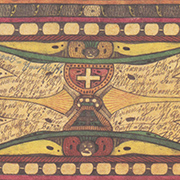
Although his prior profession had predisposed him to image-making, it seems Rädler did not start painting until 1897. His watercolors are all meticulously worked over on both sides of the sheet. One side usually centers on a relatively realistic image, while the other is covered with intricately nested skeins of symbolic figures and words that frequently taper off into illegible scribbles. In 1905, Rädler was transferred to a new state-of-the-art sanatorium at Mauer-Öhling. Among the institution's special features were its large, park-like grounds, which even included an amusement area where inmates could meet for folk festivals, dancing, bowling and the like. After his transfer to Mauer-Öhling, the range of Rädler's subject matter increased markedly. Whereas formerly he had painted mainly birds, he now did portraits of patients, scenes depicting them at their various activities, and renderings of the landscape surrounding the hospital.
Rädler spent most of his time painting and writing, consuming copious quantities of paper and paint. This activity, it appears, was permitted if not encouraged because it kept the artist from causing trouble. Not much loved by his keepers, Rädler could be nasty and belligerent, and when not writing often harangued his fellow inmates with long philosophical discourses. Frequently signing his watercolors "The Laughing Philosopher," he believed himself to be both a great thinker and a great artist. Many of his pieces are marked with exorbitant prices, though he was ready to sell for considerably less, provided the buyer signed a promissory note for the balance. The doctors, it perhaps goes without saying, did not think much of Rädler's art. Hospital records describe his pictures as "mannered, wooden, spiritless." Rädler's artistic ambitions were seen as further evidence of delusional megalomania.
From our present-day perspective, one may well wonder whether Rädler was branded a madman at least in part because he overstepped the boundaries of his prescribed social station. Although he was a voracious reader and even taught himself English, his self-styled philosophizing clearly breached the standards upheld by the educated classes. Nor, of course, did his paintings meet the academic requirements that still prevailed throughout Europe. Had Rädler come from a more privileged background, he might have been welcomed into the then nascent avant-garde or at least been shielded from confinement in a mental hospital.
It is an ironic coincidence that at the very moment when Rädler was incarcerated for his delusions of grandeur, the unbearably self-important Viennese intelligentsia was meeting at a coffeehouse that was sarcastically dubbed "Cafe Megalomania" in their honor. Regulars at the "Cafe Megalomania" included the poet Peter Altenberg, an oddly dressed character who scrawled aphoristic notes on postcards and had an unsavory fascination with little girls. Rather than being committed to a mental hospital for his bizarre behavior, however, Altenberg lived comfortably in Vienna's fashionable First District and saw his poetry praised, published and set to music by the leading composers of the day. He and others of his circle were part of a pan-European movement to unseat the academic standards that had heretofore defined art.
Throughout Europe, the old forms of imperial and aristocratic governance were breaking down. By the end of the First World War, existing regimes had been toppled in Russia, Germany and Austria. With the old ruling order went the ordering devices that had heretofore dominated the arts: realism and perspective in painting, tonality in music. In tandem with the new science of psychoanalysis, artists became much more interested in unconscious dream states. Modern artists championed the integrity of idiosyncratic personal visions and were constantly struggling against externally dictated rules. In this new climate, the art of the mentally ill seemed to provide invaluable guidelines, a direct route into the unconscious. Rather than being perceived as aberrant, the work of psychotics was seen by some to tap into primal forms of expression, beyond the pale of social engineering.
However, the larger public and most psychiatrists remained indifferent--not to say hostile--toward the art of the mentally ill. This is the reason that so little is known about Emanuel Navratil, one of the greatest Art Brut masters to be discovered in recent years. Considering that the Nazis were actually murdering ("euthanizing," in their bogus parlance) mental patients during the years when Navratil was institutionalized, he was lucky just to have made it through World War II. No records survive of his hospitalizations, and only sixteen of his drawings are said to exist. Whether there were once more drawings is unknown, just as it is not known whether Navratil showed any artistic inclinations prior to 1940, when he apparently underwent a schizophrenic break after receiving a shrapnel injury in an air-raid. His drawings, mostly quite large in scale, were executed at Vienna's Steinhof Mental Institution on the versos of medical record sheets glued together with flour paste, and with bits of colored pencil brought by his wife. Some have claimed to see evidence of Navratil's former profession as a lathe-operator in the drawings' symmetry, their organization around a central axis, and their ability to be "read" from all sides. The artist's granddaughter believes that it was mainly pain caused by his war wound that brought Navratil to the Steinhof, where he received analgesic medication in addition to psychiatric treatment. At any rate, Navratil came to feel more comfortable at the mental hospital than he did in the outside world. He eventually checked himself into the Steinhof permanently, and lived there until his death in 1956.
After World War II, attitudes toward the art of the mentally ill slowly began to improve, owing in large part to the French artist Jean Dubuffet. Like many artists before him, as well as his colleagues in the Surrealist movement, Dubuffet was seeking a way out of socially sanctioned artistic rules. His quest for unadulterated creative freedom ultimately blossomed into a wholesale condemnation of civilization. Whereas Freud had theorized that civilization imposed necessary restraints on the unruly tendencies of the unconscious, Dubuffet believed that these restraints were the enemy of true creativity. Dubuffet coined the term Art Brut ("raw art") as a catch-all for art created beyond the confines of received culture and proceeded to assemble the definitive collection of that work. As John MacGregor, the leading American scholar on the subject, has pointed out, Dubuffet removed Art Brut from the madhouse and repositioned it in the museum world. Disdaining the psychiatric profession as much as every other established institution, however, Dubuffet vehemently insisted that Art Brut was not the same as psychotic art. While it is true that the majority of the artists in his Collection de l'Art Brut were hospitalized patients or suffered from severe emotional problems, the criterion for inclusion was not mental illness per se, but quality and the a-cultural stance of the art work.
Dubuffet's pioneering work prepared the ground for the efforts of Leo Navratil (no relation to Emanuel Navratil) at the Gugging Psychiatric Hospital. While Navratil had no background in art and had probably never heard of Dubuffet when he first started out, he was unusually sensitive to the artistic abilities of his patients. He began using drawing as a diagnostic tool in the 1950s, but soon noticed that some patients produced work of exceptional quality. Although artistic talent is no more common among psychotics than it is in the population at large, Navratil came to believe, with Dubuffet, that unbridled access to the unconscious can indeed release an unusually pure form of creativity. Unlike traditional art therapists, Navratil worked one-on-one with specially selected patients, keeping in mind the individual artistic strengths of each, as well as their personal stumbling blocks. Mental patients who made art in the early twentieth century had done so of their own volition, without any assistance from their doctors. Navratil, however, was inclined to place less importance than did Dubuffet on the spontaneity of the creative drive. Most of the Gugging artists would never have turned to art without his encouragement.
In the mid 1960s, Navratil published two small books about his work with the Gugging patients: one focusing on the visual arts, the other on writing. In the counter-cultural climate of the times, these books proved an immediate success. Leading Viennese artists began making pilgrimages to Gugging, and exhibitions in galleries and museums followed. Navratil found that while "his" artists had never pursued success and even now were incapable of courting it, they nonetheless benefited socially and therapeutically from their newfound recognition. In this, he adopted a more moderate view than Dubuffet and other Art Brut advocates, who saw total isolation as the ultimate creative ideal. While the Austrian artist Arnulf Rainer attempted to approximate the freedom of psychosis by experimenting with hallucinogenic drugs and collaborating with the Gugging artists, Navratil cautioned that true psychotics suffer enormously from their isolation and actually crave "normalcy." In his view, psychotic art was not intrinsically different from any other type of art, in that both types serve as productive communicative links between the creator's inner and outer worlds.
Unlike earlier psychiatrists who had seen art-making as a negative symptom, Navratil recognized the process as an attempt at self-healing. By bringing order to the chaos of the unconscious, art helps establish an alternative world or narrative to replace the reality which the psychotic has lost through his or her illness. Navratil, like many psychiatrists before him, spent a great deal of energy analyzing the stylistic characteristics of his patients' work. He identified a group of distinct creative building blocks: the anthropomorphizing of inanimate objects and of movement; the "mixed profile" (familiar to all from Picasso's paintings), in which one sees the face both frontally and from the side; fantasy; distortion; the rhythmical repetition of like objects; exaggerated contours; geometric schematization; and symbolism. While these formal devices can perhaps most readily be accessed in a psychotic state, Navratil saw them as basic elements of human expression. Such archaic ordering devices are no more arbitrary than the system of academic perspective which ruled Western art for centuries, and once the academic order broke down, many "normal" artists began using the same devices as psychotics.
Navratil has written that, whereas creativity is a universal psychological function, "art" is a cultural or historical construct. Over the course of the twentieth century, our definition of what qualifies as "art" changed radically, as did conceptions of what it means to be "normal." Mental patients are ostensibly hospitalized because they present a danger to themselves or society, but evaluations of that danger are invariably subjective. The fear that strange ideas can harm society found its ultimate expression in the Nazi death camps, and it is no coincidence that artists and mental patients were among Hitler's first targets. The new artistic norms that sprang up following the collapse of the old order were as threatening to many people as the new politics of communism and fascism. Hitler imposed his own twisted ideas of "normalcy" and attempted to exterminate everything else.
Art Brut is a European concept, and it arose from the cultural and historical circumstances peculiar to that continent in the twentieth-century. Art Brut was a cry for freedom, a protest against the grinding mechanisms of an often brutal state and its attendant cultural apparatus. Ironically, however, the broad reach of the European welfare state also facilitated the accumulation and study of vast troves of this material in mental hospitals. American "Outsider Art," by way of contrast, has never been so centrally organized or accessible and is a far more amorphous, ill-defined entity than European Art Brut. The fact that an artist like Henry Darger was only briefly institutionalized may speak less for his mental stability than it does for the comparatively high tolerance Americans have for eccentricity. We adopted European ideas, such as modernism and Art Brut, but made of them something intrinsically more egalitarian and democratic.
Despite its alleged position beyond culture, Art Brut is not entirely immune from external influences. If we are to seriously appreciate this work, we must acknowledge the idiosyncratic circumstances that condition its creation and reception, alongside its links to the universal spectrum of human creativity. Rather than idealizing Art Brut, as artists have often done, or stigmatizing it, as has sometimes been the practice of the psychiatric profession, we might better allow the disciplines of art history and psychology to enrich one another. Perhaps in this way Art Brut can finally be established as a legitimate field of study, rather than being seen merely as the poor cousin of modern art.