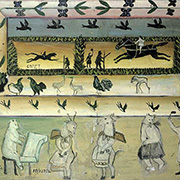
The Ins and Outs of Self-Taught Art
Reflections on a Shifting Field
January 10, 2012 - April 7, 2012
The Lady and the Tramp
Images of Women in Austrian and German Art
October 11, 2011 - December 30, 2011
Recent Acquisitions
(And Some Thoughts on the Current Art Market)
July 5, 2011 - September 30, 2011
Decadence & Decay
Max Beckmann, Otto Dix, George Grosz
April 12, 2011 - June 24, 2011
Self-Taught Painters in American 1800-1950
Revisiting the Tradition
January 11, 2011 - April 2, 2011
Marie-Louise Motesiczky
Paradise Lost & Found
October 12, 2010 - December 30, 2010
Recent Acquisitions
(And Some Thoughts on the Current Art Market)
July 13, 2010 - October 1, 2010
Käthe Kollwitz
A Portrait of the Artist
April 13, 2010 - June 25, 2010
Seventy Years Grandma Moses
A Loan Exhibition Celebrating the 70th Anniversary of the Artist's "Discovery"
February 3, 2010 - April 3, 2010
Egon Schiele as Printmaker
A Loan Exhibition Celebrating the 70th Anniversary of the Galerie St. Etienne
November 3, 2009 - January 23, 2010
From Brücke To Bauhaus
The Meanings of Modernity in Germany, 1905-1933
March 31, 2009 - June 26, 2009
They Taught Themselves
American Self-Taught Painters Between the World Wars
January 9, 2009 - March 14, 2009
Elephants We Must Never Forget
New Paintings Drawings and Prints by Sue Coe
October 14, 2008 - December 20, 2008
Recent Acquisitions
(And Some Thoughts on the Current Art Market)
June 24, 2008 - September 26, 2008
Hope or Menace?
Communism in Germany Between the World Wars
March 25, 2008 - June 13, 2008
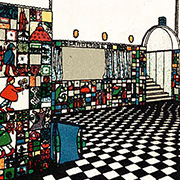
Transforming Reality
Pattern and Design in Modern and Self-Taught Art
January 15, 2008 - March 8, 2008
Leonard Baskin
Proofs and Process
October 9, 2007 - January 5, 2008
Recent Acquisitions
(And Some Thoughts on the Current Art Market)
June 5, 2007 - September 28, 2007
Who Paid the Piper?
The Art of Patronage in Fin-de-Siècle Vienna
March 8, 2007 - May 26, 2007
Fairy Tale, Myth and Fantasy
Approaches to Spirituality in Art
December 7, 2006 - February 3, 2007
More Than Coffee was Served
Café Culture in Fin-de-Siècle Vienna and Weimar Germany
September 19, 2006 - November 25, 2006
Recent Acquisitions
(And Some Thoughts on the Current Art Market)
June 6, 2006 - September 8, 2006
Parallel Visions II
"Outsider" and "Insider" Art Today
April 5, 2006 - May 26, 2006
Ilija!
His First American Exhibtion
January 17, 2006 - March 18, 2006
Coming of Age
Egon Schiele and the Modernist Culture of Youth
November 15, 2005 - January 7, 2006
Sue Coe:
Sheep of Fools
September 20, 2005 - November 5, 2005
Recent Acquisitions
And Some Thoughts on the Current Art Market
June 7, 2005 - September 9, 2005
Every Picture Tells a Story
The Narrative Impulse in Modern and Contemporary Art
April 5, 2005 - May 27, 2005
65th Anniversary Exhibition, Part II
Self-Taught Artists
January 18, 2005 - March 26, 2005
65th Anniversary Exhibition, Part I
Austrian and German Expressionism
October 28, 2004 - January 8, 2005
Sue Coe: Bully: Master of the Global Merry-Go-Round and Recent Acquisitions
(And Some Thoughts on the Current Art Market)
June 8, 2004 - October 16, 2004
Animals & Us
The Animal in Contemporary Art
April 1, 2004 - May 22, 2004
Henry Darger
Art and Myth
January 15, 2004 - March 20, 2004
Body and Soul
Expressionism and the Human Figure
October 7, 2003 - January 3, 2004
Recent Acquisitions
(And Some Thoughts on the Current Art Market)
June 24, 2003 - September 12, 2003
In Search of the "Total Artwork"
Viennese Art and Design 1897–1932
April 8, 2003 - June 14, 2003
Russia's Self-Taught Artists
A New Perspective on the "Outsider"
January 14, 2003 - March 29, 2003
Käthe Kollwitz:
Master Printmaker
October 1, 2002 - January 4, 2003
Recent Acquisitions
(And Some Thoughts on the Current Art Market)
June 25, 2002 - September 20, 2002
Workers of the World
Modern Images of Labor
April 2, 2002 - June 15, 2002
Grandma Moses
Reflections of America
January 15, 2002 - March 16, 2002
Gustav Klimt/Egon Schiele/Oskar Kokoscha
From Art Nouveau to Expressionism
November 23, 2001 - January 5, 2002
The "Black-and-White" Show
Expressionist Graphics in Austria & Germany
September 20, 2001 - November 10, 2001
Recent Acquisitions (And Some Thoughts on the Current Art Market)
June 26, 2001 - September 7, 2001
Art with an Agenda
Politics, Persuasion, Illustration and Decoration
April 10, 2001 - June 16, 2001
"Our Beautiful and Tormented Austria!": Art Brut in the Land of Freud
January 18, 2001 - March 17, 2001
The Tragedy of War
November 16, 2000 - January 6, 2001
The Expressionist City
September 19, 2000 - November 4, 2000
Recent Acquisitions (And Some Thoughts on the Current Art Market)
June 20, 2000 - September 8, 2000
From Façade to Psyche
Turn-of-the-Century Portraiture in Austria & Germany
March 28, 2000 - June 10, 2000
European Self-Taught Art
Brut or Naive?
January 18, 2000 - March 11, 2000
Saved From Europe
In Commemoration of the 60th Anniversary of the Galerie St. Etienne
November 6, 1999 - January 8, 2000
The Modern Child
(Images of Children in Twentieth-Century Art)
September 14, 1999 - November 6, 1999
Recent Acquisitions
(And a Look at Sixty Years of Art Dealing)
June 15, 1999 - September 3, 1999
Sue Coe: The Pit
The Tragical Tale of the Rise and Fall of a Vivisector
March 30, 1999 - June 5, 1999
Henry Darger and His Realms
January 14, 1999 - March 13, 1999
Becoming Käthe Kollwitz
An Artist and Her Influences
November 17, 1998 - December 31, 1998
George Grosz - Elfriede Lohse-Wächtler
Art & Gender in Weimar Germany
September 23, 1998 - November 11, 1998
Recent Acquisitions
(And Some Thoughts About Looted Art)
June 9, 1998 - September 11, 1998
Taboo
Repression and Revolt in Modern Art
March 26, 1998 - May 30, 1998
Sacred & Profane
Michel Nedjar and Expressionist Primitivism
January 13, 1998 - March 14, 1998
Egon Schiele (1890-1918)
Master Draughtsman
November 18, 1997 - January 3, 1998
The New Objectivity
Realism in Weimar-Era Germany
September 16, 1997 - November 8, 1997
Recent Acquisitions
A Question of Quality
June 10, 1997 - September 5, 1997
Käthe Kollwitz - Lea Grundig
Two German Women & The Art of Protest
March 25, 1997 - May 31, 1997
That Way Madness Lies
Expressionism and the Art of Gugging
January 14, 1997 - March 15, 1997
The Viennese Line
Art and Design Circa 1900
November 18, 1996 - January 4, 1997
Emil Nolde - Christian Rohlfs
Two German Expressionist Masters
September 24, 1996 - November 9, 1996
Breaking All The Rules
Art in Transition
June 11, 1996 - September 6, 1996
Sue Coe's Ship of Fools
March 26, 1996 - May 24, 1996
New York Folk
Lawrence Lebduska, Abraham Levin, Isreal Litwak
January 16, 1996 - March 16, 1996
The Fractured Form
Expressionism and the Human Body
November 15, 1995 - January 6, 1996
From Left to Right
Social Realism in Germany and Russia, Circa 1919-1933
September 19, 1995 - November 4, 1995
Recent Acquisitions
June 20, 1995 - September 8, 1995
On the Brink 1900-2000
The Turning of Two Centuries
March 28, 1995 - May 26, 1995
Earl Cummingham - Grandma Moses
Visions of America
January 17, 1995 - March 18, 1995
Three Berlin Artists of the Weimar Era: Hannah Höch, Käthe Kollwitz, Jeanne Mam
September 13, 1994 - November 5, 1994
55th Anniversary Exhibition in Memory of Otto Kallir
June 7, 1994 - September 2, 1994
Drawn to Text: Comix Artists as Book Illustrators
May 15, 1994 - January 7, 1995
Sue Coe: We All Fall Down
March 29, 1994 - May 27, 1994
The Forgotten Folk Art of the 1940's
January 18, 1994 - March 19, 1994
Symbolism and the Austrian Avant Garde
Klimt, Schiele and their Contemporaries
November 16, 1993 - January 8, 1994
Art and Politics in Weimar Germany
September 14, 1993 - November 6, 1993
Recent Acquisitions
June 8, 1993 - September 3, 1993
The "Outsider" Question
Non-Academic Art from 1900 to the Present
March 23, 1993 - May 28, 1993
The Dance of Death
Images of Mortality in German Art
January 19, 1993 - March 13, 1993
Art Spiegelman
The Road to Maus
November 17, 1992 - January 9, 1993
Käthe Kollwitz
In Celebration of the 125th Anniversary of the Artist's Birth
September 15, 1992 - November 7, 1992
Naive Visions/Art Nouveau and Expressionism/Sue Coe: The Road to the White House
May 19, 1992 - September 4, 1992
Richard Gerstl/Oskar Kokoschka
March 17, 1992 - May 9, 1992
Scandal, Outrage, Censorship
Controversy in Modern Art
January 21, 1992 - March 7, 1992
Viennese Graphic Design
From Secession to Expressionism
November 19, 1991 - January 11, 1992
The Expressionist Figure
September 10, 1991 - November 9, 1991
Recent Acquisitions
Themes and Variations
May 14, 1991 - August 16, 1991
Sue Coe Retrospective
Political Document of a Decade
March 12, 1991 - May 5, 1991
Gustav Klimt, Egon Schiele, Oskar Kokoschka
Watercolors, drawings and prints
January 22, 1991 - March 2, 1991
Egon Schiele
November 13, 1990 - January 12, 1991
Lovis Corinth
A Retrospective
September 11, 1990 - November 3, 1990
Recent Acquisitions
June 12, 1990 - August 31, 1990
Max Klinger, Käthe Kollwitz, Alfred Kubin
A Study in Influences
March 27, 1990 - June 2, 1990
The Narrative in Art
January 23, 1990 - March 17, 1990
Grandma Moses
November 14, 1989 - January 13, 1990
Sue Coe
Porkopolis--Animals and Industry
September 19, 1989 - November 4, 1989
Galerie St. Etienne
A History in Documents and Pictures
June 20, 1989 - September 8, 1989
Gustav Klimt
Paintings and Drawings
April 11, 1989 - June 10, 1989
Fifty Years Galerie St. Etienne: An Overview
February 14, 1989 - April 1, 1989
Folk Artists at Work
Morris Hirshfield, John Kane and Grandma Moses
November 15, 1988 - January 14, 1989
Recent Acquisitions and Works From the Collection
June 14, 1988 - September 16, 1988
From Art Nouveau to Expressionism
April 12, 1988 - May 27, 1988
Three Pre-Expressionists
Lovis Corinth Käthe Kollwitz Paula Modersohn-Becker
January 26, 1988 - March 12, 1988
Käthe Kollwitz
The Power of the Print
November 17, 1987 - January 16, 1988
Recent Acquisitions and Works From the Collection
April 7, 1987 - October 31, 1987
Folk Art of This Century
February 10, 1987 - March 28, 1987
Oskar Kokoschka and His Time
November 25, 1986 - January 31, 1987
Viennese Design and Wiener Werkstätte
September 23, 1986 - November 8, 1986
Gustav Klimt/Egon Schiele/Oskar Kokoschka
Watercolors, Drawings and Prints
May 27, 1986 - September 13, 1986
Expressionist Painters
March 25, 1986 - May 10, 1986
Käthe Kollwitz/Paula Modersohn-Becker
January 28, 1986 - March 15, 1986
The Art of Giving
December 3, 1985 - January 18, 1986
Expressionists on Paper
October 8, 1985 - November 23, 1985
European and American Landscapes
June 4, 1985 - September 13, 1985
Expressionist Printmaking
Aspects of its Genesis and Development
April 1, 1985 - May 24, 1985
Expressionist Masters
January 18, 1985 - March 23, 1985
Arnold Schoenberg's Vienna
November 13, 1984 - January 5, 1985
Grandma Moses and Selected Folk Paintings
September 25, 1984 - November 3, 1984
American Folk Art
People, Places and Things
June 12, 1984 - September 14, 1984
John Kane
Modern America's First Folk Painter
April 17, 1984 - May 25, 1984
Eugène Mihaesco
The Illustrator as Artist
February 28, 1984 - April 7, 1984
Early Expressionist Masters
January 17, 1984 - February 18, 1984
Paula Modersohn-Becker
Germany's Pioneer Modernist
November 15, 1983 - January 7, 1984
Gustav Klimt
Drawings and Selected Paintings
September 20, 1983 - November 5, 1983
Early and Late
Drawings, Paintings & Prints from Academicism to Expressionism
June 1, 1983 - September 2, 1983
Alfred Kubin
Visions From The Other Side
March 22, 1983 - May 7, 1983
20th Century Folk
The First Generation
January 18, 1983 - March 12, 1983
Grandma Moses
The Artist Behind the Myth
November 15, 1982 - January 8, 1983
Kollwitz
The Artist as Printmaker
September 28, 1982 - November 6, 1982
Aspects of Modernism
June 1, 1982 - September 3, 1982
The Human Perspective
Recent Acquisitions
March 16, 1982 - May 15, 1982
19th and 20th Century European and American Folk Art
January 19, 1982 - March 6, 1982
The Folk Art Tradition
Naïve Painting in Europe and the United States
November 17, 1981 - January 9, 1982
Austria's Expressionism
April 21, 1981 - May 30, 1981
Eugène Mihaesco
His First American One-Man Show
March 3, 1981 - April 11, 1981
Gustav Klimt, Egon Schiele
November 12, 1980 - December 27, 1980
Summer Exhibition
June 17, 1980 - October 31, 1980
Kollwitz: The Drawing and The Print
May 1, 1980 - June 10, 1980
40th Anniversary Exhibition
November 13, 1979 - December 28, 1979
American Primitive Art
November 22, 1977
Käthe Kollwitz
December 1, 1976
Neue Galerie-Galerie St. Etienne
A Documentary Exhibition
May 1, 1976
Martin Pajeck
January 27, 1976
Georges Rouault and Frans Masereel
April 29, 1972
Branko Paradis
December 1, 1971
Käthe Kollwitz
February 3, 1971
Egon Schiele
The Graphic Work
October 19, 1970
Gustav Klimt
March 20, 1970
Friedrich Hundertwasser
May 6, 1969
Austrian Art of the 20th Century
March 21, 1969
Egon Schiele
Memorial Exhibition
October 31, 1968
Yugoslav Primitive Art
April 30, 1968
Alfred Kubin
January 30, 1968
Käthe Kollwitz
In the Cause of Humanity
October 23, 1967
Abraham Levin
September 26, 1967
Karl Stark
April 5, 1967
Gustav Klimt
February 4, 1967
The Wiener Werkstätte
November 16, 1966
Oskar Laske
October 25, 1965
Käthe Kollwitz
May 1, 1965
Egon Schiele
Watercolors and Drawings from American Collections
March 1, 1965
25th Anniversary Exhibition
Part II
November 21, 1964
25th Anniversary Exhibition
Part I
October 17, 1964
Mary Urban
June 9, 1964
Werner Berg, Jane Muus and Mura Dehn
May 5, 1964
Eugen Spiro
April 4, 1964
B. F. Dolbin
Drawings of an Epoch
March 3, 1964
Austrian Expressionists
January 6, 1964
Joseph Rifesser
December 3, 1963
Panorama of Yugoslav Primitive Art
October 21, 1963
Joe Henry
Watercolors of Vermont
May 1, 1963
French Impressionists
March 8, 1963
Grandma Moses
Memorial Exhibition
November 26, 1962
Group Show
October 15, 1962
Ernst Barlach
March 23, 1962
Martin Pajeck
February 24, 1962
Paintings by Expressionists
January 27, 1962
Käthe Kollwitz
November 11, 1961
Grandma Moses
September 7, 1961
My Friends
Fourth Biennial of Pictures by American School Children
May 27, 1961
Raimonds Staprans
April 17, 1961
Gustav Klimt, Egon Schiele, Oskar Kokoschka and Alfred Kubin
March 14, 1961
Marvin Meisels
January 23, 1961
Egon Schiele
November 15, 1960
My Life's History
Paintings by Grandma Moses
September 12, 1960
Watercolors and Drawings by Austrian Artists from the Dial Collection
May 2, 1960
Martin Pajeck
February 29, 1960
Eugen Spiro
February 6, 1960
Käthe Kollwitz
December 14, 1959
Josef Scharl
Last Paintings and Drawings
November 11, 1959
European and American Expressionists
September 22, 1959
Our Town
One Hundred Paintings by American School Children
May 23, 1959
Marvin Meisels and Martin Pajeck
May 1, 1959
Gustav Klimt
April 1, 1959
Käthe Kollwitz
January 12, 1959
Oskar Kokoschka
October 28, 1958
Village Life in Guatemala
Paintings by Andres Curuchich
June 3, 1958
Two Unknown American Expressionists
Paintings by Marvin Meisels and Martin Pajeck
April 28, 1958
Paula Modersohn-Becker
March 15, 1958
The Great Tradition in American Painting
American Primitive Art
January 20, 1958
Jules Lefranc and Dominique Lagru
Two French Primitives
November 18, 1957
Margret Bilger
October 22, 1957
The Four Seasons
One Hundred Paintings by American School Children
June 11, 1957
Grandma Moses
May 6, 1957
Alfred Kubin
April 3, 1957
Franz Lerch
March 2, 1957
Egon Schiele
January 21, 1957
Josef Scharl
Memorial Exhibition
November 17, 1956
Irma Rothstein
May 19, 1956
Käthe Kollwitz
April 16, 1956
A Tribute to Grandma Moses
November 28, 1955
As I See Myself
One Hundred Paintings by American School Children
May 20, 1955
Juan De'Prey
April 19, 1955
Erich Heckel
March 29, 1955
Freddy Homburger
March 2, 1955
Masters of the 19th Century
January 18, 1955
Oskar Kokoschka
November 29, 1954
Isabel Case Borgatta and Josef Scharl
October 12, 1954
James N. Rosenberg and Eugen Spiro
April 30, 1954
Per Krogh
April 2, 1954
Cuno Amiet
February 16, 1954
Eniar Jolin
January 14, 1954
Irma Rothstein
December 8, 1953
Josef Scharl
November 11, 1953
Grandma Moses
October 21, 1953 - October 24, 1953
Wilhelm Kaufmann
September 30, 1953
Lovis Corinth, Oskar Kokoschka and Egon Schiele
May 27, 1953
A Grandma Moses Album
Recent Paintings, 1950-1953
April 15, 1953
Streeter Blair
American Primitive
February 26, 1953
Paintings on Glass
Austrian Religious Folk Art of the 17th to 19th Centuries
December 4, 1952
Hasan Kaptan
Paintings of a Ten-Year-Old Turkish Painter
October 29, 1952
Margret Bilger
May 10, 1952
American Natural Painters
March 31, 1952
Ten Years of New York Concert Impressions by Eugen Spiro; Four New Paintings by
January 26, 1952
I-Fa-Wei
Watercolors of New York by a Chinese Artist
December 1, 1951
Käthe Kollwitz
October 25, 1951
Drawings and Watercolors by Austrian Children
May 21, 1951
Grandma Moses
Twenty-Five Masterpieces of Primitive Art
March 17, 1951
Roswitha Bitterlich
January 18, 1951
Oskar Laske
Watercolors of Vienna and the Salzkammergut
October 14, 1950
Tenth Anniversary Exhibition
Part II
May 11, 1950
Austrian Art of the 19th Century
From Wadlmüller to Klimt
April 1, 1950
Chiao Ssu-Tu
February 18, 1950
Anton Faistauer
January 1, 1950
Tenth Anniversary Exhibition
Part I
November 30, 1949
Autograph Exhibition
October 26, 1949
Gladys Wertheim Bachrach
May 24, 1949
Oskar Kokoschka
March 30, 1949
Eugen Spiro
February 19, 1949
Frans Masereel
January 13, 1949
Ten Years Grandma Moses
November 22, 1948
Käthe Kollwitz
Masterworks
October 18, 1948
American Primitives
June 3, 1948
Egon Schiele
Memorial Exhibition
April 5, 1948
Miriam Richman
February 7, 1948
Vally Wieselthier
Memorial Exhibition
January 10, 1948
Christmas Exhibition
December 4, 1947
Fritz von Unruh
November 10, 1947
Käthe Kollwitz
October 4, 1947
Grandma Moses
May 17, 1947
Lovis Corinth
April 16, 1947
Hugo Steiner-Prag
March 15, 1947
Mark Baum
January 11, 1947
Eugen Spiro
November 25, 1946
Henri de Toulouse-Lautrec
May 17, 1946
Ladis W. Sabo
Paintings by a New Primitive Artist
April 8, 1946
Georges Rouault
The Graphic Work
February 26, 1946
Käthe Kollwitz
Memorial Exhibition
November 21, 1945
Fred E. Robertson
Paintings by an American Primitive
June 13, 1945
Max Liebermann
The Graphic Work
April 18, 1945
Vienna through Four Centuries
March 1, 1945
Eugen Spiro
January 20, 1945
Grandma Moses
New Paintings
December 5, 1944
Käthe Kollwitz
Part II
October 26, 1944
A Century of French Graphic Art
From Géricault to Picasso
September 28, 1944
Max Liebermann
Memorial Exhibition
June 9, 1944
Juan De'Prey
Paintings by a Self-Taught Artist from Puerto Rico
May 6, 1944
Abraham Levin
April 15, 1944
Lesser Ury
Memorial Exhibition
March 21, 1944
Grandma Moses
Paintings by the Senior of the American Primitives
February 9, 1944
Betty Lane
January 11, 1944
WaIt Disney Cavalcade
December 9, 1943
Käthe Kollwitz
Part I
November 3, 1943
Will Barnet
September 29, 1943
Lovis Corinth
May 26, 1943
Josephine Joy
Paintings by an American Primitive
May 3, 1943
Oskar Kokoschka
Aspects of His Art
March 31, 1943
Eugen Spiro
February 13, 1943
Seymour Lipton
January 18, 1943
Illuminated Gothic Woodcuts
Printed and Painted, 1477-1493
December 5, 1942
Abraham Levin
November 4, 1942
Walt Disney Originals
September 23, 1942
Documents which Relate History
Documents of Historical Importance and Landmarks of Human Development
June 10, 1942
Honoré Daumier
April 29, 1942
Bertha Trabich
Memorial Exhibition of a Russian-American Primitive
March 25, 1942
Alfred Kubin
Master of Drawing
December 4, 1941
Egon Schiele
November 7, 1941
Betty Lane
June 3, 1941
Flowers from Old Vienna
18th and Early 19th Century Flower Painting
May 7, 1941
Weavings by Navaho and Hopi Indians and Photos of Indians by Helen M. Post
January 29, 1941
Georg Merkel
November 7, 1940
What a Farm Wife Painted
Works by Mrs. Anna Mary Moses
October 9, 1940
Saved from Europe
Masterpieces of European Art
July 1, 1940
American Abstract Art
May 22, 1940
Franz Lerch
May 1, 1940
Wilhelm Thöny
April 3, 1940
French Masters of the 19th and 20th Centuries
February 29, 1940
H. W. Hannau
Metropolis, Photographic Studies of New York
February 2, 1940
Oskar Kokoschka
January 9, 1940
Austrian Masters
November 13, 1939
MORE THAN COFFEE WAS SERVED
Café Culture in Fin-de-Siècle Vienna and Weimar Germany
Altenberg, Peter
Beckmann, Max
Corinth, Lovis
Diveky, Josef
Dix, Otto
Dolbin, B.F.
Grosz, George
Heckel, Erich
Hofer, Karl
Hoffmann, Josef
Hoppe, Emil
Hubbuch, Karl
Jung, Moritz
Jürgens, Grethe
Kirchner, Ernst Ludwig
Klimt, Gustav
Kokoschka, Oskar
Kollwitz, Käthe
Kubin, Alfred
Löffler, Berthold
Loos, Adolf
Mammen, Jeanne
Meidner, Ludwig
Nolde, Emil
Orlik, Emil
Schiele, Egon
Sharp, William
Siegel, Gustav
Voigt, Bruno
Wegner, Erich
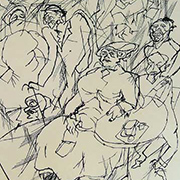
The café and its evening offshoot, the cabaret, have come to assume near-legendary status in the history of European modernism. While the first European cafés date back to the mid-seventeenth century, industrialization and the growth of bourgeois capitalism in the nineteenth century transformed these once humble institutions into grand establishments in which members of an increasingly diverse society could meet, not just to drink coffee, but to read, write, play cards, chess or billiards and to discuss the burning issues of the day. The café thus helped establish the public face of bohemia: that self-selected cadre of intellectuals whose mission in life was to oppose and undermine the philistine values of their elders. Paris, which gave us the word café, was in some respects the birthplace of café and cabaret society, but the Viennese paradigm of the Kaffeehaus was equally important, especially in Central Europe. To this day, Viennese identity is inextricably linked to that city’s Kaffeehäuser, and the Viennese contend, with some justification, that their coffee houses are different from all others. A popular tale traces Austria’s first coffee house to a stash of beans left behind when the Ottoman Turks were expelled from Vienna in 1683. While this story is a myth, it nevertheless reflects the pivotal historical role that Austrians assign to coffee. Coffee did originate in the Turkish and Arab lands, and it spread, not just to Austria, but to all of Europe, through the Crusades and, later, trade. At first coffee was served in small kiosks and as part of a broader menu in taverns. Gradually independent coffee houses evolved, and these in turn spawned a variety of sub-genres: garden cafés, popular in summer, served ice cream and sometimes held concerts; indoors, live music was featured at the Café-Konzert, dancing at the Tanz-Café; the café-restaurant offered more elaborate meals than the average café, and the Café-Konditorei specialized in sweets; some coffee houses also rented overnight accommodations. Although garden cafés, cafés with musical entertainment and Konditoreien catered to women and mixed groups, most cafés were all-male bastions, avoided by women of good reputation. In the mid-nineteenth century, after the Congress of Vienna, the Austrian Kaffeehaus adopted the large mirrors and marble-topped tables typical of its Parisian counterpart. In turn, the bentwood chair, introduced by the Austrian Thonet Brothers in 1849, became a staple at coffee houses across the continent. The Kaffeehäuser of this period could be quite imposing, comprising several stories and multiple dark-paneled rooms devoted to activities such as billiards and reading. Plush curtains and wall hangings, paintings and plaster statues completed the look, with potted palms adding an exotic touch. One caféthe Silbernes Kaffeehausboasted a silver room with real Sterling cutlery and fixtures. The dominant style of the day, historicism, permeated the Kaffeehaus, and Austria’s leading architects, such as Theophil Hansen and Heinrich Ferstel, did not disdain such commissions. Although the Kaffeehaus of the Viennese Gründerzeit (late nineteenth-century boom-period) lost some of the intimacy of its predecessors, it retained the atmosphere of a home-away-from-home. As Vienna became a metropolis, people streamed into the capital from all over the Austro-Hungarian Empire, creating an acute housing shortage. Cafés functioned as natural annexes to cramped Viennese apartments, communal parlors of a sort. Some café habitués in fact did not have apartments at all, but rather lived in rented rooms, hotels or pensions. In the days before telephones were commonplace, cafés also served as ad-hoc offices. Waiters took phone messages and received mail for regulars, and readily extended credit to those they knew. Clients, greeted personally after just a few visits, were encouraged to linger. A single order of coffee entitled one to sit for hours, and some people spent large portions of the day at the café. Of course there were café customersbusinessmen, bankers, civil servants and the likewho came and went with relative alacrity, but the regulars who gave the fin-de-siècle Kaffeehaus its reputation fit a decidedly different profile. The café had an obvious appeal as a hang-out for those, like writers, performers and artists, who did not hold ordinary nine-to-five jobs. Many Kaffeehaus habitués were relatively young and comfortably middle class: that is to say, they were compelled neither by poverty nor by overwhelming adult responsibilities to work very much. Cafés often acquired distinctive identities based on their clientele. It was natural that writers would frequent cafés located near publishing houses; actors, cafés near theaters; artists, cafés near the Academy of Fine Arts. Cafés became associated with the particular creative groups that gathered at Stammtische (regular tables) or met more formally in the establishments’ back rooms. Two seminal artists’ groups, the Siebenerklub (Club of Seven) and the Hagengesellschaft (Hagen Society, named after the café’s proprietor), met at the Café Sperl, which offered art supplies in addition to coffee. Until it was razed in 1897, the most famous literary café in Vienna was without a doubt the Griensteidl. It was here that the Jung Wien (Young Vienna) movement, revolving around the writers Hugo von Hofmannsthal, Arthur Schnitzler, Felix Salten and their champion, the critic Hermann Bahr, took shape. And not far away, glowering at them from a neighboring table, sat their nemesis, the satirist Karl Kraus. If camaraderie was one key element of the Viennese Kaffeehaus formula, the acrimony borne of too-close quarters was another. To some extent, the allure of the Parisian café rested on the experience of being alone in a crowd, partaking anonymously of the glamour and buzz of urban life. The Viennese café gave this quintessential modern experience of alienation an idiosyncratic twist. In his Theory of the Café Central (which after 1897 replaced the Griensteidl as Vienna’s top literary hang-out), the writer Alfred Polgar noted, Its inhabitants are for the most part those whose hatred of humankind is as strong as their need to socialize with people who want to be alone. Far from being anonymous, the denizens of Vienna’s Kaffeehäuser seemed to be frequently at one another’s throats. Bitterness, jealousy and the competitive claustrophobia of the Viennese intelligentsia took their toll. As a result, by 1900 the cultural elite had divided into two camps. And although these camps sometimes differed more in style than in substance, they set two very distinct agendas for the Viennese art scene. All forward-thinking Viennese artists were fundamentally opposed to the historicist aping of past styles and the self-serving commercial conservatism of Vienna’s single contemporary exhibition hall, the Künstlerhaus. To further their goals, the Siebenerklub (Josef Hoffmann, Joseph Olbrich, Koloman Moser, Max Kurzweil, Friedrich Pilz, Leo Kainradl and Adolf Kapellus) and some colleagues from the Hagengesellschaft (Josef Engelhart, Friedrich König and Alfred Roller) launched an alternative exhibition space, the Vienna Secession, which opened its doors in 1898. With the painter Gustav Klimt as its first President, the Secession united elder statesmen like the architect Otto Wagner and young mavericks like Adolf Loos in pursuit of an art suitable to the age. Belief in freedom of expression, originality of conception and the superior taste of a self-chosen creative elite bound this loose group, which shared no fixed stylistic program. Loos and his Kaffeehaus mate Karl Kraus ultimately came to reject not the Secession’s underlying principles, but rather the Secessionists’ execution of their mandate. Kraus’s adversarial stance was rooted in a profound dislike of modernity in each of its manifold dimensions: a dislike not just of bourgeois pretensions, but of the bourgeoisie itself, of industrial capitalism, high finance, science and technology. (Kraus, a Jew, was also anti-Semitic, and he associated Jews with all the aforementioned evils.) In short, Kraus detested both the people and the economic system that supported the Secession and, later, its applied-arts offshoot, the Wiener Werkstätte. He saw therein a fine-arts equivalent to the aesthetics of the Jung Wien writers. All these groups were, in his eyes, artistically and morally corrupt. Kraus’s attacks on the Secession and Klimt reveal a considerable amount of irrational vindictiveness, but one must remember that Kraus was primarily a social and literary critic, out of his depth when it came to art. The architect Adolf Loos was more to the point in his criticisms of Josef Hoffmann and the Wiener Werkstätte. Loos loathed the whole idea of the Gesamtkunstwerk (total work of art), which Hoffmann had introduced to the Secession and carried forth at the Werkstätte. Rather than subordinating all the elements of an environment to an inherently superficial overriding design, Loos felt that function should dictate form. Like Kraus, he idealized the early nineteenth-century Biedermeier period, and he sought a return to such simplicity in the austere interior and furnishings he designed for the Café Museum in 1899. Ornament, Loos said, was criminal, not only because it often defied practical utility, but because it squandered labor and materials. Furthermore, the purpose of fine art was not to coddle or flatter, in the manner of Klimt’s lavish society portraits, but rather to shake viewers out of their complacency: to shock and to reveal deeper truths Thus two stark alternatives were laid down: one could, like the Secessionists and the Wiener Werkstätte, seek an accommodation with bourgeois modernity for the sake of commercial success, or one could reject the bourgeoisie categorically and remain an outcast. Kraus and Loos drew into their circle all the leading outcasts, often due not to any deeper kinship, but simply because they were iconoclasts. Thus the nearly deaf Loos supported the atonal composer Arnold Schoenberg and championed the painter Oskar Kokoschka after he was declared the Oberwildling (top beast) at the 1908 Kunstschau. Another fixture at Kraus’s Stammtisch in the Café Central was the bohemian poet Peter Altenberg, who resided at the Graben Hotel and sported sandals all year long. Notably absent from this group was Egon Schiele, who maintained a lifelong admiration for Klimt, recognizing that the older artist’s Symbolist explorations of death and sexuality in fact had laid the groundwork for Expressionism’s bolder ventures into that territory. Nevertheless, Schiele, like Kokoschka, pioneered an approach to art that fulfilled Loos’s requirements by shaking viewers out of their complacency. The incestuous nature of Viennese café society may have sparked petty infighting, but tight quarters fostered intellectual cross-fertilization as well. Indeed, Vienna’s incredible fin-de-siècle creative renaissance has been partly ascribed to the interdisciplinary encounters that occurred in the city’s Kaffeehäuser. For example, Kokoschka knew and painted just about everyone at Kraus’s Stammtisch, including Schoenberg and Schoenberg’s disciple, the composer Anton von Webern. The atmosphere of the café, with its large mirrors, stimulated both exhibitionism and voyeurism. The melding of private introspection and public displaytypical Kaffeehaus preoccupations is a hallmark of Egon Schiele’s work, particularly evident in his self-portraits and his studies of the cabaret performers Erwin van Osen and Moa. Cabaret was itself a natural outgrowth of the café, which encouraged social satire and caricature. For writers, inventing jokes and pithy aphorisms was a Kaffeehaus game, the equivalent of chess or billiards; for artists, caricature served the same function. Brevity and incisivenessof word or linedistinguish much fin-de-siècle writing and art. If speed was a guarantor of authenticity, Schiele again can be considered one of the grand masters, for his drawings often took just minutes to complete. The taste for exquisite miniatures is further reflected in the Wiener Werkstätte’s postcard series (including many café scenes) and in the work of Peter Altenberg, who specialized in expressive verbal sketches, often written on photographs or postcards. The combining of material from multiple inputsword and image, or fragmentary bits of informationalso owes something to the Kaffeehaus, with its broad array of written and visual diversions. German Kaffeehäuser in the early twentieth century were in many respects modeled on the Austrian prototype, and the most famous of them was the Café des Westens in Berlin. Like the Griensteidl in Vienna and the Café Stefanie in Munich, the Café des Westens was known by the nickname Café Grössenwahn (Café Megalomania): a snide reference to the inflated egos of its patrons. Both the Café des Westens and the Café Stefanie were located in neighborhoods that appealed to literary and artistic types. The Stefanie was in Munich’s Schwabing district, home to many publishers as well as to the popular journals Jugend and Simplicissimus. The Café des Westens was at the western edge of Berlin, a newly developed area that attracted relatively adventuresome settlers. Renowned for its newspaper waiter, who catered to clients’ reading preferences, the Café des Westens sheltered the emergent Expressionist generation in the years before World War I. Herwarth Walden, founder of the journal and gallery Der Sturm, hung out there with his wife, the poet Else Lasker-Schüler. The dealer Paul Cassirer and his wife, the actress Tilla Durieux, were also regulars. Loos and Kraus frequented the Café des Westens when in Berlin, and they arranged for Kokoschka to show with Cassirer and to publish his work in Der Sturm. A number of writers, including Lasker-Schüler, eulogized the Café des Westens after it closed in 1915. This café in particular was considered emblematic of a magical moment: Germany before the Great War, a place inhabited by creative young idealists. Cafés figured prominently in French Impressionist and Post-Impressionist art, but the subject is surprisingly uncommon in early Austrian modernism. Despite the centrality of the Kaffeehaus to Viennese cultural life, Austrian artists were less interested in figural compositional groupings than in painting straight portraits and landscapes. Cafés and cabarets appear more often in German Expressionist paintings and prints, possibly because the German modernists were more directly in touch with their French colleagues. However, the café as an artistic subject really came into its own in the Weimar period, following World War I. Whereas people idealized the prewar café, the postwar café became a conflicted locale, the nexus for all the seething social tensions in the Weimar Republic. Kraus’s tirades against the bourgeoisie were taken up by a new generation of artists who included George Grosz and Otto Dix. In a highly politicized era characterized by military defeat and massive unemployment, Expressionist soul-searching seemed self-indulgent and dangerously narcissistic. Idle hours at the café were a luxury that only the bourgeoisie could afford, and the prewar bohemians had clearly belonged to that class, their antibourgeois posturing notwithstanding. Grosz brought this point home in his many depictions of bloated war profiteers and smug café guests, who feast in comfort while the proletariat starves. The café, particularly the Nacht-Café (night café), was also the scene of illicit encounters. Berlin after dark was a place where leering men groped buxom prostitutes. For artists like Grosz and Dix, the city was not a crucible for glamorous modernity, but rather a cesspool filled with vice and human decay. Theirs was a vision born at least in part of misogyny and fear of the ostensibly liberated New Woman. As might be expected, female artists had a rather different point of view. Käthe Kollwitz, whose career spans the prewar and postwar periods, ventured into proletarian cafés and taverns that few of her male colleagues (for all their leftwing pieties) regularly visited. These spots were naturally less grand than the Café des Westens or the Café Central, and their patrons did not have time to sit around all day writing and sketching. Nevertheless, working-class cafés played an important role in fostering class consciousness and worker solidarity. Younger female artists, such as Grethe Jürgens and Jeanne Mammen, tackled the subject of the New Woman, who in the 1920s was granted unprecedented access to the public realm, both at work and at play. Liberation was a double-edged sword, for many women in Weimar Germany worked not because they wanted to, but because they had to; they did not, after all, enjoy being prodded and poked by those leering men. Yet occasionally in the work of Jürgens and Mammen, one catches a glimpse of happy women out on the town, enjoying a freedom that would have been unimaginable before World War I. The financial upheavals of the 1920s took their toll on café society. Deluxe two-story Kaffeehäuser were no longer practical. The pampered children of the bourgeoisie had to work for a living, and waiters could not afford to indulge patrons who sat around ordering nothing or, worse still, were unable to pay for what they had ordered. Typewriters made it inconvenient to write at the Kaffeehaus, and telephones were now readily available at the office: where one had to be, in order to answer them. So coffee houses dwindled in size, number and importance, but they did not disappear. If the Starbucks chain reflects the slick standardization of American mass marketing, it also recalls the living-room ambiance of the classic Viennese Kaffeehaus. Moreover, laptop computers and cell phones have made it practical, once again, to write and conduct business at the café. Who knows? We may be entering a new era of café culture. The present exhibition was the inspiration of Elizabeth Marcus, who suggested revisiting a proposal prepared some years ago by Leo Lensing at Wesleyan University. While Professor Lensing’s exhibition, which would have focused on café culture in Vienna, Budapest and Prague, has thus far not taken place, it may be hoped that our project will lead to its revival. We would like to express our thanks, not just to Professor Lensing for his original concept, but also to the many lenders whose generous cooperation made our presentation possible, including Merrill C. Berman, Leonard A. Lauder, the Wien Museum, Vienna, and a number of anonymous private collectors. Checklist entries include catalogue raisonné numbers, where applicable. Unless otherwise indicated, image dimensions are given for the prints and full dimensions for all other works.