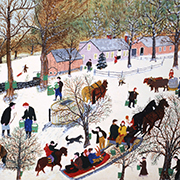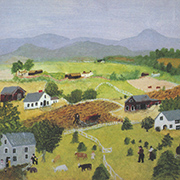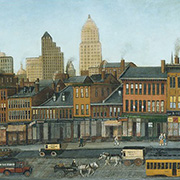

The Ins and Outs of Self-Taught Art
Reflections on a Shifting Field
January 10, 2012 - April 7, 2012
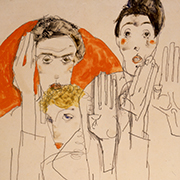
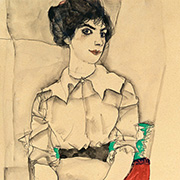
The Lady and the Tramp
Images of Women in Austrian and German Art
October 11, 2011 - December 30, 2011
Recent Acquisitions
(And Some Thoughts on the Current Art Market)
July 5, 2011 - September 30, 2011
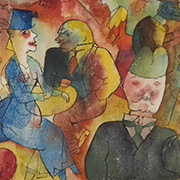
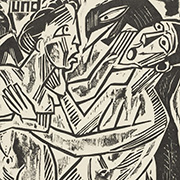
Decadence & Decay
Max Beckmann, Otto Dix, George Grosz
April 12, 2011 - June 24, 2011
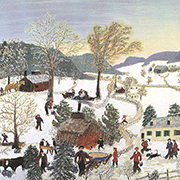
Self-Taught Painters in American 1800-1950
Revisiting the Tradition
January 11, 2011 - April 2, 2011
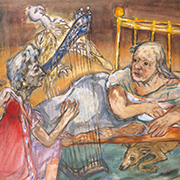
Marie-Louise Motesiczky
Paradise Lost & Found
October 12, 2010 - December 30, 2010
Recent Acquisitions
(And Some Thoughts on the Current Art Market)
July 13, 2010 - October 1, 2010
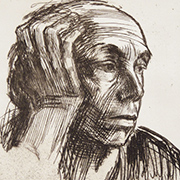
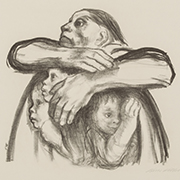
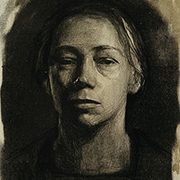
Käthe Kollwitz
A Portrait of the Artist
April 13, 2010 - June 25, 2010
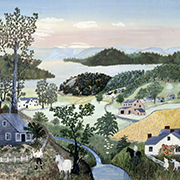
Seventy Years Grandma Moses
A Loan Exhibition Celebrating the 70th Anniversary of the Artist's "Discovery"
February 3, 2010 - April 3, 2010
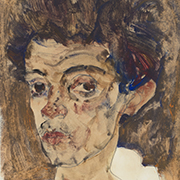
Egon Schiele as Printmaker
A Loan Exhibition Celebrating the 70th Anniversary of the Galerie St. Etienne
November 3, 2009 - January 23, 2010
From Brücke To Bauhaus
The Meanings of Modernity in Germany, 1905-1933
March 31, 2009 - June 26, 2009
They Taught Themselves
American Self-Taught Painters Between the World Wars
January 9, 2009 - March 14, 2009
Elephants We Must Never Forget
New Paintings Drawings and Prints by Sue Coe
October 14, 2008 - December 20, 2008
Recent Acquisitions
(And Some Thoughts on the Current Art Market)
June 24, 2008 - September 26, 2008
Hope or Menace?
Communism in Germany Between the World Wars
March 25, 2008 - June 13, 2008
Transforming Reality
Pattern and Design in Modern and Self-Taught Art
January 15, 2008 - March 8, 2008
Leonard Baskin
Proofs and Process
October 9, 2007 - January 5, 2008
Recent Acquisitions
(And Some Thoughts on the Current Art Market)
June 5, 2007 - September 28, 2007
Who Paid the Piper?
The Art of Patronage in Fin-de-Siècle Vienna
March 8, 2007 - May 26, 2007
Fairy Tale, Myth and Fantasy
Approaches to Spirituality in Art
December 7, 2006 - February 3, 2007
More Than Coffee was Served
Café Culture in Fin-de-Siècle Vienna and Weimar Germany
September 19, 2006 - November 25, 2006
Recent Acquisitions
(And Some Thoughts on the Current Art Market)
June 6, 2006 - September 8, 2006
Parallel Visions II
"Outsider" and "Insider" Art Today
April 5, 2006 - May 26, 2006
Ilija!
His First American Exhibtion
January 17, 2006 - March 18, 2006
Coming of Age
Egon Schiele and the Modernist Culture of Youth
November 15, 2005 - January 7, 2006
Sue Coe:
Sheep of Fools
September 20, 2005 - November 5, 2005
Recent Acquisitions
And Some Thoughts on the Current Art Market
June 7, 2005 - September 9, 2005
Every Picture Tells a Story
The Narrative Impulse in Modern and Contemporary Art
April 5, 2005 - May 27, 2005
65th Anniversary Exhibition, Part II
Self-Taught Artists
January 18, 2005 - March 26, 2005
65th Anniversary Exhibition, Part I
Austrian and German Expressionism
October 28, 2004 - January 8, 2005
Sue Coe: Bully: Master of the Global Merry-Go-Round and Recent Acquisitions
(And Some Thoughts on the Current Art Market)
June 8, 2004 - October 16, 2004
Animals & Us
The Animal in Contemporary Art
April 1, 2004 - May 22, 2004
Henry Darger
Art and Myth
January 15, 2004 - March 20, 2004
Body and Soul
Expressionism and the Human Figure
October 7, 2003 - January 3, 2004
Recent Acquisitions
(And Some Thoughts on the Current Art Market)
June 24, 2003 - September 12, 2003
In Search of the "Total Artwork"
Viennese Art and Design 1897–1932
April 8, 2003 - June 14, 2003
Russia's Self-Taught Artists
A New Perspective on the "Outsider"
January 14, 2003 - March 29, 2003
Käthe Kollwitz:
Master Printmaker
October 1, 2002 - January 4, 2003
Recent Acquisitions
(And Some Thoughts on the Current Art Market)
June 25, 2002 - September 20, 2002
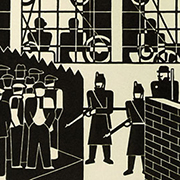
Workers of the World
Modern Images of Labor
April 2, 2002 - June 15, 2002
Grandma Moses
Reflections of America
January 15, 2002 - March 16, 2002
Gustav Klimt/Egon Schiele/Oskar Kokoscha
From Art Nouveau to Expressionism
November 23, 2001 - January 5, 2002
The "Black-and-White" Show
Expressionist Graphics in Austria & Germany
September 20, 2001 - November 10, 2001
Recent Acquisitions (And Some Thoughts on the Current Art Market)
June 26, 2001 - September 7, 2001
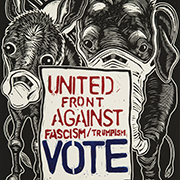
Art with an Agenda
Politics, Persuasion, Illustration and Decoration
April 10, 2001 - June 16, 2001
"Our Beautiful and Tormented Austria!": Art Brut in the Land of Freud
January 18, 2001 - March 17, 2001
The Tragedy of War
November 16, 2000 - January 6, 2001
The Expressionist City
September 19, 2000 - November 4, 2000
Recent Acquisitions (And Some Thoughts on the Current Art Market)
June 20, 2000 - September 8, 2000
From Façade to Psyche
Turn-of-the-Century Portraiture in Austria & Germany
March 28, 2000 - June 10, 2000
European Self-Taught Art
Brut or Naive?
January 18, 2000 - March 11, 2000
Saved From Europe
In Commemoration of the 60th Anniversary of the Galerie St. Etienne
November 6, 1999 - January 8, 2000
The Modern Child
(Images of Children in Twentieth-Century Art)
September 14, 1999 - November 6, 1999
Recent Acquisitions
(And a Look at Sixty Years of Art Dealing)
June 15, 1999 - September 3, 1999
Sue Coe: The Pit
The Tragical Tale of the Rise and Fall of a Vivisector
March 30, 1999 - June 5, 1999
Henry Darger and His Realms
January 14, 1999 - March 13, 1999
Becoming Käthe Kollwitz
An Artist and Her Influences
November 17, 1998 - December 31, 1998
George Grosz - Elfriede Lohse-Wächtler
Art & Gender in Weimar Germany
September 23, 1998 - November 11, 1998
Recent Acquisitions
(And Some Thoughts About Looted Art)
June 9, 1998 - September 11, 1998
Taboo
Repression and Revolt in Modern Art
March 26, 1998 - May 30, 1998
Sacred & Profane
Michel Nedjar and Expressionist Primitivism
January 13, 1998 - March 14, 1998
Egon Schiele (1890-1918)
Master Draughtsman
November 18, 1997 - January 3, 1998
The New Objectivity
Realism in Weimar-Era Germany
September 16, 1997 - November 8, 1997
Recent Acquisitions
A Question of Quality
June 10, 1997 - September 5, 1997
Käthe Kollwitz - Lea Grundig
Two German Women & The Art of Protest
March 25, 1997 - May 31, 1997
That Way Madness Lies
Expressionism and the Art of Gugging
January 14, 1997 - March 15, 1997
The Viennese Line
Art and Design Circa 1900
November 18, 1996 - January 4, 1997
Emil Nolde - Christian Rohlfs
Two German Expressionist Masters
September 24, 1996 - November 9, 1996
Breaking All The Rules
Art in Transition
June 11, 1996 - September 6, 1996
Sue Coe's Ship of Fools
March 26, 1996 - May 24, 1996
New York Folk
Lawrence Lebduska, Abraham Levin, Isreal Litwak
January 16, 1996 - March 16, 1996
The Fractured Form
Expressionism and the Human Body
November 15, 1995 - January 6, 1996
From Left to Right
Social Realism in Germany and Russia, Circa 1919-1933
September 19, 1995 - November 4, 1995
Recent Acquisitions
June 20, 1995 - September 8, 1995
On the Brink 1900-2000
The Turning of Two Centuries
March 28, 1995 - May 26, 1995
Earl Cummingham - Grandma Moses
Visions of America
January 17, 1995 - March 18, 1995
Three Berlin Artists of the Weimar Era: Hannah Höch, Käthe Kollwitz, Jeanne Mam
September 13, 1994 - November 5, 1994
55th Anniversary Exhibition in Memory of Otto Kallir
June 7, 1994 - September 2, 1994
Drawn to Text: Comix Artists as Book Illustrators
May 15, 1994 - January 7, 1995
Sue Coe: We All Fall Down
March 29, 1994 - May 27, 1994
The Forgotten Folk Art of the 1940's
January 18, 1994 - March 19, 1994
Symbolism and the Austrian Avant Garde
Klimt, Schiele and their Contemporaries
November 16, 1993 - January 8, 1994
Art and Politics in Weimar Germany
September 14, 1993 - November 6, 1993
Recent Acquisitions
June 8, 1993 - September 3, 1993
The "Outsider" Question
Non-Academic Art from 1900 to the Present
March 23, 1993 - May 28, 1993
The Dance of Death
Images of Mortality in German Art
January 19, 1993 - March 13, 1993
Art Spiegelman
The Road to Maus
November 17, 1992 - January 9, 1993
Käthe Kollwitz
In Celebration of the 125th Anniversary of the Artist's Birth
September 15, 1992 - November 7, 1992
Naive Visions/Art Nouveau and Expressionism/Sue Coe: The Road to the White House
May 19, 1992 - September 4, 1992
Richard Gerstl/Oskar Kokoschka
March 17, 1992 - May 9, 1992
Scandal, Outrage, Censorship
Controversy in Modern Art
January 21, 1992 - March 7, 1992
Viennese Graphic Design
From Secession to Expressionism
November 19, 1991 - January 11, 1992
The Expressionist Figure
September 10, 1991 - November 9, 1991
Recent Acquisitions
Themes and Variations
May 14, 1991 - August 16, 1991
Sue Coe Retrospective
Political Document of a Decade
March 12, 1991 - May 5, 1991
Gustav Klimt, Egon Schiele, Oskar Kokoschka
Watercolors, drawings and prints
January 22, 1991 - March 2, 1991
Egon Schiele
November 13, 1990 - January 12, 1991
Lovis Corinth
A Retrospective
September 11, 1990 - November 3, 1990
Recent Acquisitions
June 12, 1990 - August 31, 1990
Max Klinger, Käthe Kollwitz, Alfred Kubin
A Study in Influences
March 27, 1990 - June 2, 1990
The Narrative in Art
January 23, 1990 - March 17, 1990
Grandma Moses
November 14, 1989 - January 13, 1990
Sue Coe
Porkopolis--Animals and Industry
September 19, 1989 - November 4, 1989
Galerie St. Etienne
A History in Documents and Pictures
June 20, 1989 - September 8, 1989
Gustav Klimt
Paintings and Drawings
April 11, 1989 - June 10, 1989
Fifty Years Galerie St. Etienne: An Overview
February 14, 1989 - April 1, 1989
Folk Artists at Work
Morris Hirshfield, John Kane and Grandma Moses
November 15, 1988 - January 14, 1989
Recent Acquisitions and Works From the Collection
June 14, 1988 - September 16, 1988
From Art Nouveau to Expressionism
April 12, 1988 - May 27, 1988
Three Pre-Expressionists
Lovis Corinth Käthe Kollwitz Paula Modersohn-Becker
January 26, 1988 - March 12, 1988
Käthe Kollwitz
The Power of the Print
November 17, 1987 - January 16, 1988
Recent Acquisitions and Works From the Collection
April 7, 1987 - October 31, 1987
Folk Art of This Century
February 10, 1987 - March 28, 1987
Oskar Kokoschka and His Time
November 25, 1986 - January 31, 1987
Viennese Design and Wiener Werkstätte
September 23, 1986 - November 8, 1986
Gustav Klimt/Egon Schiele/Oskar Kokoschka
Watercolors, Drawings and Prints
May 27, 1986 - September 13, 1986
Expressionist Painters
March 25, 1986 - May 10, 1986
Käthe Kollwitz/Paula Modersohn-Becker
January 28, 1986 - March 15, 1986
The Art of Giving
December 3, 1985 - January 18, 1986
Expressionists on Paper
October 8, 1985 - November 23, 1985
European and American Landscapes
June 4, 1985 - September 13, 1985
Expressionist Printmaking
Aspects of its Genesis and Development
April 1, 1985 - May 24, 1985
Expressionist Masters
January 18, 1985 - March 23, 1985
Arnold Schoenberg's Vienna
November 13, 1984 - January 5, 1985
Grandma Moses and Selected Folk Paintings
September 25, 1984 - November 3, 1984
American Folk Art
People, Places and Things
June 12, 1984 - September 14, 1984
John Kane
Modern America's First Folk Painter
April 17, 1984 - May 25, 1984
Eugène Mihaesco
The Illustrator as Artist
February 28, 1984 - April 7, 1984
Early Expressionist Masters
January 17, 1984 - February 18, 1984
Paula Modersohn-Becker
Germany's Pioneer Modernist
November 15, 1983 - January 7, 1984
Gustav Klimt
Drawings and Selected Paintings
September 20, 1983 - November 5, 1983
Early and Late
Drawings, Paintings & Prints from Academicism to Expressionism
June 1, 1983 - September 2, 1983
Alfred Kubin
Visions From The Other Side
March 22, 1983 - May 7, 1983
20th Century Folk
The First Generation
January 18, 1983 - March 12, 1983
Grandma Moses
The Artist Behind the Myth
November 15, 1982 - January 8, 1983
Kollwitz
The Artist as Printmaker
September 28, 1982 - November 6, 1982
Aspects of Modernism
June 1, 1982 - September 3, 1982
The Human Perspective
Recent Acquisitions
March 16, 1982 - May 15, 1982
19th and 20th Century European and American Folk Art
January 19, 1982 - March 6, 1982
The Folk Art Tradition
Naïve Painting in Europe and the United States
November 17, 1981 - January 9, 1982
Austria's Expressionism
April 21, 1981 - May 30, 1981
Eugène Mihaesco
His First American One-Man Show
March 3, 1981 - April 11, 1981
Gustav Klimt, Egon Schiele
November 12, 1980 - December 27, 1980
Summer Exhibition
June 17, 1980 - October 31, 1980
Kollwitz: The Drawing and The Print
May 1, 1980 - June 10, 1980
40th Anniversary Exhibition
November 13, 1979 - December 28, 1979
American Primitive Art
November 22, 1977
Käthe Kollwitz
December 1, 1976
Neue Galerie-Galerie St. Etienne
A Documentary Exhibition
May 1, 1976
Martin Pajeck
January 27, 1976
Georges Rouault and Frans Masereel
April 29, 1972
Branko Paradis
December 1, 1971
Käthe Kollwitz
February 3, 1971
Egon Schiele
The Graphic Work
October 19, 1970
Gustav Klimt
March 20, 1970
Friedrich Hundertwasser
May 6, 1969
Austrian Art of the 20th Century
March 21, 1969
Egon Schiele
Memorial Exhibition
October 31, 1968
Yugoslav Primitive Art
April 30, 1968
Alfred Kubin
January 30, 1968
Käthe Kollwitz
In the Cause of Humanity
October 23, 1967
Abraham Levin
September 26, 1967
Karl Stark
April 5, 1967
Gustav Klimt
February 4, 1967
The Wiener Werkstätte
November 16, 1966
Oskar Laske
October 25, 1965
Käthe Kollwitz
May 1, 1965
Egon Schiele
Watercolors and Drawings from American Collections
March 1, 1965
25th Anniversary Exhibition
Part II
November 21, 1964
25th Anniversary Exhibition
Part I
October 17, 1964
Mary Urban
June 9, 1964
Werner Berg, Jane Muus and Mura Dehn
May 5, 1964
Eugen Spiro
April 4, 1964
B. F. Dolbin
Drawings of an Epoch
March 3, 1964
Austrian Expressionists
January 6, 1964
Joseph Rifesser
December 3, 1963
Panorama of Yugoslav Primitive Art
October 21, 1963
Joe Henry
Watercolors of Vermont
May 1, 1963
French Impressionists
March 8, 1963
Grandma Moses
Memorial Exhibition
November 26, 1962
Group Show
October 15, 1962
Ernst Barlach
March 23, 1962
Martin Pajeck
February 24, 1962
Paintings by Expressionists
January 27, 1962
Käthe Kollwitz
November 11, 1961
Grandma Moses
September 7, 1961
My Friends
Fourth Biennial of Pictures by American School Children
May 27, 1961
Raimonds Staprans
April 17, 1961
Gustav Klimt, Egon Schiele, Oskar Kokoschka and Alfred Kubin
March 14, 1961
Marvin Meisels
January 23, 1961
Egon Schiele
November 15, 1960
My Life's History
Paintings by Grandma Moses
September 12, 1960
Watercolors and Drawings by Austrian Artists from the Dial Collection
May 2, 1960
Martin Pajeck
February 29, 1960
Eugen Spiro
February 6, 1960
Käthe Kollwitz
December 14, 1959
Josef Scharl
Last Paintings and Drawings
November 11, 1959
European and American Expressionists
September 22, 1959
Our Town
One Hundred Paintings by American School Children
May 23, 1959
Marvin Meisels and Martin Pajeck
May 1, 1959
Gustav Klimt
April 1, 1959
Käthe Kollwitz
January 12, 1959
Oskar Kokoschka
October 28, 1958
Village Life in Guatemala
Paintings by Andres Curuchich
June 3, 1958
Two Unknown American Expressionists
Paintings by Marvin Meisels and Martin Pajeck
April 28, 1958
Paula Modersohn-Becker
March 15, 1958
The Great Tradition in American Painting
American Primitive Art
January 20, 1958
Jules Lefranc and Dominique Lagru
Two French Primitives
November 18, 1957
Margret Bilger
October 22, 1957
The Four Seasons
One Hundred Paintings by American School Children
June 11, 1957
Grandma Moses
May 6, 1957
Alfred Kubin
April 3, 1957
Franz Lerch
March 2, 1957
Egon Schiele
January 21, 1957
Josef Scharl
Memorial Exhibition
November 17, 1956
Irma Rothstein
May 19, 1956
Käthe Kollwitz
April 16, 1956
A Tribute to Grandma Moses
November 28, 1955
As I See Myself
One Hundred Paintings by American School Children
May 20, 1955
Juan De'Prey
April 19, 1955
Erich Heckel
March 29, 1955
Freddy Homburger
March 2, 1955
Masters of the 19th Century
January 18, 1955
Oskar Kokoschka
November 29, 1954
Isabel Case Borgatta and Josef Scharl
October 12, 1954
James N. Rosenberg and Eugen Spiro
April 30, 1954
Per Krogh
April 2, 1954
Cuno Amiet
February 16, 1954
Eniar Jolin
January 14, 1954
Irma Rothstein
December 8, 1953
Josef Scharl
November 11, 1953
Grandma Moses
October 21, 1953 - October 24, 1953
Wilhelm Kaufmann
September 30, 1953
Lovis Corinth, Oskar Kokoschka and Egon Schiele
May 27, 1953
A Grandma Moses Album
Recent Paintings, 1950-1953
April 15, 1953
Streeter Blair
American Primitive
February 26, 1953
Paintings on Glass
Austrian Religious Folk Art of the 17th to 19th Centuries
December 4, 1952
Hasan Kaptan
Paintings of a Ten-Year-Old Turkish Painter
October 29, 1952
Margret Bilger
May 10, 1952
American Natural Painters
March 31, 1952
Ten Years of New York Concert Impressions by Eugen Spiro; Four New Paintings by
January 26, 1952
I-Fa-Wei
Watercolors of New York by a Chinese Artist
December 1, 1951
Käthe Kollwitz
October 25, 1951
Drawings and Watercolors by Austrian Children
May 21, 1951
Grandma Moses
Twenty-Five Masterpieces of Primitive Art
March 17, 1951
Roswitha Bitterlich
January 18, 1951
Oskar Laske
Watercolors of Vienna and the Salzkammergut
October 14, 1950
Tenth Anniversary Exhibition
Part II
May 11, 1950
Austrian Art of the 19th Century
From Wadlmüller to Klimt
April 1, 1950
Chiao Ssu-Tu
February 18, 1950
Anton Faistauer
January 1, 1950
Tenth Anniversary Exhibition
Part I
November 30, 1949
Autograph Exhibition
October 26, 1949
Gladys Wertheim Bachrach
May 24, 1949
Oskar Kokoschka
March 30, 1949
Eugen Spiro
February 19, 1949
Frans Masereel
January 13, 1949
Ten Years Grandma Moses
November 22, 1948
Käthe Kollwitz
Masterworks
October 18, 1948
American Primitives
June 3, 1948
Egon Schiele
Memorial Exhibition
April 5, 1948
Miriam Richman
February 7, 1948
Vally Wieselthier
Memorial Exhibition
January 10, 1948
Christmas Exhibition
December 4, 1947
Fritz von Unruh
November 10, 1947
Käthe Kollwitz
October 4, 1947
Grandma Moses
May 17, 1947
Lovis Corinth
April 16, 1947
Hugo Steiner-Prag
March 15, 1947
Mark Baum
January 11, 1947
Eugen Spiro
November 25, 1946
Henri de Toulouse-Lautrec
May 17, 1946
Ladis W. Sabo
Paintings by a New Primitive Artist
April 8, 1946
Georges Rouault
The Graphic Work
February 26, 1946
Käthe Kollwitz
Memorial Exhibition
November 21, 1945
Fred E. Robertson
Paintings by an American Primitive
June 13, 1945
Max Liebermann
The Graphic Work
April 18, 1945
Vienna through Four Centuries
March 1, 1945
Eugen Spiro
January 20, 1945
Grandma Moses
New Paintings
December 5, 1944
Käthe Kollwitz
Part II
October 26, 1944
A Century of French Graphic Art
From Géricault to Picasso
September 28, 1944
Max Liebermann
Memorial Exhibition
June 9, 1944
Juan De'Prey
Paintings by a Self-Taught Artist from Puerto Rico
May 6, 1944
Abraham Levin
April 15, 1944
Lesser Ury
Memorial Exhibition
March 21, 1944
Grandma Moses
Paintings by the Senior of the American Primitives
February 9, 1944
Betty Lane
January 11, 1944
WaIt Disney Cavalcade
December 9, 1943
Käthe Kollwitz
Part I
November 3, 1943
Will Barnet
September 29, 1943
Lovis Corinth
May 26, 1943
Josephine Joy
Paintings by an American Primitive
May 3, 1943
Oskar Kokoschka
Aspects of His Art
March 31, 1943
Eugen Spiro
February 13, 1943
Seymour Lipton
January 18, 1943
Illuminated Gothic Woodcuts
Printed and Painted, 1477-1493
December 5, 1942
Abraham Levin
November 4, 1942
Walt Disney Originals
September 23, 1942
Documents which Relate History
Documents of Historical Importance and Landmarks of Human Development
June 10, 1942
Honoré Daumier
April 29, 1942
Bertha Trabich
Memorial Exhibition of a Russian-American Primitive
March 25, 1942
Alfred Kubin
Master of Drawing
December 4, 1941
Egon Schiele
November 7, 1941
Betty Lane
June 3, 1941
Flowers from Old Vienna
18th and Early 19th Century Flower Painting
May 7, 1941
Weavings by Navaho and Hopi Indians and Photos of Indians by Helen M. Post
January 29, 1941
Georg Merkel
November 7, 1940
What a Farm Wife Painted
Works by Mrs. Anna Mary Moses
October 9, 1940
Saved from Europe
Masterpieces of European Art
July 1, 1940
American Abstract Art
May 22, 1940
Franz Lerch
May 1, 1940
Wilhelm Thöny
April 3, 1940
French Masters of the 19th and 20th Centuries
February 29, 1940
H. W. Hannau
Metropolis, Photographic Studies of New York
February 2, 1940
Oskar Kokoschka
January 9, 1940
Austrian Masters
November 13, 1939
LEONARD BASKIN
Proofs and Process
Baskin, Leonard
Toward the end of his lengthy career, Leonard Baskin (1922-2000) often encountered people who were surprised to learn that he was still alive. Perhaps these people associated him with the 1950s and '60s, the period when Baskin first achieved acclaim for monumental woodcuts that gave graphic voice to Cold-War-era anxieties. Some people may have been familiar with Baskin's portraits of Native Americans, which in the 1970s triggered a boom in Southwestern art. Bibliophiles would have known Baskin for his work with the Gehenna Press, which between 1942 and 2000 issued over 100 deluxe limited-edition books, combining original graphics (usually by Baskin) with elegant typography. Many probably thought of Baskin primarily in connection with his close friend and sometime collaborator, the British poet Ted Hughes, or more generally, as an illustrator of texts by such classical authors as Dante and Homer. And there were those who saw Baskin chiefly as a Jewish artist, a rabbi's son who regularly used the Old Testament as a moral touchstone. Last and far from least, Baskin had a huge following as a sculptor, with patrons ranging from the Vatican to the U.S. government.
Leonard Baskin's many faces have made it difficult for the public to get a cohesive sense of his artistic achievement. Baskin himself encouraged this situation, not only by pursuing a multiplicity of different art forms with equal dedication and vigor, but by creating discrete cycles and series that tended to be exhibited or published as self-contained units. Yet there was remarkable continuity over his sixty-year career. Baskin's themes are for the most part interrelated, one to the other and across the various mediums that he employed to address them. Our fragmented view of his achievement is not really intrinsic to the work itself, but rather to the way in which it has been presented and received over the decades. Each of the mediums that Baskin chose--printmaking, book making, book illustration and sculpture--allowed the artist to recruit and engage his public directly. Baskin presented his work piecemeal, cultivating a slightly different audience for each component part, because he felt shut out of the mainstream art world. At a time when abstract formalism reigned supreme, he remained firmly committed to figurative humanism. It is perhaps only today, in an art world open to a wealth of traditions from all ages and all parts of the globe, that we can begin to see Baskin's accomplishments whole.
Baskin's sense of himself as an outcast and rebel dated to his youth. His education at a rigorous Brooklyn yeshiva instilled in him a lifelong passion for intellectual inquiry, but the teachers' cruelty also taught him early on to question authority. Although his rabbi father was extremely learned, he had absolutely no awareness of art, and Leonard's older brother and younger sister poked fun at the middle sibling's unusual enthusiasms. Leonard's artistic epiphany came at the age of fourteen, when he saw a sculpture demonstration at Macy's. The boy brought home five pounds of plasticene clay, and his career as a sculptor was, so to speak, inaugurated. After finishing his yeshiva classes at 7 PM, Leonard would rush into Manhattan to take art courses at the Educational Alliance. When he was sixteen, his father allowed him to transfer from the yeshiva to a public high school, but Leonard seldom bothered to attend. His education from here on was willfully self-directed, cobbled together largely from long hours in libraries and museums. In later years, he would advise aspiring artists to apprentice themselves to an older colleague, and he himself found such a mentor in the sculptor Maurice Glickman, whom he met at the Educational Alliance. Baskin chafed at any more structured environment. He was nearly expelled from Yale, suffered disciplinary problems while serving in the U.S. Navy during World War II, and walked out of Osip Zadkine's studio in Paris, where he had gone to study on the G.I. Bill. Burning with talent and ideas, however ill-formed, Baskin resented being dictated to by elders less wise.
Baskin's commitment to social justice and his ancillary faith in the redemptive power of art also date to his youth. Having come of age during the Great Depression, he was acutely aware of the ubiquity of human suffering and the inequities produced by industrial capitalism. The Marxist politics and social realism then common in urban artistic circles melded with Baskin's grounding in Jewish thought to form the basis of a lifelong philosophy. "I burned with youth's ardency to create a better, a more equitable, a fairer world," he recalled, "and I used my art to express and to communicate that zeal." Then, as later, the human figure seemed the ideal vehicle for capturing what Baskin wished to express. Although he had a fling with Synthetic Cubism while enrolled in a WPA class during the 1930s, he never was seriously attracted to modernism's more abstract tendencies, and this aversion in Baskin became more pronounced as those tendencies became more rigidly enshrined in the years following World War II.
In the 1950s, Abstract Expressionism was the dominant American style--championed by an art-world elite looking to best European modernists at what had until then been their game, and by the U.S. government seeking to win hearts and minds in its struggle against international Communism. Unlike realism, which was tainted by its association with the leftwing politics of the 1930s, abstraction was ideologically neutral and therefore could be used by the government to promote democratic freedom. One of the principal architects of the theory that helped achieve the so-called triumph of American painting was the critic Clement Greenberg, who wrote for the CIA-supported Partisan Review. "Content is to be dissolved so completely into form that the work of art or literature cannot be reduced in whole or in part to anything not itself," Greenberg decreed in his seminal essay "Avant Garde and Kitsch." "Avant-garde culture is the imitation of imitating." Anything else--anything with recognizable content--was kitsch. To which Baskin replied: "Cant is what we must excise, not content." When Baskin declared, quoting the type designer Eric Gill, that "all art is propaganda," he had no idea how right he was. Few people realized that ostensibly content-free, abstract art was being used to fight the Cold War.
And so, Baskin's status as an outcast was confirmed, at least in his own mind. "I see myself very much embattled," he said, "very much isolated." Occasionally, he would meet a comrade-in-arms. The artist Rico Lebrun was one such, but he died prematurely, in 1964. Ben Shahn was another, though they eventually parted ways. By and large, however, Baskin found company in the community of ideas housed in his ever-expanding library. His closest colleagues were artists of the past, whom he revered and frequently memorialized in his art: Thomas Eakins, a similarly embattled realist; William Blake, because of his radical politics, his interest in book making and his facility for combining art with poetry; Käthe Kollwitz and Ernst Barlach, for their shared appreciation of the tactile affinities between sculpting and printmaking; the German and Austrian Expressionists in general, for their humanistic values. Leonard Baskin picked his way through the paths blazed by these and other artists, gradually accumulating the creative wherewithal to give voice to his own unique vision.
By Baskin's own account, he first found his creative voice when he was in his thirties. Prior to that time, as he explained, "My interest was so profoundly engaged by the social weal that I was insensitive to the modalities of form and those formal attributes of monumentality that are the cardinal entities in the broadest definition of sculpture." Like the German artist Max Klinger (whose essay "Painting and Drawing" influenced numerous graphic artists, including Kollwitz), Baskin gradually discovered that printmaking was better suited than sculpture to the communication of social and political ideas. Not only did this free his sculptures from the cumbersome ideological burden they had been carrying, but it launched Baskin on a career as one of the most innovative and versatile printmakers of the twentieth century.
In 1952, Baskin began a series of monumental woodcuts, crudely piecing together boards of various sizes to get sheets as tall as 82 inches. He was the first artist outside the realm of commercial lithography to create such large prints in the modern era--starting a trend that found many followers in the 1960s and thereafter. Carved with the same verve as Baskin's sculptures, the monumental woodcuts were powerful commentaries on the state of humankind. The two best-known images in the series, Man of Peace and Hanged Man, trenchantly encapsulate the artist's ambivalent stance: the one an offering of hope tinged with hopelessness, the other a memorial to an anonymous figure who might be either a victim or a criminal.
During the 1950s, Baskin, who had been studying and traveling since he got out of the navy, settled in Massachusetts, where he found jobs teaching art, first in Worcester and then at Smith College in Northampton. In 1951, he revived the Gehenna press, which he had started as a student at Yale in 1942. "Gehenna" was a punning reference to Milton's Paradise Lost, wherein Gehenna is characterized as "the type of hell." Baskin loved books, which he passionately collected, not just for their contents, but for their visceral physical qualities. He appreciated beautiful fonts, elegantly composed pages, generous margins, sumptuous handmade paper and printerly craftsmanship as much as the original artwork that went into his Gehenna publications. Contained within a custom-made box or a luxurious but restrained binding, each publication was a perfect little universe unto itself.
In many respects, Baskin continued the tradition of the Gesamtkunstwerk (total work of art), which had been central to advanced artistic thought in early twentieth-century Austria and Germany. The idea of uniting disparate aesthetic components in a single coordinated expression was key to the Gehenna enterprise. Whether the task entailed mating images with text, or music to a libretto, the Austrian and German avant garde believed that neither element should be subordinate to the other, but rather that both should independently pursue the same goal. And this is how Baskin worked with his closest literary collaborator, Ted Hughes.
Like the founders of the Wiener Werkstätte design collective, who thought that if one were truly an artist one should excel in every craft, Baskin believed in being a "Jack of all trades and a master of all." This belief not only allowed him to oversee every aspect of the Gehenna productions, but to develop his creative ideas in disparate mediums.
Each medium brought its own specific characteristics to Baskin's subjects. Carving, modeling and drawing were the artist's favorite techniques, but he had a particular feeling for the indirect processes whereby a singular image is turned into a multiple. He was as comfortable with a burin or an etching needle as with a pen. Baskin pulled countless proofs of his prints, painting or penciling in corrections and adjusting the image, the inking, the color until they were exactly right. When, in 1980, he began making monotypes (more or less unique impressions pulled from painted plates), the resulting prints had a vibrancy and spontaneity far greater than that of many watercolors. Baskin rarely made preparatory studies; he preferred to work out his ideas by jumping from one medium to another. "I try to penetrate the hot essence of a theme by doing a series of drawings of it, or numbers of prints," he explained, "elaborating and finding nuances and discovering diversions and variations. . . . As the idea seems to be exhausted, I conceive of the theme anew, as a low bronze relief or as a large wood carving. The subject can thus be reinvigorated and reinvested with a set of new meanings."
Early on, Baskin's political ideas had been expelled from his sculpture into his prints, but the woodcuts gave these thoughts a graphic monumentality that was then reintroduced to the sculpture. So, for example, the "hanged man" became a leitmotif for the artist, reappearing across the span of his career not just in prints, but in watercolors, drawings and bronzes, large and small. Another recurrent motif was the raptor--the bird of prey--which for Baskin represented man's inherent predaciousness. It is clear from the penises on some of the birds that Baskin considered aggression a male attribute, just as his mourning mothers (much in the tradition of Kollwitz) reflect the reality that women are the most common victims of violence. Yet Baskin's views were hardly monolithic or unnuanced. One of his favorite mythological characters was Medea, the sorcerer who punished her unfaithful husband, Jason, by murdering their children. And the owl is not just a raptor, but the sibyl's familiar and an emblem of wisdom. Thus Baskin intertwined his own symbolic iconography with figures from literature, mythology and the Bible to explore humankind's existential predicament. Ambiguity was his forte, reflecting his conviction that we are all equally culpable for man's inhumanity to man, and likewise all its victims. Baskin believed in the possibility of redemption, and his art was at once a benediction and an act of atonement. "However debased, man . . . is marvelous," he wrote. "Freed from the gestures and manner of his destructive and coercive society, man is glorious."
Despite its sometimes grim subject matter, Baskin's art was essentially optimistic. He felt that the only way to triumph over the horrors of modern life was to address them directly. It was the denial of these realities in contemporary trends like abstraction and Pop Art that he found truly nihilistic. Although Baskin consciously bucked these trends, he experienced a considerable degree of professional success. Formalism did not conquer the art world overnight or completely, and for a time in the 1950s and early '60s, Baskin was broadly embraced. William Lieberman, then Curator of Prints and Drawings at the Museum of Modern Art and later head of the Department of Twentieth-Century Art at the Metropolitan Museum, was an early supporter. In 1959, MoMA included Baskin in its "New Images of Man" exhibition, and two years later, the museum's International Council sent a one-man show of his work abroad. The New York Times called Baskin "one of the best artists of his generation," and in 1964 he was the subject of a feature article in Life Magazine. Even as attitudes hardened against humanistic realism in the later '60s, Baskin was able to slip under the radar. This was partly due to his penchant for producing multiples, which could be marketed directly to the public with minimal art-world mediation, and partly because the mediums that interested him were considered relatively unimportant. The art-world's aesthetic battles were being waged chiefly in the realm of painting.
As Baskin approached the middle of his professional life in the early 1970s, he found himself in a strange predicament. On the one hand, he was increasingly embittered by the art-world's formalist preoccupations, which he saw as an abdication of moral responsibility. On the other hand, he was equally bothered by his own success, fearful of losing his youthful integrity of vision. In 1974, he gave up his teaching post at Smith and moved with his second wife, Lisa Unger, to England, purchasing a house in Devon near that of his friend Ted Hughes. Not only was Baskin thereby effectively insulated from the American art scene, but his work was warmly received in England, home to such artists as Henry Moore, Francis Bacon and Lucien Freud. In this congenial atmosphere, Baskin's creativity blossomed: he began to explore color in greater depth, and to broaden his explorations of the female persona, a subject that had not appeared in his work before he met Unger. A momentary dip in energy, documented in a haunting series of self-portraits, plagued the artist in the late 1970s, when he was suffering from an undiagnosed pituitary tumor. Neurosurgery in 1979 literally gave Baskin a new lease on life, and his productivity soared thereafter. In 1983, the Baskins returned to the United States, where the artist, now something of an elder statesmen, was feted with awards and exhibitions. Ironically, the U.S. government, which had once spurned his brand of social realism, became a major patron, commissioning a contribution to the Franklin Roosevelt memorial in Washington, D.C., and installing Baskin's Woodrow Wilson memorial in the Federal Triangle Building. Baskin died in Northampton, Massachusetts, in June 2000.
Leonard Baskin's career spanned most of the twentieth century, from the Depression through World War II to Vietnam and the first Iraq war. Baskin believed that it was his duty, as an artist, to reflect upon these dire events and the circumstances that had allowed them to occur. He believed that "the human figure is the image of all of us. It contains all and can express all." And he believed that a work of art must be both original and tied to tradition. Excluded from the dominant artistic trends of postwar America, Baskin sought his inspiration in the art of other times and places, and he honed his own vision. As we now know, the postwar attempt to define modernism exclusively in terms of rote formalism was simplistic and misguided, for the prewar Europeans did not wish to expunge art of all humanistic content, but rather to invent a new visual language suited to the realities of contemporary life. Just as art historians have recently been excavating modernism to its fullest depths, young artists today are interested in exploring all the many facets of art-historical tradition, including its once despised realist elements. In this, Leonard Baskin, out of sync with his times, is a role model for our own.
We would like to thank Lisa Unger Baskin for her generous help in organizing this exhibition: for her hospitality, her advice and for the many tireless hours spent reviewing and discussing her late husband's work. Where applicable, checklist entries are accompanied by references to the catalogue raisonnés, The Sculpture of Leonard Baskin by Irma B. Jaffe; The Complete Prints of Leonard Baskin by Alan Fern and Judith O'Sullivan; and The Gehenna Press: The Work of Fifty Years, 1942-1992 by Lisa, Hosea and Leonard Baskin. Image dimensions are given for the prints, full dimensions for the watercolors, drawings and monotypes.