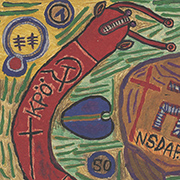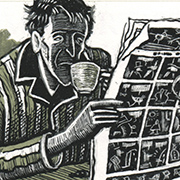

The Ins and Outs of Self-Taught Art
Reflections on a Shifting Field
January 10, 2012 - April 7, 2012
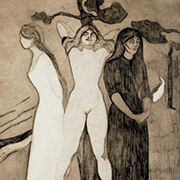
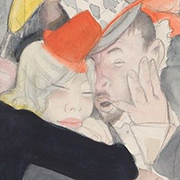
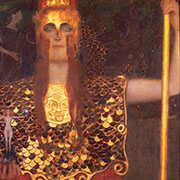
The Lady and the Tramp
Images of Women in Austrian and German Art
October 11, 2011 - December 30, 2011
Recent Acquisitions
(And Some Thoughts on the Current Art Market)
July 5, 2011 - September 30, 2011
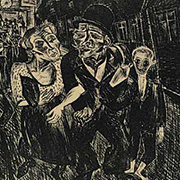
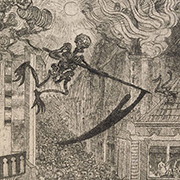
Decadence & Decay
Max Beckmann, Otto Dix, George Grosz
April 12, 2011 - June 24, 2011
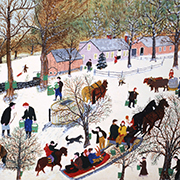
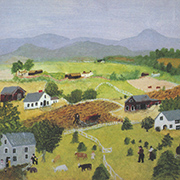
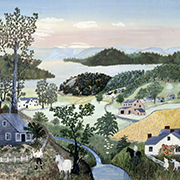
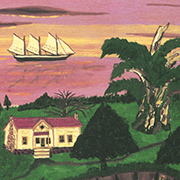
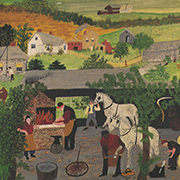
Self-Taught Painters in American 1800-1950
Revisiting the Tradition
January 11, 2011 - April 2, 2011
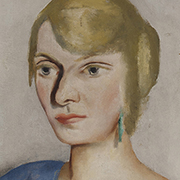
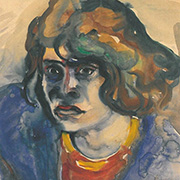
Marie-Louise Motesiczky
Paradise Lost & Found
October 12, 2010 - December 30, 2010
Recent Acquisitions
(And Some Thoughts on the Current Art Market)
July 13, 2010 - October 1, 2010
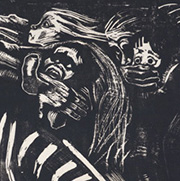
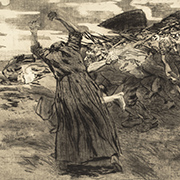
Käthe Kollwitz
A Portrait of the Artist
April 13, 2010 - June 25, 2010
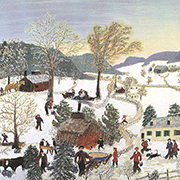
Seventy Years Grandma Moses
A Loan Exhibition Celebrating the 70th Anniversary of the Artist's "Discovery"
February 3, 2010 - April 3, 2010
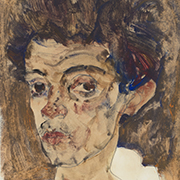
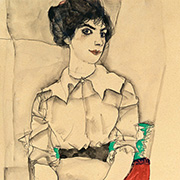
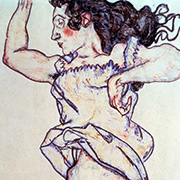
Egon Schiele as Printmaker
A Loan Exhibition Celebrating the 70th Anniversary of the Galerie St. Etienne
November 3, 2009 - January 23, 2010
From Brücke To Bauhaus
The Meanings of Modernity in Germany, 1905-1933
March 31, 2009 - June 26, 2009
They Taught Themselves
American Self-Taught Painters Between the World Wars
January 9, 2009 - March 14, 2009
Elephants We Must Never Forget
New Paintings Drawings and Prints by Sue Coe
October 14, 2008 - December 20, 2008
Recent Acquisitions
(And Some Thoughts on the Current Art Market)
June 24, 2008 - September 26, 2008
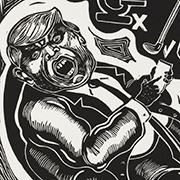
Hope or Menace?
Communism in Germany Between the World Wars
March 25, 2008 - June 13, 2008
Transforming Reality
Pattern and Design in Modern and Self-Taught Art
January 15, 2008 - March 8, 2008
Leonard Baskin
Proofs and Process
October 9, 2007 - January 5, 2008
Recent Acquisitions
(And Some Thoughts on the Current Art Market)
June 5, 2007 - September 28, 2007
Who Paid the Piper?
The Art of Patronage in Fin-de-Siècle Vienna
March 8, 2007 - May 26, 2007
Fairy Tale, Myth and Fantasy
Approaches to Spirituality in Art
December 7, 2006 - February 3, 2007
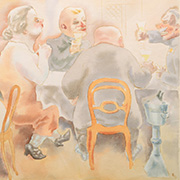
More Than Coffee was Served
Café Culture in Fin-de-Siècle Vienna and Weimar Germany
September 19, 2006 - November 25, 2006
Recent Acquisitions
(And Some Thoughts on the Current Art Market)
June 6, 2006 - September 8, 2006
Parallel Visions II
"Outsider" and "Insider" Art Today
April 5, 2006 - May 26, 2006
Ilija!
His First American Exhibtion
January 17, 2006 - March 18, 2006
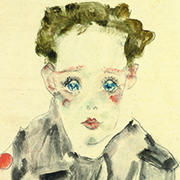
Coming of Age
Egon Schiele and the Modernist Culture of Youth
November 15, 2005 - January 7, 2006
Sue Coe:
Sheep of Fools
September 20, 2005 - November 5, 2005
Recent Acquisitions
And Some Thoughts on the Current Art Market
June 7, 2005 - September 9, 2005
Every Picture Tells a Story
The Narrative Impulse in Modern and Contemporary Art
April 5, 2005 - May 27, 2005
65th Anniversary Exhibition, Part II
Self-Taught Artists
January 18, 2005 - March 26, 2005
65th Anniversary Exhibition, Part I
Austrian and German Expressionism
October 28, 2004 - January 8, 2005
Sue Coe: Bully: Master of the Global Merry-Go-Round and Recent Acquisitions
(And Some Thoughts on the Current Art Market)
June 8, 2004 - October 16, 2004
Animals & Us
The Animal in Contemporary Art
April 1, 2004 - May 22, 2004
Henry Darger
Art and Myth
January 15, 2004 - March 20, 2004
Body and Soul
Expressionism and the Human Figure
October 7, 2003 - January 3, 2004
Recent Acquisitions
(And Some Thoughts on the Current Art Market)
June 24, 2003 - September 12, 2003
In Search of the "Total Artwork"
Viennese Art and Design 1897–1932
April 8, 2003 - June 14, 2003
Russia's Self-Taught Artists
A New Perspective on the "Outsider"
January 14, 2003 - March 29, 2003
Käthe Kollwitz:
Master Printmaker
October 1, 2002 - January 4, 2003
Recent Acquisitions
(And Some Thoughts on the Current Art Market)
June 25, 2002 - September 20, 2002
Workers of the World
Modern Images of Labor
April 2, 2002 - June 15, 2002
Grandma Moses
Reflections of America
January 15, 2002 - March 16, 2002
Gustav Klimt/Egon Schiele/Oskar Kokoscha
From Art Nouveau to Expressionism
November 23, 2001 - January 5, 2002
The "Black-and-White" Show
Expressionist Graphics in Austria & Germany
September 20, 2001 - November 10, 2001
Recent Acquisitions (And Some Thoughts on the Current Art Market)
June 26, 2001 - September 7, 2001
Art with an Agenda
Politics, Persuasion, Illustration and Decoration
April 10, 2001 - June 16, 2001
"Our Beautiful and Tormented Austria!": Art Brut in the Land of Freud
January 18, 2001 - March 17, 2001
The Tragedy of War
November 16, 2000 - January 6, 2001
The Expressionist City
September 19, 2000 - November 4, 2000
Recent Acquisitions (And Some Thoughts on the Current Art Market)
June 20, 2000 - September 8, 2000
From Façade to Psyche
Turn-of-the-Century Portraiture in Austria & Germany
March 28, 2000 - June 10, 2000
European Self-Taught Art
Brut or Naive?
January 18, 2000 - March 11, 2000
Saved From Europe
In Commemoration of the 60th Anniversary of the Galerie St. Etienne
November 6, 1999 - January 8, 2000
The Modern Child
(Images of Children in Twentieth-Century Art)
September 14, 1999 - November 6, 1999
Recent Acquisitions
(And a Look at Sixty Years of Art Dealing)
June 15, 1999 - September 3, 1999
Sue Coe: The Pit
The Tragical Tale of the Rise and Fall of a Vivisector
March 30, 1999 - June 5, 1999
Henry Darger and His Realms
January 14, 1999 - March 13, 1999
Becoming Käthe Kollwitz
An Artist and Her Influences
November 17, 1998 - December 31, 1998
George Grosz - Elfriede Lohse-Wächtler
Art & Gender in Weimar Germany
September 23, 1998 - November 11, 1998
Recent Acquisitions
(And Some Thoughts About Looted Art)
June 9, 1998 - September 11, 1998
Taboo
Repression and Revolt in Modern Art
March 26, 1998 - May 30, 1998
Sacred & Profane
Michel Nedjar and Expressionist Primitivism
January 13, 1998 - March 14, 1998
Egon Schiele (1890-1918)
Master Draughtsman
November 18, 1997 - January 3, 1998
The New Objectivity
Realism in Weimar-Era Germany
September 16, 1997 - November 8, 1997
Recent Acquisitions
A Question of Quality
June 10, 1997 - September 5, 1997
Käthe Kollwitz - Lea Grundig
Two German Women & The Art of Protest
March 25, 1997 - May 31, 1997
That Way Madness Lies
Expressionism and the Art of Gugging
January 14, 1997 - March 15, 1997
The Viennese Line
Art and Design Circa 1900
November 18, 1996 - January 4, 1997
Emil Nolde - Christian Rohlfs
Two German Expressionist Masters
September 24, 1996 - November 9, 1996
Breaking All The Rules
Art in Transition
June 11, 1996 - September 6, 1996
Sue Coe's Ship of Fools
March 26, 1996 - May 24, 1996
New York Folk
Lawrence Lebduska, Abraham Levin, Isreal Litwak
January 16, 1996 - March 16, 1996
The Fractured Form
Expressionism and the Human Body
November 15, 1995 - January 6, 1996
From Left to Right
Social Realism in Germany and Russia, Circa 1919-1933
September 19, 1995 - November 4, 1995
Recent Acquisitions
June 20, 1995 - September 8, 1995
On the Brink 1900-2000
The Turning of Two Centuries
March 28, 1995 - May 26, 1995
Earl Cummingham - Grandma Moses
Visions of America
January 17, 1995 - March 18, 1995
Three Berlin Artists of the Weimar Era: Hannah Höch, Käthe Kollwitz, Jeanne Mam
September 13, 1994 - November 5, 1994
55th Anniversary Exhibition in Memory of Otto Kallir
June 7, 1994 - September 2, 1994
Drawn to Text: Comix Artists as Book Illustrators
May 15, 1994 - January 7, 1995
Sue Coe: We All Fall Down
March 29, 1994 - May 27, 1994
The Forgotten Folk Art of the 1940's
January 18, 1994 - March 19, 1994
Symbolism and the Austrian Avant Garde
Klimt, Schiele and their Contemporaries
November 16, 1993 - January 8, 1994
Art and Politics in Weimar Germany
September 14, 1993 - November 6, 1993
Recent Acquisitions
June 8, 1993 - September 3, 1993
The "Outsider" Question
Non-Academic Art from 1900 to the Present
March 23, 1993 - May 28, 1993
The Dance of Death
Images of Mortality in German Art
January 19, 1993 - March 13, 1993
Art Spiegelman
The Road to Maus
November 17, 1992 - January 9, 1993
Käthe Kollwitz
In Celebration of the 125th Anniversary of the Artist's Birth
September 15, 1992 - November 7, 1992
Naive Visions/Art Nouveau and Expressionism/Sue Coe: The Road to the White House
May 19, 1992 - September 4, 1992
Richard Gerstl/Oskar Kokoschka
March 17, 1992 - May 9, 1992
Scandal, Outrage, Censorship
Controversy in Modern Art
January 21, 1992 - March 7, 1992
Viennese Graphic Design
From Secession to Expressionism
November 19, 1991 - January 11, 1992
The Expressionist Figure
September 10, 1991 - November 9, 1991
Recent Acquisitions
Themes and Variations
May 14, 1991 - August 16, 1991
Sue Coe Retrospective
Political Document of a Decade
March 12, 1991 - May 5, 1991
Gustav Klimt, Egon Schiele, Oskar Kokoschka
Watercolors, drawings and prints
January 22, 1991 - March 2, 1991
Egon Schiele
November 13, 1990 - January 12, 1991
Lovis Corinth
A Retrospective
September 11, 1990 - November 3, 1990
Recent Acquisitions
June 12, 1990 - August 31, 1990
Max Klinger, Käthe Kollwitz, Alfred Kubin
A Study in Influences
March 27, 1990 - June 2, 1990
The Narrative in Art
January 23, 1990 - March 17, 1990
Grandma Moses
November 14, 1989 - January 13, 1990
Sue Coe
Porkopolis--Animals and Industry
September 19, 1989 - November 4, 1989
Galerie St. Etienne
A History in Documents and Pictures
June 20, 1989 - September 8, 1989
Gustav Klimt
Paintings and Drawings
April 11, 1989 - June 10, 1989
Fifty Years Galerie St. Etienne: An Overview
February 14, 1989 - April 1, 1989
Folk Artists at Work
Morris Hirshfield, John Kane and Grandma Moses
November 15, 1988 - January 14, 1989
Recent Acquisitions and Works From the Collection
June 14, 1988 - September 16, 1988
From Art Nouveau to Expressionism
April 12, 1988 - May 27, 1988
Three Pre-Expressionists
Lovis Corinth Käthe Kollwitz Paula Modersohn-Becker
January 26, 1988 - March 12, 1988
Käthe Kollwitz
The Power of the Print
November 17, 1987 - January 16, 1988
Recent Acquisitions and Works From the Collection
April 7, 1987 - October 31, 1987
Folk Art of This Century
February 10, 1987 - March 28, 1987
Oskar Kokoschka and His Time
November 25, 1986 - January 31, 1987
Viennese Design and Wiener Werkstätte
September 23, 1986 - November 8, 1986
Gustav Klimt/Egon Schiele/Oskar Kokoschka
Watercolors, Drawings and Prints
May 27, 1986 - September 13, 1986
Expressionist Painters
March 25, 1986 - May 10, 1986
Käthe Kollwitz/Paula Modersohn-Becker
January 28, 1986 - March 15, 1986
The Art of Giving
December 3, 1985 - January 18, 1986
Expressionists on Paper
October 8, 1985 - November 23, 1985
European and American Landscapes
June 4, 1985 - September 13, 1985
Expressionist Printmaking
Aspects of its Genesis and Development
April 1, 1985 - May 24, 1985
Expressionist Masters
January 18, 1985 - March 23, 1985
Arnold Schoenberg's Vienna
November 13, 1984 - January 5, 1985
Grandma Moses and Selected Folk Paintings
September 25, 1984 - November 3, 1984
American Folk Art
People, Places and Things
June 12, 1984 - September 14, 1984
John Kane
Modern America's First Folk Painter
April 17, 1984 - May 25, 1984
Eugène Mihaesco
The Illustrator as Artist
February 28, 1984 - April 7, 1984
Early Expressionist Masters
January 17, 1984 - February 18, 1984
Paula Modersohn-Becker
Germany's Pioneer Modernist
November 15, 1983 - January 7, 1984
Gustav Klimt
Drawings and Selected Paintings
September 20, 1983 - November 5, 1983
Early and Late
Drawings, Paintings & Prints from Academicism to Expressionism
June 1, 1983 - September 2, 1983
Alfred Kubin
Visions From The Other Side
March 22, 1983 - May 7, 1983
20th Century Folk
The First Generation
January 18, 1983 - March 12, 1983
Grandma Moses
The Artist Behind the Myth
November 15, 1982 - January 8, 1983
Kollwitz
The Artist as Printmaker
September 28, 1982 - November 6, 1982
Aspects of Modernism
June 1, 1982 - September 3, 1982
The Human Perspective
Recent Acquisitions
March 16, 1982 - May 15, 1982
19th and 20th Century European and American Folk Art
January 19, 1982 - March 6, 1982
The Folk Art Tradition
Naïve Painting in Europe and the United States
November 17, 1981 - January 9, 1982
Austria's Expressionism
April 21, 1981 - May 30, 1981
Eugène Mihaesco
His First American One-Man Show
March 3, 1981 - April 11, 1981
Gustav Klimt, Egon Schiele
November 12, 1980 - December 27, 1980
Summer Exhibition
June 17, 1980 - October 31, 1980
Kollwitz: The Drawing and The Print
May 1, 1980 - June 10, 1980
40th Anniversary Exhibition
November 13, 1979 - December 28, 1979
American Primitive Art
November 22, 1977
Käthe Kollwitz
December 1, 1976
Neue Galerie-Galerie St. Etienne
A Documentary Exhibition
May 1, 1976
Martin Pajeck
January 27, 1976
Georges Rouault and Frans Masereel
April 29, 1972
Branko Paradis
December 1, 1971
Käthe Kollwitz
February 3, 1971
Egon Schiele
The Graphic Work
October 19, 1970
Gustav Klimt
March 20, 1970
Friedrich Hundertwasser
May 6, 1969
Austrian Art of the 20th Century
March 21, 1969
Egon Schiele
Memorial Exhibition
October 31, 1968
Yugoslav Primitive Art
April 30, 1968
Alfred Kubin
January 30, 1968
Käthe Kollwitz
In the Cause of Humanity
October 23, 1967
Abraham Levin
September 26, 1967
Karl Stark
April 5, 1967
Gustav Klimt
February 4, 1967
The Wiener Werkstätte
November 16, 1966
Oskar Laske
October 25, 1965
Käthe Kollwitz
May 1, 1965
Egon Schiele
Watercolors and Drawings from American Collections
March 1, 1965
25th Anniversary Exhibition
Part II
November 21, 1964
25th Anniversary Exhibition
Part I
October 17, 1964
Mary Urban
June 9, 1964
Werner Berg, Jane Muus and Mura Dehn
May 5, 1964
Eugen Spiro
April 4, 1964
B. F. Dolbin
Drawings of an Epoch
March 3, 1964
Austrian Expressionists
January 6, 1964
Joseph Rifesser
December 3, 1963
Panorama of Yugoslav Primitive Art
October 21, 1963
Joe Henry
Watercolors of Vermont
May 1, 1963
French Impressionists
March 8, 1963
Grandma Moses
Memorial Exhibition
November 26, 1962
Group Show
October 15, 1962
Ernst Barlach
March 23, 1962
Martin Pajeck
February 24, 1962
Paintings by Expressionists
January 27, 1962
Käthe Kollwitz
November 11, 1961
Grandma Moses
September 7, 1961
My Friends
Fourth Biennial of Pictures by American School Children
May 27, 1961
Raimonds Staprans
April 17, 1961
Gustav Klimt, Egon Schiele, Oskar Kokoschka and Alfred Kubin
March 14, 1961
Marvin Meisels
January 23, 1961
Egon Schiele
November 15, 1960
My Life's History
Paintings by Grandma Moses
September 12, 1960
Watercolors and Drawings by Austrian Artists from the Dial Collection
May 2, 1960
Martin Pajeck
February 29, 1960
Eugen Spiro
February 6, 1960
Käthe Kollwitz
December 14, 1959
Josef Scharl
Last Paintings and Drawings
November 11, 1959
European and American Expressionists
September 22, 1959
Our Town
One Hundred Paintings by American School Children
May 23, 1959
Marvin Meisels and Martin Pajeck
May 1, 1959
Gustav Klimt
April 1, 1959
Käthe Kollwitz
January 12, 1959
Oskar Kokoschka
October 28, 1958
Village Life in Guatemala
Paintings by Andres Curuchich
June 3, 1958
Two Unknown American Expressionists
Paintings by Marvin Meisels and Martin Pajeck
April 28, 1958
Paula Modersohn-Becker
March 15, 1958
The Great Tradition in American Painting
American Primitive Art
January 20, 1958
Jules Lefranc and Dominique Lagru
Two French Primitives
November 18, 1957
Margret Bilger
October 22, 1957
The Four Seasons
One Hundred Paintings by American School Children
June 11, 1957
Grandma Moses
May 6, 1957
Alfred Kubin
April 3, 1957
Franz Lerch
March 2, 1957
Egon Schiele
January 21, 1957
Josef Scharl
Memorial Exhibition
November 17, 1956
Irma Rothstein
May 19, 1956
Käthe Kollwitz
April 16, 1956
A Tribute to Grandma Moses
November 28, 1955
As I See Myself
One Hundred Paintings by American School Children
May 20, 1955
Juan De'Prey
April 19, 1955
Erich Heckel
March 29, 1955
Freddy Homburger
March 2, 1955
Masters of the 19th Century
January 18, 1955
Oskar Kokoschka
November 29, 1954
Isabel Case Borgatta and Josef Scharl
October 12, 1954
James N. Rosenberg and Eugen Spiro
April 30, 1954
Per Krogh
April 2, 1954
Cuno Amiet
February 16, 1954
Eniar Jolin
January 14, 1954
Irma Rothstein
December 8, 1953
Josef Scharl
November 11, 1953
Grandma Moses
October 21, 1953 - October 24, 1953
Wilhelm Kaufmann
September 30, 1953
Lovis Corinth, Oskar Kokoschka and Egon Schiele
May 27, 1953
A Grandma Moses Album
Recent Paintings, 1950-1953
April 15, 1953
Streeter Blair
American Primitive
February 26, 1953
Paintings on Glass
Austrian Religious Folk Art of the 17th to 19th Centuries
December 4, 1952
Hasan Kaptan
Paintings of a Ten-Year-Old Turkish Painter
October 29, 1952
Margret Bilger
May 10, 1952
American Natural Painters
March 31, 1952
Ten Years of New York Concert Impressions by Eugen Spiro; Four New Paintings by
January 26, 1952
I-Fa-Wei
Watercolors of New York by a Chinese Artist
December 1, 1951
Käthe Kollwitz
October 25, 1951
Drawings and Watercolors by Austrian Children
May 21, 1951
Grandma Moses
Twenty-Five Masterpieces of Primitive Art
March 17, 1951
Roswitha Bitterlich
January 18, 1951
Oskar Laske
Watercolors of Vienna and the Salzkammergut
October 14, 1950
Tenth Anniversary Exhibition
Part II
May 11, 1950
Austrian Art of the 19th Century
From Wadlmüller to Klimt
April 1, 1950
Chiao Ssu-Tu
February 18, 1950
Anton Faistauer
January 1, 1950
Tenth Anniversary Exhibition
Part I
November 30, 1949
Autograph Exhibition
October 26, 1949
Gladys Wertheim Bachrach
May 24, 1949
Oskar Kokoschka
March 30, 1949
Eugen Spiro
February 19, 1949
Frans Masereel
January 13, 1949
Ten Years Grandma Moses
November 22, 1948
Käthe Kollwitz
Masterworks
October 18, 1948
American Primitives
June 3, 1948
Egon Schiele
Memorial Exhibition
April 5, 1948
Miriam Richman
February 7, 1948
Vally Wieselthier
Memorial Exhibition
January 10, 1948
Christmas Exhibition
December 4, 1947
Fritz von Unruh
November 10, 1947
Käthe Kollwitz
October 4, 1947
Grandma Moses
May 17, 1947
Lovis Corinth
April 16, 1947
Hugo Steiner-Prag
March 15, 1947
Mark Baum
January 11, 1947
Eugen Spiro
November 25, 1946
Henri de Toulouse-Lautrec
May 17, 1946
Ladis W. Sabo
Paintings by a New Primitive Artist
April 8, 1946
Georges Rouault
The Graphic Work
February 26, 1946
Käthe Kollwitz
Memorial Exhibition
November 21, 1945
Fred E. Robertson
Paintings by an American Primitive
June 13, 1945
Max Liebermann
The Graphic Work
April 18, 1945
Vienna through Four Centuries
March 1, 1945
Eugen Spiro
January 20, 1945
Grandma Moses
New Paintings
December 5, 1944
Käthe Kollwitz
Part II
October 26, 1944
A Century of French Graphic Art
From Géricault to Picasso
September 28, 1944
Max Liebermann
Memorial Exhibition
June 9, 1944
Juan De'Prey
Paintings by a Self-Taught Artist from Puerto Rico
May 6, 1944
Abraham Levin
April 15, 1944
Lesser Ury
Memorial Exhibition
March 21, 1944
Grandma Moses
Paintings by the Senior of the American Primitives
February 9, 1944
Betty Lane
January 11, 1944
WaIt Disney Cavalcade
December 9, 1943
Käthe Kollwitz
Part I
November 3, 1943
Will Barnet
September 29, 1943
Lovis Corinth
May 26, 1943
Josephine Joy
Paintings by an American Primitive
May 3, 1943
Oskar Kokoschka
Aspects of His Art
March 31, 1943
Eugen Spiro
February 13, 1943
Seymour Lipton
January 18, 1943
Illuminated Gothic Woodcuts
Printed and Painted, 1477-1493
December 5, 1942
Abraham Levin
November 4, 1942
Walt Disney Originals
September 23, 1942
Documents which Relate History
Documents of Historical Importance and Landmarks of Human Development
June 10, 1942
Honoré Daumier
April 29, 1942
Bertha Trabich
Memorial Exhibition of a Russian-American Primitive
March 25, 1942
Alfred Kubin
Master of Drawing
December 4, 1941
Egon Schiele
November 7, 1941
Betty Lane
June 3, 1941
Flowers from Old Vienna
18th and Early 19th Century Flower Painting
May 7, 1941
Weavings by Navaho and Hopi Indians and Photos of Indians by Helen M. Post
January 29, 1941
Georg Merkel
November 7, 1940
What a Farm Wife Painted
Works by Mrs. Anna Mary Moses
October 9, 1940
Saved from Europe
Masterpieces of European Art
July 1, 1940
American Abstract Art
May 22, 1940
Franz Lerch
May 1, 1940
Wilhelm Thöny
April 3, 1940
French Masters of the 19th and 20th Centuries
February 29, 1940
H. W. Hannau
Metropolis, Photographic Studies of New York
February 2, 1940
Oskar Kokoschka
January 9, 1940
Austrian Masters
November 13, 1939
ILIJA!
His First American Exhibtion
Basicevic, Ilija Bosilj
Gazi, Dragan
Generalic, Ivan
Lackovic, Ivan
Lovkovic, Ivana
Rabuzin, Ivan
Sekulic, Sava
Skurjeni, Matija
Vecenaj, Ivan
The artist now known simply as Ilija is one of the most enigmatic painters to emerge from the land formerly known as Yugoslavia. Born Ilija Basicevic in 1895, he received international acclaim in the 1960s and ‘70s under the pseudonym Ilija Bosilj. Despite his impressive exhibition and publication history, however, the Serbian-born Ilija was at the time somewhat overshadowed by the more heavily promoted “naives” from the Yugoslav republic of Croatia. Indeed, his work stands in sharp contrast to the Croatians’ crisply rendered scenes of idyllic peasant life and farmland. Ilija’s subject matter depicts no recognizable world, but rather a nearly abstract parallel universe concocted by the artist from an amalgam of local history, myths, Biblical tales and imagination. Beyond the arena of squabbling “naives,” “outsiders” and “folk” artists, Ilija stands alone, as puzzling as he is compelling.
The field of “naïve” art originated in the early decades of the twentieth century in part as a reaction to Western European industrialization, which was killing off rural folk art along with traditional agriculture. At the same time, industrialization fostered feelings of alienation and a yearning for lost authenticity, which the bourgeois intelligentsia found in the work of lower-class painters who, often for financial reasons, had never dreamed of going to art school. Eastern Europe, by way of contrast, remained predominantly agricultural. In Ilija’s hometown of Sid, some farmers had more land, more pigs and more sheep than others, but these peasants were all relatively equal in terms of education and occupation. The rifts that would come to divide them and eventually shred their entire nation derived less from the pressures of modern development than from centuries of history as a battleground between forces of the East and of the West.
Though Croatians and Serbs are all Slavic peoples who speak the same language, Serbia was incorporated into the Eastern Roman (Byzantine) Empire in AD 395, whereas Croatia was ruled by the Western Roman Empire. As a result, Croatia has since been predominantly Catholic, while Serbs tend to adhere to the Eastern Orthodox faith. Serbs are also distinguished by their use of the Cyrillic alphabet, introduced by the Greek priest Cyril in the ninth century. In later centuries, the Ottoman Turks descended upon the Eastern territories of Serbia, while the Hungarians and then the Austrian Habsburgs took over much of Croatia. Sid, in the northwest Serbian province of Vojvodina, came under Austrian domination in the late seventeenth century. The ever-shifting frontier separating the Christian West from the Turks was thereafter roughly twenty miles to the east of Sid, and local farmers were routinely conscripted by the Austrians to patrol the border.
Growing up in this contested terrain, where rule was always arbitrarily imposed from without, Ilija developed a fierce independence of spirit and a lifelong disdain for authority. As a boy, he dreamed of becoming a soldier, emigrating to America or apprenticing to a craftsman, but his parents needed his help at home, and so he stayed to take over the family farm. Drafted into the Austro-Hungarian Army in World War I, Ilija employed several subterfuges to minimize his service. Both he and his brother managed to avoid combat by repeatedly changing places and then running away. Subsequently, Ilija deliberately injured his leg so that he would be hospitalized instead of being sent to the front.
Despite these desultory military experiences, Ilija was not one to shirk his duty. He was an extremely hard worker, rising every day at 3 AM and tending his land and livestock until nightfall. A simple lunch of bread, bacon and onions was eaten in the fields; chicken was a treat reserved for Sundays. The men on Ilija’s street owned a single pair of proper trousers among them, which they shared around for formal occasions. Nevertheless, Ilija was one of the more prosperous peasants in his little community, and he was proud. Although he himself had not gotten beyond the local elementary school, he was well-read and attuned to the latest advances in agriculture. Ilija hoped that his two sons, Dimitrije and Vojin, would receive university educations—something almost unheard of among the local peasant class. But once again, politics and world history intervened.
After the demise of the Austro-Hungarian Empire in 1918, the South Slavic peoples (“Yugo-Slavs” in Serbo-Croatian) were united in the Kingdom of Serbs, Croats and Slovenes under the rule of the Serbian Karadjordjevic dynasty. However, this union quickly began to fray. In 1934, the Serbian king, Alexander I, was assassinated by the Ustase, a Croatian fascist group battling for complete independence. During World War II, the kingdom was taken over by the Axis powers, with Hitler controlling Slovenia, northern Croatia and Serbia, and Italy occupying southeastern Croatia and Montenegro. In cooperation with the Nazis, the Ustase soon began systematically exterminating Jews, gypsies and Serbs. The fascists made a particular point of targeting the wealthier and more educated peasants. In 1941, Ilija and a number of fellow villagers were herded into the basement of the local church. Half this group was beaten and then shot by the banks of the Danube, while the other half, including Ilija, was released after a few days without further explanation. Following this narrow escape, however, it was clear to Ilija that his days in Sid were numbered. The Ustase’s police chief, who was married to a childhood friend of Ilja’s, advised him and his sons to get out.
In October 1942, Ilija, Dimitrije and Vojin fled to Vienna, choosing that city because it was on a direct railway line. There, they easily found work in an airplane factory. However, after several months, Ilija was diagnosed with tuberculosis. Told he had only a few months to live, and worried about his wife and home, he returned to Sid, where he remained under regular surveillance by the Ustase. But before leaving, Ilija fulfilled one of his long-cherished dreams: he enrolled his two sons in the University of Vienna. Vojin and Dimitrije remained in Vienna until 1944, when they joined up with Tito’s partisans to fight the fascist occupation of their homeland. While the partisans represented the only option available at the time, none of the Basicevic men really supported Tito’s alliance with the Communists. Given their choice, they would have preferred to have the Serbian king back. And so, as the old kingdom was incorporated into the postwar Communist state of Yugoslavia, Ilija and his family once again found themselves at odds with the reigning regime.
Tito’s brand of Communism was somewhat gentler than Stalin’s: foreign travel was not impossible; collectivization was for the most part imposed not through brute force, but through extortionate taxation; dissenters were harassed, but less often sent to labor camps. Nevertheless, Ilija found himself under great pressure to join the local farmers’ collective, because it was believed that, as one of Sid’s more prominent citizens, he would serve as a role model for the others. The political police became a regular presence in his life, and he was repeatedly thrown into jail on trumped-up charges. Although he had recovered from his bout with TB, Ilija was no longer as strong as he had once been, and his sons finally convinced him to donate his land, horses and tools to the collective. Still, Ilija was as stubborn as ever: he refused to work the land that was no longer his, and so forfeited his share of the crops. Fearing starvation, his wife instead labored on the collective, while Ilija took care of their small home. Hereafter, they lived in near poverty.
In the meantime, both Ilija’s sons had completed their university educations. Vojin had become a doctor, and Dimitrije an art historian, critic, poet and artist (exhibiting under the pseudonym Mangelos). Ilija was not happy with Dimitrije’s choice of profession, for he believed artists contributed nothing useful to society; “hollow men,” he called them. Regardless, Dimitrije was to introduce an important new element into his father’s life. During the 1950s, Dimitrije worked as a curator in Zagreb at the Modern Gallery of the Yugoslavian Academy of Arts and Sciences, under the supervision of the artist Krsto Hegedusic. Dimitrije and Hegedusic shared an interest in the work of untrained peasant artists, whom they considered more vital than academic painters. Unfortunately, this shared interest was to develop into a bitter rivalry.
Just as “naïve” painters were being “discovered” in Western European cities during the period between the two world wars, Yugoslavs had in the 1930s organized a group, called “Land,” that united academically educated artists, including Hegedusic, with untrained peasant painters. After the war, Ivan Generalic was hailed as the most important self-taught member of this group. His hometown, the Croatian village of Hlebine, became something of a Mecca for self-taught artists, who often emulated Generalic’s method of painting on the backs of glass panes, a technique that accentuated colors and produced clear, crisp lines. Self-taught painters--including Emerik Fejes, Ivan Rabuzin, Sava Sekulic and Matija Skurjeni--also emerged in other Yugoslav villages and towns. Unlike the Russian Communists, who took a hard line against any type of art that did not conform to their brand of socialist realism, Tito’s regime allowed this home-grown “naïve” art movement to flourish. Recognizing peasants as an important constituency, the Yugoslav Communists had secretly supported “Land” before the war; now they saw both an ideological counter to “decadent” foreign modernism and a potential export commodity in “naïve” art.
As the Yugoslav “naïve” movement gathered steam in the 1950s, Dimitrije Basicevic became one of its most important champions. He organized seminal exhibitions of such major figures as Fejes, Generalic, Rabuzin and Skurjeni, first at the gallery Peasants’ Harmony (where he was co-director) and then at the Gallery of Primitive Art (which he co-founded in 1957). Increasingly, Dimitrije came to challenge Hegedusic’s primacy as the instigator of the peasant artistic renaissance. In particular, Dimitrije questioned Hegedusic’s claim that he had taught Generalic to paint. Given the nastiness of these professional squabbles, Dimitrije was dismayed when his father Ilija suddenly decided, in 1956, to join the growing ranks of peasant painters. Not only did this present an unneeded complication, but Dimitrije did not even like his father’s work: compared to the exquisitely crafted, lyrical images of the Hlebine group, Ilija’s paintings seemed crude and ugly. At first, Dimitrije actually destroyed some of them.
Ilija was not to be dissuaded from his late-life artistic vocation, however, and in time Dimitrije came to appreciate his father’s paintings. Still, Dimitrije faced an undeniable professional conundrum. As the Director of the Gallery of Primitive Art, he could not exhibit his father’s work without being accused of a conflict of interest. And Dimitrije knew that Hegedusic, who had an extensive network of political connections, was just waiting to pounce on him. So Dimitrije came up with a plan that was as ingenious as it was, in retrospect, foolhardy: he instructed Ilija to conceal his artistic activities, and to disguise his artistic identity with a pseudonym. Thus Ilija Basicevic became Ilija Bosilj, taking his new surname from the Croatian island village of Bosiljna, where the family had a vacation retreat. Dimitrije’s goal was to get Hegedusic to endorse Ilija’s paintings on their merits, without knowing the artist’s true identity.
Of course, Dimitrije’s plan backfired. Ilija was not one to keep a secret, so it wasn’t long before everyone knew he was painting. And Hegedusic went beyond accusing Dimitrije of conflict of interest: he declared that Ilija was a fraud. The paintings must have been done by Dimitrije himself, or by Vojin, or perhaps by some of Vojin’s patients at the pediatric clinic where he worked. The entire Serbo-Croatian art world split into two camps, comprising accusers or supporters. Finally, Ilija was called to Zagreb, where he proved himself by painting in front of a tribunal of witnesses. Nonetheless, to publicly clear his name, Ilija had to sue the journalists who had denounced him; only after he had been vindicated in court did the press formally recant.
Although Ilija never received the wholehearted official backing enjoyed by other Yugoslav “naives,” he did go on to exhibit extensively, not just in Zagreb and Belgrade, but in Western European capitals such as Amsterdam, Basel, Bucharest, Dortmund, Düsseldorf, Munich, Paris and Rotterdam. Ilija was also championed by the two leading scholars of European “naïve” art, Anatole Jakovsky and Oto Bihalji-Merin. Bihalji-Merin, an internationally renowned art historian who did much to promote the art of his native Yugoslavia, anointed Ilija as one of the most powerful and original of all the postwar “naïves.” In 1971, the year before Ilija’s death, Sid established the Museum of Naïve Art—Ilijanum to honor the work of its native son.
The Yugoslav “naives” benefited internationally from the same desire for authenticity that fueled the ongoing interest in Western European self-taught artists, but Yugoslav peasant painters were much closer to traditional folk art than their counterparts in more industrialized countries. Reverse-glass painting, the technique favored by Generalic and his followers, was a craft historically used for devotional icons. Furthermore, the passing of the technique from generation to generation in Hlebine, while at odds with Western European notions of individualism, was in keeping with the communal nature of folk art. In addition to religious icons and church decorations, Ilija’s immediate artistic influences would have included embroidered towels and tablecloths, painted furniture and the woven wall hangings used to insulate homes in winter. As or perhaps more important than any visual stimuli, however, was the largely oral tradition of Serbian folk tales and history. The stories that Ilija told in his paintings were the same stories that he had told to his boys when they were growing up.
Given Ilija’s avowed disdain for artists, it is hard to understand what prompted him to begin painting. His conflicts with Dimitrije over their respective artistic careers suggest that an element of father/son rivalry may have been involved. Ultimately, of course, it is impossible to know what drives any person to paint. What is clear is that, from the moment he first picked up a brush, Ilija was obsessed. He painted all day, with the same energy he had formerly devoted to farming. He painted far into the night, despite failing vision. He painted everything in sight: the walls of his cottage, the beds, the armoire, little scraps of wood and other chance objects. Professional materials—especially canvas and linseed oil--were hard to come by in Sid, so Ilija painted on whatever was at hand. A printmaker friend volunteered to produce an edition of silk-screens, but could not sell them; so Ilija painted over those.
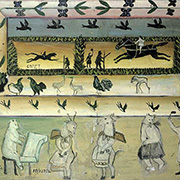
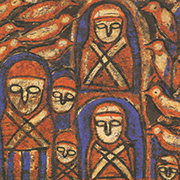
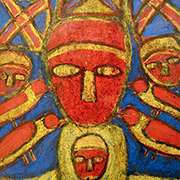
Ilija’s oeuvre can be loosely grouped according to subject matter: there are Biblical stories, scenes from the Apocalypse, episodes from myth and history, depictions of local animals, birds and the Dzigura (Sid’s main street), and most idiosyncratically, images of winged people and an idyllic parallel universe called Ilijada. These subject groupings are not discreet categories, but rather are interrelated. The flying people are on their way to Ilijada. The Dzigura exists both on earth and in Ilijada. Overall, Ilijada is a paradise that balances and opposes the horrors of the Apocalypse. Given the evil that Ilija had witnessed in his own life, it is understandable that he was obsessed with such dichotomies. His paintings are full of double-headed and two-faced creatures, which represent dualisms, not just of good and evil, but of truth and lies, kindness and aggression, the conscious and the unconscious, the outer and the inner.
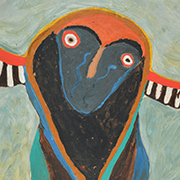
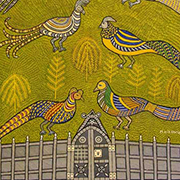
Ilija’s symbolism is complex and at times obscure. For example, some of his paintings contain “keys” that represent flowers or refer to the female uterus, but it is not clear what doors or secrets these keys unlock. Animals often perform allegorical functions. The owl, conventionally, represents wisdom. Peacocks (a bird not entirely exotic in Sid, where one of Ilija’s neighbor kept several) are ambassadors: enchanted princes from the time of the Serbian kings, or messengers from the perfect world of Ilijada. Depicting animals came naturally to the farmer Ilija, and their presence in his work further reflects the duality and interconnectedness of the human and natural worlds. Ilija’s paintings might best be interpreted as pictograms: employing a symbolic language to tell tales that defy explication in words.
In this, there are interesting parallels between Ilija’s work and the art produced by his son Dimitrije. Taking the pseudonym Mangelos from the birthplace of a friend who had been killed in World War II, Dimitrije created paintings and globes covered with elegantly scripted words in many languages and colors. Mangelos’s work (exhibited to great acclaim at the 2004-5 Carnegie International) is a metaphorical Tower of Babel, alluding to the ultimate impotence of language. Both father and son had lived through terrible events that belied any available philosophical or ideological rationale, and each artist attempted to grapple with the unfathomable in his work. Because Ilija was a self-taught peasant whose sources were the Bible and Serbian myths, he has traditionally been categorized as a “naïve” artist. Yet his work amply evidences the inadequacy of such labels. “Naïve,” after all, suggests a lack of sophistication, but Ilija was looking to unlock the deepest secrets of life, the mysterious co-existence of good and evil.
We would like to express our heartfelt thanks to Ivana and Vojin Basicevic; without their cooperation, graciousness and hospitality, this exhibition would not have been possible. Vojin Basicevic, in particular, has been a cherished resource, whose memories and astute understanding of his father’s life and work form the basis of the foregoing essay. Copies of Dimitrije Basicevic Mangelos’s book, My Father Ilija, may be purchased for $50.00, plus $15.00 for shipping and handling. New York residents, please add sales tax. , Where applicable, checklist entries include inventory numbers and references to the Mangelos book.