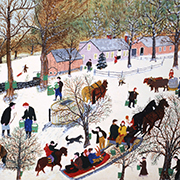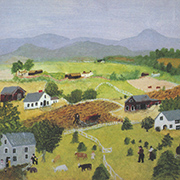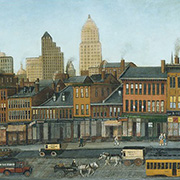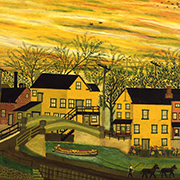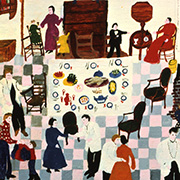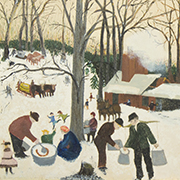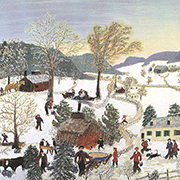

The Ins and Outs of Self-Taught Art
Reflections on a Shifting Field
January 10, 2012 - April 7, 2012
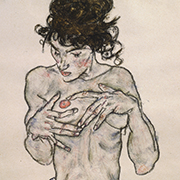
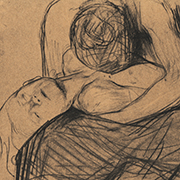
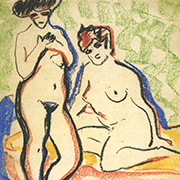
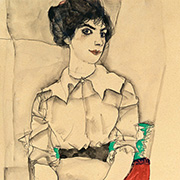
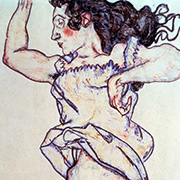
The Lady and the Tramp
Images of Women in Austrian and German Art
October 11, 2011 - December 30, 2011
Recent Acquisitions
(And Some Thoughts on the Current Art Market)
July 5, 2011 - September 30, 2011
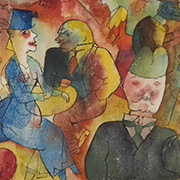
Decadence & Decay
Max Beckmann, Otto Dix, George Grosz
April 12, 2011 - June 24, 2011
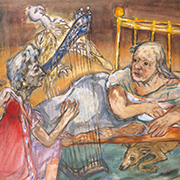
Self-Taught Painters in American 1800-1950
Revisiting the Tradition
January 11, 2011 - April 2, 2011
Marie-Louise Motesiczky
Paradise Lost & Found
October 12, 2010 - December 30, 2010
Recent Acquisitions
(And Some Thoughts on the Current Art Market)
July 13, 2010 - October 1, 2010
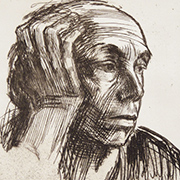
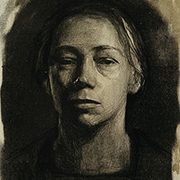
Käthe Kollwitz
A Portrait of the Artist
April 13, 2010 - June 25, 2010
Seventy Years Grandma Moses
A Loan Exhibition Celebrating the 70th Anniversary of the Artist's "Discovery"
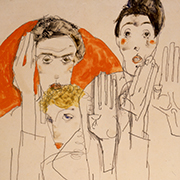
February 3, 2010 - April 3, 2010
Egon Schiele as Printmaker
A Loan Exhibition Celebrating the 70th Anniversary of the Galerie St. Etienne
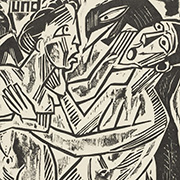
November 3, 2009 - January 23, 2010
From Brücke To Bauhaus
The Meanings of Modernity in Germany, 1905-1933
March 31, 2009 - June 26, 2009
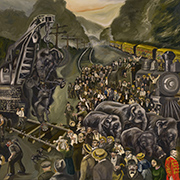
They Taught Themselves
American Self-Taught Painters Between the World Wars
January 9, 2009 - March 14, 2009
Elephants We Must Never Forget
New Paintings Drawings and Prints by Sue Coe
October 14, 2008 - December 20, 2008
Recent Acquisitions
(And Some Thoughts on the Current Art Market)
June 24, 2008 - September 26, 2008
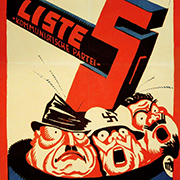
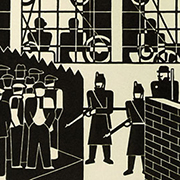
Hope or Menace?
Communism in Germany Between the World Wars
March 25, 2008 - June 13, 2008
Transforming Reality
Pattern and Design in Modern and Self-Taught Art
January 15, 2008 - March 8, 2008
Leonard Baskin
Proofs and Process
October 9, 2007 - January 5, 2008
Recent Acquisitions
(And Some Thoughts on the Current Art Market)
June 5, 2007 - September 28, 2007
Who Paid the Piper?
The Art of Patronage in Fin-de-Siècle Vienna
March 8, 2007 - May 26, 2007
Fairy Tale, Myth and Fantasy
Approaches to Spirituality in Art
December 7, 2006 - February 3, 2007
More Than Coffee was Served
Café Culture in Fin-de-Siècle Vienna and Weimar Germany
September 19, 2006 - November 25, 2006
Recent Acquisitions
(And Some Thoughts on the Current Art Market)
June 6, 2006 - September 8, 2006
Parallel Visions II
"Outsider" and "Insider" Art Today
April 5, 2006 - May 26, 2006
Ilija!
His First American Exhibtion
January 17, 2006 - March 18, 2006
Coming of Age
Egon Schiele and the Modernist Culture of Youth
November 15, 2005 - January 7, 2006
Sue Coe:
Sheep of Fools
September 20, 2005 - November 5, 2005
Recent Acquisitions
And Some Thoughts on the Current Art Market
June 7, 2005 - September 9, 2005
Every Picture Tells a Story
The Narrative Impulse in Modern and Contemporary Art
April 5, 2005 - May 27, 2005
65th Anniversary Exhibition, Part II
Self-Taught Artists
January 18, 2005 - March 26, 2005
65th Anniversary Exhibition, Part I
Austrian and German Expressionism
October 28, 2004 - January 8, 2005
Sue Coe: Bully: Master of the Global Merry-Go-Round and Recent Acquisitions
(And Some Thoughts on the Current Art Market)
June 8, 2004 - October 16, 2004
Animals & Us
The Animal in Contemporary Art
April 1, 2004 - May 22, 2004
Henry Darger
Art and Myth
January 15, 2004 - March 20, 2004
Body and Soul
Expressionism and the Human Figure
October 7, 2003 - January 3, 2004
Recent Acquisitions
(And Some Thoughts on the Current Art Market)
June 24, 2003 - September 12, 2003
In Search of the "Total Artwork"
Viennese Art and Design 1897–1932
April 8, 2003 - June 14, 2003
Russia's Self-Taught Artists
A New Perspective on the "Outsider"
January 14, 2003 - March 29, 2003
Käthe Kollwitz:
Master Printmaker
October 1, 2002 - January 4, 2003
Recent Acquisitions
(And Some Thoughts on the Current Art Market)
June 25, 2002 - September 20, 2002
Workers of the World
Modern Images of Labor
April 2, 2002 - June 15, 2002
Grandma Moses
Reflections of America
January 15, 2002 - March 16, 2002
Gustav Klimt/Egon Schiele/Oskar Kokoscha
From Art Nouveau to Expressionism
November 23, 2001 - January 5, 2002
The "Black-and-White" Show
Expressionist Graphics in Austria & Germany
September 20, 2001 - November 10, 2001
Recent Acquisitions (And Some Thoughts on the Current Art Market)
June 26, 2001 - September 7, 2001
Art with an Agenda
Politics, Persuasion, Illustration and Decoration
April 10, 2001 - June 16, 2001
"Our Beautiful and Tormented Austria!": Art Brut in the Land of Freud
January 18, 2001 - March 17, 2001
The Tragedy of War
November 16, 2000 - January 6, 2001
The Expressionist City
September 19, 2000 - November 4, 2000
Recent Acquisitions (And Some Thoughts on the Current Art Market)
June 20, 2000 - September 8, 2000
From Façade to Psyche
Turn-of-the-Century Portraiture in Austria & Germany
March 28, 2000 - June 10, 2000
European Self-Taught Art
Brut or Naive?
January 18, 2000 - March 11, 2000
Saved From Europe
In Commemoration of the 60th Anniversary of the Galerie St. Etienne
November 6, 1999 - January 8, 2000
The Modern Child
(Images of Children in Twentieth-Century Art)
September 14, 1999 - November 6, 1999
Recent Acquisitions
(And a Look at Sixty Years of Art Dealing)
June 15, 1999 - September 3, 1999
Sue Coe: The Pit
The Tragical Tale of the Rise and Fall of a Vivisector
March 30, 1999 - June 5, 1999
Henry Darger and His Realms
January 14, 1999 - March 13, 1999
Becoming Käthe Kollwitz
An Artist and Her Influences
November 17, 1998 - December 31, 1998
George Grosz - Elfriede Lohse-Wächtler
Art & Gender in Weimar Germany
September 23, 1998 - November 11, 1998
Recent Acquisitions
(And Some Thoughts About Looted Art)
June 9, 1998 - September 11, 1998
Taboo
Repression and Revolt in Modern Art
March 26, 1998 - May 30, 1998
Sacred & Profane
Michel Nedjar and Expressionist Primitivism
January 13, 1998 - March 14, 1998
Egon Schiele (1890-1918)
Master Draughtsman
November 18, 1997 - January 3, 1998
The New Objectivity
Realism in Weimar-Era Germany
September 16, 1997 - November 8, 1997
Recent Acquisitions
A Question of Quality
June 10, 1997 - September 5, 1997
Käthe Kollwitz - Lea Grundig
Two German Women & The Art of Protest
March 25, 1997 - May 31, 1997
That Way Madness Lies
Expressionism and the Art of Gugging
January 14, 1997 - March 15, 1997
The Viennese Line
Art and Design Circa 1900
November 18, 1996 - January 4, 1997
Emil Nolde - Christian Rohlfs
Two German Expressionist Masters
September 24, 1996 - November 9, 1996
Breaking All The Rules
Art in Transition
June 11, 1996 - September 6, 1996
Sue Coe's Ship of Fools
March 26, 1996 - May 24, 1996
New York Folk
Lawrence Lebduska, Abraham Levin, Isreal Litwak
January 16, 1996 - March 16, 1996
The Fractured Form
Expressionism and the Human Body
November 15, 1995 - January 6, 1996
From Left to Right
Social Realism in Germany and Russia, Circa 1919-1933
September 19, 1995 - November 4, 1995
Recent Acquisitions
June 20, 1995 - September 8, 1995
On the Brink 1900-2000
The Turning of Two Centuries
March 28, 1995 - May 26, 1995
Earl Cummingham - Grandma Moses
Visions of America
January 17, 1995 - March 18, 1995
Three Berlin Artists of the Weimar Era: Hannah Höch, Käthe Kollwitz, Jeanne Mam
September 13, 1994 - November 5, 1994
55th Anniversary Exhibition in Memory of Otto Kallir
June 7, 1994 - September 2, 1994
Drawn to Text: Comix Artists as Book Illustrators
May 15, 1994 - January 7, 1995
Sue Coe: We All Fall Down
March 29, 1994 - May 27, 1994
The Forgotten Folk Art of the 1940's
January 18, 1994 - March 19, 1994
Symbolism and the Austrian Avant Garde
Klimt, Schiele and their Contemporaries
November 16, 1993 - January 8, 1994
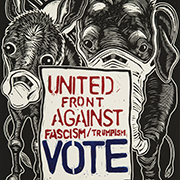
Art and Politics in Weimar Germany
September 14, 1993 - November 6, 1993
Recent Acquisitions
June 8, 1993 - September 3, 1993
The "Outsider" Question
Non-Academic Art from 1900 to the Present
March 23, 1993 - May 28, 1993
The Dance of Death
Images of Mortality in German Art
January 19, 1993 - March 13, 1993
Art Spiegelman
The Road to Maus
November 17, 1992 - January 9, 1993
Käthe Kollwitz
In Celebration of the 125th Anniversary of the Artist's Birth
September 15, 1992 - November 7, 1992
Naive Visions/Art Nouveau and Expressionism/Sue Coe: The Road to the White House
May 19, 1992 - September 4, 1992
Richard Gerstl/Oskar Kokoschka
March 17, 1992 - May 9, 1992
Scandal, Outrage, Censorship
Controversy in Modern Art
January 21, 1992 - March 7, 1992
Viennese Graphic Design
From Secession to Expressionism
November 19, 1991 - January 11, 1992
The Expressionist Figure
September 10, 1991 - November 9, 1991
Recent Acquisitions
Themes and Variations
May 14, 1991 - August 16, 1991
Sue Coe Retrospective
Political Document of a Decade
March 12, 1991 - May 5, 1991
Gustav Klimt, Egon Schiele, Oskar Kokoschka
Watercolors, drawings and prints
January 22, 1991 - March 2, 1991
Egon Schiele
November 13, 1990 - January 12, 1991
Lovis Corinth
A Retrospective
September 11, 1990 - November 3, 1990
Recent Acquisitions
June 12, 1990 - August 31, 1990
Max Klinger, Käthe Kollwitz, Alfred Kubin
A Study in Influences
March 27, 1990 - June 2, 1990
The Narrative in Art
January 23, 1990 - March 17, 1990
Grandma Moses
November 14, 1989 - January 13, 1990
Sue Coe
Porkopolis--Animals and Industry
September 19, 1989 - November 4, 1989
Galerie St. Etienne
A History in Documents and Pictures
June 20, 1989 - September 8, 1989
Gustav Klimt
Paintings and Drawings
April 11, 1989 - June 10, 1989
Fifty Years Galerie St. Etienne: An Overview
February 14, 1989 - April 1, 1989
Folk Artists at Work
Morris Hirshfield, John Kane and Grandma Moses
November 15, 1988 - January 14, 1989
Recent Acquisitions and Works From the Collection
June 14, 1988 - September 16, 1988
From Art Nouveau to Expressionism
April 12, 1988 - May 27, 1988
Three Pre-Expressionists
Lovis Corinth Käthe Kollwitz Paula Modersohn-Becker
January 26, 1988 - March 12, 1988
Käthe Kollwitz
The Power of the Print
November 17, 1987 - January 16, 1988
Recent Acquisitions and Works From the Collection
April 7, 1987 - October 31, 1987
Folk Art of This Century
February 10, 1987 - March 28, 1987
Oskar Kokoschka and His Time
November 25, 1986 - January 31, 1987
Viennese Design and Wiener Werkstätte
September 23, 1986 - November 8, 1986
Gustav Klimt/Egon Schiele/Oskar Kokoschka
Watercolors, Drawings and Prints
May 27, 1986 - September 13, 1986
Expressionist Painters
March 25, 1986 - May 10, 1986
Käthe Kollwitz/Paula Modersohn-Becker
January 28, 1986 - March 15, 1986
The Art of Giving
December 3, 1985 - January 18, 1986
Expressionists on Paper
October 8, 1985 - November 23, 1985
European and American Landscapes
June 4, 1985 - September 13, 1985
Expressionist Printmaking
Aspects of its Genesis and Development
April 1, 1985 - May 24, 1985
Expressionist Masters
January 18, 1985 - March 23, 1985
Arnold Schoenberg's Vienna
November 13, 1984 - January 5, 1985
Grandma Moses and Selected Folk Paintings
September 25, 1984 - November 3, 1984
American Folk Art
People, Places and Things
June 12, 1984 - September 14, 1984
John Kane
Modern America's First Folk Painter
April 17, 1984 - May 25, 1984
Eugène Mihaesco
The Illustrator as Artist
February 28, 1984 - April 7, 1984
Early Expressionist Masters
January 17, 1984 - February 18, 1984
Paula Modersohn-Becker
Germany's Pioneer Modernist
November 15, 1983 - January 7, 1984
Gustav Klimt
Drawings and Selected Paintings
September 20, 1983 - November 5, 1983
Early and Late
Drawings, Paintings & Prints from Academicism to Expressionism
June 1, 1983 - September 2, 1983
Alfred Kubin
Visions From The Other Side
March 22, 1983 - May 7, 1983
20th Century Folk
The First Generation
January 18, 1983 - March 12, 1983
Grandma Moses
The Artist Behind the Myth
November 15, 1982 - January 8, 1983
Kollwitz
The Artist as Printmaker
September 28, 1982 - November 6, 1982
Aspects of Modernism
June 1, 1982 - September 3, 1982
The Human Perspective
Recent Acquisitions
March 16, 1982 - May 15, 1982
19th and 20th Century European and American Folk Art
January 19, 1982 - March 6, 1982
The Folk Art Tradition
Naïve Painting in Europe and the United States
November 17, 1981 - January 9, 1982
Austria's Expressionism
April 21, 1981 - May 30, 1981
Eugène Mihaesco
His First American One-Man Show
March 3, 1981 - April 11, 1981
Gustav Klimt, Egon Schiele
November 12, 1980 - December 27, 1980
Summer Exhibition
June 17, 1980 - October 31, 1980
Kollwitz: The Drawing and The Print
May 1, 1980 - June 10, 1980
40th Anniversary Exhibition
November 13, 1979 - December 28, 1979
American Primitive Art
November 22, 1977
Käthe Kollwitz
December 1, 1976
Neue Galerie-Galerie St. Etienne
A Documentary Exhibition
May 1, 1976
Martin Pajeck
January 27, 1976
Georges Rouault and Frans Masereel
April 29, 1972
Branko Paradis
December 1, 1971
Käthe Kollwitz
February 3, 1971
Egon Schiele
The Graphic Work
October 19, 1970
Gustav Klimt
March 20, 1970
Friedrich Hundertwasser
May 6, 1969
Austrian Art of the 20th Century
March 21, 1969
Egon Schiele
Memorial Exhibition
October 31, 1968
Yugoslav Primitive Art
April 30, 1968
Alfred Kubin
January 30, 1968
Käthe Kollwitz
In the Cause of Humanity
October 23, 1967
Abraham Levin
September 26, 1967
Karl Stark
April 5, 1967
Gustav Klimt
February 4, 1967
The Wiener Werkstätte
November 16, 1966
Oskar Laske
October 25, 1965
Käthe Kollwitz
May 1, 1965
Egon Schiele
Watercolors and Drawings from American Collections
March 1, 1965
25th Anniversary Exhibition
Part II
November 21, 1964
25th Anniversary Exhibition
Part I
October 17, 1964
Mary Urban
June 9, 1964
Werner Berg, Jane Muus and Mura Dehn
May 5, 1964
Eugen Spiro
April 4, 1964
B. F. Dolbin
Drawings of an Epoch
March 3, 1964
Austrian Expressionists
January 6, 1964
Joseph Rifesser
December 3, 1963
Panorama of Yugoslav Primitive Art
October 21, 1963
Joe Henry
Watercolors of Vermont
May 1, 1963
French Impressionists
March 8, 1963
Grandma Moses
Memorial Exhibition
November 26, 1962
Group Show
October 15, 1962
Ernst Barlach
March 23, 1962
Martin Pajeck
February 24, 1962
Paintings by Expressionists
January 27, 1962
Käthe Kollwitz
November 11, 1961
Grandma Moses
September 7, 1961
My Friends
Fourth Biennial of Pictures by American School Children
May 27, 1961
Raimonds Staprans
April 17, 1961
Gustav Klimt, Egon Schiele, Oskar Kokoschka and Alfred Kubin
March 14, 1961
Marvin Meisels
January 23, 1961
Egon Schiele
November 15, 1960
My Life's History
Paintings by Grandma Moses
September 12, 1960
Watercolors and Drawings by Austrian Artists from the Dial Collection
May 2, 1960
Martin Pajeck
February 29, 1960
Eugen Spiro
February 6, 1960
Käthe Kollwitz
December 14, 1959
Josef Scharl
Last Paintings and Drawings
November 11, 1959
European and American Expressionists
September 22, 1959
Our Town
One Hundred Paintings by American School Children
May 23, 1959
Marvin Meisels and Martin Pajeck
May 1, 1959
Gustav Klimt
April 1, 1959
Käthe Kollwitz
January 12, 1959
Oskar Kokoschka
October 28, 1958
Village Life in Guatemala
Paintings by Andres Curuchich
June 3, 1958
Two Unknown American Expressionists
Paintings by Marvin Meisels and Martin Pajeck
April 28, 1958
Paula Modersohn-Becker
March 15, 1958
The Great Tradition in American Painting
American Primitive Art
January 20, 1958
Jules Lefranc and Dominique Lagru
Two French Primitives
November 18, 1957
Margret Bilger
October 22, 1957
The Four Seasons
One Hundred Paintings by American School Children
June 11, 1957
Grandma Moses
May 6, 1957
Alfred Kubin
April 3, 1957
Franz Lerch
March 2, 1957
Egon Schiele
January 21, 1957
Josef Scharl
Memorial Exhibition
November 17, 1956
Irma Rothstein
May 19, 1956
Käthe Kollwitz
April 16, 1956
A Tribute to Grandma Moses
November 28, 1955
As I See Myself
One Hundred Paintings by American School Children
May 20, 1955
Juan De'Prey
April 19, 1955
Erich Heckel
March 29, 1955
Freddy Homburger
March 2, 1955
Masters of the 19th Century
January 18, 1955
Oskar Kokoschka
November 29, 1954
Isabel Case Borgatta and Josef Scharl
October 12, 1954
James N. Rosenberg and Eugen Spiro
April 30, 1954
Per Krogh
April 2, 1954
Cuno Amiet
February 16, 1954
Eniar Jolin
January 14, 1954
Irma Rothstein
December 8, 1953
Josef Scharl
November 11, 1953
Grandma Moses
October 21, 1953 - October 24, 1953
Wilhelm Kaufmann
September 30, 1953
Lovis Corinth, Oskar Kokoschka and Egon Schiele
May 27, 1953
A Grandma Moses Album
Recent Paintings, 1950-1953
April 15, 1953
Streeter Blair
American Primitive
February 26, 1953
Paintings on Glass
Austrian Religious Folk Art of the 17th to 19th Centuries
December 4, 1952
Hasan Kaptan
Paintings of a Ten-Year-Old Turkish Painter
October 29, 1952
Margret Bilger
May 10, 1952
American Natural Painters
March 31, 1952
Ten Years of New York Concert Impressions by Eugen Spiro; Four New Paintings by
January 26, 1952
I-Fa-Wei
Watercolors of New York by a Chinese Artist
December 1, 1951
Käthe Kollwitz
October 25, 1951
Drawings and Watercolors by Austrian Children
May 21, 1951
Grandma Moses
Twenty-Five Masterpieces of Primitive Art
March 17, 1951
Roswitha Bitterlich
January 18, 1951
Oskar Laske
Watercolors of Vienna and the Salzkammergut
October 14, 1950
Tenth Anniversary Exhibition
Part II
May 11, 1950
Austrian Art of the 19th Century
From Wadlmüller to Klimt
April 1, 1950
Chiao Ssu-Tu
February 18, 1950
Anton Faistauer
January 1, 1950
Tenth Anniversary Exhibition
Part I
November 30, 1949
Autograph Exhibition
October 26, 1949
Gladys Wertheim Bachrach
May 24, 1949
Oskar Kokoschka
March 30, 1949
Eugen Spiro
February 19, 1949
Frans Masereel
January 13, 1949
Ten Years Grandma Moses
November 22, 1948
Käthe Kollwitz
Masterworks
October 18, 1948
American Primitives
June 3, 1948
Egon Schiele
Memorial Exhibition
April 5, 1948
Miriam Richman
February 7, 1948
Vally Wieselthier
Memorial Exhibition
January 10, 1948
Christmas Exhibition
December 4, 1947
Fritz von Unruh
November 10, 1947
Käthe Kollwitz
October 4, 1947
Grandma Moses
May 17, 1947
Lovis Corinth
April 16, 1947
Hugo Steiner-Prag
March 15, 1947
Mark Baum
January 11, 1947
Eugen Spiro
November 25, 1946
Henri de Toulouse-Lautrec
May 17, 1946
Ladis W. Sabo
Paintings by a New Primitive Artist
April 8, 1946
Georges Rouault
The Graphic Work
February 26, 1946
Käthe Kollwitz
Memorial Exhibition
November 21, 1945
Fred E. Robertson
Paintings by an American Primitive
June 13, 1945
Max Liebermann
The Graphic Work
April 18, 1945
Vienna through Four Centuries
March 1, 1945
Eugen Spiro
January 20, 1945
Grandma Moses
New Paintings
December 5, 1944
Käthe Kollwitz
Part II
October 26, 1944
A Century of French Graphic Art
From Géricault to Picasso
September 28, 1944
Max Liebermann
Memorial Exhibition
June 9, 1944
Juan De'Prey
Paintings by a Self-Taught Artist from Puerto Rico
May 6, 1944
Abraham Levin
April 15, 1944
Lesser Ury
Memorial Exhibition
March 21, 1944
Grandma Moses
Paintings by the Senior of the American Primitives
February 9, 1944
Betty Lane
January 11, 1944
WaIt Disney Cavalcade
December 9, 1943
Käthe Kollwitz
Part I
November 3, 1943
Will Barnet
September 29, 1943
Lovis Corinth
May 26, 1943
Josephine Joy
Paintings by an American Primitive
May 3, 1943
Oskar Kokoschka
Aspects of His Art
March 31, 1943
Eugen Spiro
February 13, 1943
Seymour Lipton
January 18, 1943
Illuminated Gothic Woodcuts
Printed and Painted, 1477-1493
December 5, 1942
Abraham Levin
November 4, 1942
Walt Disney Originals
September 23, 1942
Documents which Relate History
Documents of Historical Importance and Landmarks of Human Development
June 10, 1942
Honoré Daumier
April 29, 1942
Bertha Trabich
Memorial Exhibition of a Russian-American Primitive
March 25, 1942
Alfred Kubin
Master of Drawing
December 4, 1941
Egon Schiele
November 7, 1941
Betty Lane
June 3, 1941
Flowers from Old Vienna
18th and Early 19th Century Flower Painting
May 7, 1941
Weavings by Navaho and Hopi Indians and Photos of Indians by Helen M. Post
January 29, 1941
Georg Merkel
November 7, 1940
What a Farm Wife Painted
Works by Mrs. Anna Mary Moses
October 9, 1940
Saved from Europe
Masterpieces of European Art
July 1, 1940
American Abstract Art
May 22, 1940
Franz Lerch
May 1, 1940
Wilhelm Thöny
April 3, 1940
French Masters of the 19th and 20th Centuries
February 29, 1940
H. W. Hannau
Metropolis, Photographic Studies of New York
February 2, 1940
Oskar Kokoschka
January 9, 1940
Austrian Masters
November 13, 1939
HENRY DARGER
Art and Myth
Darger, Henry
Henry Darger (1892-1973) is in many respects the prototypical “outsider” artist. A recluse who shuttled between meager lodgings in a Chicago rooming house and menial jobs at local hospitals, he secretly harbored an extraordinarily vast and rich fantasy life. Both his immense novel, In the Realms of the Unreal (fifteen principal volumes, comprising 15,145 pages, and a sequel of 8,500 pages), and his artwork (estimated to consist of several hundred watercolor and pencil drawings of various sizes) revolve around a fictional war between the supremely good, Catholic nation of Abbiennia and its evil enemy, atheistic Glandelinia. The main characters are children: the seven angelic Vivian sisters; their boy- and girl-scout allies and foes; and masses of enslaved children, whose rebellion from their Glandelinian oppressors has triggered the war. Adding an extra touch of quirkiness to the drawings, the children are frequently “nuded” (Darger’s term) and endowed with little penises, regardless of gender. Adult men command battalions on both sides of the conflict, but grown women are almost never seen.
Jean Dubuffet defined Art Brut (“outsider” art’s European antecedent) as art created beyond the purview of received culture. Although Dubuffet tried to avoid directly correlating Art Brut with madness, it was from the start evident that, in media-saturated America or Europe, distance from received culture was largely determined by an artist’s mental state. As a result, “outsider” art as a whole, and Henry Darger in particular, have suffered from a tendency to dwell excessively on biographical and psychological details. The ostensible “artlessness” of Art Brut or “outsider” art creates further complications: is the work merely a psychiatric artifact, of essentially clinical interest, or is it in fact art? To the extent that the work is an artifact—formless and incoherent—it may be “pure” but it will also be unintelligible to all but its creator. Even the craziest artists are not entirely immune from mainstream influences, however, and the greatest “outsiders” (including Darger) are valued precisely because they achieved a mastery over form and content that equals or even exceeds that of most trained artists. We appreciate these psychologically impaired creators less because they give us access to their private worlds, than because of what they tell us about ourselves.
It could be argued that Darger’s written oeuvre is in fact more artifact than art. A plotless, unstructured narration, In the Realms of the Unreal meanders through meticulously documented battles, horrific natural disasters and plucky adventures without ever getting anywhere until the final 16 pages, when the war is rapidly brought to an end. (The Abbiennians win, though this outcome had previously often seemed in doubt.) The text itself seems to be pieced together from a miscellany of disparate sources: everything from newspaper articles to Pilgrim’s Progress. Darger bends these texts to his own idiosyncratic purposes, changing words and syntax slightly and inserting his characters’ invented names as needed. The length of the text overall, and in particular of its more gruesome passages, makes it virtually unreadable. No one, not even the preeminent Darger scholar John MacGregor, has succeeded in reading all 15,145 pages. In addition to the Realms and its even more grisly sequel Further Adventures in Chicago: Crazy House, Darger toward the end of his life kept three journals in which he compulsively recorded his sparse daily activities, the weather and his artistic progress. In 1968, five years after retiring from his last hospital job, he also began a curious autobiography. Though the first 206 pages are relatively factual (and actually comprise most of what we know about Darger’s life), the bulk of the manuscript may well be Darger’s most frightening creation: 5,085 endlessly repetitive pages documenting, in graphic detail, the gory predations of a supernaturally powerful twister incongruously named “Sweetie Pie.”
Various conflicting dates have been proposed, both by Darger and others, for the writing of the Realms. The story was probably formulated in the author’s head years before he began writing, and it continued to evolve in his drawings long after the writing had stopped. The first, presumably handwritten drafts, possibly begun as early as 1910, may have been lost or stolen. The typed manuscript that we know was begun in 1916 and probably completed around 1932, when the first seven volumes were bound. (A further eight volumes were never bound, and it is not clear if they were written later.) Though Darger created a number of ancillary images (mostly of single figures) while he was still writing the Realms, it is evident that the bulk of his mature pictorial oeuvre was completed between 1932 and 1965. During this period, he also wrote Crazy House and kept the weather and art journals, but he devoted most of his creative energies to image making. By the time Darger began his final written work--the daily diary and the autobiography--he had probably largely or completely stopped making art.
Despite the continuity of content that exists between Darger’s writings and his watercolors, it is misleading to refer to the latter as illustrations of the former. Not only were the two bodies of work done at different times, but there is little direct correlation between them. Not surprisingly, Darger’s earliest artwork is most closely related to the manuscript, though it is unlikely that he made a regular practice of referring to the text while drawing. (Sometimes, conversely, he seems to have done the pictures first, and then written about them.) Later, as the narrative evolved in his head, he crafted scenes that carry the story in previously uncharted directions.
One of the principal differences between Darger’s writings and his artwork is the treatment of violent subject matter. The artist’s reputation for gore is based principally on his writings and is belied by the cheery colors and pastoral subject matter found in many of the watercolors. Even the battle pictures are on the whole quite tame. Only a relative handful depict the disembowelings and strangulations for which the artist is, regrettably, best known. Curiously, whereas in the novel the soldiers are mainly adults, in the watercolors children are increasingly active as combatants. And though the Glandelinians, in the text, frequently strip their child victims as a prelude to further tortures, in the images nudity is both more pervasive and more matter-of-fact. Darger seems comparatively at ease with sexuality, which earlier would have triggered a frenzy of violence. Perhaps as the artist entered middle age, the sexual and aggressive drives of adolescence and early adulthood diminished. Or maybe picture-making itself had a sedative effect, allowing Darger to more completely visualize and thereby inhabit a soothing alternative reality.
In his artwork, Darger succeeded in bringing order to the chaos of his mind, something he could not achieve through writing alone. Unlike his writings, Darger’s watercolors have compositional structure and a stylistic development that evidence ever-growing skill. Initially, his approaches to image making and writing were similar. Just as he extracted texts from preexisting sources, he collected evocative photographs and printed illustrations, which he modified with paint or pencil, much as he might alter a text by interpolating his own words. Sometime in the mid to late ‘teens, Darger began portraying his cast of characters, starting with the Vivian girls and their friends, and progressing to the generals. By the 1920s, he was able to draw simple images—such as regimental flags and the winged monsters he called Blengins—without directly collaging source material into his work. However, his battle scenes (usually relying heavily on collaged elements) were chaotic, a jumble of vignettes with no underlying thematic or pictorial organization.
By the early 1930s, Darger had invented a new way of dealing with pictorial source material (mainly coloring books, comics and children’s fashion illustrations). Although he would retain a lifelong aversion to freehand drawing, he found he could achieve greater inventive freedom by tracing, rather than cutting and pasting, his printed prototypes. Watercolors done in the 1930s usually depict single scenes on 19˝ x 24˝ sheets. Accordingly, the overall scale of the compositions is small, especially as compared to Darger’s later work. There is little nudity during this period, and much emphasis on the elaborate dresses worn by the Vivian girls. The styling of these outfits has a distinctly prim, prewar look, with narrow silhouettes and knee-length skirts, especially for the older girls. Abbiennian uniforms are generally yellow and purple, the Easter colors. Although the earliest of these sheets were probably intended as stand-alone works, Darger gradually began to glue them together. The resulting long, scroll-like panels do not form sequential narratives in the comic-strip sense, but may instead represent aspects of a single episode, glimpsed from different points in time or space. Evidently, Darger was aiming to produce broad, comprehensive views. To do so, he gradually taught himself to meld two 19˝ x 24˝ sheets into a single image. At first he painted the two halves separately and only glued them together after they had been completed. One can follow his progress by marking the accuracy with which the two halves match up at the seam. A breakthrough of sorts was achieved when he learned to compose his watercolors after gluing the sheets.
By the mid 1940s, Darger was creating the long, pictorially cohesive narratives (up to 70˝ wide) for which he is famous. Starting around 1944, he began having his printed sources enlarged photographically at a neighborhood drugstore. These enlargements were expensive for someone with Darger’s limited income, so it probably took him several years to achieve a critical mass. As the size of his image bank grew, so did the size of his figures and of the works themselves. (Later works often exceed 100˝ in length.) Although Darger often reused favorite images, he evidenced increasing versatility in his manipulation of these sources: combining body parts from disparate prototypes, and “nuding” children who were clothed in the original illustrations. Nudity becomes more common during the 1940s, while the prim purple and yellow costumes are supplanted by the looser, more casual dress styles of the postwar period.
Virtually all of the watercolors from the 1940s onward are double-sided. It appears that at first Darger pasted together some of the small, one-sided works done in the 1930s simply to get larger sheets. In these cases, the sequence of early images may be fairly random, and there is usually as much as a decade’s time gap between the works on the recto and the verso. A number of the subsequent pairings also lack any contextual or even temporal connection, but others were clearly intended to function as mates. In the latter works, Darger would often present two views of the same scene (for example, one looking north and the other south) so that the two sides, if imagined in tandem, form a 360-degree panorama.
It has thus far been impossible to reconstruct the exact sequence in which Darger created his watercolors. However, it is unlikely that they ever formed a logical narrative progression, as is the norm with book illustrations. More plausibly, Darger shifted focus from one theme to the next, as inspiration or obsession moved him. Nevertheless, while there may be no chronological arc to the story told in Darger’s images, it does appear that his latest works (judging by size and pictorial complexity) depict the end of the Glandico-Abbiennnian war and its euphoric aftermath. In this phase, the atrocities that formerly served as a primary focus for Darger are isolated and encapsulated in Glandelinian statues and propaganda pictures, which have now been seized by the victorious Abbiennian army. Darger’s attempt to distance himself from his past iconography may represent a psychological split: a failure to come to terms with his own evil impulses. Darger’s authorial presence, too, is more lightly felt in these late works. The once routine captions are now sometimes augmented by dialogue balloons (shifting narrative responsibility onto the children) or dispensed with entirely. The almost complete effacement of “bad” Henry Darger (an important character in the written version of the story) makes for an idyllic world, wherein children and Blengins cavort in a flower-filled paradise.
Darger’s inability to accept the coexistence of good and evil in human nature is both the underlying cause of his lifelong psychological anguish and a central leitmotif in his work. Whereas children’s fantasy literature (from Darger’s beloved Wizard of Oz to today’s Harry Potter series) often revolves around conflicts between good and evil, the “good” characters, such as the Wizard and Harry, are nonetheless flawed. The Vivian girls, however, are saintly creatures whose unadulterated goodness challenges credulity. These paragons of virtue were undoubtedly a legacy of Darger’s Catholic upbringing, which he continued to accept with the naive literalism of a child. Nonetheless, he was baffled by the religion’s evident inconsistencies. How is it that one could be a “bad” boy and yet have all one’s sins cleansed through the simple acts of confession and penance? Conversely, and more to the point, how could one do everything in one’s power to lead a pious life (as Darger did, going to Mass up to five times a day) and still seemingly be abandoned by God?
The mystery of God’s silence in the face of unimaginable acts of human cruelty is, of course, a problem of universal significance. Furthermore, attempts to paper over the ugly side of life with banal platitudes and saccharine or heroic imagery were rampant in twentieth-century America. This was a time when the failings of public figures (from Roosevelt’s paralysis to Kennedy’s philandering) were discreetly ignored. The period during which Darger created his watercolors spans the age of Shirley Temple to that of Leave it to Beaver: an era when children, even naughty ones, were always ineffably cute, and the nuclear family was sacrosanct. The images of childhood innocence that were ubiquitous in American pop culture—and that Darger copied into his watercolors—belied the sometimes horrific realities of child neglect and abuse that the artist had experienced at first hand during a boyhood spent largely in custodial institutions. After all, while Darger was creating his pictures of child torture, real children were being gassed in Nazi Germany. This was an era when difference (including Darger’s apparent “craziness”) was brutally stigmatized; when even in the U.S., discrimination on racial or religious grounds was not only condoned, but legally enforced. And yet America was still ostensibly a land of equal opportunity for all, home of the free and the brave.
By juxtaposing pictures of the adorable Vivian girls with scenes of combat and occasional torture, Darger unwittingly exposed not only his own internal psychological split, but the hypocrisy of contemporary American culture. The inability to openly acknowledge and deal with evil impulses was not his alone, but also that of society at large. And just as this split was unbearably painful for Darger, it ultimately proved untenable for the American nation. The tumult of the 1960s ushered in a protracted period of national self-examination and efforts to right prior wrongs. We would like to believe that we are as a result more tolerant, and certainly the most overt forms of discrimination have now been outlawed. In contrast to the “Pollyanna” views common 50 years ago, Americans today seem almost obsessed with the dark side: presidential peccadilloes become cause for impeachment, movies contain episodes of graphic violence that rival any in Darger’s work, and parents worry constantly about child molestation. Routing out evil is surely preferable to ignoring it, yet one may wonder whether in some cases these efforts have not gone too far, fostering attitudes that are either unduly anxious or excessively judgmental.
There is little doubt that changes in American consciousness over the past several decades have created an atmosphere especially receptive to Darger’s work. Popular culture has all but supplanted high culture as our primary aesthetic reference point, and pop iconography is now accepted as a significant component of serious art. Whereas Darger would at one time have been derided for copying, Pop Art taught us that one of the best ways to comment upon popular culture is to quote from it. However, whereas artists such as Andy Warhol idealized pop icons like Marilyn Monroe, Darger felt betrayed by popular culture, and his work explores its deceptions.
Our fascination with Darger is in part an extension of the contemporary obsession with the dark side of human nature. Audiences always complete works of art by supplying their own interpretations, and this is especially so in the case of “outsiders,” who are generally incapable of voicing their intentions. However, all true art embodies levels of meaning that the artist never consciously intended. It is these multiple levels of meaning that permit great art to awaken responses across generations and that allow for its longevity. And it is the related element of ambiguity that gives Darger’s art its enduring resonance—despite or because of its insoluble mysteries.
We would like to thank Kiyoko Lerner and Colleen Goldsborough for their invaluable help in organizing the present exhibition, and the American Folk Art Museum for so generously lending a selection of Darger’s preliminary source material. We are particularly grateful to Brooke Anderson, Director and Curator of AFAM’s Contemporary Center, for her knowledgeable guidance in this regard, and to Ann-Marie Reilly for expediting the loan process. Much of the information in the checklist essay is based on Michael Bonesteel’s book, Henry Darger: Art and Selected Writings, and, especially, on John MacGregor’s Henry Darger: In the Realms of the Unreal. Copies of these books may be ordered for $ 85.00 each, plus $ 15.00 each (or $ 20.00 for both books) for shipping and handling. New York residents, please add sales tax. Checklist entries include references to these books, where applicable, as well as the Nathan Lerner Living Trust’s inventory numbers.
Note: For the first time, approximate dates have been assigned to the works in the present exhibition. While we hope that this will facilitate a deeper understanding of Darger’s overall development, we also recognize that the process of assigning dates entails a risk of error. It is likely that future research will make it possible to date Darger’s work with a greater degree of accuracy. The dates suggested below should not be taken as the final word, but rather as the first step in an ongoing process.