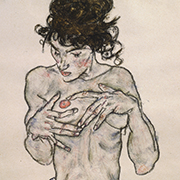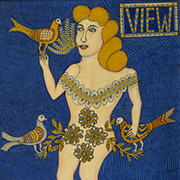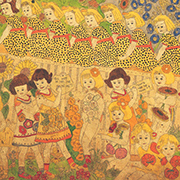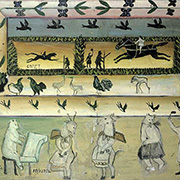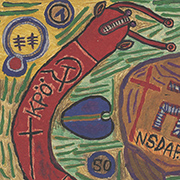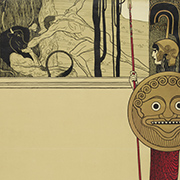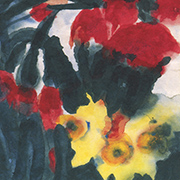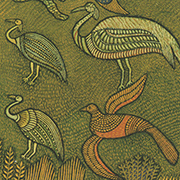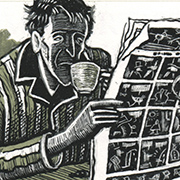
The Ins and Outs of Self-Taught Art
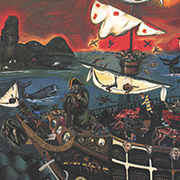
Reflections on a Shifting Field
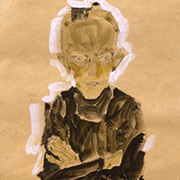
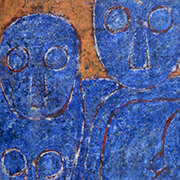
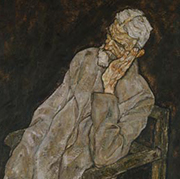
January 10, 2012 - April 7, 2012
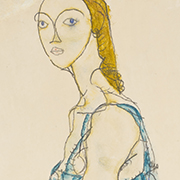
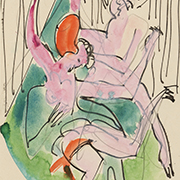
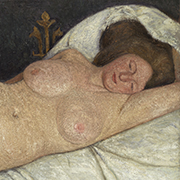
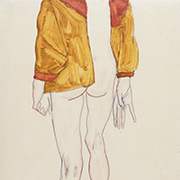
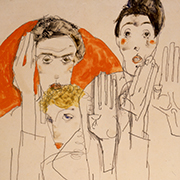
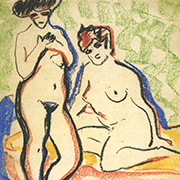
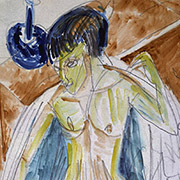
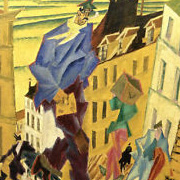
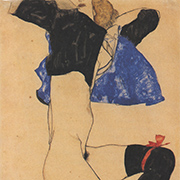
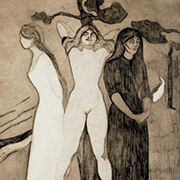
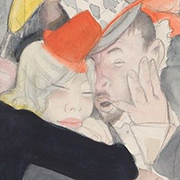
The Lady and the Tramp
Images of Women in Austrian and German Art
October 11, 2011 - December 30, 2011
Recent Acquisitions
(And Some Thoughts on the Current Art Market)
July 5, 2011 - September 30, 2011
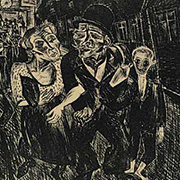
Decadence & Decay
Max Beckmann, Otto Dix, George Grosz
April 12, 2011 - June 24, 2011
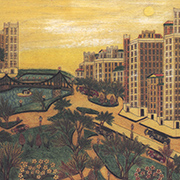
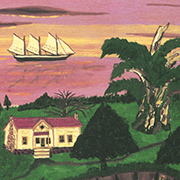
Self-Taught Painters in American 1800-1950
Revisiting the Tradition
January 11, 2011 - April 2, 2011
Marie-Louise Motesiczky
Paradise Lost & Found
October 12, 2010 - December 30, 2010
Recent Acquisitions
(And Some Thoughts on the Current Art Market)
July 13, 2010 - October 1, 2010
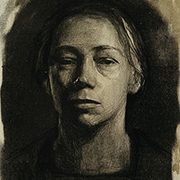
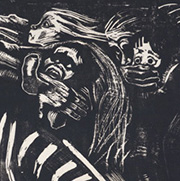
Käthe Kollwitz
A Portrait of the Artist
April 13, 2010 - June 25, 2010
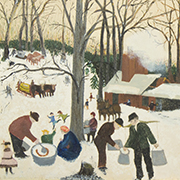
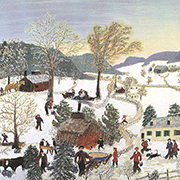
Seventy Years Grandma Moses
A Loan Exhibition Celebrating the 70th Anniversary of the Artist's "Discovery"
February 3, 2010 - April 3, 2010
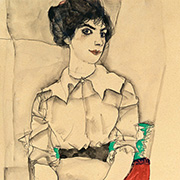
Egon Schiele as Printmaker
A Loan Exhibition Celebrating the 70th Anniversary of the Galerie St. Etienne
November 3, 2009 - January 23, 2010
From Brücke To Bauhaus
The Meanings of Modernity in Germany, 1905-1933
March 31, 2009 - June 26, 2009
They Taught Themselves
American Self-Taught Painters Between the World Wars
January 9, 2009 - March 14, 2009
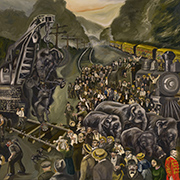
Elephants We Must Never Forget
New Paintings Drawings and Prints by Sue Coe
October 14, 2008 - December 20, 2008
Recent Acquisitions
(And Some Thoughts on the Current Art Market)
June 24, 2008 - September 26, 2008
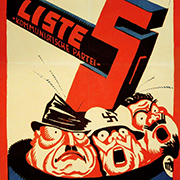
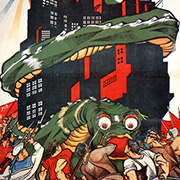
Hope or Menace?
Communism in Germany Between the World Wars
March 25, 2008 - June 13, 2008
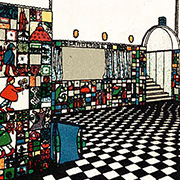
Transforming Reality
Pattern and Design in Modern and Self-Taught Art
January 15, 2008 - March 8, 2008
Leonard Baskin
Proofs and Process
October 9, 2007 - January 5, 2008
Recent Acquisitions
(And Some Thoughts on the Current Art Market)
June 5, 2007 - September 28, 2007
Who Paid the Piper?
The Art of Patronage in Fin-de-Siècle Vienna
March 8, 2007 - May 26, 2007
Fairy Tale, Myth and Fantasy
Approaches to Spirituality in Art
December 7, 2006 - February 3, 2007
More Than Coffee was Served
Café Culture in Fin-de-Siècle Vienna and Weimar Germany
September 19, 2006 - November 25, 2006
Recent Acquisitions
(And Some Thoughts on the Current Art Market)
June 6, 2006 - September 8, 2006
Parallel Visions II
"Outsider" and "Insider" Art Today
April 5, 2006 - May 26, 2006
Ilija!
His First American Exhibtion
January 17, 2006 - March 18, 2006
Coming of Age
Egon Schiele and the Modernist Culture of Youth
November 15, 2005 - January 7, 2006
Sue Coe:
Sheep of Fools
September 20, 2005 - November 5, 2005
Recent Acquisitions
And Some Thoughts on the Current Art Market
June 7, 2005 - September 9, 2005
Every Picture Tells a Story
The Narrative Impulse in Modern and Contemporary Art
April 5, 2005 - May 27, 2005
65th Anniversary Exhibition, Part II
Self-Taught Artists
January 18, 2005 - March 26, 2005
65th Anniversary Exhibition, Part I
Austrian and German Expressionism
October 28, 2004 - January 8, 2005
Sue Coe: Bully: Master of the Global Merry-Go-Round and Recent Acquisitions
(And Some Thoughts on the Current Art Market)
June 8, 2004 - October 16, 2004
Animals & Us
The Animal in Contemporary Art
April 1, 2004 - May 22, 2004
Henry Darger
Art and Myth
January 15, 2004 - March 20, 2004
Body and Soul
Expressionism and the Human Figure
October 7, 2003 - January 3, 2004
Recent Acquisitions
(And Some Thoughts on the Current Art Market)
June 24, 2003 - September 12, 2003
In Search of the "Total Artwork"
Viennese Art and Design 1897–1932
April 8, 2003 - June 14, 2003
Russia's Self-Taught Artists
A New Perspective on the "Outsider"
January 14, 2003 - March 29, 2003
Käthe Kollwitz:
Master Printmaker
October 1, 2002 - January 4, 2003
Recent Acquisitions
(And Some Thoughts on the Current Art Market)
June 25, 2002 - September 20, 2002
Workers of the World
Modern Images of Labor
April 2, 2002 - June 15, 2002
Grandma Moses
Reflections of America
January 15, 2002 - March 16, 2002
Gustav Klimt/Egon Schiele/Oskar Kokoscha
From Art Nouveau to Expressionism
November 23, 2001 - January 5, 2002
The "Black-and-White" Show
Expressionist Graphics in Austria & Germany
September 20, 2001 - November 10, 2001
Recent Acquisitions (And Some Thoughts on the Current Art Market)
June 26, 2001 - September 7, 2001
Art with an Agenda
Politics, Persuasion, Illustration and Decoration
April 10, 2001 - June 16, 2001
"Our Beautiful and Tormented Austria!": Art Brut in the Land of Freud
January 18, 2001 - March 17, 2001
The Tragedy of War
November 16, 2000 - January 6, 2001
The Expressionist City
September 19, 2000 - November 4, 2000
Recent Acquisitions (And Some Thoughts on the Current Art Market)
June 20, 2000 - September 8, 2000
From Façade to Psyche
Turn-of-the-Century Portraiture in Austria & Germany
March 28, 2000 - June 10, 2000
European Self-Taught Art
Brut or Naive?
January 18, 2000 - March 11, 2000
Saved From Europe
In Commemoration of the 60th Anniversary of the Galerie St. Etienne
November 6, 1999 - January 8, 2000
The Modern Child
(Images of Children in Twentieth-Century Art)
September 14, 1999 - November 6, 1999
Recent Acquisitions
(And a Look at Sixty Years of Art Dealing)
June 15, 1999 - September 3, 1999
Sue Coe: The Pit
The Tragical Tale of the Rise and Fall of a Vivisector
March 30, 1999 - June 5, 1999
Henry Darger and His Realms
January 14, 1999 - March 13, 1999
Becoming Käthe Kollwitz
An Artist and Her Influences
November 17, 1998 - December 31, 1998
George Grosz - Elfriede Lohse-Wächtler
Art & Gender in Weimar Germany
September 23, 1998 - November 11, 1998
Recent Acquisitions
(And Some Thoughts About Looted Art)
June 9, 1998 - September 11, 1998
Taboo
Repression and Revolt in Modern Art
March 26, 1998 - May 30, 1998
Sacred & Profane
Michel Nedjar and Expressionist Primitivism
January 13, 1998 - March 14, 1998
Egon Schiele (1890-1918)
Master Draughtsman
November 18, 1997 - January 3, 1998
The New Objectivity
Realism in Weimar-Era Germany
September 16, 1997 - November 8, 1997
Recent Acquisitions
A Question of Quality
June 10, 1997 - September 5, 1997
Käthe Kollwitz - Lea Grundig
Two German Women & The Art of Protest
March 25, 1997 - May 31, 1997
That Way Madness Lies
Expressionism and the Art of Gugging
January 14, 1997 - March 15, 1997
The Viennese Line
Art and Design Circa 1900
November 18, 1996 - January 4, 1997
Emil Nolde - Christian Rohlfs
Two German Expressionist Masters
September 24, 1996 - November 9, 1996
Breaking All The Rules
Art in Transition
June 11, 1996 - September 6, 1996
Sue Coe's Ship of Fools
March 26, 1996 - May 24, 1996
New York Folk
Lawrence Lebduska, Abraham Levin, Isreal Litwak
January 16, 1996 - March 16, 1996
The Fractured Form
Expressionism and the Human Body
November 15, 1995 - January 6, 1996
From Left to Right
Social Realism in Germany and Russia, Circa 1919-1933
September 19, 1995 - November 4, 1995
Recent Acquisitions
June 20, 1995 - September 8, 1995
On the Brink 1900-2000
The Turning of Two Centuries
March 28, 1995 - May 26, 1995
Earl Cummingham - Grandma Moses
Visions of America
January 17, 1995 - March 18, 1995
Three Berlin Artists of the Weimar Era: Hannah Höch, Käthe Kollwitz, Jeanne Mam
September 13, 1994 - November 5, 1994
55th Anniversary Exhibition in Memory of Otto Kallir
June 7, 1994 - September 2, 1994
Drawn to Text: Comix Artists as Book Illustrators
May 15, 1994 - January 7, 1995
Sue Coe: We All Fall Down
March 29, 1994 - May 27, 1994
The Forgotten Folk Art of the 1940's
January 18, 1994 - March 19, 1994
Symbolism and the Austrian Avant Garde
Klimt, Schiele and their Contemporaries
November 16, 1993 - January 8, 1994
Art and Politics in Weimar Germany
September 14, 1993 - November 6, 1993
Recent Acquisitions
June 8, 1993 - September 3, 1993
The "Outsider" Question
Non-Academic Art from 1900 to the Present
March 23, 1993 - May 28, 1993
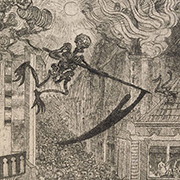
The Dance of Death
Images of Mortality in German Art
January 19, 1993 - March 13, 1993
Art Spiegelman
The Road to Maus
November 17, 1992 - January 9, 1993
Käthe Kollwitz
In Celebration of the 125th Anniversary of the Artist's Birth
September 15, 1992 - November 7, 1992
Naive Visions/Art Nouveau and Expressionism/Sue Coe: The Road to the White House
May 19, 1992 - September 4, 1992
Richard Gerstl/Oskar Kokoschka
March 17, 1992 - May 9, 1992
Scandal, Outrage, Censorship
Controversy in Modern Art
January 21, 1992 - March 7, 1992
Viennese Graphic Design
From Secession to Expressionism
November 19, 1991 - January 11, 1992
The Expressionist Figure
September 10, 1991 - November 9, 1991
Recent Acquisitions
Themes and Variations
May 14, 1991 - August 16, 1991
Sue Coe Retrospective
Political Document of a Decade
March 12, 1991 - May 5, 1991
Gustav Klimt, Egon Schiele, Oskar Kokoschka
Watercolors, drawings and prints
January 22, 1991 - March 2, 1991
Egon Schiele
November 13, 1990 - January 12, 1991
Lovis Corinth
A Retrospective
September 11, 1990 - November 3, 1990
Recent Acquisitions
June 12, 1990 - August 31, 1990
Max Klinger, Käthe Kollwitz, Alfred Kubin
A Study in Influences
March 27, 1990 - June 2, 1990
The Narrative in Art
January 23, 1990 - March 17, 1990
Grandma Moses
November 14, 1989 - January 13, 1990
Sue Coe
Porkopolis--Animals and Industry
September 19, 1989 - November 4, 1989
Galerie St. Etienne
A History in Documents and Pictures
June 20, 1989 - September 8, 1989
Gustav Klimt
Paintings and Drawings
April 11, 1989 - June 10, 1989
Fifty Years Galerie St. Etienne: An Overview
February 14, 1989 - April 1, 1989
Folk Artists at Work
Morris Hirshfield, John Kane and Grandma Moses
November 15, 1988 - January 14, 1989
Recent Acquisitions and Works From the Collection
June 14, 1988 - September 16, 1988
From Art Nouveau to Expressionism
April 12, 1988 - May 27, 1988
Three Pre-Expressionists
Lovis Corinth Käthe Kollwitz Paula Modersohn-Becker
January 26, 1988 - March 12, 1988
Käthe Kollwitz
The Power of the Print
November 17, 1987 - January 16, 1988
Recent Acquisitions and Works From the Collection
April 7, 1987 - October 31, 1987
Folk Art of This Century
February 10, 1987 - March 28, 1987
Oskar Kokoschka and His Time
November 25, 1986 - January 31, 1987
Viennese Design and Wiener Werkstätte
September 23, 1986 - November 8, 1986
Gustav Klimt/Egon Schiele/Oskar Kokoschka
Watercolors, Drawings and Prints
May 27, 1986 - September 13, 1986
Expressionist Painters
March 25, 1986 - May 10, 1986
Käthe Kollwitz/Paula Modersohn-Becker
January 28, 1986 - March 15, 1986
The Art of Giving
December 3, 1985 - January 18, 1986
Expressionists on Paper
October 8, 1985 - November 23, 1985
European and American Landscapes
June 4, 1985 - September 13, 1985
Expressionist Printmaking
Aspects of its Genesis and Development
April 1, 1985 - May 24, 1985
Expressionist Masters
January 18, 1985 - March 23, 1985
Arnold Schoenberg's Vienna
November 13, 1984 - January 5, 1985
Grandma Moses and Selected Folk Paintings
September 25, 1984 - November 3, 1984
American Folk Art
People, Places and Things
June 12, 1984 - September 14, 1984
John Kane
Modern America's First Folk Painter
April 17, 1984 - May 25, 1984
Eugène Mihaesco
The Illustrator as Artist
February 28, 1984 - April 7, 1984
Early Expressionist Masters
January 17, 1984 - February 18, 1984
Paula Modersohn-Becker
Germany's Pioneer Modernist
November 15, 1983 - January 7, 1984
Gustav Klimt
Drawings and Selected Paintings
September 20, 1983 - November 5, 1983
Early and Late
Drawings, Paintings & Prints from Academicism to Expressionism
June 1, 1983 - September 2, 1983
Alfred Kubin
Visions From The Other Side
March 22, 1983 - May 7, 1983
20th Century Folk
The First Generation
January 18, 1983 - March 12, 1983
Grandma Moses
The Artist Behind the Myth
November 15, 1982 - January 8, 1983
Kollwitz
The Artist as Printmaker
September 28, 1982 - November 6, 1982
Aspects of Modernism
June 1, 1982 - September 3, 1982
The Human Perspective
Recent Acquisitions
March 16, 1982 - May 15, 1982
19th and 20th Century European and American Folk Art
January 19, 1982 - March 6, 1982
The Folk Art Tradition
Naïve Painting in Europe and the United States
November 17, 1981 - January 9, 1982
Austria's Expressionism
April 21, 1981 - May 30, 1981
Eugène Mihaesco
His First American One-Man Show
March 3, 1981 - April 11, 1981
Gustav Klimt, Egon Schiele
November 12, 1980 - December 27, 1980
Summer Exhibition
June 17, 1980 - October 31, 1980
Kollwitz: The Drawing and The Print
May 1, 1980 - June 10, 1980
40th Anniversary Exhibition
November 13, 1979 - December 28, 1979
American Primitive Art
November 22, 1977
Käthe Kollwitz
December 1, 1976
Neue Galerie-Galerie St. Etienne
A Documentary Exhibition
May 1, 1976
Martin Pajeck
January 27, 1976
Georges Rouault and Frans Masereel
April 29, 1972
Branko Paradis
December 1, 1971
Käthe Kollwitz
February 3, 1971
Egon Schiele
The Graphic Work
October 19, 1970
Gustav Klimt
March 20, 1970
Friedrich Hundertwasser
May 6, 1969
Austrian Art of the 20th Century
March 21, 1969
Egon Schiele
Memorial Exhibition
October 31, 1968
Yugoslav Primitive Art
April 30, 1968
Alfred Kubin
January 30, 1968
Käthe Kollwitz
In the Cause of Humanity
October 23, 1967
Abraham Levin
September 26, 1967
Karl Stark
April 5, 1967
Gustav Klimt
February 4, 1967
The Wiener Werkstätte
November 16, 1966
Oskar Laske
October 25, 1965
Käthe Kollwitz
May 1, 1965
Egon Schiele
Watercolors and Drawings from American Collections
March 1, 1965
25th Anniversary Exhibition
Part II
November 21, 1964
25th Anniversary Exhibition
Part I
October 17, 1964
Mary Urban
June 9, 1964
Werner Berg, Jane Muus and Mura Dehn
May 5, 1964
Eugen Spiro
April 4, 1964
B. F. Dolbin
Drawings of an Epoch
March 3, 1964
Austrian Expressionists
January 6, 1964
Joseph Rifesser
December 3, 1963
Panorama of Yugoslav Primitive Art
October 21, 1963
Joe Henry
Watercolors of Vermont
May 1, 1963
French Impressionists
March 8, 1963
Grandma Moses
Memorial Exhibition
November 26, 1962
Group Show
October 15, 1962
Ernst Barlach
March 23, 1962
Martin Pajeck
February 24, 1962
Paintings by Expressionists
January 27, 1962
Käthe Kollwitz
November 11, 1961
Grandma Moses
September 7, 1961
My Friends
Fourth Biennial of Pictures by American School Children
May 27, 1961
Raimonds Staprans
April 17, 1961
Gustav Klimt, Egon Schiele, Oskar Kokoschka and Alfred Kubin
March 14, 1961
Marvin Meisels
January 23, 1961
Egon Schiele
November 15, 1960
My Life's History
Paintings by Grandma Moses
September 12, 1960
Watercolors and Drawings by Austrian Artists from the Dial Collection
May 2, 1960
Martin Pajeck
February 29, 1960
Eugen Spiro
February 6, 1960
Käthe Kollwitz
December 14, 1959
Josef Scharl
Last Paintings and Drawings
November 11, 1959
European and American Expressionists
September 22, 1959
Our Town
One Hundred Paintings by American School Children
May 23, 1959
Marvin Meisels and Martin Pajeck
May 1, 1959
Gustav Klimt
April 1, 1959
Käthe Kollwitz
January 12, 1959
Oskar Kokoschka
October 28, 1958
Village Life in Guatemala
Paintings by Andres Curuchich
June 3, 1958
Two Unknown American Expressionists
Paintings by Marvin Meisels and Martin Pajeck
April 28, 1958
Paula Modersohn-Becker
March 15, 1958
The Great Tradition in American Painting
American Primitive Art
January 20, 1958
Jules Lefranc and Dominique Lagru
Two French Primitives
November 18, 1957
Margret Bilger
October 22, 1957
The Four Seasons
One Hundred Paintings by American School Children
June 11, 1957
Grandma Moses
May 6, 1957
Alfred Kubin
April 3, 1957
Franz Lerch
March 2, 1957
Egon Schiele
January 21, 1957
Josef Scharl
Memorial Exhibition
November 17, 1956
Irma Rothstein
May 19, 1956
Käthe Kollwitz
April 16, 1956
A Tribute to Grandma Moses
November 28, 1955
As I See Myself
One Hundred Paintings by American School Children
May 20, 1955
Juan De'Prey
April 19, 1955
Erich Heckel
March 29, 1955
Freddy Homburger
March 2, 1955
Masters of the 19th Century
January 18, 1955
Oskar Kokoschka
November 29, 1954
Isabel Case Borgatta and Josef Scharl
October 12, 1954
James N. Rosenberg and Eugen Spiro
April 30, 1954
Per Krogh
April 2, 1954
Cuno Amiet
February 16, 1954
Eniar Jolin
January 14, 1954
Irma Rothstein
December 8, 1953
Josef Scharl
November 11, 1953
Grandma Moses
October 21, 1953 - October 24, 1953
Wilhelm Kaufmann
September 30, 1953
Lovis Corinth, Oskar Kokoschka and Egon Schiele
May 27, 1953
A Grandma Moses Album
Recent Paintings, 1950-1953
April 15, 1953
Streeter Blair
American Primitive
February 26, 1953
Paintings on Glass
Austrian Religious Folk Art of the 17th to 19th Centuries
December 4, 1952
Hasan Kaptan
Paintings of a Ten-Year-Old Turkish Painter
October 29, 1952
Margret Bilger
May 10, 1952
American Natural Painters
March 31, 1952
Ten Years of New York Concert Impressions by Eugen Spiro; Four New Paintings by
January 26, 1952
I-Fa-Wei
Watercolors of New York by a Chinese Artist
December 1, 1951
Käthe Kollwitz
October 25, 1951
Drawings and Watercolors by Austrian Children
May 21, 1951
Grandma Moses
Twenty-Five Masterpieces of Primitive Art
March 17, 1951
Roswitha Bitterlich
January 18, 1951
Oskar Laske
Watercolors of Vienna and the Salzkammergut
October 14, 1950
Tenth Anniversary Exhibition
Part II
May 11, 1950
Austrian Art of the 19th Century
From Wadlmüller to Klimt
April 1, 1950
Chiao Ssu-Tu
February 18, 1950
Anton Faistauer
January 1, 1950
Tenth Anniversary Exhibition
Part I
November 30, 1949
Autograph Exhibition
October 26, 1949
Gladys Wertheim Bachrach
May 24, 1949
Oskar Kokoschka
March 30, 1949
Eugen Spiro
February 19, 1949
Frans Masereel
January 13, 1949
Ten Years Grandma Moses
November 22, 1948
Käthe Kollwitz
Masterworks
October 18, 1948
American Primitives
June 3, 1948
Egon Schiele
Memorial Exhibition
April 5, 1948
Miriam Richman
February 7, 1948
Vally Wieselthier
Memorial Exhibition
January 10, 1948
Christmas Exhibition
December 4, 1947
Fritz von Unruh
November 10, 1947
Käthe Kollwitz
October 4, 1947
Grandma Moses
May 17, 1947
Lovis Corinth
April 16, 1947
Hugo Steiner-Prag
March 15, 1947
Mark Baum
January 11, 1947
Eugen Spiro
November 25, 1946
Henri de Toulouse-Lautrec
May 17, 1946
Ladis W. Sabo
Paintings by a New Primitive Artist
April 8, 1946
Georges Rouault
The Graphic Work
February 26, 1946
Käthe Kollwitz
Memorial Exhibition
November 21, 1945
Fred E. Robertson
Paintings by an American Primitive
June 13, 1945
Max Liebermann
The Graphic Work
April 18, 1945
Vienna through Four Centuries
March 1, 1945
Eugen Spiro
January 20, 1945
Grandma Moses
New Paintings
December 5, 1944
Käthe Kollwitz
Part II
October 26, 1944
A Century of French Graphic Art
From Géricault to Picasso
September 28, 1944
Max Liebermann
Memorial Exhibition
June 9, 1944
Juan De'Prey
Paintings by a Self-Taught Artist from Puerto Rico
May 6, 1944
Abraham Levin
April 15, 1944
Lesser Ury
Memorial Exhibition
March 21, 1944
Grandma Moses
Paintings by the Senior of the American Primitives
February 9, 1944
Betty Lane
January 11, 1944
WaIt Disney Cavalcade
December 9, 1943
Käthe Kollwitz
Part I
November 3, 1943
Will Barnet
September 29, 1943
Lovis Corinth
May 26, 1943
Josephine Joy
Paintings by an American Primitive
May 3, 1943
Oskar Kokoschka
Aspects of His Art
March 31, 1943
Eugen Spiro
February 13, 1943
Seymour Lipton
January 18, 1943
Illuminated Gothic Woodcuts
Printed and Painted, 1477-1493
December 5, 1942
Abraham Levin
November 4, 1942
Walt Disney Originals
September 23, 1942
Documents which Relate History
Documents of Historical Importance and Landmarks of Human Development
June 10, 1942
Honoré Daumier
April 29, 1942
Bertha Trabich
Memorial Exhibition of a Russian-American Primitive
March 25, 1942
Alfred Kubin
Master of Drawing
December 4, 1941
Egon Schiele
November 7, 1941
Betty Lane
June 3, 1941
Flowers from Old Vienna
18th and Early 19th Century Flower Painting
May 7, 1941
Weavings by Navaho and Hopi Indians and Photos of Indians by Helen M. Post
January 29, 1941
Georg Merkel
November 7, 1940
What a Farm Wife Painted
Works by Mrs. Anna Mary Moses
October 9, 1940
Saved from Europe
Masterpieces of European Art
July 1, 1940
American Abstract Art
May 22, 1940
Franz Lerch
May 1, 1940
Wilhelm Thöny
April 3, 1940
French Masters of the 19th and 20th Centuries
February 29, 1940
H. W. Hannau
Metropolis, Photographic Studies of New York
February 2, 1940
Oskar Kokoschka
January 9, 1940
Austrian Masters
November 13, 1939
FAIRY TALE, MYTH AND FANTASY
Approaches to Spirituality in Art
Basicevic, Ilija Bosilj
Baskin, Leonard
Bazile, Castera
Bellande, Francois
Chagall, Marc
Corinth, Lovis
Darger, Henry
Evans, Minnie
Gill, Madge
Griebler, Matthias
Klee, Paul
Kokoschka, Oskar
Kubin, Alfred
Leonov, Pavel
Morgan, Sister Gertrude
Nedjar, Michel
Nolde, Emil
Pechstein, Hermann Max
Picasso, Pablo
Romanenkov, Vasilij
Rouault, Georges
Schröder-Sonnenstern, F.
Smith, Kiki
Wilson, Scottie
Zharkikh, Rosa
Spirituality means different things to different people, for there are many ways to engage the invisible and never completely knowable forces that may lie beyond our material existence. From earliest prehistoric times, art has served as an adjunct to the spiritual quest, codifying ancient myths and rituals in order to access the supernatural. Many modern and contemporary artists have remained keenly interested in spiritual content, but the creation of immediately recognizable, overtly religious imagery declined precipitously in the twentieth century. Formalist critical discourse, the power of the capitalist marketplace and the perennial academicization of the avant garde all conspired to seemingly rob mainstream art of what Wassily Kandinsky termed its inner necessity. Interest in the work of self-taught artists initially developed as an antidote to this perceived deadening of the creative spirit. Through all its varied manifestations over the last centuryfrom the naive to Art Brut, folk and outsider artthe paradigm of the unschooled artist served as a repository for the ideals of expressive intensity and authenticity. These ideals are exemplified by the popular use of the term visionary to describe self-taught artists, most notably by Baltimores American Visionary Art Museum. There are, however, two significant problems with this approach. On the one hand, it implies that trained artists are not capable of visionary creativity, while on the other it implicitly denigrates spiritual content as the domain of societys outsiders.
There is little question that the spiritual component in mainstream modern European and American art has been downplayed and often entirely ignored. To some extent, this phenomenon can be traced back to the Reformation, which banned religious icons from Protestant churches. By the late nineteenth century, however, industrialization and modern science had precipitated a full-blown spiritual crisis throughout Western Europe. Traditional Christianity appeared too stale, too familiar, and worst of all, too closely associated with the curse of bourgeois materialism to offer a viable solution to this crisis. As a result, some intellectuals became atheists or agnostics. Others experimented with alternative forms of spiritualism, such as Theosophy, Anthroposophy, Rosicrucianism, mysticism, the occult and Eastern religions. Kandinsky hoped that, after a period of upheaval, these disparate forces would eventually give birth to a great epoch of the Spiritual. His goal, formulated both in his famous treatise On the Spiritual in Art and in his own paintings, was to create a new kind of monumental art appropriate to that epoch.
There were, Kandinsky believed, two ways to invest art with spiritual authenticity: total realism (by which he meant the complete absence of artifice) and total abstraction (by which he meant the absence of recognizable subject matter). Total realism, theoretically, was exemplified by naïfs such as Henri Rousseau, whereas the path Kandinsky chose for himself was abstraction, because it promised a more complete renunciation of materialism. While not every early-twentieth-century artist was prepared to go as far as Kandinsky in relinquishing representationalism, all modernists shared a desire to reinvigorate art by inventing a new pictorial language. With this new language, old subjectswhether secular, religious or more broadly mysticalcould be seen afresh. It is ironic that, to further his political agenda, Hitler later accused artists such as Hermann Max Pechstein, Oskar Kokoschka and Emil Nolde of blasphemy, when they were actually attempting to revitalize Christian iconography.
Though the early modernists did not hide their spiritual preoccupations, the fact that these artists employed an arcane formal vocabulary made their spiritualism less than obvious to the uninitiated. Abstract art, in particular, was open to many interpretations, and as the twentieth century progressed, these interpretations veered away from the spiritual. Some of the same mystical crosscurrents that had nurtured modern artists could be discerned in the Nazi concept of the master race. Both anti-fascism and the anti-communism of the postwar period fostered a predisposition toward content-free art. Abstraction, the antithesis of the left-leaning figurative art common in the 1920s and 30s, fit the bill. Alfred Barr, the founding director of the Museum of Modern Art, and the critic Clement Greenberg devised histories of modernism based on purely formalist criteria. Ignoring the spiritual concerns of Jackson Pollock and Mark Rothko, Harold Rosenberg lauded Abstract Expressionism for its dearth of content: The gesture on the canvas was a gesture of liberations, from Valuepolitical, aesthetic, moral.
By denying or denigrating the spiritual content of modern art, postwar American critics created a cult of art for arts sake that abetted the very materialism many artists had ardently sought to escape. Art became a commodity with a mundane, readily decoded message, rather than a vector for inherently ineffable mystical experiences. Furthermore, the apotheosis of abstraction meant that attempts to depict spiritual subjects through more conventional representational means were considered retrograde and trivial. This aesthetic marginalization of the spiritual paralleled the broader marginalization of religion in an increasingly secular world. Politically, the separation of church from state and the necessity for tolerance in a multicultural society have made religious faith a personal, private matter. Scientifically, the explanations put forth in the Bible and other religious texts are constantly being challenged by discoveries in such fields as biology, physics and astronomy. While the feasibility of reconciling scientific and religious faith remains open to debate, the fact is that the contemporary world offers a variety of compelling organizational schema that are not inherently spiritual in nature. Sociology, psychology, anthropology and other disciplines provide ways of interpreting existential phenomena that once would have been the sole purview of priests or shamen.
Situated within an essentially secular context, the lingering hunger for spiritual authenticity in art creates paradoxes that are not easily resolved. In the absence of a single shared faith, it can be difficult for an artist to communicate spiritually with his or her audience. Yet we are rightly wary of the totalitarianism that shared faith can generate, whether through political ideologies, like fascism and communism, or through religious fundamentalism. When taken to dogmatic extremes, spirituality can be dangerous. We effectively defuse it by confining our interest in religious art to work created by outsiders. Alternatively, spiritual art is often secularized; that is, interpreted in a fashion that maintains the arts existential relevance while down-playing the potentially divisive particulars of a given faith.
The psychologist C. G. Jung was one of the first and greatest theoreticians to devise a framework for understanding spirituality in a secular context. He postulated the existence of a collective unconscious: an innate universal repository of repressed feelings and psychic experiences that form the basis of all spiritual manifestations. In order to reconcile these subjective feelings with their objective experiences of the world, according to Jung, primitive humans created archetypesconscious manifestations of primordial unconscious contentthat were recorded in myths and fairy tales. Insofar as both myths and fairy tales derived from unconscious content, which often came to the surface through dreams or hallucinations, there was originally little to distinguish the two genres. However, as these stories were shaped by retelling over time, myths and fairy tales acquired slightly different cultural overlays. Whereas both story forms incorporate extra-ordinary magical forces, myths feature heroic characters who encounter the divine on earth, while the protagonists of fairy tales are usually every-day human beings. As the psychologist Bruno Bettelheim noted, fairy tales allow children, through personal identification, to deal with their anxieties and establish the foundations of moral awareness. Myths, on the other hand, offer sweeping, sacred explanations of how things came to be the way they are, and crucial information on how to live in harmony with the world.
Mythology is inherently rooted in the sacred, but the word myth has by now been so thoroughly de-sanctified that it has become synonymous with falsehood. The de-sanctifying of the myths that were once central to Greek and Roman religion began more than five centuries before the birth of Christ. Having lost faith in the holiness of their gods, the ancient Greeks and Romans transformed their mythology into literature. The myths remained pertinent as allegory but not as literal truth. A similar choice between interpretations of the Bible as literal or allegorical truth confronts Judeo-Christian believers today. Nevertheless, the archetypes preserved in Judeo-Christian theology, as well as those in older or non-Western mythologies, survive, alongside the more wholly secular archetypes found in fairy tales. The universality of these archetypes forms the basis for a common spiritual language that artists everywhere can dip into.
Not surprisingly, a lot of overtly spiritual art derives from entrenched traditions of sacred imagery. The contemporary artist Kiki Smith, raised a Catholic, feels that, Catholicism and art have gone well together, because both believe in the physical manifestation of the spiritual world. Smith gravitates to the more atavistic aspects of Catholicism: its visceral connections to the human body, the practical interventions of saints, and the embodiment of the sacred in animals and the natural environment. While Protestant theologians at one time feared that Catholic altars and icons could encourage idolatry, they condoned the use of Bible illustrations to teach the largely illiterate African-American population in the post-bellum South. These were the images that nurtured the self-styled Baptist preacher Sister Gertrude Morgan, who made art a central part of her New Orleans ministry.
The important role played by art in African religions has arguably conditioned the spiritually-inflected work of many self-taught artists of African descent. African religions tend to view the human body as a piece of sculpture brought to life by the soul. Souls do not die when the body dies, but rather can be reborn or communicate with the living through spirit mediums. The African-American artist Minnie Evans is a good example of how such spirit visitations can inspire art that is nonetheless wholly informed by Christian theology. In Haiti, on the other hand, where slaves and their descendants came to outnumber the white colonizers who originally brought them from Africa, a far more substantial residue of African religious tradition survives, even when given a Christian veneer. Vodou has always dominated Haitian popular art, and many artists are vodou priests, or houngans, whose paintings document religious ceremonies or trance visions.
In the far reaches of the former Soviet Union and the European continent, Eastern Orthodox Christianity merged with local history and folk tales to create a rich tradition that endures despite being opposed by the Communists. Vassilij Romanenkov, working as a gardener at a Moscow hotel, uses art to connect with the spiritual roots he left behind in his native Smolensk. Some of the symbolism in his intricately crafted drawings is so sacred that the artist refuses to explain it. Much of Romanenkovs work relates to ancient burial rites and the belief that on certain holy days the living can communicate with the dead. Archetypal images include circles or trees of life, and stairways linking earth to the heavens. The Serbian artist Ilija Bosilj-Basicevic, though not especially religious, was steeped in a similar stew of local secular and sacramental lore, which he drew upon to comprehend an extremely difficult life. Having been persecuted in succession by Austro-Hungarian occupiers, Croatian fascists, Nazis and Yugoslav Communists, Ilija saw the apocalypse not as a mythical battle to come, but as a living hell on earth. Salvation might be brought by the wise men from the East (a recurring, Christian-derived theme), but more than likely it could only be found in Ilijas own personal paradise, a parallel universe he called Ilijada.
In the absence of a comprehensive, satisfying spiritual faith, artists often invent personal fantasies that amalgamate elements from religion, history and fairy tale. One of the best known of these fantasy worlds is the one created by the reclusive artist Henry Darger in his rented Chicago room. A devout Catholic who felt abandoned by God, Darger recorded his own apocalyptic war between good and evil, first in a lengthy manuscript, and then in several hundred scroll-like watercolors. In addition to Catholic iconography, his influences included Civil War history, popular childrens books, comic strips and commercial illustration. It is the contrast between Dargers fire-and-brimstone battles and the saccharine innocence of his child heroines that gives the artists fantasy its profound emotional resonance. Such fantasy worlds are not, however, the sole province of self-taught artists. Ernesto Caivano won acclaim at the 2004 Whitney Biennial with After the Woods, a series of roughly 500 ink drawings narrating a romance between a young knight and a princess who turns into a spaceship. In Caivanos related print cycle, Knight Interlude, the knight is gradually transformed into a tree. The two characters, reunited after 1,000 years, embody, respectively, technology and nature.
Artists who evolve complex personal mythologies, such as Caivano and Darger, often need narrative cycles to explicate stories not previously known to their viewers. Artists who integrate narratives that are common cultural property, on the other hand, usually create more concise, one-off images. Although fading from popular awareness, the Greek myths were once among the best known stories in Western Europe. Mythological subjects were not only a mainstay of the academic salons, but they inspired renegades such as Pablo Picasso. Picasso famously projected his own sexual appetites onto the legendary Minotaur, a bull-man who annually devoured seven youths and seven maidens. Greek mythology is also one of the many narrative traditions drawn upon by Leonard Baskin. For example, the story of the murderous sorceress Medea, who kills her husbands younger lover, feels eternally fresh. Another tradition revived by Baskin is that of the Renaissance grotesque: fanciful creatures that are simultaneously gruesome and amusing. From these he derived a menagerie of imaginary pets, which in turn evolved into a childrens book.
The porous relationship between a childs imagination and pure fantasy contributes to the profound impression made by fairy tales. While the Walt Disney Studios to an extent sanitized and softened the classic tales, their cartoons have nonetheless become enduring childhood icons, fondly remembered by adults. As Bettelheim understood, these stories are not just passing entertainments; they offer crucial developmental lessons. Pinocchio, often recalled merely as the story of a puppet who lies, is in fact an allegory about the humanizing effects of empathy and honesty. It is for this reason that the Austrian artist Matthias Griebler sees Pinocchio as his alter ego, a frequent subject of his intricate hand-colored etchings, along with other emblematic figures that range from St. Anthony to Puss n Boots. Such archetypal figures enable Griebler to confront his own conflicts and desires, while at the same time referencing stories that are widely understood.
Whereas many artists access the spiritual realm through invented or pre-existing narratives, others seek simpler, more elemental images to express the emanations of their souls. Such an artist is Michel Nedjar. Scarred by his familys losses in the Holocaust, Nedjar has sought a means to recuperate the past and communicate with the dead through art. Though entirely self-taught and included in Jean Dubuffets Musée de lArt Brut, Nedjar has consciously searched through primitive visual material to locate archetypal images that evoke the spirit world. A similar self-styled spirit language was invented by peddler-turned-artist Scottie Wilson. Working in Canada and London in the years just before and after World War II, Wilson created a body of meticulous, semi-abstract drawings depicting a phantasmagorical realm inhabited by a mix of good creatures, such as birds and fish, and wicked, horned greedies. Like Dargers, Scotties oeuvre has been interpreted as depicting an ongoing battle between good and evil, in which good ultimately triumphs. However, in Scotties work, the battle is conveyed entirely through symbols, without an overriding narrative.
Despite its modern-day secularization and commodification, art-making is still tantamount to a spiritual practice, a way of understanding and giving meaning to ones existence. To do so, artists reach into the depths of their souls, tapping resources of which they are not always fully conscious. And to express what they find therein, artists develop a pictorial language that will, ideally, arouse kindred feelings in their audience. Now that the hegemony of abstraction and its allied critical discourse has diminished, the spiritual re-emergesnot as something new, but as something that has always been there. Todays art world is awash in a multiplicity of expressive forms; no single dominant pictorial paradigm has replaced abstraction. And this is all to the good. For one must beware of dogmatic ideologies, whether they be aesthetic, political or religious. Art-making is a spiritual journey to an ambiguous and elusive destination; the magic is lost when the message becomes fixed and finite.
We would like to express our thanks to Fay Duftler and Elizabeth Marcus for their collaboration on this exhibition, and also to the colleagues and collectors whose generous cooperation made our presentation possible, including Hans Brockstedt, Jonathan Demme, Anthony Petullo, Robert Roth, Susan Yecies and several anonymous private lenders. Checklist entries include catalogue raisonné numbers, where applicable. Unless otherwise indicated, image dimensions are given for the prints and full dimensions for all other works.