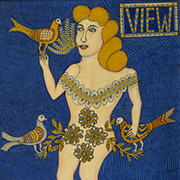

The Ins and Outs of Self-Taught Art
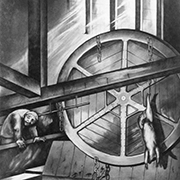
Reflections on a Shifting Field
January 10, 2012 - April 7, 2012
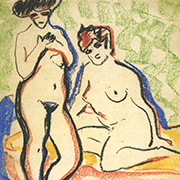
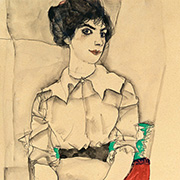
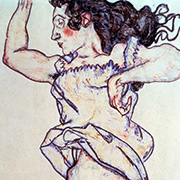
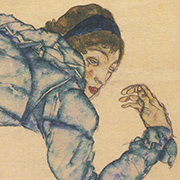
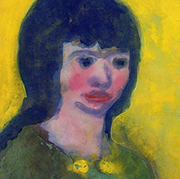
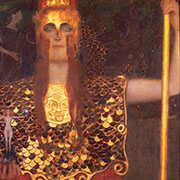
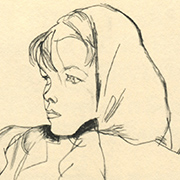
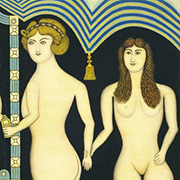
The Lady and the Tramp
Images of Women in Austrian and German Art
October 11, 2011 - December 30, 2011
Recent Acquisitions
(And Some Thoughts on the Current Art Market)
July 5, 2011 - September 30, 2011
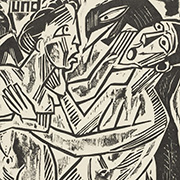
Decadence & Decay
Max Beckmann, Otto Dix, George Grosz
April 12, 2011 - June 24, 2011
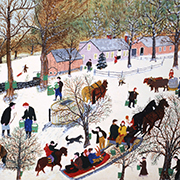
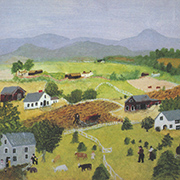
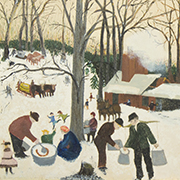
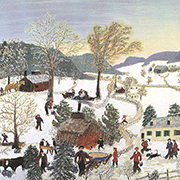
Self-Taught Painters in American 1800-1950
Revisiting the Tradition
January 11, 2011 - April 2, 2011
Marie-Louise Motesiczky
Paradise Lost & Found
October 12, 2010 - December 30, 2010
Recent Acquisitions
(And Some Thoughts on the Current Art Market)
July 13, 2010 - October 1, 2010
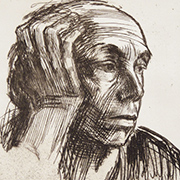
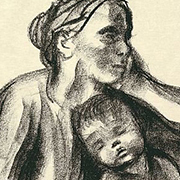
Käthe Kollwitz
A Portrait of the Artist
April 13, 2010 - June 25, 2010
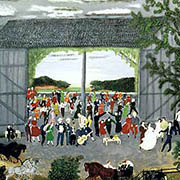
Seventy Years Grandma Moses
A Loan Exhibition Celebrating the 70th Anniversary of the Artist's "Discovery"
February 3, 2010 - April 3, 2010
Egon Schiele as Printmaker
A Loan Exhibition Celebrating the 70th Anniversary of the Galerie St. Etienne
November 3, 2009 - January 23, 2010
From Brücke To Bauhaus
The Meanings of Modernity in Germany, 1905-1933
March 31, 2009 - June 26, 2009
They Taught Themselves
American Self-Taught Painters Between the World Wars
January 9, 2009 - March 14, 2009
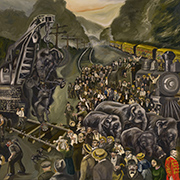
Elephants We Must Never Forget
New Paintings Drawings and Prints by Sue Coe
October 14, 2008 - December 20, 2008
Recent Acquisitions
(And Some Thoughts on the Current Art Market)
June 24, 2008 - September 26, 2008
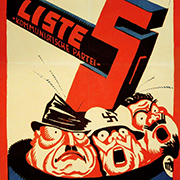
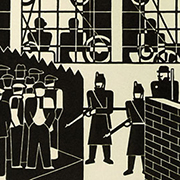
Hope or Menace?
Communism in Germany Between the World Wars
March 25, 2008 - June 13, 2008
Transforming Reality
Pattern and Design in Modern and Self-Taught Art
January 15, 2008 - March 8, 2008
Leonard Baskin
Proofs and Process
October 9, 2007 - January 5, 2008
Recent Acquisitions
(And Some Thoughts on the Current Art Market)
June 5, 2007 - September 28, 2007
Who Paid the Piper?
The Art of Patronage in Fin-de-Siècle Vienna
March 8, 2007 - May 26, 2007
Fairy Tale, Myth and Fantasy
Approaches to Spirituality in Art
December 7, 2006 - February 3, 2007
More Than Coffee was Served
Café Culture in Fin-de-Siècle Vienna and Weimar Germany
September 19, 2006 - November 25, 2006
Recent Acquisitions
(And Some Thoughts on the Current Art Market)
June 6, 2006 - September 8, 2006
Parallel Visions II
"Outsider" and "Insider" Art Today
April 5, 2006 - May 26, 2006
Ilija!
His First American Exhibtion
January 17, 2006 - March 18, 2006
Coming of Age
Egon Schiele and the Modernist Culture of Youth
November 15, 2005 - January 7, 2006
Sue Coe:
Sheep of Fools
September 20, 2005 - November 5, 2005
Recent Acquisitions
And Some Thoughts on the Current Art Market
June 7, 2005 - September 9, 2005
Every Picture Tells a Story
The Narrative Impulse in Modern and Contemporary Art
April 5, 2005 - May 27, 2005
65th Anniversary Exhibition, Part II
Self-Taught Artists
January 18, 2005 - March 26, 2005
65th Anniversary Exhibition, Part I
Austrian and German Expressionism
October 28, 2004 - January 8, 2005
Sue Coe: Bully: Master of the Global Merry-Go-Round and Recent Acquisitions
(And Some Thoughts on the Current Art Market)
June 8, 2004 - October 16, 2004
Animals & Us
The Animal in Contemporary Art
April 1, 2004 - May 22, 2004
Henry Darger
Art and Myth
January 15, 2004 - March 20, 2004
Body and Soul
Expressionism and the Human Figure
October 7, 2003 - January 3, 2004
Recent Acquisitions
(And Some Thoughts on the Current Art Market)
June 24, 2003 - September 12, 2003
In Search of the "Total Artwork"
Viennese Art and Design 1897–1932
April 8, 2003 - June 14, 2003
Russia's Self-Taught Artists
A New Perspective on the "Outsider"
January 14, 2003 - March 29, 2003
Käthe Kollwitz:
Master Printmaker
October 1, 2002 - January 4, 2003
Recent Acquisitions
(And Some Thoughts on the Current Art Market)
June 25, 2002 - September 20, 2002
Workers of the World
Modern Images of Labor
April 2, 2002 - June 15, 2002
Grandma Moses
Reflections of America
January 15, 2002 - March 16, 2002
Gustav Klimt/Egon Schiele/Oskar Kokoscha
From Art Nouveau to Expressionism
November 23, 2001 - January 5, 2002
The "Black-and-White" Show
Expressionist Graphics in Austria & Germany
September 20, 2001 - November 10, 2001
Recent Acquisitions (And Some Thoughts on the Current Art Market)
June 26, 2001 - September 7, 2001
Art with an Agenda
Politics, Persuasion, Illustration and Decoration
April 10, 2001 - June 16, 2001
"Our Beautiful and Tormented Austria!": Art Brut in the Land of Freud
January 18, 2001 - March 17, 2001
The Tragedy of War
November 16, 2000 - January 6, 2001
The Expressionist City
September 19, 2000 - November 4, 2000
Recent Acquisitions (And Some Thoughts on the Current Art Market)
June 20, 2000 - September 8, 2000
From Façade to Psyche
Turn-of-the-Century Portraiture in Austria & Germany
March 28, 2000 - June 10, 2000
European Self-Taught Art
Brut or Naive?
January 18, 2000 - March 11, 2000
Saved From Europe
In Commemoration of the 60th Anniversary of the Galerie St. Etienne
November 6, 1999 - January 8, 2000
The Modern Child
(Images of Children in Twentieth-Century Art)
September 14, 1999 - November 6, 1999
Recent Acquisitions
(And a Look at Sixty Years of Art Dealing)
June 15, 1999 - September 3, 1999
Sue Coe: The Pit
The Tragical Tale of the Rise and Fall of a Vivisector
March 30, 1999 - June 5, 1999
Henry Darger and His Realms
January 14, 1999 - March 13, 1999
Becoming Käthe Kollwitz
An Artist and Her Influences
November 17, 1998 - December 31, 1998
George Grosz - Elfriede Lohse-Wächtler
Art & Gender in Weimar Germany
September 23, 1998 - November 11, 1998
Recent Acquisitions
(And Some Thoughts About Looted Art)
June 9, 1998 - September 11, 1998
Taboo
Repression and Revolt in Modern Art
March 26, 1998 - May 30, 1998
Sacred & Profane
Michel Nedjar and Expressionist Primitivism
January 13, 1998 - March 14, 1998
Egon Schiele (1890-1918)
Master Draughtsman
November 18, 1997 - January 3, 1998
The New Objectivity
Realism in Weimar-Era Germany
September 16, 1997 - November 8, 1997
Recent Acquisitions
A Question of Quality
June 10, 1997 - September 5, 1997
Käthe Kollwitz - Lea Grundig
Two German Women & The Art of Protest
March 25, 1997 - May 31, 1997
That Way Madness Lies
Expressionism and the Art of Gugging
January 14, 1997 - March 15, 1997
The Viennese Line
Art and Design Circa 1900
November 18, 1996 - January 4, 1997
Emil Nolde - Christian Rohlfs
Two German Expressionist Masters
September 24, 1996 - November 9, 1996
Breaking All The Rules
Art in Transition
June 11, 1996 - September 6, 1996
Sue Coe's Ship of Fools
March 26, 1996 - May 24, 1996
New York Folk
Lawrence Lebduska, Abraham Levin, Isreal Litwak
January 16, 1996 - March 16, 1996
The Fractured Form
Expressionism and the Human Body
November 15, 1995 - January 6, 1996
From Left to Right
Social Realism in Germany and Russia, Circa 1919-1933
September 19, 1995 - November 4, 1995
Recent Acquisitions
June 20, 1995 - September 8, 1995
On the Brink 1900-2000
The Turning of Two Centuries
March 28, 1995 - May 26, 1995
Earl Cummingham - Grandma Moses
Visions of America
January 17, 1995 - March 18, 1995
Three Berlin Artists of the Weimar Era: Hannah Höch, Käthe Kollwitz, Jeanne Mam
September 13, 1994 - November 5, 1994
55th Anniversary Exhibition in Memory of Otto Kallir
June 7, 1994 - September 2, 1994
Drawn to Text: Comix Artists as Book Illustrators
May 15, 1994 - January 7, 1995
Sue Coe: We All Fall Down
March 29, 1994 - May 27, 1994
The Forgotten Folk Art of the 1940's
January 18, 1994 - March 19, 1994
Symbolism and the Austrian Avant Garde
Klimt, Schiele and their Contemporaries
November 16, 1993 - January 8, 1994
Art and Politics in Weimar Germany
September 14, 1993 - November 6, 1993
Recent Acquisitions
June 8, 1993 - September 3, 1993
The "Outsider" Question
Non-Academic Art from 1900 to the Present
March 23, 1993 - May 28, 1993
The Dance of Death
Images of Mortality in German Art
January 19, 1993 - March 13, 1993
Art Spiegelman
The Road to Maus
November 17, 1992 - January 9, 1993
Käthe Kollwitz
In Celebration of the 125th Anniversary of the Artist's Birth
September 15, 1992 - November 7, 1992
Naive Visions/Art Nouveau and Expressionism/Sue Coe: The Road to the White House
May 19, 1992 - September 4, 1992
Richard Gerstl/Oskar Kokoschka
March 17, 1992 - May 9, 1992
Scandal, Outrage, Censorship
Controversy in Modern Art
January 21, 1992 - March 7, 1992
Viennese Graphic Design
From Secession to Expressionism
November 19, 1991 - January 11, 1992
The Expressionist Figure
September 10, 1991 - November 9, 1991
Recent Acquisitions
Themes and Variations
May 14, 1991 - August 16, 1991
Sue Coe Retrospective
Political Document of a Decade
March 12, 1991 - May 5, 1991
Gustav Klimt, Egon Schiele, Oskar Kokoschka
Watercolors, drawings and prints
January 22, 1991 - March 2, 1991
Egon Schiele
November 13, 1990 - January 12, 1991
Lovis Corinth
A Retrospective
September 11, 1990 - November 3, 1990
Recent Acquisitions
June 12, 1990 - August 31, 1990
Max Klinger, Käthe Kollwitz, Alfred Kubin
A Study in Influences
March 27, 1990 - June 2, 1990
The Narrative in Art
January 23, 1990 - March 17, 1990
Grandma Moses
November 14, 1989 - January 13, 1990
Sue Coe
Porkopolis--Animals and Industry
September 19, 1989 - November 4, 1989
Galerie St. Etienne
A History in Documents and Pictures
June 20, 1989 - September 8, 1989
Gustav Klimt
Paintings and Drawings
April 11, 1989 - June 10, 1989
Fifty Years Galerie St. Etienne: An Overview
February 14, 1989 - April 1, 1989
Folk Artists at Work
Morris Hirshfield, John Kane and Grandma Moses
November 15, 1988 - January 14, 1989
Recent Acquisitions and Works From the Collection
June 14, 1988 - September 16, 1988
From Art Nouveau to Expressionism
April 12, 1988 - May 27, 1988
Three Pre-Expressionists
Lovis Corinth Käthe Kollwitz Paula Modersohn-Becker
January 26, 1988 - March 12, 1988
Käthe Kollwitz
The Power of the Print
November 17, 1987 - January 16, 1988
Recent Acquisitions and Works From the Collection
April 7, 1987 - October 31, 1987
Folk Art of This Century
February 10, 1987 - March 28, 1987
Oskar Kokoschka and His Time
November 25, 1986 - January 31, 1987
Viennese Design and Wiener Werkstätte
September 23, 1986 - November 8, 1986
Gustav Klimt/Egon Schiele/Oskar Kokoschka
Watercolors, Drawings and Prints
May 27, 1986 - September 13, 1986
Expressionist Painters
March 25, 1986 - May 10, 1986
Käthe Kollwitz/Paula Modersohn-Becker
January 28, 1986 - March 15, 1986
The Art of Giving
December 3, 1985 - January 18, 1986
Expressionists on Paper
October 8, 1985 - November 23, 1985
European and American Landscapes
June 4, 1985 - September 13, 1985
Expressionist Printmaking
Aspects of its Genesis and Development
April 1, 1985 - May 24, 1985
Expressionist Masters
January 18, 1985 - March 23, 1985
Arnold Schoenberg's Vienna
November 13, 1984 - January 5, 1985
Grandma Moses and Selected Folk Paintings
September 25, 1984 - November 3, 1984
American Folk Art
People, Places and Things
June 12, 1984 - September 14, 1984
John Kane
Modern America's First Folk Painter
April 17, 1984 - May 25, 1984
Eugène Mihaesco
The Illustrator as Artist
February 28, 1984 - April 7, 1984
Early Expressionist Masters
January 17, 1984 - February 18, 1984
Paula Modersohn-Becker
Germany's Pioneer Modernist
November 15, 1983 - January 7, 1984
Gustav Klimt
Drawings and Selected Paintings
September 20, 1983 - November 5, 1983
Early and Late
Drawings, Paintings & Prints from Academicism to Expressionism
June 1, 1983 - September 2, 1983
Alfred Kubin
Visions From The Other Side
March 22, 1983 - May 7, 1983
20th Century Folk
The First Generation
January 18, 1983 - March 12, 1983
Grandma Moses
The Artist Behind the Myth
November 15, 1982 - January 8, 1983
Kollwitz
The Artist as Printmaker
September 28, 1982 - November 6, 1982
Aspects of Modernism
June 1, 1982 - September 3, 1982
The Human Perspective
Recent Acquisitions
March 16, 1982 - May 15, 1982
19th and 20th Century European and American Folk Art
January 19, 1982 - March 6, 1982
The Folk Art Tradition
Naïve Painting in Europe and the United States
November 17, 1981 - January 9, 1982
Austria's Expressionism
April 21, 1981 - May 30, 1981
Eugène Mihaesco
His First American One-Man Show
March 3, 1981 - April 11, 1981
Gustav Klimt, Egon Schiele
November 12, 1980 - December 27, 1980
Summer Exhibition
June 17, 1980 - October 31, 1980
Kollwitz: The Drawing and The Print
May 1, 1980 - June 10, 1980
40th Anniversary Exhibition
November 13, 1979 - December 28, 1979
American Primitive Art
November 22, 1977
Käthe Kollwitz
December 1, 1976
Neue Galerie-Galerie St. Etienne
A Documentary Exhibition
May 1, 1976
Martin Pajeck
January 27, 1976
Georges Rouault and Frans Masereel
April 29, 1972
Branko Paradis
December 1, 1971
Käthe Kollwitz
February 3, 1971
Egon Schiele
The Graphic Work
October 19, 1970
Gustav Klimt
March 20, 1970
Friedrich Hundertwasser
May 6, 1969
Austrian Art of the 20th Century
March 21, 1969
Egon Schiele
Memorial Exhibition
October 31, 1968
Yugoslav Primitive Art
April 30, 1968
Alfred Kubin
January 30, 1968
Käthe Kollwitz
In the Cause of Humanity
October 23, 1967
Abraham Levin
September 26, 1967
Karl Stark
April 5, 1967
Gustav Klimt
February 4, 1967
The Wiener Werkstätte
November 16, 1966
Oskar Laske
October 25, 1965
Käthe Kollwitz
May 1, 1965
Egon Schiele
Watercolors and Drawings from American Collections
March 1, 1965
25th Anniversary Exhibition
Part II
November 21, 1964
25th Anniversary Exhibition
Part I
October 17, 1964
Mary Urban
June 9, 1964
Werner Berg, Jane Muus and Mura Dehn
May 5, 1964
Eugen Spiro
April 4, 1964
B. F. Dolbin
Drawings of an Epoch
March 3, 1964
Austrian Expressionists
January 6, 1964
Joseph Rifesser
December 3, 1963
Panorama of Yugoslav Primitive Art
October 21, 1963
Joe Henry
Watercolors of Vermont
May 1, 1963
French Impressionists
March 8, 1963
Grandma Moses
Memorial Exhibition
November 26, 1962
Group Show
October 15, 1962
Ernst Barlach
March 23, 1962
Martin Pajeck
February 24, 1962
Paintings by Expressionists
January 27, 1962
Käthe Kollwitz
November 11, 1961
Grandma Moses
September 7, 1961
My Friends
Fourth Biennial of Pictures by American School Children
May 27, 1961
Raimonds Staprans
April 17, 1961
Gustav Klimt, Egon Schiele, Oskar Kokoschka and Alfred Kubin
March 14, 1961
Marvin Meisels
January 23, 1961
Egon Schiele
November 15, 1960
My Life's History
Paintings by Grandma Moses
September 12, 1960
Watercolors and Drawings by Austrian Artists from the Dial Collection
May 2, 1960
Martin Pajeck
February 29, 1960
Eugen Spiro
February 6, 1960
Käthe Kollwitz
December 14, 1959
Josef Scharl
Last Paintings and Drawings
November 11, 1959
European and American Expressionists
September 22, 1959
Our Town
One Hundred Paintings by American School Children
May 23, 1959
Marvin Meisels and Martin Pajeck
May 1, 1959
Gustav Klimt
April 1, 1959
Käthe Kollwitz
January 12, 1959
Oskar Kokoschka
October 28, 1958
Village Life in Guatemala
Paintings by Andres Curuchich
June 3, 1958
Two Unknown American Expressionists
Paintings by Marvin Meisels and Martin Pajeck
April 28, 1958
Paula Modersohn-Becker
March 15, 1958
The Great Tradition in American Painting
American Primitive Art
January 20, 1958
Jules Lefranc and Dominique Lagru
Two French Primitives
November 18, 1957
Margret Bilger
October 22, 1957
The Four Seasons
One Hundred Paintings by American School Children
June 11, 1957
Grandma Moses
May 6, 1957
Alfred Kubin
April 3, 1957
Franz Lerch
March 2, 1957
Egon Schiele
January 21, 1957
Josef Scharl
Memorial Exhibition
November 17, 1956
Irma Rothstein
May 19, 1956
Käthe Kollwitz
April 16, 1956
A Tribute to Grandma Moses
November 28, 1955
As I See Myself
One Hundred Paintings by American School Children
May 20, 1955
Juan De'Prey
April 19, 1955
Erich Heckel
March 29, 1955
Freddy Homburger
March 2, 1955
Masters of the 19th Century
January 18, 1955
Oskar Kokoschka
November 29, 1954
Isabel Case Borgatta and Josef Scharl
October 12, 1954
James N. Rosenberg and Eugen Spiro
April 30, 1954
Per Krogh
April 2, 1954
Cuno Amiet
February 16, 1954
Eniar Jolin
January 14, 1954
Irma Rothstein
December 8, 1953
Josef Scharl
November 11, 1953
Grandma Moses
October 21, 1953 - October 24, 1953
Wilhelm Kaufmann
September 30, 1953
Lovis Corinth, Oskar Kokoschka and Egon Schiele
May 27, 1953
A Grandma Moses Album
Recent Paintings, 1950-1953
April 15, 1953
Streeter Blair
American Primitive
February 26, 1953
Paintings on Glass
Austrian Religious Folk Art of the 17th to 19th Centuries
December 4, 1952
Hasan Kaptan
Paintings of a Ten-Year-Old Turkish Painter
October 29, 1952
Margret Bilger
May 10, 1952
American Natural Painters
March 31, 1952
Ten Years of New York Concert Impressions by Eugen Spiro; Four New Paintings by
January 26, 1952
I-Fa-Wei
Watercolors of New York by a Chinese Artist
December 1, 1951
Käthe Kollwitz
October 25, 1951
Drawings and Watercolors by Austrian Children
May 21, 1951
Grandma Moses
Twenty-Five Masterpieces of Primitive Art
March 17, 1951
Roswitha Bitterlich
January 18, 1951
Oskar Laske
Watercolors of Vienna and the Salzkammergut
October 14, 1950
Tenth Anniversary Exhibition
Part II
May 11, 1950
Austrian Art of the 19th Century
From Wadlmüller to Klimt
April 1, 1950
Chiao Ssu-Tu
February 18, 1950
Anton Faistauer
January 1, 1950
Tenth Anniversary Exhibition
Part I
November 30, 1949
Autograph Exhibition
October 26, 1949
Gladys Wertheim Bachrach
May 24, 1949
Oskar Kokoschka
March 30, 1949
Eugen Spiro
February 19, 1949
Frans Masereel
January 13, 1949
Ten Years Grandma Moses
November 22, 1948
Käthe Kollwitz
Masterworks
October 18, 1948
American Primitives
June 3, 1948
Egon Schiele
Memorial Exhibition
April 5, 1948
Miriam Richman
February 7, 1948
Vally Wieselthier
Memorial Exhibition
January 10, 1948
Christmas Exhibition
December 4, 1947
Fritz von Unruh
November 10, 1947
Käthe Kollwitz
October 4, 1947
Grandma Moses
May 17, 1947
Lovis Corinth
April 16, 1947
Hugo Steiner-Prag
March 15, 1947
Mark Baum
January 11, 1947
Eugen Spiro
November 25, 1946
Henri de Toulouse-Lautrec
May 17, 1946
Ladis W. Sabo
Paintings by a New Primitive Artist
April 8, 1946
Georges Rouault
The Graphic Work
February 26, 1946
Käthe Kollwitz
Memorial Exhibition
November 21, 1945
Fred E. Robertson
Paintings by an American Primitive
June 13, 1945
Max Liebermann
The Graphic Work
April 18, 1945
Vienna through Four Centuries
March 1, 1945
Eugen Spiro
January 20, 1945
Grandma Moses
New Paintings
December 5, 1944
Käthe Kollwitz
Part II
October 26, 1944
A Century of French Graphic Art
From Géricault to Picasso
September 28, 1944
Max Liebermann
Memorial Exhibition
June 9, 1944
Juan De'Prey
Paintings by a Self-Taught Artist from Puerto Rico
May 6, 1944
Abraham Levin
April 15, 1944
Lesser Ury
Memorial Exhibition
March 21, 1944
Grandma Moses
Paintings by the Senior of the American Primitives
February 9, 1944
Betty Lane
January 11, 1944
WaIt Disney Cavalcade
December 9, 1943
Käthe Kollwitz
Part I
November 3, 1943
Will Barnet
September 29, 1943
Lovis Corinth
May 26, 1943
Josephine Joy
Paintings by an American Primitive
May 3, 1943
Oskar Kokoschka
Aspects of His Art
March 31, 1943
Eugen Spiro
February 13, 1943
Seymour Lipton
January 18, 1943
Illuminated Gothic Woodcuts
Printed and Painted, 1477-1493
December 5, 1942
Abraham Levin
November 4, 1942
Walt Disney Originals
September 23, 1942
Documents which Relate History
Documents of Historical Importance and Landmarks of Human Development
June 10, 1942
Honoré Daumier
April 29, 1942
Bertha Trabich
Memorial Exhibition of a Russian-American Primitive
March 25, 1942
Alfred Kubin
Master of Drawing
December 4, 1941
Egon Schiele
November 7, 1941
Betty Lane
June 3, 1941
Flowers from Old Vienna
18th and Early 19th Century Flower Painting
May 7, 1941
Weavings by Navaho and Hopi Indians and Photos of Indians by Helen M. Post
January 29, 1941
Georg Merkel
November 7, 1940
What a Farm Wife Painted
Works by Mrs. Anna Mary Moses
October 9, 1940
Saved from Europe
Masterpieces of European Art
July 1, 1940
American Abstract Art
May 22, 1940
Franz Lerch
May 1, 1940
Wilhelm Thöny
April 3, 1940
French Masters of the 19th and 20th Centuries
February 29, 1940
H. W. Hannau
Metropolis, Photographic Studies of New York
February 2, 1940
Oskar Kokoschka
January 9, 1940
Austrian Masters
November 13, 1939
EUROPEAN SELF-TAUGHT ART
Brut or Naive?
Boix-Vives, Anselme
Corbaz, Aloïse
Crepin, Joseph
Darger, Henry
Ghizzardi, Pietro
Gill, Madge
Gugging, The Artists of
Lesage, Augustin
Nedjar, Michel
Nikifor
Schröder-Sonnenstern, F.
Sekulic, Sava
Wallis, Alfred
Wey, Alois
Wilson, Scottie
Wittlich, Josef
Wölfli, Adolf
Zinelli, Carlo
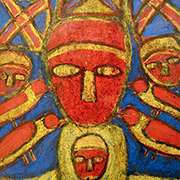
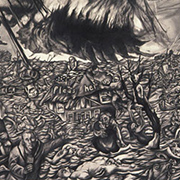
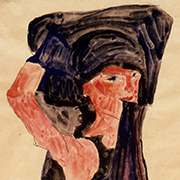
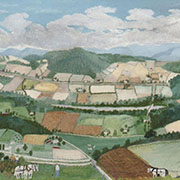
Self-taught art has been an important adjunct to the contemporary art scene for roughly one hundred years. Yet, though the field (as distinct from the art itself) originated in Europe, its American component has frequently been viewed in isolation. The term “Outsider art” was initially intended to be the English-language equivalent of European Art Brut, but American Outsider art--with its quirky mix of folk objects, environments, amateur paintings, works by the mentally ill, ethnic expressions and religious proselytizing--at times differs markedly from Art Brut. Indeed, surprisingly few American collectors of the native product have much awareness of the genre’s European antecedents. While European self-taught art of various kinds has been exhibited and collected sporadically in the United States since the 1930s, the exhibition "Private Worlds," held at the Katonah Museum of Art last winter, may be considered something of a watershed. Exemplary both in its scholarly rigor and aesthetic standards, "Private Worlds" was the first systematic attempt to introduce the American public to Art Brut. The present exhibition builds upon "Private Worlds," but is somewhat looser and broader in its orientation. While many of the artists in our show are classical exemplars of Art Brut, others would be classified as Naives in Europe. By exploring the differences and similarities between these artists, we hope to shed light upon the manner in which the field of self-taught art, as a whole, is constructed.
Whereas American Outsider art often shades indistinguishably into the broader umbrella category of self-taught art, Europeans maintain a rigid boundary between what they call Naive art and Art Brut. This boundary has been established and reinforced over the course of many years, but European self-taught art was not originally so strictly demarcated. The early modern artists, such as Picasso and Kandinsky, who were looking for an alternative to the academic idiom, promoted a whole host of nonacademic material. With no concern for the works' inherent differences, these artists indiscriminately collected tribal art, peasant crafts, and pieces by children, mental patients and untutored "normally" functioning adults. All of these works were held to be freer, fresher and more authentic than the productions of conventionally trained artists. Created outside the commercial marketplace, these objects were also deemed to represent an expressive purity unattainable to artists laboring within the capitalist establishment. In the work of self-taught artists, a somewhat jaded avant-garde sought nothing less than a return to an artistic Eden.
The field of self-taught art was constructed in early twentieth-century Europe as an alternative to a civilization perceived to be in irreversible decline. However, unlike the other kindred modernist movements, such as Fauvism, Cubism and Expressionism, that arose around the same time, self-taught art allowed for practically no input from the creators themselves. In fact, the creators were elected by virtue of their distance from the self-conscious art world, which projected onto those creators ideals that often could not be met. The myth of absolute originality was shaken every time it was revealed that a self-taught artist had been influenced by an outside source. The myth of purity crumbled almost as soon as an artist was discovered and taken into the evil commercial marketplace. Convinced that the hypothetical tree falling in an empty forest does make a noise, the art world set out on an impossible mission to record the sound.
Almost everyone knows that the first self-taught artist to be anointed by the art world was the French toll-collector Henri Rousseau. Discovered in the early years of the twentieth century, he was the original "Naive," and much was made of his supposedly gullible, childlike character. (Rousseau's "gullibility" actually consisted primarily of being foolish enough to take himself seriously as an artist.) Other discoveries in the Naive mode quickly followed after Rousseau's, particularly in the period between the two world wars, when modernism began to develop wider international recognition. Both in Europe and the United States, these first-generation Naives were relatively conventional picture-makers. Denied formal training due chiefly to economic circumstances (or, particularly in America, geographical remoteness), these painters nonetheless pursued goals shaped by the traditional academic genres of landscape, portraiture and still life. Their originality lay in the ad-hoc methods the artists invented to achieve these goals, drawing on whatever visual sources they could muster and combining those sources with direct observation and trial-and-error experience. If Art Brut and Outsider artists tend to look inward (depicting the "private worlds" referenced in the Katonah exhibition title), the Naives looked outward, reflecting more public, generally accessible views of their surroundings.
Alongside the Naive movement, another related but distinctly different phenomenon was quietly developing. In 1921, Walter Morgenthaler published his monograph on Adolf Wölfli, A Mentally Ill Person as an Artist. And in 1922, after a marathon three-year collecting spree, Hans Prinzhorn issued his landmark survey, The Artistry of the Mentally Ill. Both authors were psychiatrists who had initially encountered their subjects in clinical settings, but they broke new ground in recognizing that the work of the mentally ill could also be appreciated as art. Unlike Naive art, which in the interwar period was finding its way into galleries, museums and private collections, partly aided by the artists themselves, the art of the mentally ill remained largely the province of a few specialized connoisseurs. Such art was too difficult to attract a wide public at this time, and hospitalized artists were for the most part unavailable or unable to engage in self-promotion. However, the Morgenthaler and Prinzhorn books did reach the right people. A number of German Expressionists made pilgrimages to the Prinzhorn collection at the University of Heidelberg's Psychiatric Clinic, and Prinzhorn's book became the "Bible" of the French Surrealists.
Undoubtedly, Freud's reification of the unconscious and his seminal work on dreams contributed substantially to the surge of interest in the art of the mentally ill that developed after World War I. In the ensuing decades, this interest continued to percolate through the European health-care and artistic communities, which worked in tandem to preserve and celebrate psychiatric art. Indeed, the persistent intertwining of these two intellectual communities is one of the chief characteristics that distinguishes the development of European Art Brut from American Outsider art. Following Prinzhorn's lead, the Royal Bethlem Hospital in Kent, England, the Sainte-Anne Hospital in Paris and, more recently, the Lower Austrian Psychiatric Hospital in Gugging and the Hospital Art Center--La Tinaia in Florence, Italy, all developed various kinds of programs revolving around artist-patients. Among the mainstream artists who drew inspiration from these psychiatric programs during the postwar period were Arnulf Rainer in Austria and, above all, Jean Dubuffet in France.
By the late 1940s, when Dubuffet began his efforts in earnest, the prewar European avant-garde was establishing itself as a new "academy," and the Naives whom these artists had once fostered, with their comforting landscapes and idiosyncratic but endearing portraits, were welcomed warmly by a public chafing against the ascendancy of abstraction. It grew increasingly difficult to distinguish real from faux Naives, as the style became a staple of greeting cards, children's book illustrations and calendars. Whereas once economic and/or geographic circumstances had been sufficient to segregate self-taught artists from received culture, in the age of mass communications, a further degree of remove seemed to be required. Dubuffet started by collecting the art of mental patients, but like other members of the avant-garde before him, what he was really looking for was an art untainted by the influence of bourgeois civilization: an art that was (as he put it) Brut, or raw.
Art Brut was literally Dubuffet's invention, and in coining the term, he also created the field. Almost from the outset, however, the term proved impossible to define. Psychiatric art was at least objectively identifiable, even if it raised the ugly specter of classifying artists according to their degree of emotional impairment. But once Dubuffet acknowledged that Art Brut could as readily exist outside the hospital walls as within, he became reliant on far more subjective criteria. How, finally, could one judge an artist's distance from received culture? Trained artists, after all, do strive to break new ground, and cultural influences penetrate even mental institutions. Admitting that no artist exists either fully beyond or within received culture, Dubuffet instead proposed the idea of a continuum, along which artists might be situated in accordance with their degree of proximity to or distance from the conventional art scene. Nevertheless, particularly as one moves away from the extreme ends of the spectrum, certifying an artist as Brut entails a very personal assessment of the artist's motives and mental state. At a certain level, the determination of who is or is not Brut rests as much in the eye (or mind) of the beholder as it does in the art itself.
If there is such a thing as a canon of accepted Art Brut artists, it would have to be those in Dubuffet's collection, today housed at the Musée de l'Art Brut in Lausanne, Switzerland. Work which Dubuffet did not consider quite Brut enough, he dubbed "Neuve Invention" (New Invention) and housed in a separate annex. In 1972, the British art-historian Roger Cardinal introduced the English-speaking public at large to Art Brut through his book Outsider Art, and in 1979, he and the late Victor Musgrave organized a major exhibition of "Outsiders" for the Arts Council of Great Britain. Today, Monika Kinley continues Musgrave's work, and the collection she and he formed is on extended loan to the Irish Museum of Modern Art in Dublin. Meanwhile, in France, Madeleine Lommel and the self-taught artist Michel Nedjar established the Collection de l'Aracine, which is in the process of being donated to the Villeneuve d'Ascq Museum. Among the other public European collections of self-taught art that have proliferated in the last years are the Haus Cajeth in Heidelberg, the Museum im Lagerhaus in St. Gallen, Switzerland, and the Stadshof Museum for Naive and Outsider Art in the Dutch town of Zwolle. In the small German village of Bönnigheim, Charlotte Zander calls her collection a Museum of Naive Art, but in fact her holdings include a number of Art Brut pieces.
Each of these collections of European self-taught art situates the parameters of the field somewhat differently, and even partisans who stick exclusively to Art Brut are capable of maddening theoretical hair-splitting when it comes to selection criteria. The Naive and Art Brut camps for the most part have little to do with one another, but once one accepts Dubuffet's idea of a cultural continuum, it can become difficult to draw the line between the Naive and the Brut. Dubuffet, after all, was essentially looking for the same kind of untainted creativity as the original champions of Naive art. And while it is true that the first generation Naives, who created easel paintings in the manner of Rousseau, have an entirely different "look" than the Brut artists, the differences may be more ones of style than substance. Today, the Naive category contains a number of artists who do not do conventional easel paintings.
Of the artists in the present exhibition, those who were or are institutionalized, such as Corbaz, Wölfli, Zinelli and the Gugging artists (Fischer, Garber, Kernbeis, Korec, Reisenbauer, Tschirtner and Walla), may be positioned near the most distant end of Dubuffet's cultural spectrum. The others, however, are less easily placed. Anselme Boix-Vives is generally classified as a Naive because his subjects loosely conform to such traditional types as portraiture and still-life, while Scottie Wilson is considered Brut because he depicted mythical characters he called "greedies" and "evils." Yet it is hard to argue that Boix-Vives, a semi-literate produce vendor who spent decades concocting elaborate plans for world peace, was any closer to received culture than Wilson, who showed in prestigious London galleries, counted some of the leading Surrealists as patrons and saw his work reproduced on dinnerware. Some of the artists in the present exhibition (for example, Fejes, Nikifor, Wallis and Wey), created landscapes that are more like inner mental maps than they are records of recognizable places. Others (Crépin, Gill, Lesage, Schröder-Sonnenstern and Zemánková) were propelled by arcane visions or, like Nedjar, have sought to salvage archetypal images from history and personal memory. Is it really proper to classify the landscapists as Naives and the visionaries as Brut, simply because reality is more dominant in the former group and fantasy in the latter? And if so, what of the many trained artists who have pursued fantastical or spiritual subject matter?
There are no easy answers to these questions, just as there is, today, no satisfactory definition of Art Brut or Naive art. Perhaps the most that can ever be said is that self-taught artists, as a broad group, are those who fail to partake of the ongoing dialogue amongst artists, critics, curators and collectors that constitutes the mainstream art world; even if discovered and brought into the art world, self-taught artists will never participate fully in that dialogue, because they are by background and nature incapable of doing so. As a result, the intentions, methods and desires of self-taught artists are often given short shrift even by their most impassioned advocates, and self-taught art is instead interpreted in accordance with the mainstream's agenda. For example, those who oppose bourgeois capitalism are outraged at the idea that anyone (sometimes including the artists) should make money from self-taught art. Many avant-garde artists have used self-taught art to validate their own achievements: to prove that they, unlike their less enlightened colleagues, were not corrupted by the evils of modern civilization. In America, Outsider art has come to represent such quintessential national virtues as rugged individualism, grassroots vitality, ethnic diversity and boot-strap self-reliance. Our beliefs about self-taught art often tell us more about ourselves than they do about the artists. Whether Naive or Brut, self-taught art has, throughout the twentieth century, been a repository for our fondest dreams: when we have despaired of civilization, of justice, of the indomitability of the human spirit, self-taught artists have been there to redeem us. In an era when intellectuals tended to cultivate negativity, optimism went underground and emerged in the life-affirming creativity of the unschooled.
We would like to convey our heartfelt gratitude to Sam and Betsey Farber and Anthony Petullo for their generous loans, and to thank as well the various colleagues who contributed to this exhibition.