
The Ins and Outs of Self-Taught Art
Reflections on a Shifting Field
January 10, 2012 - April 7, 2012
The Lady and the Tramp
Images of Women in Austrian and German Art
October 11, 2011 - December 30, 2011
Recent Acquisitions
(And Some Thoughts on the Current Art Market)
July 5, 2011 - September 30, 2011
Decadence & Decay
Max Beckmann, Otto Dix, George Grosz
April 12, 2011 - June 24, 2011
Self-Taught Painters in American 1800-1950
Revisiting the Tradition
January 11, 2011 - April 2, 2011
Marie-Louise Motesiczky
Paradise Lost & Found
October 12, 2010 - December 30, 2010
Recent Acquisitions
(And Some Thoughts on the Current Art Market)
July 13, 2010 - October 1, 2010
Käthe Kollwitz
A Portrait of the Artist
April 13, 2010 - June 25, 2010
Seventy Years Grandma Moses
A Loan Exhibition Celebrating the 70th Anniversary of the Artist's "Discovery"
February 3, 2010 - April 3, 2010
Egon Schiele as Printmaker
A Loan Exhibition Celebrating the 70th Anniversary of the Galerie St. Etienne
November 3, 2009 - January 23, 2010
From Brücke To Bauhaus
The Meanings of Modernity in Germany, 1905-1933
March 31, 2009 - June 26, 2009
They Taught Themselves
American Self-Taught Painters Between the World Wars
January 9, 2009 - March 14, 2009
Elephants We Must Never Forget
New Paintings Drawings and Prints by Sue Coe
October 14, 2008 - December 20, 2008
Recent Acquisitions
(And Some Thoughts on the Current Art Market)
June 24, 2008 - September 26, 2008
Hope or Menace?
Communism in Germany Between the World Wars
March 25, 2008 - June 13, 2008
Transforming Reality
Pattern and Design in Modern and Self-Taught Art
January 15, 2008 - March 8, 2008
Leonard Baskin
Proofs and Process
October 9, 2007 - January 5, 2008
Recent Acquisitions
(And Some Thoughts on the Current Art Market)
June 5, 2007 - September 28, 2007
Who Paid the Piper?
The Art of Patronage in Fin-de-Siècle Vienna
March 8, 2007 - May 26, 2007
Fairy Tale, Myth and Fantasy
Approaches to Spirituality in Art
December 7, 2006 - February 3, 2007
More Than Coffee was Served
Café Culture in Fin-de-Siècle Vienna and Weimar Germany
September 19, 2006 - November 25, 2006
Recent Acquisitions
(And Some Thoughts on the Current Art Market)
June 6, 2006 - September 8, 2006
Parallel Visions II
"Outsider" and "Insider" Art Today
April 5, 2006 - May 26, 2006
Ilija!
His First American Exhibtion
January 17, 2006 - March 18, 2006
Coming of Age
Egon Schiele and the Modernist Culture of Youth
November 15, 2005 - January 7, 2006
Sue Coe:
Sheep of Fools
September 20, 2005 - November 5, 2005
Recent Acquisitions
And Some Thoughts on the Current Art Market
June 7, 2005 - September 9, 2005
Every Picture Tells a Story
The Narrative Impulse in Modern and Contemporary Art
April 5, 2005 - May 27, 2005
65th Anniversary Exhibition, Part II
Self-Taught Artists
January 18, 2005 - March 26, 2005
65th Anniversary Exhibition, Part I
Austrian and German Expressionism
October 28, 2004 - January 8, 2005
Sue Coe: Bully: Master of the Global Merry-Go-Round and Recent Acquisitions
(And Some Thoughts on the Current Art Market)
June 8, 2004 - October 16, 2004
Animals & Us
The Animal in Contemporary Art
April 1, 2004 - May 22, 2004
Henry Darger
Art and Myth
January 15, 2004 - March 20, 2004
Body and Soul
Expressionism and the Human Figure
October 7, 2003 - January 3, 2004
Recent Acquisitions
(And Some Thoughts on the Current Art Market)
June 24, 2003 - September 12, 2003
In Search of the "Total Artwork"
Viennese Art and Design 1897–1932
April 8, 2003 - June 14, 2003
Russia's Self-Taught Artists
A New Perspective on the "Outsider"
January 14, 2003 - March 29, 2003
Käthe Kollwitz:
Master Printmaker
October 1, 2002 - January 4, 2003
Recent Acquisitions
(And Some Thoughts on the Current Art Market)
June 25, 2002 - September 20, 2002
Workers of the World
Modern Images of Labor
April 2, 2002 - June 15, 2002
Grandma Moses
Reflections of America
January 15, 2002 - March 16, 2002
Gustav Klimt/Egon Schiele/Oskar Kokoscha
From Art Nouveau to Expressionism
November 23, 2001 - January 5, 2002
The "Black-and-White" Show
Expressionist Graphics in Austria & Germany
September 20, 2001 - November 10, 2001
Recent Acquisitions (And Some Thoughts on the Current Art Market)
June 26, 2001 - September 7, 2001
Art with an Agenda
Politics, Persuasion, Illustration and Decoration
April 10, 2001 - June 16, 2001
"Our Beautiful and Tormented Austria!": Art Brut in the Land of Freud
January 18, 2001 - March 17, 2001
The Tragedy of War
November 16, 2000 - January 6, 2001
The Expressionist City
September 19, 2000 - November 4, 2000
Recent Acquisitions (And Some Thoughts on the Current Art Market)
June 20, 2000 - September 8, 2000
From Façade to Psyche
Turn-of-the-Century Portraiture in Austria & Germany
March 28, 2000 - June 10, 2000
European Self-Taught Art
Brut or Naive?
January 18, 2000 - March 11, 2000
Saved From Europe
In Commemoration of the 60th Anniversary of the Galerie St. Etienne
November 6, 1999 - January 8, 2000
The Modern Child
(Images of Children in Twentieth-Century Art)
September 14, 1999 - November 6, 1999
Recent Acquisitions
(And a Look at Sixty Years of Art Dealing)
June 15, 1999 - September 3, 1999
Sue Coe: The Pit
The Tragical Tale of the Rise and Fall of a Vivisector
March 30, 1999 - June 5, 1999
Henry Darger and His Realms
January 14, 1999 - March 13, 1999
Becoming Käthe Kollwitz
An Artist and Her Influences
November 17, 1998 - December 31, 1998
George Grosz - Elfriede Lohse-Wächtler
Art & Gender in Weimar Germany
September 23, 1998 - November 11, 1998
Recent Acquisitions
(And Some Thoughts About Looted Art)
June 9, 1998 - September 11, 1998
Taboo
Repression and Revolt in Modern Art
March 26, 1998 - May 30, 1998
Sacred & Profane
Michel Nedjar and Expressionist Primitivism
January 13, 1998 - March 14, 1998
Egon Schiele (1890-1918)
Master Draughtsman
November 18, 1997 - January 3, 1998
The New Objectivity
Realism in Weimar-Era Germany
September 16, 1997 - November 8, 1997
Recent Acquisitions
A Question of Quality
June 10, 1997 - September 5, 1997
Käthe Kollwitz - Lea Grundig
Two German Women & The Art of Protest
March 25, 1997 - May 31, 1997
That Way Madness Lies
Expressionism and the Art of Gugging
January 14, 1997 - March 15, 1997
The Viennese Line
Art and Design Circa 1900
November 18, 1996 - January 4, 1997
Emil Nolde - Christian Rohlfs
Two German Expressionist Masters
September 24, 1996 - November 9, 1996
Breaking All The Rules
Art in Transition
June 11, 1996 - September 6, 1996
Sue Coe's Ship of Fools
March 26, 1996 - May 24, 1996
New York Folk
Lawrence Lebduska, Abraham Levin, Isreal Litwak
January 16, 1996 - March 16, 1996
The Fractured Form
Expressionism and the Human Body
November 15, 1995 - January 6, 1996
From Left to Right
Social Realism in Germany and Russia, Circa 1919-1933
September 19, 1995 - November 4, 1995
Recent Acquisitions
June 20, 1995 - September 8, 1995
On the Brink 1900-2000
The Turning of Two Centuries
March 28, 1995 - May 26, 1995
Earl Cummingham - Grandma Moses
Visions of America
January 17, 1995 - March 18, 1995
Three Berlin Artists of the Weimar Era: Hannah Höch, Käthe Kollwitz, Jeanne Mam
September 13, 1994 - November 5, 1994
55th Anniversary Exhibition in Memory of Otto Kallir
June 7, 1994 - September 2, 1994
Drawn to Text: Comix Artists as Book Illustrators
May 15, 1994 - January 7, 1995
Sue Coe: We All Fall Down
March 29, 1994 - May 27, 1994
The Forgotten Folk Art of the 1940's
January 18, 1994 - March 19, 1994
Symbolism and the Austrian Avant Garde
Klimt, Schiele and their Contemporaries
November 16, 1993 - January 8, 1994
Art and Politics in Weimar Germany
September 14, 1993 - November 6, 1993
Recent Acquisitions
June 8, 1993 - September 3, 1993
The "Outsider" Question
Non-Academic Art from 1900 to the Present
March 23, 1993 - May 28, 1993
The Dance of Death
Images of Mortality in German Art
January 19, 1993 - March 13, 1993
Art Spiegelman
The Road to Maus
November 17, 1992 - January 9, 1993
Käthe Kollwitz
In Celebration of the 125th Anniversary of the Artist's Birth
September 15, 1992 - November 7, 1992
Naive Visions/Art Nouveau and Expressionism/Sue Coe: The Road to the White House
May 19, 1992 - September 4, 1992
Richard Gerstl/Oskar Kokoschka
March 17, 1992 - May 9, 1992
Scandal, Outrage, Censorship
Controversy in Modern Art
January 21, 1992 - March 7, 1992
Viennese Graphic Design
From Secession to Expressionism
November 19, 1991 - January 11, 1992
The Expressionist Figure
September 10, 1991 - November 9, 1991
Recent Acquisitions
Themes and Variations
May 14, 1991 - August 16, 1991
Sue Coe Retrospective
Political Document of a Decade
March 12, 1991 - May 5, 1991
Gustav Klimt, Egon Schiele, Oskar Kokoschka
Watercolors, drawings and prints
January 22, 1991 - March 2, 1991
Egon Schiele
November 13, 1990 - January 12, 1991
Lovis Corinth
A Retrospective
September 11, 1990 - November 3, 1990
Recent Acquisitions
June 12, 1990 - August 31, 1990
Max Klinger, Käthe Kollwitz, Alfred Kubin
A Study in Influences
March 27, 1990 - June 2, 1990
The Narrative in Art
January 23, 1990 - March 17, 1990
Grandma Moses
November 14, 1989 - January 13, 1990
Sue Coe
Porkopolis--Animals and Industry
September 19, 1989 - November 4, 1989
Galerie St. Etienne
A History in Documents and Pictures
June 20, 1989 - September 8, 1989
Gustav Klimt
Paintings and Drawings
April 11, 1989 - June 10, 1989
Fifty Years Galerie St. Etienne: An Overview
February 14, 1989 - April 1, 1989
Folk Artists at Work
Morris Hirshfield, John Kane and Grandma Moses
November 15, 1988 - January 14, 1989
Recent Acquisitions and Works From the Collection
June 14, 1988 - September 16, 1988
From Art Nouveau to Expressionism
April 12, 1988 - May 27, 1988
Three Pre-Expressionists
Lovis Corinth Käthe Kollwitz Paula Modersohn-Becker
January 26, 1988 - March 12, 1988
Käthe Kollwitz
The Power of the Print
November 17, 1987 - January 16, 1988
Recent Acquisitions and Works From the Collection
April 7, 1987 - October 31, 1987
Folk Art of This Century
February 10, 1987 - March 28, 1987
Oskar Kokoschka and His Time
November 25, 1986 - January 31, 1987
Viennese Design and Wiener Werkstätte
September 23, 1986 - November 8, 1986
Gustav Klimt/Egon Schiele/Oskar Kokoschka
Watercolors, Drawings and Prints
May 27, 1986 - September 13, 1986
Expressionist Painters
March 25, 1986 - May 10, 1986
Käthe Kollwitz/Paula Modersohn-Becker
January 28, 1986 - March 15, 1986
The Art of Giving
December 3, 1985 - January 18, 1986
Expressionists on Paper
October 8, 1985 - November 23, 1985
European and American Landscapes
June 4, 1985 - September 13, 1985
Expressionist Printmaking
Aspects of its Genesis and Development
April 1, 1985 - May 24, 1985
Expressionist Masters
January 18, 1985 - March 23, 1985
Arnold Schoenberg's Vienna
November 13, 1984 - January 5, 1985
Grandma Moses and Selected Folk Paintings
September 25, 1984 - November 3, 1984
American Folk Art
People, Places and Things
June 12, 1984 - September 14, 1984
John Kane
Modern America's First Folk Painter
April 17, 1984 - May 25, 1984
Eugène Mihaesco
The Illustrator as Artist
February 28, 1984 - April 7, 1984
Early Expressionist Masters
January 17, 1984 - February 18, 1984
Paula Modersohn-Becker
Germany's Pioneer Modernist
November 15, 1983 - January 7, 1984
Gustav Klimt
Drawings and Selected Paintings
September 20, 1983 - November 5, 1983
Early and Late
Drawings, Paintings & Prints from Academicism to Expressionism
June 1, 1983 - September 2, 1983
Alfred Kubin
Visions From The Other Side
March 22, 1983 - May 7, 1983
20th Century Folk
The First Generation
January 18, 1983 - March 12, 1983
Grandma Moses
The Artist Behind the Myth
November 15, 1982 - January 8, 1983
Kollwitz
The Artist as Printmaker
September 28, 1982 - November 6, 1982
Aspects of Modernism
June 1, 1982 - September 3, 1982
The Human Perspective
Recent Acquisitions
March 16, 1982 - May 15, 1982
19th and 20th Century European and American Folk Art
January 19, 1982 - March 6, 1982
The Folk Art Tradition
Naïve Painting in Europe and the United States
November 17, 1981 - January 9, 1982
Austria's Expressionism
April 21, 1981 - May 30, 1981
Eugène Mihaesco
His First American One-Man Show
March 3, 1981 - April 11, 1981
Gustav Klimt, Egon Schiele
November 12, 1980 - December 27, 1980
Summer Exhibition
June 17, 1980 - October 31, 1980
Kollwitz: The Drawing and The Print
May 1, 1980 - June 10, 1980
40th Anniversary Exhibition
November 13, 1979 - December 28, 1979
American Primitive Art
November 22, 1977
Käthe Kollwitz
December 1, 1976
Neue Galerie-Galerie St. Etienne
A Documentary Exhibition
May 1, 1976
Martin Pajeck
January 27, 1976
Georges Rouault and Frans Masereel
April 29, 1972
Branko Paradis
December 1, 1971
Käthe Kollwitz
February 3, 1971
Egon Schiele
The Graphic Work
October 19, 1970
Gustav Klimt
March 20, 1970
Friedrich Hundertwasser
May 6, 1969
Austrian Art of the 20th Century
March 21, 1969
Egon Schiele
Memorial Exhibition
October 31, 1968
Yugoslav Primitive Art
April 30, 1968
Alfred Kubin
January 30, 1968
Käthe Kollwitz
In the Cause of Humanity
October 23, 1967
Abraham Levin
September 26, 1967
Karl Stark
April 5, 1967
Gustav Klimt
February 4, 1967
The Wiener Werkstätte
November 16, 1966
Oskar Laske
October 25, 1965
Käthe Kollwitz
May 1, 1965
Egon Schiele
Watercolors and Drawings from American Collections
March 1, 1965
25th Anniversary Exhibition
Part II
November 21, 1964
25th Anniversary Exhibition
Part I
October 17, 1964
Mary Urban
June 9, 1964
Werner Berg, Jane Muus and Mura Dehn
May 5, 1964
Eugen Spiro
April 4, 1964
B. F. Dolbin
Drawings of an Epoch
March 3, 1964
Austrian Expressionists
January 6, 1964
Joseph Rifesser
December 3, 1963
Panorama of Yugoslav Primitive Art
October 21, 1963
Joe Henry
Watercolors of Vermont
May 1, 1963
French Impressionists
March 8, 1963
Grandma Moses
Memorial Exhibition
November 26, 1962
Group Show
October 15, 1962
Ernst Barlach
March 23, 1962
Martin Pajeck
February 24, 1962
Paintings by Expressionists
January 27, 1962
Käthe Kollwitz
November 11, 1961
Grandma Moses
September 7, 1961
My Friends
Fourth Biennial of Pictures by American School Children
May 27, 1961
Raimonds Staprans
April 17, 1961
Gustav Klimt, Egon Schiele, Oskar Kokoschka and Alfred Kubin
March 14, 1961
Marvin Meisels
January 23, 1961
Egon Schiele
November 15, 1960
My Life's History
Paintings by Grandma Moses
September 12, 1960
Watercolors and Drawings by Austrian Artists from the Dial Collection
May 2, 1960
Martin Pajeck
February 29, 1960
Eugen Spiro
February 6, 1960
Käthe Kollwitz
December 14, 1959
Josef Scharl
Last Paintings and Drawings
November 11, 1959
European and American Expressionists
September 22, 1959
Our Town
One Hundred Paintings by American School Children
May 23, 1959
Marvin Meisels and Martin Pajeck
May 1, 1959
Gustav Klimt
April 1, 1959
Käthe Kollwitz
January 12, 1959
Oskar Kokoschka
October 28, 1958
Village Life in Guatemala
Paintings by Andres Curuchich
June 3, 1958
Two Unknown American Expressionists
Paintings by Marvin Meisels and Martin Pajeck
April 28, 1958
Paula Modersohn-Becker
March 15, 1958
The Great Tradition in American Painting
American Primitive Art
January 20, 1958
Jules Lefranc and Dominique Lagru
Two French Primitives
November 18, 1957
Margret Bilger
October 22, 1957
The Four Seasons
One Hundred Paintings by American School Children
June 11, 1957
Grandma Moses
May 6, 1957
Alfred Kubin
April 3, 1957
Franz Lerch
March 2, 1957
Egon Schiele
January 21, 1957
Josef Scharl
Memorial Exhibition
November 17, 1956
Irma Rothstein
May 19, 1956
Käthe Kollwitz
April 16, 1956
A Tribute to Grandma Moses
November 28, 1955
As I See Myself
One Hundred Paintings by American School Children
May 20, 1955
Juan De'Prey
April 19, 1955
Erich Heckel
March 29, 1955
Freddy Homburger
March 2, 1955
Masters of the 19th Century
January 18, 1955
Oskar Kokoschka
November 29, 1954
Isabel Case Borgatta and Josef Scharl
October 12, 1954
James N. Rosenberg and Eugen Spiro
April 30, 1954
Per Krogh
April 2, 1954
Cuno Amiet
February 16, 1954
Eniar Jolin
January 14, 1954
Irma Rothstein
December 8, 1953
Josef Scharl
November 11, 1953
Grandma Moses
October 21, 1953 - October 24, 1953
Wilhelm Kaufmann
September 30, 1953
Lovis Corinth, Oskar Kokoschka and Egon Schiele
May 27, 1953
A Grandma Moses Album
Recent Paintings, 1950-1953
April 15, 1953
Streeter Blair
American Primitive
February 26, 1953
Paintings on Glass
Austrian Religious Folk Art of the 17th to 19th Centuries
December 4, 1952
Hasan Kaptan
Paintings of a Ten-Year-Old Turkish Painter
October 29, 1952
Margret Bilger
May 10, 1952
American Natural Painters
March 31, 1952
Ten Years of New York Concert Impressions by Eugen Spiro; Four New Paintings by
January 26, 1952
I-Fa-Wei
Watercolors of New York by a Chinese Artist
December 1, 1951
Käthe Kollwitz
October 25, 1951
Drawings and Watercolors by Austrian Children
May 21, 1951
Grandma Moses
Twenty-Five Masterpieces of Primitive Art
March 17, 1951
Roswitha Bitterlich
January 18, 1951
Oskar Laske
Watercolors of Vienna and the Salzkammergut
October 14, 1950
Tenth Anniversary Exhibition
Part II
May 11, 1950
Austrian Art of the 19th Century
From Wadlmüller to Klimt
April 1, 1950
Chiao Ssu-Tu
February 18, 1950
Anton Faistauer
January 1, 1950
Tenth Anniversary Exhibition
Part I
November 30, 1949
Autograph Exhibition
October 26, 1949
Gladys Wertheim Bachrach
May 24, 1949
Oskar Kokoschka
March 30, 1949
Eugen Spiro
February 19, 1949
Frans Masereel
January 13, 1949
Ten Years Grandma Moses
November 22, 1948
Käthe Kollwitz
Masterworks
October 18, 1948
American Primitives
June 3, 1948
Egon Schiele
Memorial Exhibition
April 5, 1948
Miriam Richman
February 7, 1948
Vally Wieselthier
Memorial Exhibition
January 10, 1948
Christmas Exhibition
December 4, 1947
Fritz von Unruh
November 10, 1947
Käthe Kollwitz
October 4, 1947
Grandma Moses
May 17, 1947
Lovis Corinth
April 16, 1947
Hugo Steiner-Prag
March 15, 1947
Mark Baum
January 11, 1947
Eugen Spiro
November 25, 1946
Henri de Toulouse-Lautrec
May 17, 1946
Ladis W. Sabo
Paintings by a New Primitive Artist
April 8, 1946
Georges Rouault
The Graphic Work
February 26, 1946
Käthe Kollwitz
Memorial Exhibition
November 21, 1945
Fred E. Robertson
Paintings by an American Primitive
June 13, 1945
Max Liebermann
The Graphic Work
April 18, 1945
Vienna through Four Centuries
March 1, 1945
Eugen Spiro
January 20, 1945
Grandma Moses
New Paintings
December 5, 1944
Käthe Kollwitz
Part II
October 26, 1944
A Century of French Graphic Art
From Géricault to Picasso
September 28, 1944
Max Liebermann
Memorial Exhibition
June 9, 1944
Juan De'Prey
Paintings by a Self-Taught Artist from Puerto Rico
May 6, 1944
Abraham Levin
April 15, 1944
Lesser Ury
Memorial Exhibition
March 21, 1944
Grandma Moses
Paintings by the Senior of the American Primitives
February 9, 1944
Betty Lane
January 11, 1944
WaIt Disney Cavalcade
December 9, 1943
Käthe Kollwitz
Part I
November 3, 1943
Will Barnet
September 29, 1943
Lovis Corinth
May 26, 1943
Josephine Joy
Paintings by an American Primitive
May 3, 1943
Oskar Kokoschka
Aspects of His Art
March 31, 1943
Eugen Spiro
February 13, 1943
Seymour Lipton
January 18, 1943
Illuminated Gothic Woodcuts
Printed and Painted, 1477-1493
December 5, 1942
Abraham Levin
November 4, 1942
Walt Disney Originals
September 23, 1942
Documents which Relate History
Documents of Historical Importance and Landmarks of Human Development
June 10, 1942
Honoré Daumier
April 29, 1942
Bertha Trabich
Memorial Exhibition of a Russian-American Primitive
March 25, 1942
Alfred Kubin
Master of Drawing
December 4, 1941
Egon Schiele
November 7, 1941
Betty Lane
June 3, 1941
Flowers from Old Vienna
18th and Early 19th Century Flower Painting
May 7, 1941
Weavings by Navaho and Hopi Indians and Photos of Indians by Helen M. Post
January 29, 1941
Georg Merkel
November 7, 1940
What a Farm Wife Painted
Works by Mrs. Anna Mary Moses
October 9, 1940
Saved from Europe
Masterpieces of European Art
July 1, 1940
American Abstract Art
May 22, 1940
Franz Lerch
May 1, 1940
Wilhelm Thöny
April 3, 1940
French Masters of the 19th and 20th Centuries
February 29, 1940
H. W. Hannau
Metropolis, Photographic Studies of New York
February 2, 1940
Oskar Kokoschka
January 9, 1940
Austrian Masters
November 13, 1939
EGON SCHIELE AS PRINTMAKER
A Loan Exhibition Celebrating the 70th Anniversary of the Galerie St. Etienne
Schiele, Egon
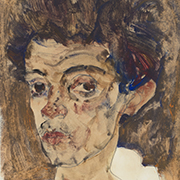
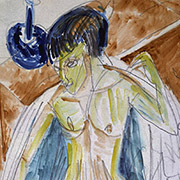
Although widely recognized as one of the greatest draughtsmen of the modern era, Egon Schiele is often underrated as a printmaker. Granted, he produced only seventeen prints (as compared with more than two thousand unique works on paper), but these lithographs, linocuts, woodcuts and etchings evidence the same graphic intensity seen in the better-known drawings and watercolors. Schiele’s prints not only reflect artistic concerns he was pursuing contemporaneously in other mediums, but, clustered in the years 1912, 1914, 1916 and 1918, the graphics closely track his overall development. A comprehensive reassessment of this neglected aspect of the artist’s oeuvre is thus long overdue. Fostering a wider understanding of Schiele’s multifaceted achievements has been central to the Galerie St. Etienne’s mission since its founding in 1939, at a time when few in the United States had ever heard of the artist. It therefore seems appropriate to focus our 70th anniversary celebration on Schiele’s prints, which furthermore occupy a significant place in our history. Otto Kallir, the gallery’s founder, began his career in Vienna as a publisher of limited-edition graphics. In 1921, he published the first edition of Schiele’s Portrait of Franz Hauer in the catalogue for the “Schwarz-Weiss” (Black-and-White) exhibition at the Künstlerhaus in Salzburg. The following year, he issued the portfolio Das graphische Werk von Egon Schiele, containing editions of all the artist’s etchings (Portrait of a Man, Self-Portrait, Portrait of Franz Hauer, Squatting Woman, Sorrow, Portrait of Arthur Roessler) and his last two lithographs (Portrait of Paris von Gütersloh and Girl), none of which had been published during Schiele’s lifetime. After compiling the catalogues raisonnés of Schiele’s paintings (1930 and 1966), Kallir wrote the first proper catalogue raisonné of the prints in 1970. Kallir’s granddaughter and current St. Etienne Co-Director, Jane Kallir, updated these catalogues raisonnés in her comprehensive volume Egon Schiele: The Complete Works (1990 and 1998). Schiele’s initial encounter with printmaking was prompted by an increased involvement with the German art scene. In October 1911, he had his first German exhibition at the Munich gallery of Hans Goltz. Shortly thereafter, he was invited to join the Munich-based artist’s association Sema and to submit a lithograph for publication in the group’s forthcoming print portfolio. Schiele chose for his subject a nude self-portrait, as though announcing his presence on the German scene, or saying, simply: “I am here; this is who I am.” Self-portraits, reflecting a post-adolescent search for identity, had figured prominently in Schiele’s oeuvre from the time of his Expressionist breakthrough in 1910. The artist probed his innermost feelings in these works, but he was also consciously play-acting, presenting himself to the public in various guises. In the studies for the Sema lithograph, he tested a number of personalities: defiant, seductive, confrontational or coy. He ended up submitting two transfer drawings to Sema: in the first, the artist appears wary but confident (Kallir G. 1), while in the second, he seems to recoil in fear (Kallir G. 2). Sema chose the first version, which was published in early 1912. Only three proof impressions, all unsigned, of the rejected self-portrait have been recorded. Schiele’s unique combination of arrogance and vulnerability is encapsulated in the two Sema self-portraits. The subject’s nudity—brash but exposed—and the inexplicable absence of a penis further underscore this existential ambiguity. Schiele believed fervently in the sanctity of his artistic mission, but his emotional honesty left him undefended against attacks by those who did not share his vision. He thought that his status as an artist granted him immunity from the strictures imposed by society upon ordinary mortals. Yet time and again, he was undone by the demands of bourgeois life. These could be as basic as the necessity of earning money, the cause of countless squabbles between himself and his patrons. More insidiously, bourgeois morality did not condone the artistic lifestyle, as manifested by Schiele’s open cohabitation with his model Wally Neuzil and, especially, his habit of bringing underage school children into the sexually tainted atmosphere of his studio. It was the latter practice, ultimately, that landed Schiele in jail in April 1912, on charges of “public immorality.” He emerged after 24 days both chastened and furious. Two post-prison watercolor self-portraits (this time confined to the artist’s face) echo the dichotomy expressed in the Sema prints. Schiele is, respectively, defiant in the one watercolor and dejected in the other. But now he is no longer posing. The emotions have been forged in the crucible of real life. Following his imprisonment, Schiele faced persistent financial difficulties. His paintings sold poorly in Germany, and the system of private patronage, which dominated the more backward Austrian art market, was not sufficient to support a young artist still struggling to establish a reputation. Schiele’s second stab at printmaking was prompted by his patron Arthur Roessler, who, tired of the artist’s constant requests for money, suggested etching as a way to earn additional income. Declaring that he considered drypoint—an intaglio process that uses a pointed stylus instead of acid—“the only honest and artistic etching technique,” Schiele acquiesced. Roessler bankrolled the venture by providing the necessary equipment, and an artist friend, Robert Philippi, offered to give Schiele lessons. Following an example etched by Philippi to one side of the plate, Schiele created his first etching (a Portrait of a Man (Kallir G. 3) who strikingly resembles the artist) in March or April 1914 (checklist no. 24). Two further small etchings (Self-Portrait (Kallir G. 4) and Portrait of Franz Hauer) (Kallir G. 5), drawn on the recto and verso of a single plate, followed shortly thereafter. By May, Schiele was ready for larger plates, executing in fairly rapid succession two images of female nudes, Squatting Woman (Kallir G. 6) and Sorrow (Kallir G. 7), and a portrait of Roessler (Kallir G. 8). Probably at Roessler’s request, Schiele pulled and signed at least nine (and possibly as many as 32) impressions of the portrait, but very few lifetime proofs exist of the other drypoints. And with this, the etching experiment was over. By the end of the summer, Schiele had given away his tools, remarking, “In the time needed to etch one plate, I can well and easily create fifty to sixty—no, even more, surely about one hundred—drawings.” Despite his aversion to the etching medium, Schiele was readily able to turn it to his own ends. With his third drypoint, the Portrait of Franz Hauer, he was already in firm control of the stylus, wielding it with the same authority as a pencil. Hauer, a kindly innkeeper who was a noted patron of young painters, had met Schiele in 1912, and it is likely that the artist created the portrait in thanks for his considerable support. While there is no evidence that this was a formal commission, Schiele, as with any such project, executed a series of preliminary pencil studies. Adopting an approach that would come to typify his later portraits, Schiele focused almost exclusively on Hauer’s face, viewed from various angles and sometimes in tandem with the sitter’s hands. It is not clear whether the stitch-like perpendicular strokes with which Schiele embellished his lines in the Hauer studies intentionally anticipate the crosshatching that is used to suggest volume and shadow in etchings. For whatever reason, hatched lines are common to many of the artist’s drawings in mid 1914—the period that coincides with his etching experiences. From this evolved a more conscious awareness of the interplay between two-dimensional line and three dimensional illusion, which culminated in Schiele’s more voluptuously modeled late figure drawings. If the Roessler etching, like the Hauer portrait, was a “thank you” gesture for a deserving patron, the two drypoint nudes were closely related to Schiele’s paintings Blind Mother (Kallir P. 272) and Young Mother (Kallir P. 273). Motherhood had, for some years, been a significant recurrent theme in Schiele’s allegories. He was inclined to see mothers as expedients whose sole purpose in life was to nurture youth (representing, for Schiele, artistic genius). Tired, spent and dead mothers proliferate in his paintings from 1910 on, but by 1914 Schiele was beginning to develop new approaches to the subject. The Blind Mother—literally and figuratively unable to see—is incapable of nurturing. The Young Mother, on the other hand, represents a more hopeful paradigm. The etching Sorrow is based on Blind Mother, whereas Squatting Woman replicates the pose of the Young Mother. Since the drypoints and the paintings were executed at more or less the same time, it is hard to assign priority to one medium over the other. Schiele might have based the prints on the paintings, paring down his thesis to its essential characters. Or he could have employed the drypoints to work out the poses for the oils. Contemporaneous drawings and watercolors document how Schiele used studio models to develop his compositions. Often viewing the model from above, he would drop out all background detail to leave her floating in blank space, and then twist her into the desired position. Thus the Squatting Woman/Young Mother, who in reality probably posed on her hands and knees, is transfigured by a far more ethereal vertical orientation. The transition from real to allegorical space strengthens the underlying metaphor in the final composition. The etching project was partly inspired by hopes that Schiele would be able to sell the editions in Germany. In 1914, he received inquiries about prints not just from Goltz, but from the Berlin dealers J.B. Neumann and Fritz Gurlitt. Although nothing came of this, the comparatively robust German art scene remained a lure, even after World War I had drastically reduced cultural interchange. The left-wing Berlin periodical Die Aktion regularly published Schiele’s work, and in 1916 the editor, Franz Pfemfert, decided to put out a special “Egon Schiele issue.” Since woodcuts were cheaper to print than reproductions of drawings, Schiele, at Pfemfert’s request, agreed to try his hand at the new technique. Philippi was again engaged as instructor, and within a few weeks in the summer of 1916, Schiele created the two woodcuts that were reproduced in Die Aktion that September (Kallir G. 13 and 14), as well as four rubbercuts (Kallir G. 9, 10, 11 and 12), done as preliminary exercises. The rubbercuts and woodcuts differ from Schiele’s other prints not only in technique, but in their diminutive size. The rubbercuts, in fact, are scarcely larger than a thumbnail, and one can imagine that Schiele enjoyed the tactile immediacy of carving into the small soft rubber blocks. Wood is harder to cut, but again Schiele seems to have taken instinctively to the manipulation of flat shapes and negative space intrinsic to this art form. Both these aesthetic characteristics are central to Art Nouveau graphics, which had a formative influence on Schiele’s early development, as well as on the German Expressionists who pioneered the woodcut revival. While the chunky rubber- and woodcuts may seem quite different in style to the spare elegance of Schiele’s drawings, these little prints are closely related to the artist’s sketchbook studies. Schiele carried small graph-ruled notebooks with him almost constantly, using them to jot down creative concepts as they came to him. For this purpose, he invented a kind of visual shorthand, manipulating tiny figures and objects in little boxes denoting imagined future canvases. The format is almost identical to that of the Aktion prints. Schiele, who early on had been influenced by the Art-Nouveau genius Gustav Klimt, had a greater affinity to poster design than to conventional printmaking. The poster for his first one-man show at the Galerie Goltz combined relatively pedestrian typography with a greatly enlarged reproduction of one of the artist’s drawings. It can be assumed that Schiele had little or no input into that poster’s design, and he may well have been displeased with it. At any rate, hereafter Schiele took a far more active interest in designing his exhibition posters. The artist’s feeling for negative space, for the placement of images on the sheet—a skill that served him well in his woodcuts and is central to his drawings—is evident in his poster for an unidentified 1915 exhibition, as well as in the poster he created for his 1918 retrospective at the Vienna Secession (Kallir G. 15). The concept for the Secession poster dates back to at least January 1917, when Schiele began planning a painting that he called, simply, The Friends (Kallir P. 323). In keeping with his predilection for religious allegory, The Friends evokes the Last Supper. Christ, his back to the viewer, occupies the chair at the foot of the table, but Schiele, seated opposite, is the dominant figure. This surprising juxtaposition reflects Schiele’s belief that artists, connecting the mundane to the spiritual, perform a priestly function. The others in the group are all artistic colleagues. In the original painting (which remained unfinished) and a related study (Kallir P. 324), the table is set with plates of food and carafes of wine. For the more secular poster, Schiele replaced the plates with books, but left the carafes in place. In this rendition, the seat at the end of the table is left vacant, possibly for Gustav Klimt, who had recently died. The technical sophistication of the Secession poster is at least in part due to Schiele’s collaboration with Alfred Berger, a master lithographer who printed many of the Secession’s greatest posters. It was thus natural that Schiele again chose to work with Berger for his next, and final, print project. Around the time of the Secession exhibition in March 1918, the artist was invited to contribute a color lithograph to the annual portfolio of the Gesellschaft für vervielfältigende Kunst (Society for Art Reproductions). At the time, he was working on an oil painting of the artist Paris von Gütersloh, and so Schiele decided to base his lithograph (Kallir G. 16) on the portrait studies. However, the Gesellschaft rejected this print, saying that it was not properly representative of the artist’s “special originality.” The Society’s spokesperson, Arpad Weixlgärtner, instead requested a nude. Schiele’s second attempt, Girl (Kallir G. 17), likewise did not satisfy Weixlgärtner, who asked him to tone down the genitalia and complained that, whereas the assignment was to produce a multicolored lithograph, the artist, in both his submissions, had merely generated proofs in various single colors. Schiele responded by producing a colored drawing of the Girl, though no multicolored impressions of the lithograph are known to exist. In June 1918, the Gesellschaft’s board categorically rejected all the artist’s submissions, and his work on the project ceased. Schiele’s last three prints--the Secession poster, the Portrait of Paris von Gütersloh and the Girl--were essentially transfer lithographs. In the case of the poster, the black master image was a mechanical reproduction of Schiele’s design, while the two colored stones were hand-drawn, either by Schiele himself or under his supervision. The Gütersloh and Girl were transferred to stones from the artist’s drawings. Transfer lithography, which places the technical onus on a master printer, was ideal for an artist like Schiele, who did not enjoy fussing with stones or plates. As a consummate draughtsman, he was also probably pleased by the faithful, nuanced reproductions of drawings that can be achieved by this method. Like the Gütersloh portrait, Girl is closely related to a series of contemporaneous crayon studies. After his prison experiences, Schiele had become much more cautious in his dealings with underage subjects, but in 1918 he found a model who was willing to pose nude with her own daughter. Numerous drawings exist of the “girl,” with and without her mother. By 1918, Schiele’s line had lost much of its Expressionistic edge and assumed an almost classical voluptuousness. Few of his last drawings are colored; the artist was interested in the ability of line alone to convey weight, character and volume. This approach lent itself readily to transfer lithography, and it is likely that, had he lived, Schiele would have experimented further with the technique, which was also favored by his compatriots Kokoschka and Kubin. At the time of Schiele’s death in October 1918, the Sema self-portrait, Male Nude I, was the only one of his prints that had been published in a signed edition. The stones for Portrait of Paris von Gütersloh and Girl remained in storage at Berger’s workshop. Robert Philippi retained the plate for Schiele’s first etching, Portrait of a Man, and Arthur Roessler, having paid for the other plates, now owned them. In 1919, as artistic director of the Avalun Verlag, Roessler ordered 125 impressions pulled from each of the two lithographic stones (which were subsequently erased) and published editions of 200 each of Sorrow and Squatting Woman. Sales of the four prints proved disappointing, and in 1921, Otto Kallir’s Verlag Neuer Graphik (the art division of the Rikola Verlag) acquired the remaining impressions, plus all Schiele’s plates. In 1922, the Verlag Neuer Graphik/Rikola issued the portfolio Das graphische Werk von Egon Schiele, incorporating the impressions purchased from Avalun as well as impressions newly pulled from the plates. The total edition size of 80 was determined by the number of available impressions of the two lithographs, which could not be reprinted. Further editions of the Self-Portrait and the Portrait of Franz Hauer (numbering 65 impressions each) were published in 1966; 80 impressions of Portrait of Arthur Roessler were published in 1970; and 100 impressions of Squatting Woman in 1990. Given the instability of drypoint lines, it is unlikely that any of these four plates could yield a further edition. Schiele’s etching plates (with the exception of that for Portrait of a Man, which is lost) are today privately owned and well protected against uncontrolled use.