
The Ins and Outs of Self-Taught Art
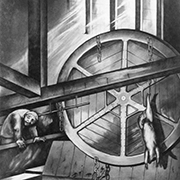
Reflections on a Shifting Field
January 10, 2012 - April 7, 2012
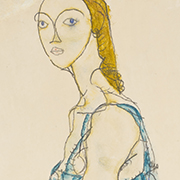
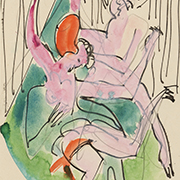
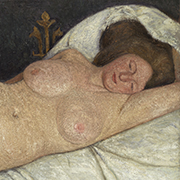
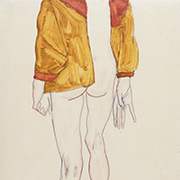
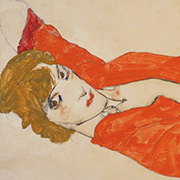
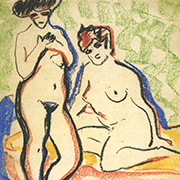
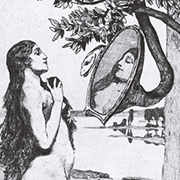
The Lady and the Tramp
Images of Women in Austrian and German Art
October 11, 2011 - December 30, 2011
Recent Acquisitions
(And Some Thoughts on the Current Art Market)
July 5, 2011 - September 30, 2011
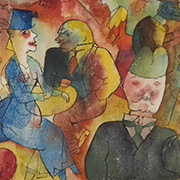
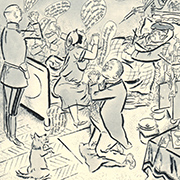
Decadence & Decay
Max Beckmann, Otto Dix, George Grosz
April 12, 2011 - June 24, 2011
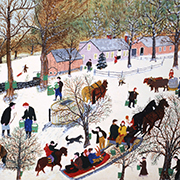
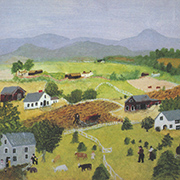
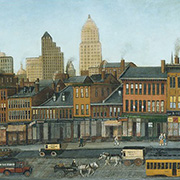
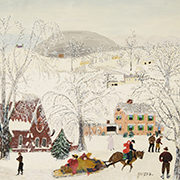
Self-Taught Painters in American 1800-1950
Revisiting the Tradition
January 11, 2011 - April 2, 2011
Marie-Louise Motesiczky
Paradise Lost & Found
October 12, 2010 - December 30, 2010
Recent Acquisitions
(And Some Thoughts on the Current Art Market)
July 13, 2010 - October 1, 2010
Käthe Kollwitz
A Portrait of the Artist
April 13, 2010 - June 25, 2010
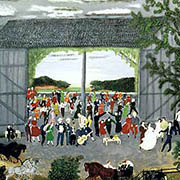
Seventy Years Grandma Moses
A Loan Exhibition Celebrating the 70th Anniversary of the Artist's "Discovery"
February 3, 2010 - April 3, 2010
Egon Schiele as Printmaker
A Loan Exhibition Celebrating the 70th Anniversary of the Galerie St. Etienne
November 3, 2009 - January 23, 2010
From Brücke To Bauhaus
The Meanings of Modernity in Germany, 1905-1933
March 31, 2009 - June 26, 2009
They Taught Themselves
American Self-Taught Painters Between the World Wars
January 9, 2009 - March 14, 2009
Elephants We Must Never Forget
New Paintings Drawings and Prints by Sue Coe
October 14, 2008 - December 20, 2008
Recent Acquisitions
(And Some Thoughts on the Current Art Market)
June 24, 2008 - September 26, 2008
Hope or Menace?
Communism in Germany Between the World Wars
March 25, 2008 - June 13, 2008
Transforming Reality
Pattern and Design in Modern and Self-Taught Art
January 15, 2008 - March 8, 2008
Leonard Baskin
Proofs and Process
October 9, 2007 - January 5, 2008
Recent Acquisitions
(And Some Thoughts on the Current Art Market)
June 5, 2007 - September 28, 2007
Who Paid the Piper?
The Art of Patronage in Fin-de-Siècle Vienna
March 8, 2007 - May 26, 2007
Fairy Tale, Myth and Fantasy
Approaches to Spirituality in Art
December 7, 2006 - February 3, 2007
More Than Coffee was Served
Café Culture in Fin-de-Siècle Vienna and Weimar Germany
September 19, 2006 - November 25, 2006
Recent Acquisitions
(And Some Thoughts on the Current Art Market)
June 6, 2006 - September 8, 2006
Parallel Visions II
"Outsider" and "Insider" Art Today
April 5, 2006 - May 26, 2006
Ilija!
His First American Exhibtion
January 17, 2006 - March 18, 2006
Coming of Age
Egon Schiele and the Modernist Culture of Youth
November 15, 2005 - January 7, 2006
Sue Coe:
Sheep of Fools
September 20, 2005 - November 5, 2005
Recent Acquisitions
And Some Thoughts on the Current Art Market
June 7, 2005 - September 9, 2005
Every Picture Tells a Story
The Narrative Impulse in Modern and Contemporary Art
April 5, 2005 - May 27, 2005
65th Anniversary Exhibition, Part II
Self-Taught Artists
January 18, 2005 - March 26, 2005
65th Anniversary Exhibition, Part I
Austrian and German Expressionism
October 28, 2004 - January 8, 2005
Sue Coe: Bully: Master of the Global Merry-Go-Round and Recent Acquisitions
(And Some Thoughts on the Current Art Market)
June 8, 2004 - October 16, 2004
Animals & Us
The Animal in Contemporary Art
April 1, 2004 - May 22, 2004
Henry Darger
Art and Myth
January 15, 2004 - March 20, 2004
Body and Soul
Expressionism and the Human Figure
October 7, 2003 - January 3, 2004
Recent Acquisitions
(And Some Thoughts on the Current Art Market)
June 24, 2003 - September 12, 2003
In Search of the "Total Artwork"
Viennese Art and Design 1897–1932
April 8, 2003 - June 14, 2003
Russia's Self-Taught Artists
A New Perspective on the "Outsider"
January 14, 2003 - March 29, 2003
Käthe Kollwitz:
Master Printmaker
October 1, 2002 - January 4, 2003
Recent Acquisitions
(And Some Thoughts on the Current Art Market)
June 25, 2002 - September 20, 2002
Workers of the World
Modern Images of Labor
April 2, 2002 - June 15, 2002
Grandma Moses
Reflections of America
January 15, 2002 - March 16, 2002
Gustav Klimt/Egon Schiele/Oskar Kokoscha
From Art Nouveau to Expressionism
November 23, 2001 - January 5, 2002
The "Black-and-White" Show
Expressionist Graphics in Austria & Germany
September 20, 2001 - November 10, 2001
Recent Acquisitions (And Some Thoughts on the Current Art Market)
June 26, 2001 - September 7, 2001
Art with an Agenda
Politics, Persuasion, Illustration and Decoration
April 10, 2001 - June 16, 2001
"Our Beautiful and Tormented Austria!": Art Brut in the Land of Freud
January 18, 2001 - March 17, 2001
The Tragedy of War
November 16, 2000 - January 6, 2001
The Expressionist City
September 19, 2000 - November 4, 2000
Recent Acquisitions (And Some Thoughts on the Current Art Market)
June 20, 2000 - September 8, 2000
From Façade to Psyche
Turn-of-the-Century Portraiture in Austria & Germany
March 28, 2000 - June 10, 2000
European Self-Taught Art
Brut or Naive?
January 18, 2000 - March 11, 2000
Saved From Europe
In Commemoration of the 60th Anniversary of the Galerie St. Etienne
November 6, 1999 - January 8, 2000
The Modern Child
(Images of Children in Twentieth-Century Art)
September 14, 1999 - November 6, 1999
Recent Acquisitions
(And a Look at Sixty Years of Art Dealing)
June 15, 1999 - September 3, 1999
Sue Coe: The Pit
The Tragical Tale of the Rise and Fall of a Vivisector
March 30, 1999 - June 5, 1999
Henry Darger and His Realms
January 14, 1999 - March 13, 1999
Becoming Käthe Kollwitz
An Artist and Her Influences
November 17, 1998 - December 31, 1998
George Grosz - Elfriede Lohse-Wächtler
Art & Gender in Weimar Germany
September 23, 1998 - November 11, 1998
Recent Acquisitions
(And Some Thoughts About Looted Art)
June 9, 1998 - September 11, 1998
Taboo
Repression and Revolt in Modern Art
March 26, 1998 - May 30, 1998
Sacred & Profane
Michel Nedjar and Expressionist Primitivism
January 13, 1998 - March 14, 1998
Egon Schiele (1890-1918)
Master Draughtsman
November 18, 1997 - January 3, 1998
The New Objectivity
Realism in Weimar-Era Germany
September 16, 1997 - November 8, 1997
Recent Acquisitions
A Question of Quality
June 10, 1997 - September 5, 1997
Käthe Kollwitz - Lea Grundig
Two German Women & The Art of Protest
March 25, 1997 - May 31, 1997
That Way Madness Lies
Expressionism and the Art of Gugging
January 14, 1997 - March 15, 1997
The Viennese Line
Art and Design Circa 1900
November 18, 1996 - January 4, 1997
Emil Nolde - Christian Rohlfs
Two German Expressionist Masters
September 24, 1996 - November 9, 1996
Breaking All The Rules
Art in Transition
June 11, 1996 - September 6, 1996
Sue Coe's Ship of Fools
March 26, 1996 - May 24, 1996
New York Folk
Lawrence Lebduska, Abraham Levin, Isreal Litwak
January 16, 1996 - March 16, 1996
The Fractured Form
Expressionism and the Human Body
November 15, 1995 - January 6, 1996
From Left to Right
Social Realism in Germany and Russia, Circa 1919-1933
September 19, 1995 - November 4, 1995
Recent Acquisitions
June 20, 1995 - September 8, 1995
On the Brink 1900-2000
The Turning of Two Centuries
March 28, 1995 - May 26, 1995
Earl Cummingham - Grandma Moses
Visions of America
January 17, 1995 - March 18, 1995
Three Berlin Artists of the Weimar Era: Hannah Höch, Käthe Kollwitz, Jeanne Mam
September 13, 1994 - November 5, 1994
55th Anniversary Exhibition in Memory of Otto Kallir
June 7, 1994 - September 2, 1994
Drawn to Text: Comix Artists as Book Illustrators
May 15, 1994 - January 7, 1995
Sue Coe: We All Fall Down
March 29, 1994 - May 27, 1994
The Forgotten Folk Art of the 1940's
January 18, 1994 - March 19, 1994
Symbolism and the Austrian Avant Garde
Klimt, Schiele and their Contemporaries
November 16, 1993 - January 8, 1994
Art and Politics in Weimar Germany
September 14, 1993 - November 6, 1993
Recent Acquisitions
June 8, 1993 - September 3, 1993
The "Outsider" Question
Non-Academic Art from 1900 to the Present
March 23, 1993 - May 28, 1993
The Dance of Death
Images of Mortality in German Art
January 19, 1993 - March 13, 1993
Art Spiegelman
The Road to Maus
November 17, 1992 - January 9, 1993
Käthe Kollwitz
In Celebration of the 125th Anniversary of the Artist's Birth
September 15, 1992 - November 7, 1992
Naive Visions/Art Nouveau and Expressionism/Sue Coe: The Road to the White House
May 19, 1992 - September 4, 1992
Richard Gerstl/Oskar Kokoschka
March 17, 1992 - May 9, 1992
Scandal, Outrage, Censorship
Controversy in Modern Art
January 21, 1992 - March 7, 1992
Viennese Graphic Design
From Secession to Expressionism
November 19, 1991 - January 11, 1992
The Expressionist Figure
September 10, 1991 - November 9, 1991
Recent Acquisitions
Themes and Variations
May 14, 1991 - August 16, 1991
Sue Coe Retrospective
Political Document of a Decade
March 12, 1991 - May 5, 1991
Gustav Klimt, Egon Schiele, Oskar Kokoschka
Watercolors, drawings and prints
January 22, 1991 - March 2, 1991
Egon Schiele
November 13, 1990 - January 12, 1991
Lovis Corinth
A Retrospective
September 11, 1990 - November 3, 1990
Recent Acquisitions
June 12, 1990 - August 31, 1990
Max Klinger, Käthe Kollwitz, Alfred Kubin
A Study in Influences
March 27, 1990 - June 2, 1990
The Narrative in Art
January 23, 1990 - March 17, 1990
Grandma Moses
November 14, 1989 - January 13, 1990
Sue Coe
Porkopolis--Animals and Industry
September 19, 1989 - November 4, 1989
Galerie St. Etienne
A History in Documents and Pictures
June 20, 1989 - September 8, 1989
Gustav Klimt
Paintings and Drawings
April 11, 1989 - June 10, 1989
Fifty Years Galerie St. Etienne: An Overview
February 14, 1989 - April 1, 1989
Folk Artists at Work
Morris Hirshfield, John Kane and Grandma Moses
November 15, 1988 - January 14, 1989
Recent Acquisitions and Works From the Collection
June 14, 1988 - September 16, 1988
From Art Nouveau to Expressionism
April 12, 1988 - May 27, 1988
Three Pre-Expressionists
Lovis Corinth Käthe Kollwitz Paula Modersohn-Becker
January 26, 1988 - March 12, 1988
Käthe Kollwitz
The Power of the Print
November 17, 1987 - January 16, 1988
Recent Acquisitions and Works From the Collection
April 7, 1987 - October 31, 1987
Folk Art of This Century
February 10, 1987 - March 28, 1987
Oskar Kokoschka and His Time
November 25, 1986 - January 31, 1987
Viennese Design and Wiener Werkstätte
September 23, 1986 - November 8, 1986
Gustav Klimt/Egon Schiele/Oskar Kokoschka
Watercolors, Drawings and Prints
May 27, 1986 - September 13, 1986
Expressionist Painters
March 25, 1986 - May 10, 1986
Käthe Kollwitz/Paula Modersohn-Becker
January 28, 1986 - March 15, 1986
The Art of Giving
December 3, 1985 - January 18, 1986
Expressionists on Paper
October 8, 1985 - November 23, 1985
European and American Landscapes
June 4, 1985 - September 13, 1985
Expressionist Printmaking
Aspects of its Genesis and Development
April 1, 1985 - May 24, 1985
Expressionist Masters
January 18, 1985 - March 23, 1985
Arnold Schoenberg's Vienna
November 13, 1984 - January 5, 1985
Grandma Moses and Selected Folk Paintings
September 25, 1984 - November 3, 1984
American Folk Art
People, Places and Things
June 12, 1984 - September 14, 1984
John Kane
Modern America's First Folk Painter
April 17, 1984 - May 25, 1984
Eugène Mihaesco
The Illustrator as Artist
February 28, 1984 - April 7, 1984
Early Expressionist Masters
January 17, 1984 - February 18, 1984
Paula Modersohn-Becker
Germany's Pioneer Modernist
November 15, 1983 - January 7, 1984
Gustav Klimt
Drawings and Selected Paintings
September 20, 1983 - November 5, 1983
Early and Late
Drawings, Paintings & Prints from Academicism to Expressionism
June 1, 1983 - September 2, 1983
Alfred Kubin
Visions From The Other Side
March 22, 1983 - May 7, 1983
20th Century Folk
The First Generation
January 18, 1983 - March 12, 1983
Grandma Moses
The Artist Behind the Myth
November 15, 1982 - January 8, 1983
Kollwitz
The Artist as Printmaker
September 28, 1982 - November 6, 1982
Aspects of Modernism
June 1, 1982 - September 3, 1982
The Human Perspective
Recent Acquisitions
March 16, 1982 - May 15, 1982
19th and 20th Century European and American Folk Art
January 19, 1982 - March 6, 1982
The Folk Art Tradition
Naïve Painting in Europe and the United States
November 17, 1981 - January 9, 1982
Austria's Expressionism
April 21, 1981 - May 30, 1981
Eugène Mihaesco
His First American One-Man Show
March 3, 1981 - April 11, 1981
Gustav Klimt, Egon Schiele
November 12, 1980 - December 27, 1980
Summer Exhibition
June 17, 1980 - October 31, 1980
Kollwitz: The Drawing and The Print
May 1, 1980 - June 10, 1980
40th Anniversary Exhibition
November 13, 1979 - December 28, 1979
American Primitive Art
November 22, 1977
Käthe Kollwitz
December 1, 1976
Neue Galerie-Galerie St. Etienne
A Documentary Exhibition
May 1, 1976
Martin Pajeck
January 27, 1976
Georges Rouault and Frans Masereel
April 29, 1972
Branko Paradis
December 1, 1971
Käthe Kollwitz
February 3, 1971
Egon Schiele
The Graphic Work
October 19, 1970
Gustav Klimt
March 20, 1970
Friedrich Hundertwasser
May 6, 1969
Austrian Art of the 20th Century
March 21, 1969
Egon Schiele
Memorial Exhibition
October 31, 1968
Yugoslav Primitive Art
April 30, 1968
Alfred Kubin
January 30, 1968
Käthe Kollwitz
In the Cause of Humanity
October 23, 1967
Abraham Levin
September 26, 1967
Karl Stark
April 5, 1967
Gustav Klimt
February 4, 1967
The Wiener Werkstätte
November 16, 1966
Oskar Laske
October 25, 1965
Käthe Kollwitz
May 1, 1965
Egon Schiele
Watercolors and Drawings from American Collections
March 1, 1965
25th Anniversary Exhibition
Part II
November 21, 1964
25th Anniversary Exhibition
Part I
October 17, 1964
Mary Urban
June 9, 1964
Werner Berg, Jane Muus and Mura Dehn
May 5, 1964
Eugen Spiro
April 4, 1964
B. F. Dolbin
Drawings of an Epoch
March 3, 1964
Austrian Expressionists
January 6, 1964
Joseph Rifesser
December 3, 1963
Panorama of Yugoslav Primitive Art
October 21, 1963
Joe Henry
Watercolors of Vermont
May 1, 1963
French Impressionists
March 8, 1963
Grandma Moses
Memorial Exhibition
November 26, 1962
Group Show
October 15, 1962
Ernst Barlach
March 23, 1962
Martin Pajeck
February 24, 1962
Paintings by Expressionists
January 27, 1962
Käthe Kollwitz
November 11, 1961
Grandma Moses
September 7, 1961
My Friends
Fourth Biennial of Pictures by American School Children
May 27, 1961
Raimonds Staprans
April 17, 1961
Gustav Klimt, Egon Schiele, Oskar Kokoschka and Alfred Kubin
March 14, 1961
Marvin Meisels
January 23, 1961
Egon Schiele
November 15, 1960
My Life's History
Paintings by Grandma Moses
September 12, 1960
Watercolors and Drawings by Austrian Artists from the Dial Collection
May 2, 1960
Martin Pajeck
February 29, 1960
Eugen Spiro
February 6, 1960
Käthe Kollwitz
December 14, 1959
Josef Scharl
Last Paintings and Drawings
November 11, 1959
European and American Expressionists
September 22, 1959
Our Town
One Hundred Paintings by American School Children
May 23, 1959
Marvin Meisels and Martin Pajeck
May 1, 1959
Gustav Klimt
April 1, 1959
Käthe Kollwitz
January 12, 1959
Oskar Kokoschka
October 28, 1958
Village Life in Guatemala
Paintings by Andres Curuchich
June 3, 1958
Two Unknown American Expressionists
Paintings by Marvin Meisels and Martin Pajeck
April 28, 1958
Paula Modersohn-Becker
March 15, 1958
The Great Tradition in American Painting
American Primitive Art
January 20, 1958
Jules Lefranc and Dominique Lagru
Two French Primitives
November 18, 1957
Margret Bilger
October 22, 1957
The Four Seasons
One Hundred Paintings by American School Children
June 11, 1957
Grandma Moses
May 6, 1957
Alfred Kubin
April 3, 1957
Franz Lerch
March 2, 1957
Egon Schiele
January 21, 1957
Josef Scharl
Memorial Exhibition
November 17, 1956
Irma Rothstein
May 19, 1956
Käthe Kollwitz
April 16, 1956
A Tribute to Grandma Moses
November 28, 1955
As I See Myself
One Hundred Paintings by American School Children
May 20, 1955
Juan De'Prey
April 19, 1955
Erich Heckel
March 29, 1955
Freddy Homburger
March 2, 1955
Masters of the 19th Century
January 18, 1955
Oskar Kokoschka
November 29, 1954
Isabel Case Borgatta and Josef Scharl
October 12, 1954
James N. Rosenberg and Eugen Spiro
April 30, 1954
Per Krogh
April 2, 1954
Cuno Amiet
February 16, 1954
Eniar Jolin
January 14, 1954
Irma Rothstein
December 8, 1953
Josef Scharl
November 11, 1953
Grandma Moses
October 21, 1953 - October 24, 1953
Wilhelm Kaufmann
September 30, 1953
Lovis Corinth, Oskar Kokoschka and Egon Schiele
May 27, 1953
A Grandma Moses Album
Recent Paintings, 1950-1953
April 15, 1953
Streeter Blair
American Primitive
February 26, 1953
Paintings on Glass
Austrian Religious Folk Art of the 17th to 19th Centuries
December 4, 1952
Hasan Kaptan
Paintings of a Ten-Year-Old Turkish Painter
October 29, 1952
Margret Bilger
May 10, 1952
American Natural Painters
March 31, 1952
Ten Years of New York Concert Impressions by Eugen Spiro; Four New Paintings by
January 26, 1952
I-Fa-Wei
Watercolors of New York by a Chinese Artist
December 1, 1951
Käthe Kollwitz
October 25, 1951
Drawings and Watercolors by Austrian Children
May 21, 1951
Grandma Moses
Twenty-Five Masterpieces of Primitive Art
March 17, 1951
Roswitha Bitterlich
January 18, 1951
Oskar Laske
Watercolors of Vienna and the Salzkammergut
October 14, 1950
Tenth Anniversary Exhibition
Part II
May 11, 1950
Austrian Art of the 19th Century
From Wadlmüller to Klimt
April 1, 1950
Chiao Ssu-Tu
February 18, 1950
Anton Faistauer
January 1, 1950
Tenth Anniversary Exhibition
Part I
November 30, 1949
Autograph Exhibition
October 26, 1949
Gladys Wertheim Bachrach
May 24, 1949
Oskar Kokoschka
March 30, 1949
Eugen Spiro
February 19, 1949
Frans Masereel
January 13, 1949
Ten Years Grandma Moses
November 22, 1948
Käthe Kollwitz
Masterworks
October 18, 1948
American Primitives
June 3, 1948
Egon Schiele
Memorial Exhibition
April 5, 1948
Miriam Richman
February 7, 1948
Vally Wieselthier
Memorial Exhibition
January 10, 1948
Christmas Exhibition
December 4, 1947
Fritz von Unruh
November 10, 1947
Käthe Kollwitz
October 4, 1947
Grandma Moses
May 17, 1947
Lovis Corinth
April 16, 1947
Hugo Steiner-Prag
March 15, 1947
Mark Baum
January 11, 1947
Eugen Spiro
November 25, 1946
Henri de Toulouse-Lautrec
May 17, 1946
Ladis W. Sabo
Paintings by a New Primitive Artist
April 8, 1946
Georges Rouault
The Graphic Work
February 26, 1946
Käthe Kollwitz
Memorial Exhibition
November 21, 1945
Fred E. Robertson
Paintings by an American Primitive
June 13, 1945
Max Liebermann
The Graphic Work
April 18, 1945
Vienna through Four Centuries
March 1, 1945
Eugen Spiro
January 20, 1945
Grandma Moses
New Paintings
December 5, 1944
Käthe Kollwitz
Part II
October 26, 1944
A Century of French Graphic Art
From Géricault to Picasso
September 28, 1944
Max Liebermann
Memorial Exhibition
June 9, 1944
Juan De'Prey
Paintings by a Self-Taught Artist from Puerto Rico
May 6, 1944
Abraham Levin
April 15, 1944
Lesser Ury
Memorial Exhibition
March 21, 1944
Grandma Moses
Paintings by the Senior of the American Primitives
February 9, 1944
Betty Lane
January 11, 1944
WaIt Disney Cavalcade
December 9, 1943
Käthe Kollwitz
Part I
November 3, 1943
Will Barnet
September 29, 1943
Lovis Corinth
May 26, 1943
Josephine Joy
Paintings by an American Primitive
May 3, 1943
Oskar Kokoschka
Aspects of His Art
March 31, 1943
Eugen Spiro
February 13, 1943
Seymour Lipton
January 18, 1943
Illuminated Gothic Woodcuts
Printed and Painted, 1477-1493
December 5, 1942
Abraham Levin
November 4, 1942
Walt Disney Originals
September 23, 1942
Documents which Relate History
Documents of Historical Importance and Landmarks of Human Development
June 10, 1942
Honoré Daumier
April 29, 1942
Bertha Trabich
Memorial Exhibition of a Russian-American Primitive
March 25, 1942
Alfred Kubin
Master of Drawing
December 4, 1941
Egon Schiele
November 7, 1941
Betty Lane
June 3, 1941
Flowers from Old Vienna
18th and Early 19th Century Flower Painting
May 7, 1941
Weavings by Navaho and Hopi Indians and Photos of Indians by Helen M. Post
January 29, 1941
Georg Merkel
November 7, 1940
What a Farm Wife Painted
Works by Mrs. Anna Mary Moses
October 9, 1940
Saved from Europe
Masterpieces of European Art
July 1, 1940
American Abstract Art
May 22, 1940
Franz Lerch
May 1, 1940
Wilhelm Thöny
April 3, 1940
French Masters of the 19th and 20th Centuries
February 29, 1940
H. W. Hannau
Metropolis, Photographic Studies of New York
February 2, 1940
Oskar Kokoschka
January 9, 1940
Austrian Masters
November 13, 1939
COMING OF AGE
Egon Schiele and the Modernist Culture of Youth
Beckmann, Max
Corinth, Lovis
Grundig, Lea
Heckel, Erich
Hodler, Ferdinand
Kirchner, Ernst Ludwig
Klimt, Gustav
Klinger, Max
Kokoschka, Oskar
Kollwitz, Käthe
Modersohn-Becker, Paula
Mueller, Otto
Munch, Edvard
Overbeck-Schenk, Gerta
Pechstein, Hermann Max
Schiele, Egon
Vogeler, Heinrich
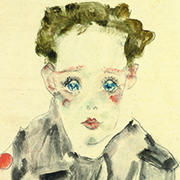
Like all great artists, Egon Schiele (1890-1918) transcended the specific circumstances of his personal and historical background, while nevertheless being indelibly marked by them. Reaching creative maturity shortly before his twentieth birthday, he is surely one of the youngest modernist superstars. However, Schiele was not entirely alone: the fin-de-siècle culture that spawned him and his Expressionist comrades was uniquely oriented to youth. It was within an overall culture of youth that Schiele, the quintessential artist of adolescence, flourished. This fall, as two major Schiele retrospectives, one at the Neue Galerie in New York (October 21-February 20) and a second at the Albertina Museum in Vienna (December 7-March 19) celebrate the artist’s imprint on our present-day mindset, the Galerie St. Etienne reexamines Schiele within the context of his own milieu.
Unlike puberty, which is a specific biological marker, adolescence is a cultural artifact: a way-station between childhood and adulthood whose duration and even existence vary across time and place. Evidence suggests that the concept of adolescence did not emerge—as a subject in literature, art, pedagogy, criminal justice or social psychology—in Western society until the latter part of the nineteenth century. The reification of adolescence was in large part a product of bourgeois capitalism, which placed heretofore unknown emphasis on secondary education as a prerequisite to entering the middleclass workforce. Increased life expectancy and a decrease in infant mortality made it less necessary to commence the reproductive cycle during one’s teen years. In fact, in Schiele’s Vienna, bourgeois men were not encouraged to marry before they had reached their twenty-fifth birthday, at which time they were finally deemed fit to support a family. The postponement of adult responsibilities created an uneasy interim period during which young men were expected to “sow their wild oats” amongst prostitutes and the like. Young middle-class women, who were expected neither to work nor to be sexually active, were largely denied this phase of youthful experimentation; they were often married off at an early age to comparatively older men.
The predominantly male adolescent subculture that developed as a result of these conditions was to some extent defined in opposition to the elderly forces that circumscribed the subculture’s boundaries. The strict teachers who ran the schools and the bearded gentlemen who controlled the pathways to subsequent professional success were associated with conservative social and artistic values that came to seem increasingly outmoded. Across central Europe in the 1890s, a cry arose for greater creative freedom and for an art more in tune with contemporary concerns. Secession movements in Berlin, Munich, Vienna and elsewhere attempted to wrest control from reactionary art academies by establishing venues wherein innovative artists could display and market their work. The German style of the period, Jugendstil (Youth Style) took its name from the popular Munich periodical Die Jugend (Youth). In Austria, the literary movement Jung Wien (Young Vienna) brought to the fore authors such as the teenage Hugo von Hofmannsthal. Franz Wedekind’s 1891 play Spring’s Awakening set up a central metaphor for his generation. It is surely no coincidence that, seven years later, the Vienna Secession chose to name its journal Ver Sacrum (Sacred Spring). Spring connoted both artistic renewal and the first flowering of youth.
The first flowering of the fin-de-siècle youth movement was filled with hope and yet undercut by pangs of foreboding. The rapid rise of the various Secessions indicates that the member artists were not economic outcasts, and many of them quickly found patronage among the emergent bourgeoisie. Ambivalence to the bourgeois environment that had brought forth and sustained them nevertheless was rampant among the Austrian and German avant-garde. Although Gustav Klimt was Vienna’s foremost society portraitist, he famously derided the efficacy of contemporary medicine, philosophy and jurisprudence in his controversial University paintings. The gloomy view of the human condition that pervades Klimt’s allegories was a primary focus for Edvard Munch, who often used the ambiguity of adolescence to symbolize anxiety. In Munch’s series of paintings and prints of Girls on a Jetty, the subjects congregate on a literal path to nowhere. The fearful, cowering woman-child in his series Puberty is the direct antithesis of the exultant girl in Ferdinand Hodler’s lithograph Spring's Awakening. Yet the Wedekind play from which Hodler took his title is actually a tragedy: the fourteen-year-old heroine dies of an abortion after being seduced and abandoned.
As the Secession movements split into squabbling factions and artists such as Klimt, Hodler and Munch, who had come of age professionally in the 1890s, moved toward their later years, the central-European avant garde entered a new phase. This second flowering would be led by a younger generation, who included the Brücke (Bridge) and Blaue Reiter (Blue Rider) artists in Germany, and in Austria, Schiele and Oskar Kokoschka. More extreme in their stylistic innovations, more vehement in their demand for change and their denunciation of bourgeois values, this Expressionist cohort both critiqued and continued the efforts of their Secessionist predecessors. The Expressionist generation is if anything more firmly associated with the hallmarks of adolescence: oedipal revolt, sexual experimentation, anxiety, narcissistic introspection, role-playing and identity formation.
Whereas the Secessionists had initially sought to establish a broad-based institutional presence, the Expressionists gathered in much smaller groups. With some misgivings, they left the marketing of their work chiefly to professional dealers, who were becoming increasingly important not just as salesmen but as defenders of difficult modernist trends. And whereas the Vienna Secession had stood behind the ambiguous motto “To the age its art, to art its freedom,” the newer groups were more explicit in their rejection of the past. “We call upon all youth to gather,” wrote Ernst Ludwig Kirchner, a leader of the Brücke group, in 1906. “We want to create elbowroom and existential freedom against the settled older forces.” Nonetheless, the Expressionists had no clear idea of how to achieve this end. “Anyone who directly and authentically reproduces the creative urge within himself is one of us,” Kirchner concluded. Schiele, in his 1909 Neukunstgruppe (New Art Group) manifesto, was similarly vague: “There is no new art. There are only new artists. . . . Formula is their antithesis.” In this context, much has been made of the influence of the philosopher Friedrich Nietzsche, who mandated a decisive break with the commonplace as a prerequisite to the birth of a “Higher Man.” Stranded between a despised past and an uncertain future, the Expressionists occupied an anxious limbo similar to that of Munch’s teenage Girls on a Jetty.
Like that latter-day adolescent hero Holden Caulfield, who believed the adult world is irredeemably tainted by phoniness, the Expressionists sought one possible solution in the pursuit of authenticity. Aesthetic authenticity, as Schiele suggested, might be found in the rejection of rote formula, and to this end the Expressionists assimilated a range of unconventional visual input: French Fauvism, the tribal art of non-Western cultures, and their own indigenous folk and Gothic traditions. Authenticity of content was a more complex matter that to some degree came to be exemplified by an unresolved tug-of-war between urban and rural environments. The city was the nexus of modern life, and as such it represented freedom and the future. But the city also represented bourgeois corruption, whereas the country was “pure.” “The city is dark,” wrote Schiele, and fled Vienna for Krumau and Neulengbach, where he clashed head-on with provincial values. He was evicted in the first town for drawing a nude in his studio garden; in the second, he was jailed on charges of “corrupting the morals of minors.” The Brücke artists found a slightly more hospitable climate in the Moritzburg lake district outside of Dresden, where nude sunbathing was tolerated if not condoned. Brücke depictions of nudes romping through the open landscape encapsulate the group’s idyllic vision of harmony between humankind and nature.
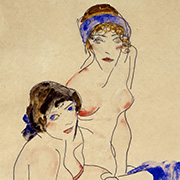
In addition to connoting Edenic purity, the natural environment suggested the unfettered expression of primal sexual instincts. If these two concepts were powerfully conjoined in images of the nude outdoors, an adolescent nude was even more potent. Children, like nature, had been associated with purity for over a century, but as Freud had recently revealed, they also embodied inchoate sexual impulses. It is therefore logical that the Expressionist generation was particularly attracted to underage models, who projected a poignant combination of sexual precocity and naiveté, nonchalance and embarassment. For the most part, these models came from the underclass: Kokoschka drew circus children, Schiele Viennese street urchins. The Brücke artists found their ideal models in the teenage daughters, Fränzi and Marzella, of an artist’s widow. The ready availability of such models reflects the hypocrisy of fin-de-siècle sexual mores: for although bourgeois girls were supposed to remain virgins until marriage, the streets were rife with lower-class prostitutes, often scarcely past puberty, who catered to young men during their protracted adolescence. Professional models—women who took their clothes off for money—were socially hardly better than prostitutes. So long as they did not violate the boundary separating lower- from upper-class girls, artists were free to do as they pleased; Schiele had ignored this caveat and paid the price in Neulengbach.
Not only were teenage models somehow more “authentic” than adults, they also had the advantage of being much more sympathetic to artists who themselves were often not quite over the pangs of adolescence. Girls’ slender, nearly hermaphroditic bodies were relatively unthreatening. They could be sexual without being sexy. Indeed, the emotions evoked by the adolescent nude range from terror and defiance to curiosity and soporific entrancement, but seldom include lust. Such art was in effect an analogue to sexual experimentation in the flesh, allowing artists to run through a panoply of feelings on paper or canvas before committing to full-fledged adult relationships. These works were thus less about the models per se than about the artists’ reactions to them. In this respect, the Expressionists’ teenage nudes constitute one component in the process of identity formation that is among the principal developmental tasks of adolescence.
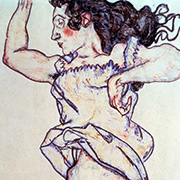
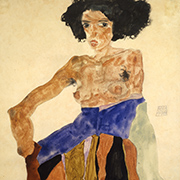
Almost all the Expressionists were in their twenties when they executed their breakthrough works. However, Schiele, as the youngest of them, dealt most consistently with identity issues in his art. He, alone among his peers, paid extensive attention to the male nude, in addition to executing an extensive sequence of probing self-portraits. Often, glancing from one self-portrait to the next, we ourselves do not know who Schiele is. He can be beautiful one day, hideous the next; preening and self-confident, and then again wracked with fear and doubt. This exploration of multiple selves becomes even more explicit—some would say downright disturbing—in Schiele’s double self-portraits (a theme confined principally to his oils). Yet Schiele’s unwavering certainty in his artistic mission suggests that he was never in true danger of losing himself. Like his sometimes narcissistic self-absorption, his identity confusion is less a sign of psychological malaise than a normal concomitant of adolescence.
And like all teenagers, Schiele eventually grew up. The Neulengbach incident shook him to the depths of his being, pulling him closer into the orbit of conventional society. Schiele had, in fact, always been a bourgeois young man, whose sometimes extreme images were called forth by inner necessity, not by any overt desire to shock or offend. In accordance with the rules of the day, Schiele chose to marry at the age of twenty-five, throwing aside his long-time model and lover Wally Neuzil for a conventional middle-class girl, Edith Harms. In the wake of his 1912 imprisonment, Schiele’s style also changed: his lines became less angular, his nudes more conventionally beautiful. He drew children and adolescents rarely, and only with the permission of their parents. Self-portraits and male nudes, too, became far less numerous. The resolution of his adolescent conflicts in his art makes Schiele’s entire oeuvre a coming of age story. In this regard, it is both tragic and yet somehow fitting that the artist died at twenty-eight.
Adolescence is a luxury. Teenagers and young adults who have to work or go to war cannot afford to cavort in the countryside with naked girls, or to indulge in existential crises. Perhaps this is why adolescent themes faded from art after World War I. If the anxiety that pervaded much prewar art was on some level anticipatory, it became much less compelling to people who had actually experienced the horrors of war and seen governments fall in both Germany and Austria. The children who remain as subjects in Weimar-era art tend to be prepubescent, and they often evidence visible emotional scars. In the more politically conscious art of the 1920s, children are society’s youngest victims: bearing the brunt of poverty and unemployment early on, only later to become canon fodder. This was a viewpoint that was particularly attractive to female artists, such as Käthe Kollwitz, who had never indulged in the adolescent sexual fantasizing of their male colleagues. The prewar paintings of Paula Modersohn–Becker, for example, depict childhood and adolescence as a period of impotence and insecurity. More frightening still is the postwar art of Lea Grundig. Youth culture in her work is cruel rather than liberating, suggesting how adaptable the innate cliquishness and intolerance of childhood would prove to Nazi militarism and anti-Semitism. The movement that had begun so hopefully with the Secessionists’ call for creative freedom ended in the rigid lockstep of the Hitler Youth.
We would like to warmly thank all the lenders whose generous cooperation has made this exhibition possible. Checklist entries include catalogue raisonné numbers, where applicable. Sheet sizes are given for paintings, watercolors and drawings, image sizes for prints.