The Ins and Outs of Self-Taught Art
Reflections on a Shifting Field
January 10, 2012 - April 7, 2012
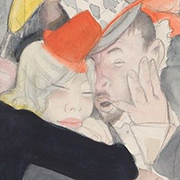
The Lady and the Tramp
Images of Women in Austrian and German Art
October 11, 2011 - December 30, 2011
Recent Acquisitions
(And Some Thoughts on the Current Art Market)
July 5, 2011 - September 30, 2011
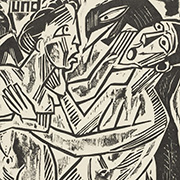
Decadence & Decay
Max Beckmann, Otto Dix, George Grosz
April 12, 2011 - June 24, 2011
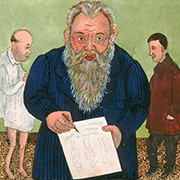
Self-Taught Painters in American 1800-1950
Revisiting the Tradition
January 11, 2011 - April 2, 2011
Marie-Louise Motesiczky
Paradise Lost & Found
October 12, 2010 - December 30, 2010
Recent Acquisitions
(And Some Thoughts on the Current Art Market)
July 13, 2010 - October 1, 2010
Käthe Kollwitz
A Portrait of the Artist
April 13, 2010 - June 25, 2010
Seventy Years Grandma Moses
A Loan Exhibition Celebrating the 70th Anniversary of the Artist's "Discovery"
February 3, 2010 - April 3, 2010
Egon Schiele as Printmaker
A Loan Exhibition Celebrating the 70th Anniversary of the Galerie St. Etienne
November 3, 2009 - January 23, 2010
From Brücke To Bauhaus
The Meanings of Modernity in Germany, 1905-1933
March 31, 2009 - June 26, 2009
They Taught Themselves
American Self-Taught Painters Between the World Wars
January 9, 2009 - March 14, 2009
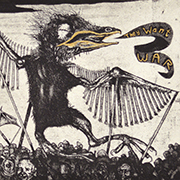
Elephants We Must Never Forget
New Paintings Drawings and Prints by Sue Coe
October 14, 2008 - December 20, 2008
Recent Acquisitions
(And Some Thoughts on the Current Art Market)
June 24, 2008 - September 26, 2008
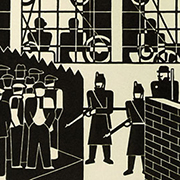
Hope or Menace?
Communism in Germany Between the World Wars
March 25, 2008 - June 13, 2008
Transforming Reality
Pattern and Design in Modern and Self-Taught Art
January 15, 2008 - March 8, 2008
Leonard Baskin
Proofs and Process
October 9, 2007 - January 5, 2008
Recent Acquisitions
(And Some Thoughts on the Current Art Market)
June 5, 2007 - September 28, 2007
Who Paid the Piper?
The Art of Patronage in Fin-de-Siècle Vienna
March 8, 2007 - May 26, 2007
Fairy Tale, Myth and Fantasy
Approaches to Spirituality in Art
December 7, 2006 - February 3, 2007
More Than Coffee was Served
Café Culture in Fin-de-Siècle Vienna and Weimar Germany
September 19, 2006 - November 25, 2006
Recent Acquisitions
(And Some Thoughts on the Current Art Market)
June 6, 2006 - September 8, 2006
Parallel Visions II
"Outsider" and "Insider" Art Today
April 5, 2006 - May 26, 2006
Ilija!
His First American Exhibtion
January 17, 2006 - March 18, 2006
Coming of Age
Egon Schiele and the Modernist Culture of Youth
November 15, 2005 - January 7, 2006
Sue Coe:
Sheep of Fools
September 20, 2005 - November 5, 2005
Recent Acquisitions
And Some Thoughts on the Current Art Market
June 7, 2005 - September 9, 2005
Every Picture Tells a Story
The Narrative Impulse in Modern and Contemporary Art
April 5, 2005 - May 27, 2005
65th Anniversary Exhibition, Part II
Self-Taught Artists
January 18, 2005 - March 26, 2005
65th Anniversary Exhibition, Part I
Austrian and German Expressionism
October 28, 2004 - January 8, 2005
Sue Coe: Bully: Master of the Global Merry-Go-Round and Recent Acquisitions
(And Some Thoughts on the Current Art Market)
June 8, 2004 - October 16, 2004
Animals & Us
The Animal in Contemporary Art
April 1, 2004 - May 22, 2004
Henry Darger
Art and Myth
January 15, 2004 - March 20, 2004
Body and Soul
Expressionism and the Human Figure
October 7, 2003 - January 3, 2004
Recent Acquisitions
(And Some Thoughts on the Current Art Market)
June 24, 2003 - September 12, 2003
In Search of the "Total Artwork"
Viennese Art and Design 1897–1932
April 8, 2003 - June 14, 2003
Russia's Self-Taught Artists
A New Perspective on the "Outsider"
January 14, 2003 - March 29, 2003
Käthe Kollwitz:
Master Printmaker
October 1, 2002 - January 4, 2003
Recent Acquisitions
(And Some Thoughts on the Current Art Market)
June 25, 2002 - September 20, 2002
Workers of the World
Modern Images of Labor
April 2, 2002 - June 15, 2002
Grandma Moses
Reflections of America
January 15, 2002 - March 16, 2002
Gustav Klimt/Egon Schiele/Oskar Kokoscha
From Art Nouveau to Expressionism
November 23, 2001 - January 5, 2002
The "Black-and-White" Show
Expressionist Graphics in Austria & Germany
September 20, 2001 - November 10, 2001
Recent Acquisitions (And Some Thoughts on the Current Art Market)
June 26, 2001 - September 7, 2001
Art with an Agenda
Politics, Persuasion, Illustration and Decoration
April 10, 2001 - June 16, 2001
"Our Beautiful and Tormented Austria!": Art Brut in the Land of Freud
January 18, 2001 - March 17, 2001
The Tragedy of War
November 16, 2000 - January 6, 2001
The Expressionist City
September 19, 2000 - November 4, 2000
Recent Acquisitions (And Some Thoughts on the Current Art Market)
June 20, 2000 - September 8, 2000
From Façade to Psyche
Turn-of-the-Century Portraiture in Austria & Germany
March 28, 2000 - June 10, 2000
European Self-Taught Art
Brut or Naive?
January 18, 2000 - March 11, 2000
Saved From Europe
In Commemoration of the 60th Anniversary of the Galerie St. Etienne
November 6, 1999 - January 8, 2000
The Modern Child
(Images of Children in Twentieth-Century Art)
September 14, 1999 - November 6, 1999
Recent Acquisitions
(And a Look at Sixty Years of Art Dealing)
June 15, 1999 - September 3, 1999
Sue Coe: The Pit
The Tragical Tale of the Rise and Fall of a Vivisector
March 30, 1999 - June 5, 1999
Henry Darger and His Realms
January 14, 1999 - March 13, 1999
Becoming Käthe Kollwitz
An Artist and Her Influences
November 17, 1998 - December 31, 1998
George Grosz - Elfriede Lohse-Wächtler
Art & Gender in Weimar Germany
September 23, 1998 - November 11, 1998
Recent Acquisitions
(And Some Thoughts About Looted Art)
June 9, 1998 - September 11, 1998
Taboo
Repression and Revolt in Modern Art
March 26, 1998 - May 30, 1998
Sacred & Profane
Michel Nedjar and Expressionist Primitivism
January 13, 1998 - March 14, 1998
Egon Schiele (1890-1918)
Master Draughtsman
November 18, 1997 - January 3, 1998
The New Objectivity
Realism in Weimar-Era Germany
September 16, 1997 - November 8, 1997
Recent Acquisitions
A Question of Quality
June 10, 1997 - September 5, 1997
Käthe Kollwitz - Lea Grundig
Two German Women & The Art of Protest
March 25, 1997 - May 31, 1997
That Way Madness Lies
Expressionism and the Art of Gugging
January 14, 1997 - March 15, 1997
The Viennese Line
Art and Design Circa 1900
November 18, 1996 - January 4, 1997
Emil Nolde - Christian Rohlfs
Two German Expressionist Masters
September 24, 1996 - November 9, 1996
Breaking All The Rules
Art in Transition
June 11, 1996 - September 6, 1996
Sue Coe's Ship of Fools
March 26, 1996 - May 24, 1996
New York Folk
Lawrence Lebduska, Abraham Levin, Isreal Litwak
January 16, 1996 - March 16, 1996
The Fractured Form
Expressionism and the Human Body
November 15, 1995 - January 6, 1996
From Left to Right
Social Realism in Germany and Russia, Circa 1919-1933
September 19, 1995 - November 4, 1995
Recent Acquisitions
June 20, 1995 - September 8, 1995
On the Brink 1900-2000
The Turning of Two Centuries
March 28, 1995 - May 26, 1995
Earl Cummingham - Grandma Moses
Visions of America
January 17, 1995 - March 18, 1995
Three Berlin Artists of the Weimar Era: Hannah Höch, Käthe Kollwitz, Jeanne Mam
September 13, 1994 - November 5, 1994
55th Anniversary Exhibition in Memory of Otto Kallir
June 7, 1994 - September 2, 1994
Drawn to Text: Comix Artists as Book Illustrators
May 15, 1994 - January 7, 1995
Sue Coe: We All Fall Down
March 29, 1994 - May 27, 1994
The Forgotten Folk Art of the 1940's
January 18, 1994 - March 19, 1994
Symbolism and the Austrian Avant Garde
Klimt, Schiele and their Contemporaries
November 16, 1993 - January 8, 1994
Art and Politics in Weimar Germany
September 14, 1993 - November 6, 1993
Recent Acquisitions
June 8, 1993 - September 3, 1993
The "Outsider" Question
Non-Academic Art from 1900 to the Present
March 23, 1993 - May 28, 1993
The Dance of Death
Images of Mortality in German Art
January 19, 1993 - March 13, 1993
Art Spiegelman
The Road to Maus
November 17, 1992 - January 9, 1993
Käthe Kollwitz
In Celebration of the 125th Anniversary of the Artist's Birth
September 15, 1992 - November 7, 1992
Naive Visions/Art Nouveau and Expressionism/Sue Coe: The Road to the White House
May 19, 1992 - September 4, 1992
Richard Gerstl/Oskar Kokoschka
March 17, 1992 - May 9, 1992
Scandal, Outrage, Censorship
Controversy in Modern Art
January 21, 1992 - March 7, 1992
Viennese Graphic Design
From Secession to Expressionism
November 19, 1991 - January 11, 1992
The Expressionist Figure
September 10, 1991 - November 9, 1991
Recent Acquisitions
Themes and Variations
May 14, 1991 - August 16, 1991
Sue Coe Retrospective
Political Document of a Decade
March 12, 1991 - May 5, 1991
Gustav Klimt, Egon Schiele, Oskar Kokoschka
Watercolors, drawings and prints
January 22, 1991 - March 2, 1991
Egon Schiele
November 13, 1990 - January 12, 1991
Lovis Corinth
A Retrospective
September 11, 1990 - November 3, 1990
Recent Acquisitions
June 12, 1990 - August 31, 1990
Max Klinger, Käthe Kollwitz, Alfred Kubin
A Study in Influences
March 27, 1990 - June 2, 1990
The Narrative in Art
January 23, 1990 - March 17, 1990
Grandma Moses
November 14, 1989 - January 13, 1990
Sue Coe
Porkopolis--Animals and Industry
September 19, 1989 - November 4, 1989
Galerie St. Etienne
A History in Documents and Pictures
June 20, 1989 - September 8, 1989
Gustav Klimt
Paintings and Drawings
April 11, 1989 - June 10, 1989
Fifty Years Galerie St. Etienne: An Overview
February 14, 1989 - April 1, 1989
Folk Artists at Work
Morris Hirshfield, John Kane and Grandma Moses
November 15, 1988 - January 14, 1989
Recent Acquisitions and Works From the Collection
June 14, 1988 - September 16, 1988
From Art Nouveau to Expressionism
April 12, 1988 - May 27, 1988
Three Pre-Expressionists
Lovis Corinth Käthe Kollwitz Paula Modersohn-Becker
January 26, 1988 - March 12, 1988
Käthe Kollwitz
The Power of the Print
November 17, 1987 - January 16, 1988
Recent Acquisitions and Works From the Collection
April 7, 1987 - October 31, 1987
Folk Art of This Century
February 10, 1987 - March 28, 1987
Oskar Kokoschka and His Time
November 25, 1986 - January 31, 1987
Viennese Design and Wiener Werkstätte
September 23, 1986 - November 8, 1986
Gustav Klimt/Egon Schiele/Oskar Kokoschka
Watercolors, Drawings and Prints
May 27, 1986 - September 13, 1986
Expressionist Painters
March 25, 1986 - May 10, 1986
Käthe Kollwitz/Paula Modersohn-Becker
January 28, 1986 - March 15, 1986
The Art of Giving
December 3, 1985 - January 18, 1986
Expressionists on Paper
October 8, 1985 - November 23, 1985
European and American Landscapes
June 4, 1985 - September 13, 1985
Expressionist Printmaking
Aspects of its Genesis and Development
April 1, 1985 - May 24, 1985
Expressionist Masters
January 18, 1985 - March 23, 1985
Arnold Schoenberg's Vienna
November 13, 1984 - January 5, 1985
Grandma Moses and Selected Folk Paintings
September 25, 1984 - November 3, 1984
American Folk Art
People, Places and Things
June 12, 1984 - September 14, 1984
John Kane
Modern America's First Folk Painter
April 17, 1984 - May 25, 1984
Eugène Mihaesco
The Illustrator as Artist
February 28, 1984 - April 7, 1984
Early Expressionist Masters
January 17, 1984 - February 18, 1984
Paula Modersohn-Becker
Germany's Pioneer Modernist
November 15, 1983 - January 7, 1984
Gustav Klimt
Drawings and Selected Paintings
September 20, 1983 - November 5, 1983
Early and Late
Drawings, Paintings & Prints from Academicism to Expressionism
June 1, 1983 - September 2, 1983
Alfred Kubin
Visions From The Other Side
March 22, 1983 - May 7, 1983
20th Century Folk
The First Generation
January 18, 1983 - March 12, 1983
Grandma Moses
The Artist Behind the Myth
November 15, 1982 - January 8, 1983
Kollwitz
The Artist as Printmaker
September 28, 1982 - November 6, 1982
Aspects of Modernism
June 1, 1982 - September 3, 1982
The Human Perspective
Recent Acquisitions
March 16, 1982 - May 15, 1982
19th and 20th Century European and American Folk Art
January 19, 1982 - March 6, 1982
The Folk Art Tradition
Naïve Painting in Europe and the United States
November 17, 1981 - January 9, 1982
Austria's Expressionism
April 21, 1981 - May 30, 1981
Eugène Mihaesco
His First American One-Man Show
March 3, 1981 - April 11, 1981
Gustav Klimt, Egon Schiele
November 12, 1980 - December 27, 1980
Summer Exhibition
June 17, 1980 - October 31, 1980
Kollwitz: The Drawing and The Print
May 1, 1980 - June 10, 1980
40th Anniversary Exhibition
November 13, 1979 - December 28, 1979
American Primitive Art
November 22, 1977
Käthe Kollwitz
December 1, 1976
Neue Galerie-Galerie St. Etienne
A Documentary Exhibition
May 1, 1976
Martin Pajeck
January 27, 1976
Georges Rouault and Frans Masereel
April 29, 1972
Branko Paradis
December 1, 1971
Käthe Kollwitz
February 3, 1971
Egon Schiele
The Graphic Work
October 19, 1970
Gustav Klimt
March 20, 1970
Friedrich Hundertwasser
May 6, 1969
Austrian Art of the 20th Century
March 21, 1969
Egon Schiele
Memorial Exhibition
October 31, 1968
Yugoslav Primitive Art
April 30, 1968
Alfred Kubin
January 30, 1968
Käthe Kollwitz
In the Cause of Humanity
October 23, 1967
Abraham Levin
September 26, 1967
Karl Stark
April 5, 1967
Gustav Klimt
February 4, 1967
The Wiener Werkstätte
November 16, 1966
Oskar Laske
October 25, 1965
Käthe Kollwitz
May 1, 1965
Egon Schiele
Watercolors and Drawings from American Collections
March 1, 1965
25th Anniversary Exhibition
Part II
November 21, 1964
25th Anniversary Exhibition
Part I
October 17, 1964
Mary Urban
June 9, 1964
Werner Berg, Jane Muus and Mura Dehn
May 5, 1964
Eugen Spiro
April 4, 1964
B. F. Dolbin
Drawings of an Epoch
March 3, 1964
Austrian Expressionists
January 6, 1964
Joseph Rifesser
December 3, 1963
Panorama of Yugoslav Primitive Art
October 21, 1963
Joe Henry
Watercolors of Vermont
May 1, 1963
French Impressionists
March 8, 1963
Grandma Moses
Memorial Exhibition
November 26, 1962
Group Show
October 15, 1962
Ernst Barlach
March 23, 1962
Martin Pajeck
February 24, 1962
Paintings by Expressionists
January 27, 1962
Käthe Kollwitz
November 11, 1961
Grandma Moses
September 7, 1961
My Friends
Fourth Biennial of Pictures by American School Children
May 27, 1961
Raimonds Staprans
April 17, 1961
Gustav Klimt, Egon Schiele, Oskar Kokoschka and Alfred Kubin
March 14, 1961
Marvin Meisels
January 23, 1961
Egon Schiele
November 15, 1960
My Life's History
Paintings by Grandma Moses
September 12, 1960
Watercolors and Drawings by Austrian Artists from the Dial Collection
May 2, 1960
Martin Pajeck
February 29, 1960
Eugen Spiro
February 6, 1960
Käthe Kollwitz
December 14, 1959
Josef Scharl
Last Paintings and Drawings
November 11, 1959
European and American Expressionists
September 22, 1959
Our Town
One Hundred Paintings by American School Children
May 23, 1959
Marvin Meisels and Martin Pajeck
May 1, 1959
Gustav Klimt
April 1, 1959
Käthe Kollwitz
January 12, 1959
Oskar Kokoschka
October 28, 1958
Village Life in Guatemala
Paintings by Andres Curuchich
June 3, 1958
Two Unknown American Expressionists
Paintings by Marvin Meisels and Martin Pajeck
April 28, 1958
Paula Modersohn-Becker
March 15, 1958
The Great Tradition in American Painting
American Primitive Art
January 20, 1958
Jules Lefranc and Dominique Lagru
Two French Primitives
November 18, 1957
Margret Bilger
October 22, 1957
The Four Seasons
One Hundred Paintings by American School Children
June 11, 1957
Grandma Moses
May 6, 1957
Alfred Kubin
April 3, 1957
Franz Lerch
March 2, 1957
Egon Schiele
January 21, 1957
Josef Scharl
Memorial Exhibition
November 17, 1956
Irma Rothstein
May 19, 1956
Käthe Kollwitz
April 16, 1956
A Tribute to Grandma Moses
November 28, 1955
As I See Myself
One Hundred Paintings by American School Children
May 20, 1955
Juan De'Prey
April 19, 1955
Erich Heckel
March 29, 1955
Freddy Homburger
March 2, 1955
Masters of the 19th Century
January 18, 1955
Oskar Kokoschka
November 29, 1954
Isabel Case Borgatta and Josef Scharl
October 12, 1954
James N. Rosenberg and Eugen Spiro
April 30, 1954
Per Krogh
April 2, 1954
Cuno Amiet
February 16, 1954
Eniar Jolin
January 14, 1954
Irma Rothstein
December 8, 1953
Josef Scharl
November 11, 1953
Grandma Moses
October 21, 1953 - October 24, 1953
Wilhelm Kaufmann
September 30, 1953
Lovis Corinth, Oskar Kokoschka and Egon Schiele
May 27, 1953
A Grandma Moses Album
Recent Paintings, 1950-1953
April 15, 1953
Streeter Blair
American Primitive
February 26, 1953
Paintings on Glass
Austrian Religious Folk Art of the 17th to 19th Centuries
December 4, 1952
Hasan Kaptan
Paintings of a Ten-Year-Old Turkish Painter
October 29, 1952
Margret Bilger
May 10, 1952
American Natural Painters
March 31, 1952
Ten Years of New York Concert Impressions by Eugen Spiro; Four New Paintings by
January 26, 1952
I-Fa-Wei
Watercolors of New York by a Chinese Artist
December 1, 1951
Käthe Kollwitz
October 25, 1951
Drawings and Watercolors by Austrian Children
May 21, 1951
Grandma Moses
Twenty-Five Masterpieces of Primitive Art
March 17, 1951
Roswitha Bitterlich
January 18, 1951
Oskar Laske
Watercolors of Vienna and the Salzkammergut
October 14, 1950
Tenth Anniversary Exhibition
Part II
May 11, 1950
Austrian Art of the 19th Century
From Wadlmüller to Klimt
April 1, 1950
Chiao Ssu-Tu
February 18, 1950
Anton Faistauer
January 1, 1950
Tenth Anniversary Exhibition
Part I
November 30, 1949
Autograph Exhibition
October 26, 1949
Gladys Wertheim Bachrach
May 24, 1949
Oskar Kokoschka
March 30, 1949
Eugen Spiro
February 19, 1949
Frans Masereel
January 13, 1949
Ten Years Grandma Moses
November 22, 1948
Käthe Kollwitz
Masterworks
October 18, 1948
American Primitives
June 3, 1948
Egon Schiele
Memorial Exhibition
April 5, 1948
Miriam Richman
February 7, 1948
Vally Wieselthier
Memorial Exhibition
January 10, 1948
Christmas Exhibition
December 4, 1947
Fritz von Unruh
November 10, 1947
Käthe Kollwitz
October 4, 1947
Grandma Moses
May 17, 1947
Lovis Corinth
April 16, 1947
Hugo Steiner-Prag
March 15, 1947
Mark Baum
January 11, 1947
Eugen Spiro
November 25, 1946
Henri de Toulouse-Lautrec
May 17, 1946
Ladis W. Sabo
Paintings by a New Primitive Artist
April 8, 1946
Georges Rouault
The Graphic Work
February 26, 1946
Käthe Kollwitz
Memorial Exhibition
November 21, 1945
Fred E. Robertson
Paintings by an American Primitive
June 13, 1945
Max Liebermann
The Graphic Work
April 18, 1945
Vienna through Four Centuries
March 1, 1945
Eugen Spiro
January 20, 1945
Grandma Moses
New Paintings
December 5, 1944
Käthe Kollwitz
Part II
October 26, 1944
A Century of French Graphic Art
From Géricault to Picasso
September 28, 1944
Max Liebermann
Memorial Exhibition
June 9, 1944
Juan De'Prey
Paintings by a Self-Taught Artist from Puerto Rico
May 6, 1944
Abraham Levin
April 15, 1944
Lesser Ury
Memorial Exhibition
March 21, 1944
Grandma Moses
Paintings by the Senior of the American Primitives
February 9, 1944
Betty Lane
January 11, 1944
WaIt Disney Cavalcade
December 9, 1943
Käthe Kollwitz
Part I
November 3, 1943
Will Barnet
September 29, 1943
Lovis Corinth
May 26, 1943
Josephine Joy
Paintings by an American Primitive
May 3, 1943
Oskar Kokoschka
Aspects of His Art
March 31, 1943
Eugen Spiro
February 13, 1943
Seymour Lipton
January 18, 1943
Illuminated Gothic Woodcuts
Printed and Painted, 1477-1493
December 5, 1942
Abraham Levin
November 4, 1942
Walt Disney Originals
September 23, 1942
Documents which Relate History
Documents of Historical Importance and Landmarks of Human Development
June 10, 1942
Honoré Daumier
April 29, 1942
Bertha Trabich
Memorial Exhibition of a Russian-American Primitive
March 25, 1942
Alfred Kubin
Master of Drawing
December 4, 1941
Egon Schiele
November 7, 1941
Betty Lane
June 3, 1941
Flowers from Old Vienna
18th and Early 19th Century Flower Painting
May 7, 1941
Weavings by Navaho and Hopi Indians and Photos of Indians by Helen M. Post
January 29, 1941
Georg Merkel
November 7, 1940
What a Farm Wife Painted
Works by Mrs. Anna Mary Moses
October 9, 1940
Saved from Europe
Masterpieces of European Art
July 1, 1940
American Abstract Art
May 22, 1940
Franz Lerch
May 1, 1940
Wilhelm Thöny
April 3, 1940
French Masters of the 19th and 20th Centuries
February 29, 1940
H. W. Hannau
Metropolis, Photographic Studies of New York
February 2, 1940
Oskar Kokoschka
January 9, 1940
Austrian Masters
November 13, 1939
ART WITH AN AGENDA
Politics, Persuasion, Illustration and Decoration
Arntz, Gerd
Grosz, George
Heartfield, John
Hoffmann, Josef
Klutsis, Gustav
Kokoschka, Oskar
Kollwitz, Käthe
Kubin, Alfred
Meidner, Ludwig
Moser, Kolomon
Peche, Dagobert
Schiele, Egon
Modernism, though sometimes studied from a strictly formalist perspective, encompassed a wide range of political, commercial, literary and utilitarian agendas. During the first decades of the twentieth century, avant-garde artists, fired up with utopian idealism, sought to rescue the masses from drudgery and bad taste by investing art and artifacts with revolutionary purpose. Not all these artists were specifically political, but almost all the early modernists felt that art served some higher, transformative goal, be it spiritual, personal or social. Europe at the time was in a state of upheaval. Industrialization had overturned the socio-economic structure of the entire continent, undermining the aristocratic order and empowering the working class in ways that could be perceived as either frightening or exciting, depending on one's own class allegiances. Technology, too, was frightening to some, but many others were invigorated by the prospect of a "brave new world." At the outset modernity entailed a push--pull between danger and promise, and this dualism was in turn reflected in the art of the period.
Whether they fled civilization's demoralizing advance, as did Paul Gauguin, or welcomed the apparently imminent demise of a stultifying regime, as did the Italian Futurists, forward-thinking artists were united in their rejection of the status quo and their quest for a more vital alternative. Expressionists, Cubists and their slightly younger cousins, the Surrealists, all shared a distaste for the artificial and a reverence for the authentic, which they manifested through a repudiation of the academy and bourgeois culture. These artists rent asunder, once and for all, nineteenth-century standards of taste and approved subject matter, substituting for them a very personal vocabulary of form and color. The political significance of this transformation should not be underestimated, for the old styles were associated with the old regime, just as the new ones presaged a hoped-for new age of individual freedom. The scandals provoked by modern art in the first decades of the twentieth century--which would reach their climax with the Nazi attacks on "degenerate" art--are indicative of the tangible threat that conventional society perceived in such work.
The socio-economic ramifications of modernity were addressed most directly within the field of the applied arts, which naturally was also most immediately affected by industrialization. Here art and social issues were overtly fused. In the mid-nineteenth century, proponents of the British Arts and Crafts revival, curiously melding progressive and reactionary ideas, had sought to create a socialist workers' paradise by resurrecting the medieval workshop, which was held to foster community alongside craftsmanship. When the workshop principle was transplanted to Austria in the early twentieth century, however, the political agenda was largely jettisoned, while the artistic mandate was considerably expanded. Artists and artisans of the Wiener Werkstätte (Vienna Workshop), founded in 1903 by Josef Hoffmann (checklist nos. 31-34) and Koloman Moser (checklist nos. 61 and 62), joined forces in pursuit of the Gesamtkunstwerk--the total artwork--combining everything from architecture (checklist nos. 35, 37, 38, 73 and 74) and painting to fashion design (checklist nos. 57, 58, 80, 81 and 83). The Werkstätte's goal was to counter industrialization with handicraft, in the process elevating the taste of the masses and infusing all of life with aesthetic value. Far from espousing a socialist, much less a democratic doctrine, the Austrian avant garde favored what might best be described as a benevolent artistic dictatorship. Those with taste would rule by acclamation; artists would be supported by a cadre of like-minded patrons; and the cultural benefits would trickle down from the enlightened few to the many.
The idea of the "total artwork," coupled with the anti-elitist desire to level the “high” and “low” arts, fostered the belief that a true artist should be able to do everything. At the Wiener Werkstätte, artists designed utilitarian objects, creating some that were extraordinarily innovative and others that defied practical use or manufacture. Painters such as Gustav Klimt, Oskar Kokoschka (checklist nos. 41-43) and Egon Schiele (checklist nos. 70-72) enthusiastically pitched in, contributing wall decor, postcards, posters and the like. Schiele and Kokoschka also dabbled in literature, as did Ernst Barlach (checklist no. 14), Max Beckmann (checklist no. 15), Wassily Kandinsky, Alfred Kubin (checklist nos. 53-55), Ludwig Meidner (checklist nos. 59 and 60) and other artists associated with the Expressionist movement. Many produced illustrations for writings by themselves and others, or cycles of interrelated images. Taking off from the exquisitely crafted periodicals of the Art-Nouveau period, the concept of the artist's publication assumed unprecedented dimensions. Portfolios containing original graphics reflected the new aesthetic importance accorded printmaking and also helped to disseminate and promote the work. Publications like the Blauer Reiter Almanac and the Futurist Manifesto served as artistic polemics in which form and content were integrally connected.
Most members of the early twentieth-century avant garde initially welcomed the First World War, perceiving it as a cleansing action that would at last sweep away the remnants of nineteenth-century bourgeois culture. In a sense, the war accomplished this goal, helping to topple aristocratic regimes in Russia, Germany and Austria. And while progressive artists ultimately recoiled from the carnage wrought by the global conflict, they heralded the role of art in contributing to the social transformation now at hand. Particularly in countries that had been touched by revolution, the avant garde felt compelled to side with the masses. Even in remote America, Stuart Davis could characterize his artist colleagues as exploited laborers who had more in common with the working class than they did with their bourgeois patrons. Figures as diverse as the French Surrealist André Breton and the Russian Communist Leon Trotsky believed that socialism would free the artist from the hostile commercial forces that hampered creative expression under capitalism. Artists were seen--and saw themselves--as the natural allies of revolution.
The revolutionary artists who came of age in the period between the two world wars were quick to recognize that technology was a logical adjunct to their efforts. Its dehumanizing downside momentarily forgotten, technology was hailed as the handmaiden of progress, guarantor of a better life for all. Embraced as an artistic tool, technology provided a perfect way to reach the masses by permitting the production of vast quantities of imagery at low cost. Furthermore, mechanical reproduction effaced the touch of the artist's hand, which carried the taint of bourgeois preciousness. Painting was, for the moment, "out." Photomontage--as practiced by John Heartfield (checklist nos. 27-30) and others in Germany, and by Constructivists like Gustav Klutsis in Russia (checklist nos. 39 and 40)--struck just the right note: cool, mechanistic and exuding a sense of newness.
Artists renounced the cult of individualism that had frequently characterized the earlier avant garde, while retaining such stylistic innovations as the use of abstract form and expressive color. The German artist Gerd Arntz created a complex vocabulary of symbolic shapes in order to strip his social commentaries of personal associations (checklist nos. 5-13). Seeking to outrage the bourgeoisie, Dadaists and Surrealists joyously cribbed from "low" culture, appropriating an intentionally irritating hodgepodge of commercial type and symbols. Constructivists, working under the collectivist mantle of the new Soviet state, refined these chaotic experiments into a coherent formal language that combined clean typography, bright, attention-getting color and elemental abstraction.
These aesthetic innovations were predicated on the notion that new times demanded new forms of expression. Linear perspective, it was said, reinforced the oppressive logic of capitalism. Realism implied a passive acceptance of the status quo, whereas the disjointed design found in photomontage assumed a reordering of reality. However, as it turned out, the masses were slow to accept this new art that had been so lovingly developed for them. Just because the Dadaists mimicked commercial design did not make their work automatically accessible to a large public. People saw cynical self-promotion in an art that looked commercial but in fact was not selling anything except, perhaps, the artists themselves. Constructivist typography was hard to read, abstract imagery hard to comprehend. The public found these works confusing and even insulting.
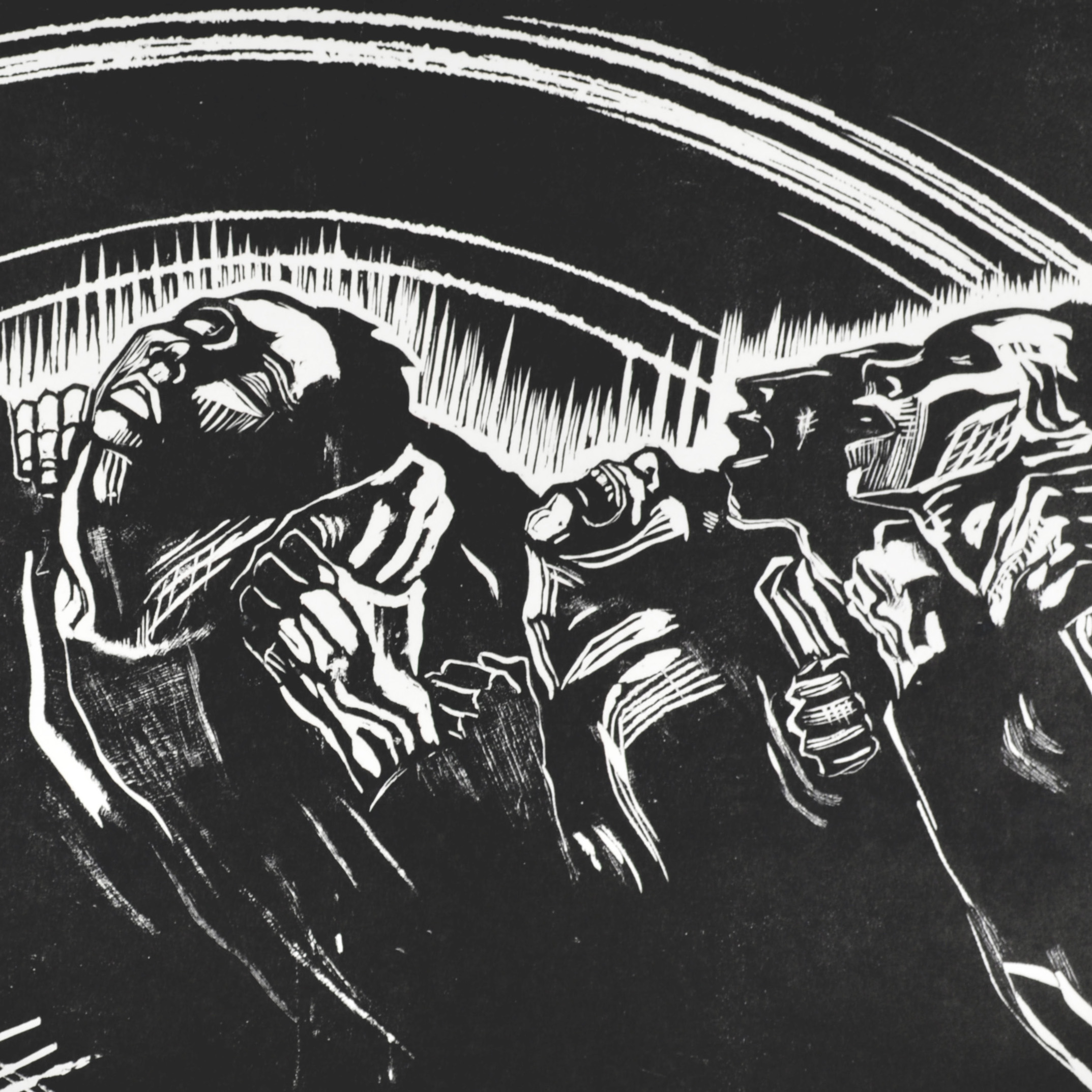
As the revolution foundered in Germany and Stalinism took hold in the Soviet Union, artists reverted to a realist orientation. Trotsky had written that all representational art is essentially political: either affirming the existing order or critiquing it. German artists such as George Grosz and Käthe Kollwitz took the latter approach. Grosz used satire and caricature to raise awareness of the corruption endemic to the Weimar regime (checklists nos. 18-26), while Kollwitz, through her compassionate portrayals of the downtrodden (checklists nos. 45-52), hoped to provoke meaningful social reform. The Russians, who had once been allied with the German left-wing, now damned its art as too negative. The philosophy of Socialist Realism demanded uncritical praise of Soviet industry and agriculture. A virtually identical doctrine would be instituted in Nazi Germany, where all the advanced artists who had flourished during the Weimar era were banned.
Their temporary obliteration by the politics of Communism and fascism notwithstanding, avant-garde artists of the inter-war period ironically bequeathed a substantial legacy to commercial design. The public gradually grew accustomed to quirky typography and abstraction, which came to replace the what-you-see-is-what-you-get realism of prior advertisements. Rather than simply depicting merchandise, modern design imparted the aura of style and novelty that was necessary to distinguish products in the vast consumer marketplace. Letters were manipulated to convey ideas, color to evoke emotion (checklist nos. 16, 75 and 76). Abstract stylization transformed images into essential objects: the ur-auto, or -ship or -stick of gum. By compelling viewers to use their imaginations to complete and interpret such stylized representations, advertisers engaged customers in a participatory game that snagged their attention if not their loyalty. Thus the best-laid plans of socialist artists came to serve the great capitalist machine.
The unprecedented growth of consumer capitalism after World War II, plus the pressure of Cold-War politics, gave a peculiar spin to the art-world's agenda. In the 1950s, many intellectuals recoiled at the prospect of a mass culture, which they feared would annihilate all standards of taste and quality. Thus the belief developed that high culture could only survive if it was cocooned, kept in isolation from the corrupting hordes. This belief, which persists among some art critics to the present day, found its most cogent expression in the writings of Clement Greenberg, who decreed that art should disdain all social ties and strive for the purity exemplified by abstraction. "Content," he wrote, "is to be dissolved so completely into form that the work of art . . . cannot be reduced in whole or in part to anything not itself."
As against the moralistic totalitarianism of Socialist Realism, Greenberg et. al. offered an aesthetic totalitarianism of absolute abstraction. Although the American public in the 1950s largely disdained abstract art, the U.S. government was gradually won over by the art establishment, which championed the Abstract Expressionists as models of democratic freedom. Through a series of international exhibitions organized by the CIA’s front organization, the Congress for Cultural Freedom, and later by the State Department, Abstract Expressionism was in effect employed as propaganda to counter the rigidity of Soviet cultural doctrine. Ignoring the messy and mixed agendas of early modernism, Cold-War era critics traced a pristine formalist trajectory from Europe to the United States and anointed America's abstract artists as the logical successors to the pre-war avant-garde. Homegrown modernism was promoted to establish the United States as an art-world superpower, a status deemed commensurate with the nation's post-war economic and military might.
The political use that was made of Abstract Expressionism demonstrates that all art has an agenda--even, or perhaps most especially, when its defenders are loudly denying any such ulterior motive. That is to say, all art has a social context, which artists can choose to embrace or deny. The push--pull between engagement and distancing was in a sense hard-wired into the modernist mandate. While some artists wanted to remake the world, others retreated into the production of “art for art’s sake.” Indeed, these two goals were often intimately related, for many felt that in rejecting contact with a tainted world, art might yet offer redemption. Their socialist pretensions notwithstanding, few members of the early twentieth-century avant garde were authentic egalitarians. Clinging to their elitist status, artists expected that the masses would just naturally follow their example. If artists cannot escape the political implications of their work, neither do they always identify them correctly.
Modernism and the various ideologies that helped shape it are presently fading into history. With the benefit of hindsight, we can see that, while things did not always turn out as hoped, many dire predictions proved inaccurate. “Consumer culture” is not a complete oxymoron. Certainly industrialization generated more than its share of kitsch, but it also succeeded in making a huge variety of tasteful products available to the masses at affordable prices. For better or for worse, culture has been truly democratized. People crowd our museums, buying Van Gogh bookmarks and Picasso mugs. By validating the work of such artists as Walt Disney and Norman Rockwell, contemporary critics recognize that originality and quality are not determined by or limited to elitist modes of creative expression. Several generations of artists have now been reared on film, television and comic books, and contemporary “high” art is infused with traditions derived from the “low.” While prejudice against representational art--particularly work with obvious illustrative or political content--lingers, the formalist dogma of Clement Greenberg and his colleagues has been largely discredited.
It remains to be seen how the anti-elitist thrust of contemporary culture will affect the art-world’s agenda. Like most situations, the present one has negative as well as positive aspects. On the one hand, the demise of any serious socialist alternative has encouraged the all-out pursuit of wealth by every segment of the art community. On the other hand, the democratizing of culture means that the art world must be genuinely responsive to the needs of the masses. Those who support the old elitist model of artistic patronage see only debasement in the resulting “blockbuster” mentality. However, as neither artists nor museum directors any longer hold themselves aloof from the general public, it is to be hoped that the art-world's future agenda will be not merely to make money, but to address, boldly and passionately, the human concerns that lie at the heart of all great art.
We would like to covey our warmest thanks to Merrill Berman, a pioneering collector of this material, for his generous loans. Checklist entries include catalogue raisonné numbers, where applicable. Unless otherwise indicated, image dimensions are given for the prints and full dimensions for all other works.