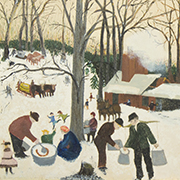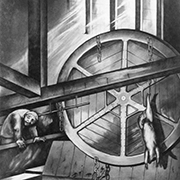

The Ins and Outs of Self-Taught Art
Reflections on a Shifting Field
January 10, 2012 - April 7, 2012
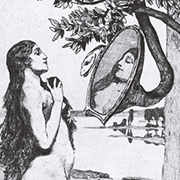
The Lady and the Tramp
Images of Women in Austrian and German Art
October 11, 2011 - December 30, 2011
Recent Acquisitions
(And Some Thoughts on the Current Art Market)
July 5, 2011 - September 30, 2011
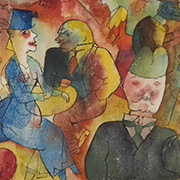
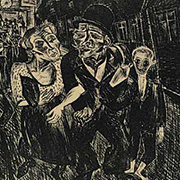
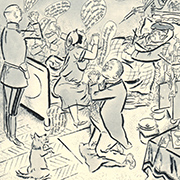
Decadence & Decay
Max Beckmann, Otto Dix, George Grosz
April 12, 2011 - June 24, 2011
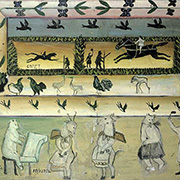
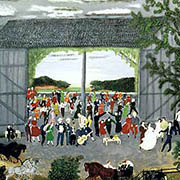
Self-Taught Painters in American 1800-1950
Revisiting the Tradition
January 11, 2011 - April 2, 2011
Marie-Louise Motesiczky
Paradise Lost & Found
October 12, 2010 - December 30, 2010
Recent Acquisitions
(And Some Thoughts on the Current Art Market)
July 13, 2010 - October 1, 2010
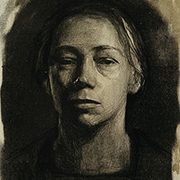
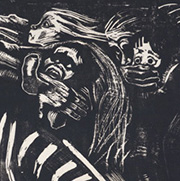
Käthe Kollwitz
A Portrait of the Artist
April 13, 2010 - June 25, 2010
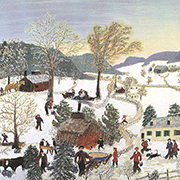
Seventy Years Grandma Moses
A Loan Exhibition Celebrating the 70th Anniversary of the Artist's "Discovery"
February 3, 2010 - April 3, 2010
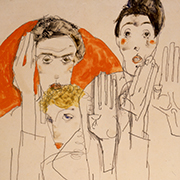
Egon Schiele as Printmaker
A Loan Exhibition Celebrating the 70th Anniversary of the Galerie St. Etienne
November 3, 2009 - January 23, 2010
From Brücke To Bauhaus
The Meanings of Modernity in Germany, 1905-1933
March 31, 2009 - June 26, 2009
They Taught Themselves
American Self-Taught Painters Between the World Wars
January 9, 2009 - March 14, 2009
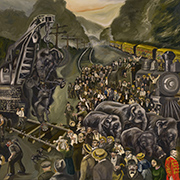
Elephants We Must Never Forget
New Paintings Drawings and Prints by Sue Coe
October 14, 2008 - December 20, 2008
Recent Acquisitions
(And Some Thoughts on the Current Art Market)
June 24, 2008 - September 26, 2008
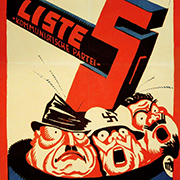
Hope or Menace?
Communism in Germany Between the World Wars
March 25, 2008 - June 13, 2008
Transforming Reality
Pattern and Design in Modern and Self-Taught Art
January 15, 2008 - March 8, 2008
Leonard Baskin
Proofs and Process
October 9, 2007 - January 5, 2008
Recent Acquisitions
(And Some Thoughts on the Current Art Market)
June 5, 2007 - September 28, 2007
Who Paid the Piper?
The Art of Patronage in Fin-de-Siècle Vienna
March 8, 2007 - May 26, 2007
Fairy Tale, Myth and Fantasy
Approaches to Spirituality in Art
December 7, 2006 - February 3, 2007
More Than Coffee was Served
Café Culture in Fin-de-Siècle Vienna and Weimar Germany
September 19, 2006 - November 25, 2006
Recent Acquisitions
(And Some Thoughts on the Current Art Market)
June 6, 2006 - September 8, 2006
Parallel Visions II
"Outsider" and "Insider" Art Today
April 5, 2006 - May 26, 2006
Ilija!
His First American Exhibtion
January 17, 2006 - March 18, 2006
Coming of Age
Egon Schiele and the Modernist Culture of Youth
November 15, 2005 - January 7, 2006
Sue Coe:
Sheep of Fools
September 20, 2005 - November 5, 2005
Recent Acquisitions
And Some Thoughts on the Current Art Market
June 7, 2005 - September 9, 2005
Every Picture Tells a Story
The Narrative Impulse in Modern and Contemporary Art
April 5, 2005 - May 27, 2005
65th Anniversary Exhibition, Part II
Self-Taught Artists
January 18, 2005 - March 26, 2005
65th Anniversary Exhibition, Part I
Austrian and German Expressionism
October 28, 2004 - January 8, 2005
Sue Coe: Bully: Master of the Global Merry-Go-Round and Recent Acquisitions
(And Some Thoughts on the Current Art Market)
June 8, 2004 - October 16, 2004
Animals & Us
The Animal in Contemporary Art
April 1, 2004 - May 22, 2004
Henry Darger
Art and Myth
January 15, 2004 - March 20, 2004
Body and Soul
Expressionism and the Human Figure
October 7, 2003 - January 3, 2004
Recent Acquisitions
(And Some Thoughts on the Current Art Market)
June 24, 2003 - September 12, 2003
In Search of the "Total Artwork"
Viennese Art and Design 1897–1932
April 8, 2003 - June 14, 2003
Russia's Self-Taught Artists
A New Perspective on the "Outsider"
January 14, 2003 - March 29, 2003
Käthe Kollwitz:
Master Printmaker
October 1, 2002 - January 4, 2003
Recent Acquisitions
(And Some Thoughts on the Current Art Market)
June 25, 2002 - September 20, 2002
Workers of the World
Modern Images of Labor
April 2, 2002 - June 15, 2002
Grandma Moses
Reflections of America
January 15, 2002 - March 16, 2002
Gustav Klimt/Egon Schiele/Oskar Kokoscha
From Art Nouveau to Expressionism
November 23, 2001 - January 5, 2002
The "Black-and-White" Show
Expressionist Graphics in Austria & Germany
September 20, 2001 - November 10, 2001
Recent Acquisitions (And Some Thoughts on the Current Art Market)
June 26, 2001 - September 7, 2001
Art with an Agenda
Politics, Persuasion, Illustration and Decoration
April 10, 2001 - June 16, 2001
"Our Beautiful and Tormented Austria!": Art Brut in the Land of Freud
January 18, 2001 - March 17, 2001
The Tragedy of War
November 16, 2000 - January 6, 2001
The Expressionist City
September 19, 2000 - November 4, 2000
Recent Acquisitions (And Some Thoughts on the Current Art Market)
June 20, 2000 - September 8, 2000
From Façade to Psyche
Turn-of-the-Century Portraiture in Austria & Germany
March 28, 2000 - June 10, 2000
European Self-Taught Art
Brut or Naive?
January 18, 2000 - March 11, 2000
Saved From Europe
In Commemoration of the 60th Anniversary of the Galerie St. Etienne
November 6, 1999 - January 8, 2000
The Modern Child
(Images of Children in Twentieth-Century Art)
September 14, 1999 - November 6, 1999
Recent Acquisitions
(And a Look at Sixty Years of Art Dealing)
June 15, 1999 - September 3, 1999
Sue Coe: The Pit
The Tragical Tale of the Rise and Fall of a Vivisector
March 30, 1999 - June 5, 1999
Henry Darger and His Realms
January 14, 1999 - March 13, 1999
Becoming Käthe Kollwitz
An Artist and Her Influences
November 17, 1998 - December 31, 1998
George Grosz - Elfriede Lohse-Wächtler
Art & Gender in Weimar Germany
September 23, 1998 - November 11, 1998
Recent Acquisitions
(And Some Thoughts About Looted Art)
June 9, 1998 - September 11, 1998
Taboo
Repression and Revolt in Modern Art
March 26, 1998 - May 30, 1998
Sacred & Profane
Michel Nedjar and Expressionist Primitivism
January 13, 1998 - March 14, 1998
Egon Schiele (1890-1918)
Master Draughtsman
November 18, 1997 - January 3, 1998
The New Objectivity
Realism in Weimar-Era Germany
September 16, 1997 - November 8, 1997
Recent Acquisitions
A Question of Quality
June 10, 1997 - September 5, 1997
Käthe Kollwitz - Lea Grundig
Two German Women & The Art of Protest
March 25, 1997 - May 31, 1997
That Way Madness Lies
Expressionism and the Art of Gugging
January 14, 1997 - March 15, 1997
The Viennese Line
Art and Design Circa 1900
November 18, 1996 - January 4, 1997
Emil Nolde - Christian Rohlfs
Two German Expressionist Masters
September 24, 1996 - November 9, 1996
Breaking All The Rules
Art in Transition
June 11, 1996 - September 6, 1996
Sue Coe's Ship of Fools
March 26, 1996 - May 24, 1996
New York Folk
Lawrence Lebduska, Abraham Levin, Isreal Litwak
January 16, 1996 - March 16, 1996
The Fractured Form
Expressionism and the Human Body
November 15, 1995 - January 6, 1996
From Left to Right
Social Realism in Germany and Russia, Circa 1919-1933
September 19, 1995 - November 4, 1995
Recent Acquisitions
June 20, 1995 - September 8, 1995
On the Brink 1900-2000
The Turning of Two Centuries
March 28, 1995 - May 26, 1995
Earl Cummingham - Grandma Moses
Visions of America
January 17, 1995 - March 18, 1995
Three Berlin Artists of the Weimar Era: Hannah Höch, Käthe Kollwitz, Jeanne Mam
September 13, 1994 - November 5, 1994
55th Anniversary Exhibition in Memory of Otto Kallir
June 7, 1994 - September 2, 1994
Drawn to Text: Comix Artists as Book Illustrators
May 15, 1994 - January 7, 1995
Sue Coe: We All Fall Down
March 29, 1994 - May 27, 1994
The Forgotten Folk Art of the 1940's
January 18, 1994 - March 19, 1994
Symbolism and the Austrian Avant Garde
Klimt, Schiele and their Contemporaries
November 16, 1993 - January 8, 1994
Art and Politics in Weimar Germany
September 14, 1993 - November 6, 1993
Recent Acquisitions
June 8, 1993 - September 3, 1993
The "Outsider" Question
Non-Academic Art from 1900 to the Present
March 23, 1993 - May 28, 1993
The Dance of Death
Images of Mortality in German Art
January 19, 1993 - March 13, 1993
Art Spiegelman
The Road to Maus
November 17, 1992 - January 9, 1993
Käthe Kollwitz
In Celebration of the 125th Anniversary of the Artist's Birth
September 15, 1992 - November 7, 1992
Naive Visions/Art Nouveau and Expressionism/Sue Coe: The Road to the White House
May 19, 1992 - September 4, 1992
Richard Gerstl/Oskar Kokoschka
March 17, 1992 - May 9, 1992
Scandal, Outrage, Censorship
Controversy in Modern Art
January 21, 1992 - March 7, 1992
Viennese Graphic Design
From Secession to Expressionism
November 19, 1991 - January 11, 1992
The Expressionist Figure
September 10, 1991 - November 9, 1991
Recent Acquisitions
Themes and Variations
May 14, 1991 - August 16, 1991
Sue Coe Retrospective
Political Document of a Decade
March 12, 1991 - May 5, 1991
Gustav Klimt, Egon Schiele, Oskar Kokoschka
Watercolors, drawings and prints
January 22, 1991 - March 2, 1991
Egon Schiele
November 13, 1990 - January 12, 1991
Lovis Corinth
A Retrospective
September 11, 1990 - November 3, 1990
Recent Acquisitions
June 12, 1990 - August 31, 1990
Max Klinger, Käthe Kollwitz, Alfred Kubin
A Study in Influences
March 27, 1990 - June 2, 1990
The Narrative in Art
January 23, 1990 - March 17, 1990
Grandma Moses
November 14, 1989 - January 13, 1990
Sue Coe
Porkopolis--Animals and Industry
September 19, 1989 - November 4, 1989
Galerie St. Etienne
A History in Documents and Pictures
June 20, 1989 - September 8, 1989
Gustav Klimt
Paintings and Drawings
April 11, 1989 - June 10, 1989
Fifty Years Galerie St. Etienne: An Overview
February 14, 1989 - April 1, 1989
Folk Artists at Work
Morris Hirshfield, John Kane and Grandma Moses
November 15, 1988 - January 14, 1989
Recent Acquisitions and Works From the Collection
June 14, 1988 - September 16, 1988
From Art Nouveau to Expressionism
April 12, 1988 - May 27, 1988
Three Pre-Expressionists
Lovis Corinth Käthe Kollwitz Paula Modersohn-Becker
January 26, 1988 - March 12, 1988
Käthe Kollwitz
The Power of the Print
November 17, 1987 - January 16, 1988
Recent Acquisitions and Works From the Collection
April 7, 1987 - October 31, 1987
Folk Art of This Century
February 10, 1987 - March 28, 1987
Oskar Kokoschka and His Time
November 25, 1986 - January 31, 1987
Viennese Design and Wiener Werkstätte
September 23, 1986 - November 8, 1986
Gustav Klimt/Egon Schiele/Oskar Kokoschka
Watercolors, Drawings and Prints
May 27, 1986 - September 13, 1986
Expressionist Painters
March 25, 1986 - May 10, 1986
Käthe Kollwitz/Paula Modersohn-Becker
January 28, 1986 - March 15, 1986
The Art of Giving
December 3, 1985 - January 18, 1986
Expressionists on Paper
October 8, 1985 - November 23, 1985
European and American Landscapes
June 4, 1985 - September 13, 1985
Expressionist Printmaking
Aspects of its Genesis and Development
April 1, 1985 - May 24, 1985
Expressionist Masters
January 18, 1985 - March 23, 1985
Arnold Schoenberg's Vienna
November 13, 1984 - January 5, 1985
Grandma Moses and Selected Folk Paintings
September 25, 1984 - November 3, 1984
American Folk Art
People, Places and Things
June 12, 1984 - September 14, 1984
John Kane
Modern America's First Folk Painter
April 17, 1984 - May 25, 1984
Eugène Mihaesco
The Illustrator as Artist
February 28, 1984 - April 7, 1984
Early Expressionist Masters
January 17, 1984 - February 18, 1984
Paula Modersohn-Becker
Germany's Pioneer Modernist
November 15, 1983 - January 7, 1984
Gustav Klimt
Drawings and Selected Paintings
September 20, 1983 - November 5, 1983
Early and Late
Drawings, Paintings & Prints from Academicism to Expressionism
June 1, 1983 - September 2, 1983
Alfred Kubin
Visions From The Other Side
March 22, 1983 - May 7, 1983
20th Century Folk
The First Generation
January 18, 1983 - March 12, 1983
Grandma Moses
The Artist Behind the Myth
November 15, 1982 - January 8, 1983
Kollwitz
The Artist as Printmaker
September 28, 1982 - November 6, 1982
Aspects of Modernism
June 1, 1982 - September 3, 1982
The Human Perspective
Recent Acquisitions
March 16, 1982 - May 15, 1982
19th and 20th Century European and American Folk Art
January 19, 1982 - March 6, 1982
The Folk Art Tradition
Naïve Painting in Europe and the United States
November 17, 1981 - January 9, 1982
Austria's Expressionism
April 21, 1981 - May 30, 1981
Eugène Mihaesco
His First American One-Man Show
March 3, 1981 - April 11, 1981
Gustav Klimt, Egon Schiele
November 12, 1980 - December 27, 1980
Summer Exhibition
June 17, 1980 - October 31, 1980
Kollwitz: The Drawing and The Print
May 1, 1980 - June 10, 1980
40th Anniversary Exhibition
November 13, 1979 - December 28, 1979
American Primitive Art
November 22, 1977
Käthe Kollwitz
December 1, 1976
Neue Galerie-Galerie St. Etienne
A Documentary Exhibition
May 1, 1976
Martin Pajeck
January 27, 1976
Georges Rouault and Frans Masereel
April 29, 1972
Branko Paradis
December 1, 1971
Käthe Kollwitz
February 3, 1971
Egon Schiele
The Graphic Work
October 19, 1970
Gustav Klimt
March 20, 1970
Friedrich Hundertwasser
May 6, 1969
Austrian Art of the 20th Century
March 21, 1969
Egon Schiele
Memorial Exhibition
October 31, 1968
Yugoslav Primitive Art
April 30, 1968
Alfred Kubin
January 30, 1968
Käthe Kollwitz
In the Cause of Humanity
October 23, 1967
Abraham Levin
September 26, 1967
Karl Stark
April 5, 1967
Gustav Klimt
February 4, 1967
The Wiener Werkstätte
November 16, 1966
Oskar Laske
October 25, 1965
Käthe Kollwitz
May 1, 1965
Egon Schiele
Watercolors and Drawings from American Collections
March 1, 1965
25th Anniversary Exhibition
Part II
November 21, 1964
25th Anniversary Exhibition
Part I
October 17, 1964
Mary Urban
June 9, 1964
Werner Berg, Jane Muus and Mura Dehn
May 5, 1964
Eugen Spiro
April 4, 1964
B. F. Dolbin
Drawings of an Epoch
March 3, 1964
Austrian Expressionists
January 6, 1964
Joseph Rifesser
December 3, 1963
Panorama of Yugoslav Primitive Art
October 21, 1963
Joe Henry
Watercolors of Vermont
May 1, 1963
French Impressionists
March 8, 1963
Grandma Moses
Memorial Exhibition
November 26, 1962
Group Show
October 15, 1962
Ernst Barlach
March 23, 1962
Martin Pajeck
February 24, 1962
Paintings by Expressionists
January 27, 1962
Käthe Kollwitz
November 11, 1961
Grandma Moses
September 7, 1961
My Friends
Fourth Biennial of Pictures by American School Children
May 27, 1961
Raimonds Staprans
April 17, 1961
Gustav Klimt, Egon Schiele, Oskar Kokoschka and Alfred Kubin
March 14, 1961
Marvin Meisels
January 23, 1961
Egon Schiele
November 15, 1960
My Life's History
Paintings by Grandma Moses
September 12, 1960
Watercolors and Drawings by Austrian Artists from the Dial Collection
May 2, 1960
Martin Pajeck
February 29, 1960
Eugen Spiro
February 6, 1960
Käthe Kollwitz
December 14, 1959
Josef Scharl
Last Paintings and Drawings
November 11, 1959
European and American Expressionists
September 22, 1959
Our Town
One Hundred Paintings by American School Children
May 23, 1959
Marvin Meisels and Martin Pajeck
May 1, 1959
Gustav Klimt
April 1, 1959
Käthe Kollwitz
January 12, 1959
Oskar Kokoschka
October 28, 1958
Village Life in Guatemala
Paintings by Andres Curuchich
June 3, 1958
Two Unknown American Expressionists
Paintings by Marvin Meisels and Martin Pajeck
April 28, 1958
Paula Modersohn-Becker
March 15, 1958
The Great Tradition in American Painting
American Primitive Art
January 20, 1958
Jules Lefranc and Dominique Lagru
Two French Primitives
November 18, 1957
Margret Bilger
October 22, 1957
The Four Seasons
One Hundred Paintings by American School Children
June 11, 1957
Grandma Moses
May 6, 1957
Alfred Kubin
April 3, 1957
Franz Lerch
March 2, 1957
Egon Schiele
January 21, 1957
Josef Scharl
Memorial Exhibition
November 17, 1956
Irma Rothstein
May 19, 1956
Käthe Kollwitz
April 16, 1956
A Tribute to Grandma Moses
November 28, 1955
As I See Myself
One Hundred Paintings by American School Children
May 20, 1955
Juan De'Prey
April 19, 1955
Erich Heckel
March 29, 1955
Freddy Homburger
March 2, 1955
Masters of the 19th Century
January 18, 1955
Oskar Kokoschka
November 29, 1954
Isabel Case Borgatta and Josef Scharl
October 12, 1954
James N. Rosenberg and Eugen Spiro
April 30, 1954
Per Krogh
April 2, 1954
Cuno Amiet
February 16, 1954
Eniar Jolin
January 14, 1954
Irma Rothstein
December 8, 1953
Josef Scharl
November 11, 1953
Grandma Moses
October 21, 1953 - October 24, 1953
Wilhelm Kaufmann
September 30, 1953
Lovis Corinth, Oskar Kokoschka and Egon Schiele
May 27, 1953
A Grandma Moses Album
Recent Paintings, 1950-1953
April 15, 1953
Streeter Blair
American Primitive
February 26, 1953
Paintings on Glass
Austrian Religious Folk Art of the 17th to 19th Centuries
December 4, 1952
Hasan Kaptan
Paintings of a Ten-Year-Old Turkish Painter
October 29, 1952
Margret Bilger
May 10, 1952
American Natural Painters
March 31, 1952
Ten Years of New York Concert Impressions by Eugen Spiro; Four New Paintings by
January 26, 1952
I-Fa-Wei
Watercolors of New York by a Chinese Artist
December 1, 1951
Käthe Kollwitz
October 25, 1951
Drawings and Watercolors by Austrian Children
May 21, 1951
Grandma Moses
Twenty-Five Masterpieces of Primitive Art
March 17, 1951
Roswitha Bitterlich
January 18, 1951
Oskar Laske
Watercolors of Vienna and the Salzkammergut
October 14, 1950
Tenth Anniversary Exhibition
Part II
May 11, 1950
Austrian Art of the 19th Century
From Wadlmüller to Klimt
April 1, 1950
Chiao Ssu-Tu
February 18, 1950
Anton Faistauer
January 1, 1950
Tenth Anniversary Exhibition
Part I
November 30, 1949
Autograph Exhibition
October 26, 1949
Gladys Wertheim Bachrach
May 24, 1949
Oskar Kokoschka
March 30, 1949
Eugen Spiro
February 19, 1949
Frans Masereel
January 13, 1949
Ten Years Grandma Moses
November 22, 1948
Käthe Kollwitz
Masterworks
October 18, 1948
American Primitives
June 3, 1948
Egon Schiele
Memorial Exhibition
April 5, 1948
Miriam Richman
February 7, 1948
Vally Wieselthier
Memorial Exhibition
January 10, 1948
Christmas Exhibition
December 4, 1947
Fritz von Unruh
November 10, 1947
Käthe Kollwitz
October 4, 1947
Grandma Moses
May 17, 1947
Lovis Corinth
April 16, 1947
Hugo Steiner-Prag
March 15, 1947
Mark Baum
January 11, 1947
Eugen Spiro
November 25, 1946
Henri de Toulouse-Lautrec
May 17, 1946
Ladis W. Sabo
Paintings by a New Primitive Artist
April 8, 1946
Georges Rouault
The Graphic Work
February 26, 1946
Käthe Kollwitz
Memorial Exhibition
November 21, 1945
Fred E. Robertson
Paintings by an American Primitive
June 13, 1945
Max Liebermann
The Graphic Work
April 18, 1945
Vienna through Four Centuries
March 1, 1945
Eugen Spiro
January 20, 1945
Grandma Moses
New Paintings
December 5, 1944
Käthe Kollwitz
Part II
October 26, 1944
A Century of French Graphic Art
From Géricault to Picasso
September 28, 1944
Max Liebermann
Memorial Exhibition
June 9, 1944
Juan De'Prey
Paintings by a Self-Taught Artist from Puerto Rico
May 6, 1944
Abraham Levin
April 15, 1944
Lesser Ury
Memorial Exhibition
March 21, 1944
Grandma Moses
Paintings by the Senior of the American Primitives
February 9, 1944
Betty Lane
January 11, 1944
WaIt Disney Cavalcade
December 9, 1943
Käthe Kollwitz
Part I
November 3, 1943
Will Barnet
September 29, 1943
Lovis Corinth
May 26, 1943
Josephine Joy
Paintings by an American Primitive
May 3, 1943
Oskar Kokoschka
Aspects of His Art
March 31, 1943
Eugen Spiro
February 13, 1943
Seymour Lipton
January 18, 1943
Illuminated Gothic Woodcuts
Printed and Painted, 1477-1493
December 5, 1942
Abraham Levin
November 4, 1942
Walt Disney Originals
September 23, 1942
Documents which Relate History
Documents of Historical Importance and Landmarks of Human Development
June 10, 1942
Honoré Daumier
April 29, 1942
Bertha Trabich
Memorial Exhibition of a Russian-American Primitive
March 25, 1942
Alfred Kubin
Master of Drawing
December 4, 1941
Egon Schiele
November 7, 1941
Betty Lane
June 3, 1941
Flowers from Old Vienna
18th and Early 19th Century Flower Painting
May 7, 1941
Weavings by Navaho and Hopi Indians and Photos of Indians by Helen M. Post
January 29, 1941
Georg Merkel
November 7, 1940
What a Farm Wife Painted
Works by Mrs. Anna Mary Moses
October 9, 1940
Saved from Europe
Masterpieces of European Art
July 1, 1940
American Abstract Art
May 22, 1940
Franz Lerch
May 1, 1940
Wilhelm Thöny
April 3, 1940
French Masters of the 19th and 20th Centuries
February 29, 1940
H. W. Hannau
Metropolis, Photographic Studies of New York
February 2, 1940
Oskar Kokoschka
January 9, 1940
Austrian Masters
November 13, 1939
ANIMALS & US
The Animal in Contemporary Art
Applebroog, Ida
Beuys, Joseph
Coe, Sue
Craven, Ann
Crewdson, Gregory
Dion, Mark
Ford, Walton
Fritsch, Katherina
Golub, Leon
Hujar, Peter
Koons, Jeff
Mann, Sally
Noelker, Frank
Pondick, Rona
Rockman, Alexis
Schrager, Victor
Smith, Kiki
Sugimoto, Hiroshi
Wegman, William
In the Old Testament, it is written that man shall have dominion over all the animals. For millennia, humans have followed this prescription, hunting wild animals, usurping their habitats and domesticating certain species for the purposes of providing food or labor. After two centuries of industrialization, however, there is little unspoiled wilderness, and very few inhabitants of the Western world have regular contact with farm animals. It is perhaps no coincidence that the industrialization of animal husbandry was accompanied by a dramatic increase in the importance of pet ownership. Indeed, for some today the very phrase pet ownership is anathema: these are animal companions, quasi-family members whose presence in our lives not only restores a vital connection to the natural environment, but, because of the heightened intimacy, fundamentally alters the nature of our emotional engagement with non-human creatures. Born from the alienation of modern life, this empathy may, paradoxically, offer a possibility of redemption.
Over the last three to four decades, a number of people have begun to question the hierarchies that traditionally placed humans above allegedly lesser species, and these concerns gradually permeated the art of the period. Steve Baker, whose book The Postmodern Animal (2000) is a seminal survey of its topic, notes that the resurgence of animal imagery in contemporary art coincided with the birth of the animal rights movement in the 1970s. While animals had been a recurrent if not dominant motif in Western art through the 19th century, the subject was of surprisingly little interest to early 20th-century modernists. With a few notable exceptions (such as Franz Marcs vibrant cows and horses), the modern avant garde either used animals as mere pretexts for formal experimentation or ignored them entirely. However, by June 2000 the situation had changed so dramatically that The New York Times could announce, "Animals Have Taken Over Art."
Joseph Beuys was among the first contemporary artists to engage animal subject matter in a sustained, substantive manner. How to Explain Pictures to a Dead Hare (1965) and Coyote: I Like America and America Likes Me (1974) were attempts to establish meaningful dialogues with animals that occupy positions of central importance in Eurasian and American mythology respectively. Beuys repeatedly affirmed his personal identification with the hare, which even dead, seemed to him more aesthetically responsive than many humans. By confining himself for a week with a live coyote, the artist endeavored to access invisible spiritual energies that, while common to people and animals alike, have been largely effaced by the mechanistic and materialistic preoccupations of modern-day human society. The coyote--revered by Native Americans for its ability to morph from physical to spiritual form, and persecuted by white colonialists--was also emblematic of humankind's tendency to project feelings of inferiority onto a minority or other scapegoat. Beuys saw his involvement with animals both as a way to harness latent spiritual powers and as a means to heal the ancient wounds produced by toxic assertions of racial superiority.
In his work, Beuys introduced two strands of inquiry that have remained important for subsequent artists: the exploration of the animal/human divide, and the political implications of that divide. Whereas the coyote action was a direct exchange between man and animal, many contemporary artists recognize that our relationships with animals are invariably mediated by prior pictorial conventions and prejudices. The language of representation thus figures prominently in much recent art. A number of artists have toyed with the sentimentality that infuses popular animal imagery. By decapitating and bisecting his Split Rocker, Jeff Koons distances the hobbyhorse from its comforting nursery context. Massive scale is another way of subliminally subverting such kitsch icons--used by Koons in the flower-covered Puppy that was installed as an unofficial adjunct to the 1992 Documenta exhibition near Kassel, Germany, and in 2000 at New York's Rockefeller Center. Ann Craven's pastel-hued bird paintings similarly undercut Disneyesque references by hugely magnifying their diminutive subjects. In this manner, Craven raises questions about domestication and the means whereby once wild species cohabit in the human environment.
Birds appeal to contemporary artists because they seem so intrinsically wild, and because they have long been admired for their beauty and as symbols of freedom. One cannot, of course, approach avian subject matter in the U.S. without conjuring the ghost of John James Audubon. A conqueror of nature active at the same time that European settlers were annihilating the native inhabitants of the American West, Audubon routinely killed his subjects before drawing them. As such, he encapsulates the limitations and implicit aggressiveness of the scientific approach. Love/hate for Audubon infuses the work of Walton Ford, who emulates the master's exquisite technical precision while at the same time twisting this methodology to expose the predations of colonialism. In Benjamin's Emblem, a wild turkey (Franklin's nominee for national bird) nonchalantly spears a far smaller parakeet with its massive talons.
The scientific process of naming (and thereby asserting dominance over) animals is the jumping-off point for Victor Schrager's beautifully photographed Hand Book of Birds. Like Audubon, who set out to draw every bird in America, Schrager initially conceived of his project as the literal fleshing out of a list of names. His birds, however, were not harmed in the process. On the contrary, each subject is handled professionally in the manner appropriate to its species. Nonetheless, the subordination of Schrager's birds--to their handlers, to their human-given names, and to the photographers lens--is the leitmotif of the entire series.
Scientific methodology is also the leitmotif of Hiroshi Sugimoto's photographs of the dioramas at New Yorks Museum of Natural History. Dating to the 1930s, these dioramas were once thought to represent the epitome of scientific accuracy, regardless of whether they portrayed prehistoric or extant species. By today's standards of verisimilitude, however, the dioramas look stilted and artificial. Sugimoto's photographs inject new artistic life into these fabricated environments, while at the same time calling into question our ability to ever definitively capture the wildness of nature.
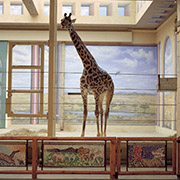
The diorama concept is turned on its head in Frank Noelker's Zoo Portraits. Here, the animals are real, but their surroundings are obviously artificial. These environments are in many cases designed to convince a human audience that the animals remain in their natural habitats, though the animals themselves are unlikely to be fooled. Yet as the primatologist Jane Goodall points out in her introduction to Noelker's forthcoming book, the human intervention that whisks animals from their original habitats is not invariably pernicious. Human incursions into those habitats are sometimes even more destructive, and the survival of some species may depend on their nurturance by enlightened zookeepers. Noelker's animals, with their mute dignity, reflect our conflicted relationship to nature: the animals cannot in most cases go back, and it is not clear how they, or we, are to move forward.
A slightly different approach to science is taken by Alexis Rockman, who prides himself on the clinical accuracy with which he researches and renders his subjects. Though art is ostensibly subjective and science objective, Rockman calls into question the veracity of this dichotomy by willfully commingling the two approaches. Like an illustration in a zoology textbook, his painting Prairie shows in cut-away form the creatures burrowing below the surface of a Mid-Western landscape. The above-ground scenery alludes to the Edenic visions of the American West painted by such 19th-century artists as Albert Bierstadt, but the barrenness of the topography suggests that this may actually be an Apocalyptic, posthuman tableau. The teeming action is all underground, amongst the surviving insects and rodents. Despite their bucolic surroundings, Rockman considers the ground squirrels in his painting to be essentially urban animals, whose nest-building and colonization of tunnels dug by other species parallels human activities. The blurring of categories--art/science, animal/human--is thus carried through thematically as well as aesthetically.
Kiki Smith is another artist who employs the pictorial language of multiple disciplines--including anatomy, anthropology, mythology and religion--to reestablish the bond between animals and humans that was lost through industrialization. Her turn to animal subject matter was triggered by the death, from pesticide poisoning, of a flock of crows in New Jersey, and her work (which she refers to as a kind of Noah's Ark) has a redemptive, preservationist subtext. At the same time, many of her animals appear damaged: They can be patched back together but never made fully whole again. In her series Butterfly, Bat, Turtle, Smith pastes wings or a shell over her own image, creating awkward, imperfect hybrids. "I found this anthropomorphizing interesting," she has said. "The human attributes we give to animals, and the animal attributes we take on as humans construct our identity."
Animal-human hybrids such as centaurs and mermaids have long figured in mythology, but they take on new significance for such contemporary artists as Kiki Smith and Rona Pondick. While working on a series of sculptures in which her own face was melded to the bodies of various animals, Pondick was startled to encounter a news photo of a mouse that had been genetically modified to grow a human ear. Science today not only merges species, but has demonstrated that relatively few genes separate humans from other animals. Increased attention to illnesses transmitted from animals to humans, including West Nile virus, SARS and BSE (mad cow disease), further highlights the permeability of the boundaries separating us from other species. The animal-human hybrid has become a special kind of monster, alluding to our primordial ties with nature while simultaneously triggering fears that science's cross-species transgressions may yield terrifying consequences.
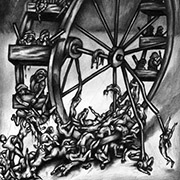
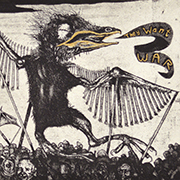
Of all the artists in the present exhibition, Sue Coe addresses these fears most directly. Strongly committed to animal rights, she believes that the industrialization of animal husbandry has not only removed food animals from our midst but has altered the nature of farming in ways that are both unspeakably cruel to the animals and harmful to people. She sees a connection between animals and weaker human beings, all of whom are literally or figuratively chewed up by an amoral capitalist system. In this sense, biotechnology and agribusiness are part of a single continuum. The genetically modified animals depicted in It Got Away from Them are the products of a corrupt and dangerous science. For her Porkopolis series (published in book form as Dead Meat, 1996), Coe infiltrated factory farms and slaughterhouses in order to expose the processes concealed therein. Whereas in earlier works, like Dog of War, the artist used animals metaphorically, she now feels it is crucial to depict animals as they are.
The closest regular contact that most people today have with animals comes from our interactions with pets. Ida Applebroog's Dog with Hat and Dahu both depict dogs in quasi-human guise: one with clothing, the other with crutches. These works remind us that some pets are treated like surrogate children, and that veterinary medicine can now replicate many of the cures once reserved for humans. The animal rights activist Tom Reagan has criticized William Wegman for similarly dressing up his famous weimaraners, claiming that the photographer denies them their innate doggishness. In truth, Wegman's photographs are far more complex than this. The weimaraners are clearly well trained by their master, but the work itself represents the collaborative symbiosis that is the hallmark of the new pet: the animal as equal participant in a cooperative dynamic.
Sally Mann's memorial to her dead greyhound, Eva, is a far more disturbing investigation of the bond between people and their pets. This series of photographs depicts the dog's pelt, which Mann preserved, and bones, which she dug up a year after the animal died. Mann lives on a farm, and therefore remains close to agricultural processes, like tanning and taxidermy, that have become alien to most urbanites. The Eva photos also reference more archaic traditions, such as the preservation of saints bones and other human relics. Though some people live with the ashes of both family members and pets, there is nonetheless a tendency to recoil at these photos, to ask ourselves: Would one do this to a beloved child? Wherein lies the difference? Mann is negotiating the treacherous territory that separates us from the otherness of animals and the other-worldliness of death.
The reification of the other is a recurrent theme in modern and postmodern art, and it is always inherently political. Whereas some contemporary artists have attempted to assimilate the spiritual authenticity of animals, early 20th-century modernists sought inspiration beyond the sphere of European culture, in non- Western countries and in the work of self-taught local artists. In each instance, the other was seen by artists as an alternative or corrective to the dominant power structure. However, just as the early modernists flirtation with primitivism is today viewed as a condescending exercise in cultural colonialism, the postmodern reverence for the animal other can never escape its human-centric origins.
We cannot help but see animals from a human vantage point, and therefore in some sense all the works in the present exhibition are actually about us. As Steve Baker notes, humans will never be able to depict the essence of a real animal, because animals are fundamentally unknowable to us. However, from a less theoretical perspective, there is no denying that animals are real. They may function as our pets, or as our dinner, or they may roam freely in a natural realm that is increasingly encroached upon by human intervention. Regardless, they are obviously real. Arguably a dog, which telegraphs its likes and dislikes fairly distinctly, is more completely knowable than a human companion, who commands a more complex range of emotions. The belief that the animal is inherently unknowable bespeaks a failure of both imagination and of compassion. It is akin to that distancing of the other which leads to genocide.
We would like to express our heartfelt thanks to the many colleagues who made this exhibition possible, as well as to Sue Coe, Don Hanson, Frank Noelker, Alexis Rockman and the William Wegman studio. This exhibition coincides with the publication by the Illinois University Press of Frank Noelker's book Captive Beauty: Zoo Portraits (with a foreword by Jane Goodall and an introduction by Nigel Rothfels). Frank Noelker will be present at the gallery to sign copies of his book on Wednesday, May 19, from 6 to 8 PM. The book may also be ordered from the gallery for $50.00 in hardcover, or $25.00 in paperback. Copies of Sue Coe's Dead Meat (Four Walls Eight Windows, 1996; with an introduction by Alexander Cockburn) are available for $40.00 in hardcover, or $22.00 in paperback. If you order by mail, please add $8.00 per book to cover shipping and handling; New York residents, also add sales tax.