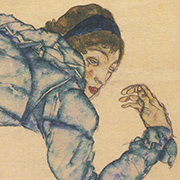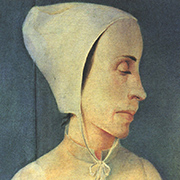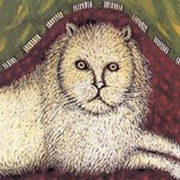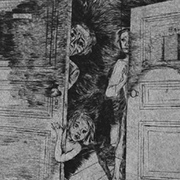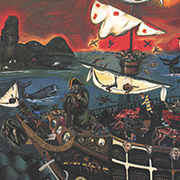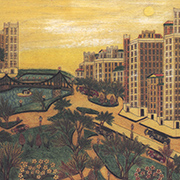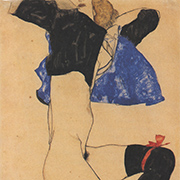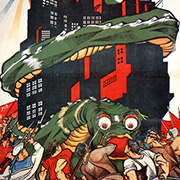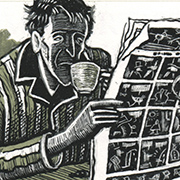

The Ins and Outs of Self-Taught Art
Reflections on a Shifting Field
January 10, 2012 - April 7, 2012
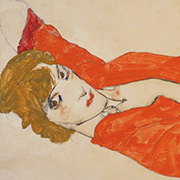
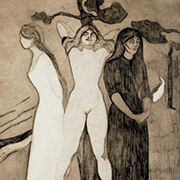
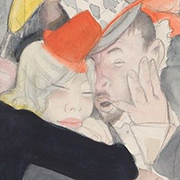
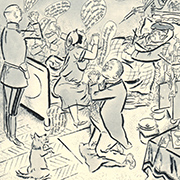
The Lady and the Tramp
Images of Women in Austrian and German Art
October 11, 2011 - December 30, 2011
Recent Acquisitions
(And Some Thoughts on the Current Art Market)
July 5, 2011 - September 30, 2011
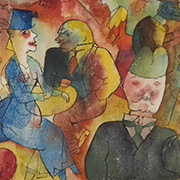
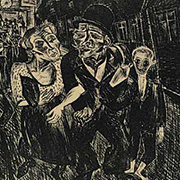
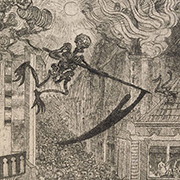
Decadence & Decay
Max Beckmann, Otto Dix, George Grosz
April 12, 2011 - June 24, 2011
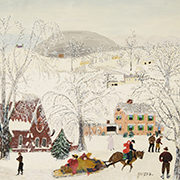
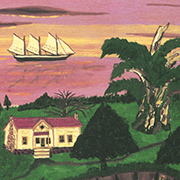
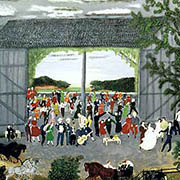
Self-Taught Painters in American 1800-1950
Revisiting the Tradition
January 11, 2011 - April 2, 2011
Marie-Louise Motesiczky
Paradise Lost & Found
October 12, 2010 - December 30, 2010
Recent Acquisitions
(And Some Thoughts on the Current Art Market)
July 13, 2010 - October 1, 2010
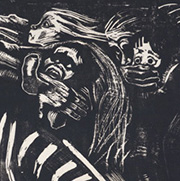
Käthe Kollwitz
A Portrait of the Artist
April 13, 2010 - June 25, 2010
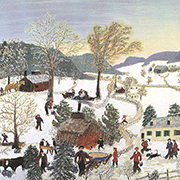
Seventy Years Grandma Moses
A Loan Exhibition Celebrating the 70th Anniversary of the Artist's "Discovery"
February 3, 2010 - April 3, 2010
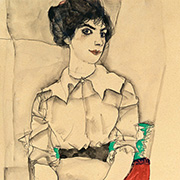
Egon Schiele as Printmaker
A Loan Exhibition Celebrating the 70th Anniversary of the Galerie St. Etienne
November 3, 2009 - January 23, 2010
From Brücke To Bauhaus
The Meanings of Modernity in Germany, 1905-1933
March 31, 2009 - June 26, 2009
They Taught Themselves
American Self-Taught Painters Between the World Wars
January 9, 2009 - March 14, 2009
Elephants We Must Never Forget
New Paintings Drawings and Prints by Sue Coe
October 14, 2008 - December 20, 2008
Recent Acquisitions
(And Some Thoughts on the Current Art Market)
June 24, 2008 - September 26, 2008
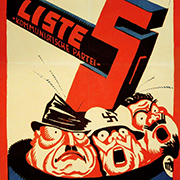
Hope or Menace?
Communism in Germany Between the World Wars
March 25, 2008 - June 13, 2008
Transforming Reality
Pattern and Design in Modern and Self-Taught Art
January 15, 2008 - March 8, 2008
Leonard Baskin
Proofs and Process
October 9, 2007 - January 5, 2008
Recent Acquisitions
(And Some Thoughts on the Current Art Market)
June 5, 2007 - September 28, 2007
Who Paid the Piper?
The Art of Patronage in Fin-de-Siècle Vienna
March 8, 2007 - May 26, 2007
Fairy Tale, Myth and Fantasy
Approaches to Spirituality in Art
December 7, 2006 - February 3, 2007
More Than Coffee was Served
Café Culture in Fin-de-Siècle Vienna and Weimar Germany
September 19, 2006 - November 25, 2006
Recent Acquisitions
(And Some Thoughts on the Current Art Market)
June 6, 2006 - September 8, 2006
Parallel Visions II
"Outsider" and "Insider" Art Today
April 5, 2006 - May 26, 2006
Ilija!
His First American Exhibtion
January 17, 2006 - March 18, 2006
Coming of Age
Egon Schiele and the Modernist Culture of Youth
November 15, 2005 - January 7, 2006
Sue Coe:
Sheep of Fools
September 20, 2005 - November 5, 2005
Recent Acquisitions
And Some Thoughts on the Current Art Market
June 7, 2005 - September 9, 2005
Every Picture Tells a Story
The Narrative Impulse in Modern and Contemporary Art
April 5, 2005 - May 27, 2005
65th Anniversary Exhibition, Part II
Self-Taught Artists
January 18, 2005 - March 26, 2005
65th Anniversary Exhibition, Part I
Austrian and German Expressionism
October 28, 2004 - January 8, 2005
Sue Coe: Bully: Master of the Global Merry-Go-Round and Recent Acquisitions
(And Some Thoughts on the Current Art Market)
June 8, 2004 - October 16, 2004
Animals & Us
The Animal in Contemporary Art
April 1, 2004 - May 22, 2004
Henry Darger
Art and Myth
January 15, 2004 - March 20, 2004
Body and Soul
Expressionism and the Human Figure
October 7, 2003 - January 3, 2004
Recent Acquisitions
(And Some Thoughts on the Current Art Market)
June 24, 2003 - September 12, 2003
In Search of the "Total Artwork"
Viennese Art and Design 1897–1932
April 8, 2003 - June 14, 2003
Russia's Self-Taught Artists
A New Perspective on the "Outsider"
January 14, 2003 - March 29, 2003
Käthe Kollwitz:
Master Printmaker
October 1, 2002 - January 4, 2003
Recent Acquisitions
(And Some Thoughts on the Current Art Market)
June 25, 2002 - September 20, 2002
Workers of the World
Modern Images of Labor
April 2, 2002 - June 15, 2002
Grandma Moses
Reflections of America
January 15, 2002 - March 16, 2002
Gustav Klimt/Egon Schiele/Oskar Kokoscha
From Art Nouveau to Expressionism
November 23, 2001 - January 5, 2002
The "Black-and-White" Show
Expressionist Graphics in Austria & Germany
September 20, 2001 - November 10, 2001
Recent Acquisitions (And Some Thoughts on the Current Art Market)
June 26, 2001 - September 7, 2001
Art with an Agenda
Politics, Persuasion, Illustration and Decoration
April 10, 2001 - June 16, 2001
"Our Beautiful and Tormented Austria!": Art Brut in the Land of Freud
January 18, 2001 - March 17, 2001
The Tragedy of War
November 16, 2000 - January 6, 2001
The Expressionist City
September 19, 2000 - November 4, 2000
Recent Acquisitions (And Some Thoughts on the Current Art Market)
June 20, 2000 - September 8, 2000
From Façade to Psyche
Turn-of-the-Century Portraiture in Austria & Germany
March 28, 2000 - June 10, 2000
European Self-Taught Art
Brut or Naive?
January 18, 2000 - March 11, 2000
Saved From Europe
In Commemoration of the 60th Anniversary of the Galerie St. Etienne
November 6, 1999 - January 8, 2000
The Modern Child
(Images of Children in Twentieth-Century Art)
September 14, 1999 - November 6, 1999
Recent Acquisitions
(And a Look at Sixty Years of Art Dealing)
June 15, 1999 - September 3, 1999
Sue Coe: The Pit
The Tragical Tale of the Rise and Fall of a Vivisector
March 30, 1999 - June 5, 1999
Henry Darger and His Realms
January 14, 1999 - March 13, 1999
Becoming Käthe Kollwitz
An Artist and Her Influences
November 17, 1998 - December 31, 1998
George Grosz - Elfriede Lohse-Wächtler
Art & Gender in Weimar Germany
September 23, 1998 - November 11, 1998
Recent Acquisitions
(And Some Thoughts About Looted Art)
June 9, 1998 - September 11, 1998
Taboo
Repression and Revolt in Modern Art
March 26, 1998 - May 30, 1998
Sacred & Profane
Michel Nedjar and Expressionist Primitivism
January 13, 1998 - March 14, 1998
Egon Schiele (1890-1918)
Master Draughtsman
November 18, 1997 - January 3, 1998
The New Objectivity
Realism in Weimar-Era Germany
September 16, 1997 - November 8, 1997
Recent Acquisitions
A Question of Quality
June 10, 1997 - September 5, 1997
Käthe Kollwitz - Lea Grundig
Two German Women & The Art of Protest
March 25, 1997 - May 31, 1997
That Way Madness Lies
Expressionism and the Art of Gugging
January 14, 1997 - March 15, 1997
The Viennese Line
Art and Design Circa 1900
November 18, 1996 - January 4, 1997
Emil Nolde - Christian Rohlfs
Two German Expressionist Masters
September 24, 1996 - November 9, 1996
Breaking All The Rules
Art in Transition
June 11, 1996 - September 6, 1996
Sue Coe's Ship of Fools
March 26, 1996 - May 24, 1996
New York Folk
Lawrence Lebduska, Abraham Levin, Isreal Litwak
January 16, 1996 - March 16, 1996
The Fractured Form
Expressionism and the Human Body
November 15, 1995 - January 6, 1996
From Left to Right
Social Realism in Germany and Russia, Circa 1919-1933
September 19, 1995 - November 4, 1995
Recent Acquisitions
June 20, 1995 - September 8, 1995
On the Brink 1900-2000
The Turning of Two Centuries
March 28, 1995 - May 26, 1995
Earl Cummingham - Grandma Moses
Visions of America
January 17, 1995 - March 18, 1995
Three Berlin Artists of the Weimar Era: Hannah Höch, Käthe Kollwitz, Jeanne Mam
September 13, 1994 - November 5, 1994
55th Anniversary Exhibition in Memory of Otto Kallir
June 7, 1994 - September 2, 1994
Drawn to Text: Comix Artists as Book Illustrators
May 15, 1994 - January 7, 1995
Sue Coe: We All Fall Down
March 29, 1994 - May 27, 1994
The Forgotten Folk Art of the 1940's
January 18, 1994 - March 19, 1994
Symbolism and the Austrian Avant Garde
Klimt, Schiele and their Contemporaries
November 16, 1993 - January 8, 1994
Art and Politics in Weimar Germany
September 14, 1993 - November 6, 1993
Recent Acquisitions
June 8, 1993 - September 3, 1993
The "Outsider" Question
Non-Academic Art from 1900 to the Present
March 23, 1993 - May 28, 1993
The Dance of Death
Images of Mortality in German Art
January 19, 1993 - March 13, 1993
Art Spiegelman
The Road to Maus
November 17, 1992 - January 9, 1993
Käthe Kollwitz
In Celebration of the 125th Anniversary of the Artist's Birth
September 15, 1992 - November 7, 1992
Naive Visions/Art Nouveau and Expressionism/Sue Coe: The Road to the White House
May 19, 1992 - September 4, 1992
Richard Gerstl/Oskar Kokoschka
March 17, 1992 - May 9, 1992
Scandal, Outrage, Censorship
Controversy in Modern Art
January 21, 1992 - March 7, 1992
Viennese Graphic Design
From Secession to Expressionism
November 19, 1991 - January 11, 1992
The Expressionist Figure
September 10, 1991 - November 9, 1991
Recent Acquisitions
Themes and Variations
May 14, 1991 - August 16, 1991
Sue Coe Retrospective
Political Document of a Decade
March 12, 1991 - May 5, 1991
Gustav Klimt, Egon Schiele, Oskar Kokoschka
Watercolors, drawings and prints
January 22, 1991 - March 2, 1991
Egon Schiele
November 13, 1990 - January 12, 1991
Lovis Corinth
A Retrospective
September 11, 1990 - November 3, 1990
Recent Acquisitions
June 12, 1990 - August 31, 1990
Max Klinger, Käthe Kollwitz, Alfred Kubin
A Study in Influences
March 27, 1990 - June 2, 1990
The Narrative in Art
January 23, 1990 - March 17, 1990
Grandma Moses
November 14, 1989 - January 13, 1990
Sue Coe
Porkopolis--Animals and Industry
September 19, 1989 - November 4, 1989
Galerie St. Etienne
A History in Documents and Pictures
June 20, 1989 - September 8, 1989
Gustav Klimt
Paintings and Drawings
April 11, 1989 - June 10, 1989
Fifty Years Galerie St. Etienne: An Overview
February 14, 1989 - April 1, 1989
Folk Artists at Work
Morris Hirshfield, John Kane and Grandma Moses
November 15, 1988 - January 14, 1989
Recent Acquisitions and Works From the Collection
June 14, 1988 - September 16, 1988
From Art Nouveau to Expressionism
April 12, 1988 - May 27, 1988
Three Pre-Expressionists
Lovis Corinth Käthe Kollwitz Paula Modersohn-Becker
January 26, 1988 - March 12, 1988
Käthe Kollwitz
The Power of the Print
November 17, 1987 - January 16, 1988
Recent Acquisitions and Works From the Collection
April 7, 1987 - October 31, 1987
Folk Art of This Century
February 10, 1987 - March 28, 1987
Oskar Kokoschka and His Time
November 25, 1986 - January 31, 1987
Viennese Design and Wiener Werkstätte
September 23, 1986 - November 8, 1986
Gustav Klimt/Egon Schiele/Oskar Kokoschka
Watercolors, Drawings and Prints
May 27, 1986 - September 13, 1986
Expressionist Painters
March 25, 1986 - May 10, 1986
Käthe Kollwitz/Paula Modersohn-Becker
January 28, 1986 - March 15, 1986
The Art of Giving
December 3, 1985 - January 18, 1986
Expressionists on Paper
October 8, 1985 - November 23, 1985
European and American Landscapes
June 4, 1985 - September 13, 1985
Expressionist Printmaking
Aspects of its Genesis and Development
April 1, 1985 - May 24, 1985
Expressionist Masters
January 18, 1985 - March 23, 1985
Arnold Schoenberg's Vienna
November 13, 1984 - January 5, 1985
Grandma Moses and Selected Folk Paintings
September 25, 1984 - November 3, 1984
American Folk Art
People, Places and Things
June 12, 1984 - September 14, 1984
John Kane
Modern America's First Folk Painter
April 17, 1984 - May 25, 1984
Eugène Mihaesco
The Illustrator as Artist
February 28, 1984 - April 7, 1984
Early Expressionist Masters
January 17, 1984 - February 18, 1984
Paula Modersohn-Becker
Germany's Pioneer Modernist
November 15, 1983 - January 7, 1984
Gustav Klimt
Drawings and Selected Paintings
September 20, 1983 - November 5, 1983
Early and Late
Drawings, Paintings & Prints from Academicism to Expressionism
June 1, 1983 - September 2, 1983
Alfred Kubin
Visions From The Other Side
March 22, 1983 - May 7, 1983
20th Century Folk
The First Generation
January 18, 1983 - March 12, 1983
Grandma Moses
The Artist Behind the Myth
November 15, 1982 - January 8, 1983
Kollwitz
The Artist as Printmaker
September 28, 1982 - November 6, 1982
Aspects of Modernism
June 1, 1982 - September 3, 1982
The Human Perspective
Recent Acquisitions
March 16, 1982 - May 15, 1982
19th and 20th Century European and American Folk Art
January 19, 1982 - March 6, 1982
The Folk Art Tradition
Naïve Painting in Europe and the United States
November 17, 1981 - January 9, 1982
Austria's Expressionism
April 21, 1981 - May 30, 1981
Eugène Mihaesco
His First American One-Man Show
March 3, 1981 - April 11, 1981
Gustav Klimt, Egon Schiele
November 12, 1980 - December 27, 1980
Summer Exhibition
June 17, 1980 - October 31, 1980
Kollwitz: The Drawing and The Print
May 1, 1980 - June 10, 1980
40th Anniversary Exhibition
November 13, 1979 - December 28, 1979
American Primitive Art
November 22, 1977
Käthe Kollwitz
December 1, 1976
Neue Galerie-Galerie St. Etienne
A Documentary Exhibition
May 1, 1976
Martin Pajeck
January 27, 1976
Georges Rouault and Frans Masereel
April 29, 1972
Branko Paradis
December 1, 1971
Käthe Kollwitz
February 3, 1971
Egon Schiele
The Graphic Work
October 19, 1970
Gustav Klimt
March 20, 1970
Friedrich Hundertwasser
May 6, 1969
Austrian Art of the 20th Century
March 21, 1969
Egon Schiele
Memorial Exhibition
October 31, 1968
Yugoslav Primitive Art
April 30, 1968
Alfred Kubin
January 30, 1968
Käthe Kollwitz
In the Cause of Humanity
October 23, 1967
Abraham Levin
September 26, 1967
Karl Stark
April 5, 1967
Gustav Klimt
February 4, 1967
The Wiener Werkstätte
November 16, 1966
Oskar Laske
October 25, 1965
Käthe Kollwitz
May 1, 1965
Egon Schiele
Watercolors and Drawings from American Collections
March 1, 1965
25th Anniversary Exhibition
Part II
November 21, 1964
25th Anniversary Exhibition
Part I
October 17, 1964
Mary Urban
June 9, 1964
Werner Berg, Jane Muus and Mura Dehn
May 5, 1964
Eugen Spiro
April 4, 1964
B. F. Dolbin
Drawings of an Epoch
March 3, 1964
Austrian Expressionists
January 6, 1964
Joseph Rifesser
December 3, 1963
Panorama of Yugoslav Primitive Art
October 21, 1963
Joe Henry
Watercolors of Vermont
May 1, 1963
French Impressionists
March 8, 1963
Grandma Moses
Memorial Exhibition
November 26, 1962
Group Show
October 15, 1962
Ernst Barlach
March 23, 1962
Martin Pajeck
February 24, 1962
Paintings by Expressionists
January 27, 1962
Käthe Kollwitz
November 11, 1961
Grandma Moses
September 7, 1961
My Friends
Fourth Biennial of Pictures by American School Children
May 27, 1961
Raimonds Staprans
April 17, 1961
Gustav Klimt, Egon Schiele, Oskar Kokoschka and Alfred Kubin
March 14, 1961
Marvin Meisels
January 23, 1961
Egon Schiele
November 15, 1960
My Life's History
Paintings by Grandma Moses
September 12, 1960
Watercolors and Drawings by Austrian Artists from the Dial Collection
May 2, 1960
Martin Pajeck
February 29, 1960
Eugen Spiro
February 6, 1960
Käthe Kollwitz
December 14, 1959
Josef Scharl
Last Paintings and Drawings
November 11, 1959
European and American Expressionists
September 22, 1959
Our Town
One Hundred Paintings by American School Children
May 23, 1959
Marvin Meisels and Martin Pajeck
May 1, 1959
Gustav Klimt
April 1, 1959
Käthe Kollwitz
January 12, 1959
Oskar Kokoschka
October 28, 1958
Village Life in Guatemala
Paintings by Andres Curuchich
June 3, 1958
Two Unknown American Expressionists
Paintings by Marvin Meisels and Martin Pajeck
April 28, 1958
Paula Modersohn-Becker
March 15, 1958
The Great Tradition in American Painting
American Primitive Art
January 20, 1958
Jules Lefranc and Dominique Lagru
Two French Primitives
November 18, 1957
Margret Bilger
October 22, 1957
The Four Seasons
One Hundred Paintings by American School Children
June 11, 1957
Grandma Moses
May 6, 1957
Alfred Kubin
April 3, 1957
Franz Lerch
March 2, 1957
Egon Schiele
January 21, 1957
Josef Scharl
Memorial Exhibition
November 17, 1956
Irma Rothstein
May 19, 1956
Käthe Kollwitz
April 16, 1956
A Tribute to Grandma Moses
November 28, 1955
As I See Myself
One Hundred Paintings by American School Children
May 20, 1955
Juan De'Prey
April 19, 1955
Erich Heckel
March 29, 1955
Freddy Homburger
March 2, 1955
Masters of the 19th Century
January 18, 1955
Oskar Kokoschka
November 29, 1954
Isabel Case Borgatta and Josef Scharl
October 12, 1954
James N. Rosenberg and Eugen Spiro
April 30, 1954
Per Krogh
April 2, 1954
Cuno Amiet
February 16, 1954
Eniar Jolin
January 14, 1954
Irma Rothstein
December 8, 1953
Josef Scharl
November 11, 1953
Grandma Moses
October 21, 1953 - October 24, 1953
Wilhelm Kaufmann
September 30, 1953
Lovis Corinth, Oskar Kokoschka and Egon Schiele
May 27, 1953
A Grandma Moses Album
Recent Paintings, 1950-1953
April 15, 1953
Streeter Blair
American Primitive
February 26, 1953
Paintings on Glass
Austrian Religious Folk Art of the 17th to 19th Centuries
December 4, 1952
Hasan Kaptan
Paintings of a Ten-Year-Old Turkish Painter
October 29, 1952
Margret Bilger
May 10, 1952
American Natural Painters
March 31, 1952
Ten Years of New York Concert Impressions by Eugen Spiro; Four New Paintings by
January 26, 1952
I-Fa-Wei
Watercolors of New York by a Chinese Artist
December 1, 1951
Käthe Kollwitz
October 25, 1951
Drawings and Watercolors by Austrian Children
May 21, 1951
Grandma Moses
Twenty-Five Masterpieces of Primitive Art
March 17, 1951
Roswitha Bitterlich
January 18, 1951
Oskar Laske
Watercolors of Vienna and the Salzkammergut
October 14, 1950
Tenth Anniversary Exhibition
Part II
May 11, 1950
Austrian Art of the 19th Century
From Wadlmüller to Klimt
April 1, 1950
Chiao Ssu-Tu
February 18, 1950
Anton Faistauer
January 1, 1950
Tenth Anniversary Exhibition
Part I
November 30, 1949
Autograph Exhibition
October 26, 1949
Gladys Wertheim Bachrach
May 24, 1949
Oskar Kokoschka
March 30, 1949
Eugen Spiro
February 19, 1949
Frans Masereel
January 13, 1949
Ten Years Grandma Moses
November 22, 1948
Käthe Kollwitz
Masterworks
October 18, 1948
American Primitives
June 3, 1948
Egon Schiele
Memorial Exhibition
April 5, 1948
Miriam Richman
February 7, 1948
Vally Wieselthier
Memorial Exhibition
January 10, 1948
Christmas Exhibition
December 4, 1947
Fritz von Unruh
November 10, 1947
Käthe Kollwitz
October 4, 1947
Grandma Moses
May 17, 1947
Lovis Corinth
April 16, 1947
Hugo Steiner-Prag
March 15, 1947
Mark Baum
January 11, 1947
Eugen Spiro
November 25, 1946
Henri de Toulouse-Lautrec
May 17, 1946
Ladis W. Sabo
Paintings by a New Primitive Artist
April 8, 1946
Georges Rouault
The Graphic Work
February 26, 1946
Käthe Kollwitz
Memorial Exhibition
November 21, 1945
Fred E. Robertson
Paintings by an American Primitive
June 13, 1945
Max Liebermann
The Graphic Work
April 18, 1945
Vienna through Four Centuries
March 1, 1945
Eugen Spiro
January 20, 1945
Grandma Moses
New Paintings
December 5, 1944
Käthe Kollwitz
Part II
October 26, 1944
A Century of French Graphic Art
From Géricault to Picasso
September 28, 1944
Max Liebermann
Memorial Exhibition
June 9, 1944
Juan De'Prey
Paintings by a Self-Taught Artist from Puerto Rico
May 6, 1944
Abraham Levin
April 15, 1944
Lesser Ury
Memorial Exhibition
March 21, 1944
Grandma Moses
Paintings by the Senior of the American Primitives
February 9, 1944
Betty Lane
January 11, 1944
WaIt Disney Cavalcade
December 9, 1943
Käthe Kollwitz
Part I
November 3, 1943
Will Barnet
September 29, 1943
Lovis Corinth
May 26, 1943
Josephine Joy
Paintings by an American Primitive
May 3, 1943
Oskar Kokoschka
Aspects of His Art
March 31, 1943
Eugen Spiro
February 13, 1943
Seymour Lipton
January 18, 1943
Illuminated Gothic Woodcuts
Printed and Painted, 1477-1493
December 5, 1942
Abraham Levin
November 4, 1942
Walt Disney Originals
September 23, 1942
Documents which Relate History
Documents of Historical Importance and Landmarks of Human Development
June 10, 1942
Honoré Daumier
April 29, 1942
Bertha Trabich
Memorial Exhibition of a Russian-American Primitive
March 25, 1942
Alfred Kubin
Master of Drawing
December 4, 1941
Egon Schiele
November 7, 1941
Betty Lane
June 3, 1941
Flowers from Old Vienna
18th and Early 19th Century Flower Painting
May 7, 1941
Weavings by Navaho and Hopi Indians and Photos of Indians by Helen M. Post
January 29, 1941
Georg Merkel
November 7, 1940
What a Farm Wife Painted
Works by Mrs. Anna Mary Moses
October 9, 1940
Saved from Europe
Masterpieces of European Art
July 1, 1940
American Abstract Art
May 22, 1940
Franz Lerch
May 1, 1940
Wilhelm Thöny
April 3, 1940
French Masters of the 19th and 20th Centuries
February 29, 1940
H. W. Hannau
Metropolis, Photographic Studies of New York
February 2, 1940
Oskar Kokoschka
January 9, 1940
Austrian Masters
November 13, 1939
55TH ANNIVERSARY EXHIBITION IN MEMORY OF OTTO KALLIR
Beckmann, Max
Benoit, Rigaud
Corinth, Lovis
Felix, Lafortune
Gerstl, Richard
Hirshfield, Morris
Jungnickel, Ludwig Heinrich
Kane, John
Klimt, Gustav
Kokoschka, Oskar
Kubin, Alfred
Laske, Oskar
Lebduska, Lawrence
Levin, Abraham
Litwak, Israel
Moses, Anna Mary Robertson ("Grandma")
Neder, Michael
Nikifor
Nolde, Emil
Romako, Anton
Scharl, Josef
Schiele, Egon
Waldmüller, Ferdinand Georg
In the years since Otto Kallir, founder of Galerie St. Etienne, died in 1978, we have periodically reminded our visitors of the gallery’s lengthy history. Our most noteworthy efforts in this vein were the Kallir memorial exhibitions mounted in the early 1980s (loan shows on a scale that, given subsequent increases in values, could never be duplicated today) and our fiftieth-anniversary series in 1989. This year’s fifty-fifth anniversary happens to coincide with the 100th anniversary of Otto Kallir’s birth, and the present exhibition is therefore dedicated to his achievements.
Kallir was one of a generation of art dealers who transformed the New York art world in the period immediately preceding and following World War II. When he came to New York in 1939--having been driven from his native Austria a year earlier by the Nazi Anschluss--the American art scene was still surprisingly provincial. The 1913 Armory show and the First World War had occasioned fleeting contact with European modernism, but interest on this side of the Atlantic was confined to a relatively small minority. It would take the mass exodus of European intellectuals spurred by Hitler’s cultural policies, and the subsequent rise of the United States as a global super-power, to make America a full-fledged partner in the modernist enterprise.
Most early champions of the avant-garde--here and in Europe--approached their task with a missionary zeal that was sharpened by the often hostile responses of an uninformed public, but Kallir was unusual in the breadth and eclecticism of his enthusiasms. For one thing, he was almost naively optimistic about the potential of the twentieth century. Modern art was just one facet along a wide progressive continuum encompassing a host of allied cultural and scientific advances. (His collection of aeronautica, a mere sideline to his multiple professional pursuits, won awards in many nations.) Kallir was no dealer in the narrow, conventional sense. He was a publisher of original graphics by such artists as Max Beckmann, Oskar Kokoschka, Alfred Kubin and Egon Schiele, and of literature by the likes of Rainer Maria Rilke and Hugo von Hofmannsthal. He was an organizer of exhibitions on a monumental scale, bringing the work of Lovis Corinth, Käthe Kollwitz, Edvard Munch, Auguste Renoir, Paul Signac, and Vincent van Gogh to Vienna, and that of Gustav Klimt, Kokoschka, Kubin, Paula Modersohn-Becker and Schiele to the United States. And he was an erudite scholar who believed passionately in documenting the work of the artists he represented: he published no fewer than three catalogues raisonnés on the work of Schiele, as well as cataloguing the oeuvres of Richard Gerstl and Grandma Moses.
It was perhaps the diversity of his interests that provided Kallir--forty-five years old at the time of his immigration--with the stamina to start over in a new and very different country. In Vienna, he had supported his predilection for avant-garde artists such as Ludwig Heinrich Jungnickel, Klimt, Kokoschka, Kubin, Oskar Laske and Schiele by also exhibiting the decidedly more lucrative work of nineteenth-century painters like Anton Romako, August von Pettenkofen and Ferdinand Georg Waldmüller. In the United States, they were all equally unknown. The Galerie St. Etienne’s inaugural show of “Austrian Masters” was a disaster. In a special room, Kallir displayed a “picture of the month”: Van Gogh’s L’Arlésienne, today in the Sao Paulo Museum of Art. But no one would believe that this humble refugee, who at the time barely spoke English, could legitimately offer such a major piece, and the Van Gogh went unsold, as did a subsequent, equally monumental “picture of the month,” the famous self-portrait Yo, Picasso. To help make ends meet, Kallir started a subsidiary enterprise publishing photographic postcards of American landmarks, for he was convinced that there should be an alternative to the tacky dime-store images then prevalent in this country. Unfortunately, he had no conception of how to establish an effective distribution network in a nation as large as the United States, and the postcard business foundered, along with his attempt to continue his Austrian book and print publishing venture, the Johannes Presse.
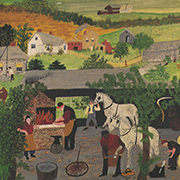
Kallir was also initially disappointed in his desire to find compelling contemporary American artists, for by comparison with Europe, the aesthetic orientation here in the late 1930s seemed to him backward and derivative. However, like many modernist pioneers, Kallir had a keenly developed appreciation of self-taught and folk art. In Vienna, he had shown and collected votive paintings (originally brought to wider attention by Wassily Kandinsky in the Blaue Reiter almanac), and one of Kallir’s first excursions into his newly adopted land took him to New Mexico, where he filled his car with Santos and Native American crafts. Hearing of Kallir’s interest in folk art, a fellow emigré by the name of Louis J. Caldor brought him an array of amateur paintings that he had collected on his travels in upstate New York. Among this material was a small group of pictures by Anna Mary Robertson Moses, which Caldor had picked up at a drugstore in Hoosick Falls. Kallir opened the exhibition “What a Farmwife Painted” in the autumn of 1940, and by the end of the year, “Grandma” Moses had been discovered by the national press. It took some time before Moses was firmly ensconced in the public’s imagination, but once there she remained a popular celebrity (the first art-world personality to be perceived as such) until her death in 1961 at the age of 101. Throughout the 1940s and ‘50s, the Galerie St. Etienne was one of the foremost specialists in self-taught art, showing both nineteenth-century material and the work of such living painters as Morris Hirshfield, Abraham Levin and Israel Litwak. But Grandma Moses far outshone the others, and in a very real sense helped make it financially possible for Kallir to indulge his passion for Austrian Expressionism.
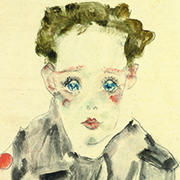
Of the Austrian artists whose work Kallir had brought to the United States (Expressionism, banned by Hitler as “degenerate,” could be freely exported), only Kokoschka had an international reputation. The Galerie St. Etienne mounted Schiele exhibitions in 1941 (his first in the United States) and 1948, and featured the artist in a number of group shows, but the work at first was sold mainly to refugee dealers: in one such bulk sale, twelve drawings went for less than $300, total. Klimt, whose posters are today a fixture in college dorms from coast to coast, did not even have his first American exhibition, at this gallery, until 1959. Here, as elsewhere, it was Kallir’s skill, not exactly as salesman but as proselytizer, that paved the way. To get Klimt and Schiele into American museums, he sold at bargain prices or, when need be, literally gave away their work to such institutions as the Minneapolis Institute of Arts, the Fogg Art Museum, the Guggenheim, the Museum of Modern Art and the National Gallery of Art. By 1957, he was able to mount his first truly successful Schiele exhibition, and in 1960, collaborating with Thomas M. Messer, he organized the first traveling museum showing of Schiele’s work in this country. In 1965, with Messer now at the Guggenheim, Kallir initiated a major Klimt/Schiele exhibition--to this day the largest assemblage of works by both artists ever seen in the United States.
Kallir lived to see the beginnings of the “Vienna 1900” boom in the 1970s: the publication of the first truly popular monographs on Klimt and Schiele by Alessandra Comini, and the first significant interdisciplinary study of the field, Wittgenstein’s Vienna, by Allan Janik and Stephen Toulmin. However, it was left to Kallir’s successors at the Galerie St. Etienne to carry the torch into the 1980s. In the last fifteen years, we have greatly expanded the practice of organizing museum-level exhibitions, both on our own premises and for outside institutions. The gallery has hosted landmark loan shows of Lovis Corinth, Richard Gerstl, Gustav Klimt, Oskar Kokoschka, Paula Modersohn-Becker, Egon Schiele, the Wiener Werkstätte and many others. We are perhaps proudest of the exhibitions that we organized for the Historisches Museum der Stadt Wien in 1986, documenting Kallir’s activities; for the Österreichische Galerie in 1990, on the occasion of Schiele’s 100th birthday; and of the current Schiele traveling show, which just closed at the National Gallery of Art and may be seen at the Indianapolis Museum of Art through August 7, and at the San Diego Museum of Art from August 27 to October 30. Our commitment to self-taught art has also grown in recent years. In 1984, we added the estate of John Kane to our roster, and more recently we have organized broad surveys of so-called outsider art that included paintings by Europeans and Haitians as well as Americans. In the mid 1980s, we sent a John Kane retrospective to five museums, and in the past decade, we circulated three different Grandma Moses exhibitions to museums across the United States and in Japan. The gallery has also been responsible for an increasing number of scholarly publications, most notably the first comprehensive Schiele catalogue raisonné, published by Harry N. Abrams in 1990.
Although many of the Galerie St. Etienne’s most spectacular exhibition and publication projects are of fairly recent vintage, the fact is that the dealer’s educational role has been severely eroded since the 1940s and ‘50s. The financial stakes today are much higher, and there is accordingly much less incentive to cater to a broad-based public. The focus has become more narrowly commercial, with the emphasis on auctions and art fairs geared almost exclusively to active collectors. In part, this is an outgrowth of the general economic retrenchment characteristic of the 1990s, but we need to remind ourselves that such trends can become permanent. For those of us who value the educational mission of the public gallery, the present may well prove to be a watershed era. Now, more than ever, it is important to commemorate and appreciate the accomplishments and spirit of impresarios such as Otto Kallir.